
Grapevine
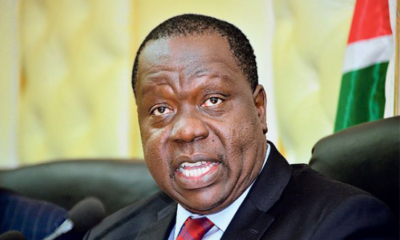
SUPREMO: How Simba Arati’s Wife Is Running Kisii County From Her Home With Terror
She slaps chief officers, confiscates phones, dictates who gets paid and who does not, and sends grown men to their knees. She is not the governor. She was never elected. But in the hills of Motonto, Mei Arati rules.


They call her Kwamboka. She sings SDA hymns in flawless Ekegusii, gate-crashes political rallies organised by her husband’s enemies, introduces herself to crowds as a simple governor’s wife who stumbled upon their meeting on her way to Nairobi.
She smiles wide. She speaks their language. She is charming, disarming, and seemingly everywhere. But behind the warm face and the vernacular fluency, insiders at the Kisii county government tell a very different story.
A story told in whispers, behind locked doors, and only with guarantees of strict anonymity by officials who say they fear for their positions, and their lives.
The scene that has finally broken this story’s silence unfolded recently at the private home of Governor Paul Simba Arati in Motonto village, Bobasi constituency, deep in Kisii’s green interior.
What was meant to be a county government meeting turned, according to multiple eyewitness accounts, into a two-hour ordeal of intimidation and humiliation directed at Prof. Justus Nyagwencha, the county’s Chief Officer for Tourism.
By the time it was over, a distinguished American-trained academic who had abandoned a promising career in the United States to serve his home county had been reduced, sources say, to silence and terror. The man who allegedly did all of this was not the governor. It was his wife.
“Mei is the substantive governor. The governor himself is just a figurehead. That is why official government business is executed from Arati’s home and not in the officially gazetted office in Kisii town.”
THE DARKROOM THREAT
According to several senior officials who were present and who spoke to this publication under conditions of strict confidentiality, Mei Arati convened the meeting at the Motonto compound as she has done on numerous occasions since her husband assumed the governorship in 2022.
What initially distinguished this gathering from the routine exercises in financial micromanagement and political discipline that insiders say have come to define Mei’s home-based administration was the presence of Nyagwencha himself.
A professor of science trained in the United States, Nyagwencha is known, colleagues say, as a man who speaks his mind. That reputation, insiders now believe, made him a marked target.
Mei’s charges against Nyagwencha were overtly political.
She accused him of backing the so-called one-term crusade against President William Ruto’s re-election bid, and of supporting the presidential ambitions of former Cabinet Secretary Fred Matiang’i, a man she reportedly dismissed as a political nonstarter.
The professor was not given much room to respond. As the meeting wore on, Mei allegedly escalated her tirade, threatening to consign Nyagwencha to a “darkroom” where, in her words, he would “not see life again.” It was a phrase, sources say, that sent a chill through the room.
Present throughout the two-hour confrontation were Deputy Governor Elijah Obebo, multiple chief officers, and county executive committee members from various departments. Not one of them intervened. Officials who were there explain that silence was not indifference but survival. “We signaled Prof. Nyagwencha not to say anything even if she slapped him,” one chief officer told this publication. “With his background from the US, the professor is known to speak his mind and if he attempted to do that, we’d have witnessed a tragic outcome. It was very scary, especially when she threatened to send him into the darkroom.”
And then there is the security dimension that makes defiance seem especially irrational. “Although we have tasted the woman’s excesses in the past, Prof. Nyagwencha’s case was very scary because we feared she would unleash the goons who always hover around the governor’s home to harm the professor,” said a top official at the governor’s residence who requested strict confidentiality, fearing for both position and life. Armed men, insiders say, patrol the compound. They are not county government security. Nobody this publication spoke to could quite explain who they are or who deploys them.
As for the governor himself, sources say his response to the unfolding crisis was to quietly slip away. “What was strange is that when she started the meeting as she always does, the governor deliberately sneaked out into a separate room and left us at her mercy,” recalled one chief officer.
Nyagwencha, contacted for comment by this publication, was measured but telling. “I’d rather not discuss that incident. I am doing my work to serve the people of Kisii county,” he said, before switching off his phone. He neither confirmed nor denied what happened.
A PATTERN BEHIND CLOSED DOORS
Those close to the county government are at pains to stress that what happened to Nyagwencha was not an anomaly. It was simply the most visible and frightening episode in a long pattern of alleged conduct that Mei Arati has visited upon county officials since her husband’s administration began. What has changed is that the terror has moved up the food chain.
In earlier incidents, insiders say, Mei would confiscate the mobile phones of chief officers attending meetings at Motonto and demand passwords to access their private WhatsApp conversations.
Officials who spoke to this publication describe the experience as humiliating, jarring, and utterly without legal basis. In one especially disturbing account, a chief officer found his private text messages with a woman other than his wife accessed, shared, and weaponised.
“She slapped the CO and asked him for his wife’s phone number so that she would share the text messages,” recalled a colleague of the affected official.
“The CO went down on his knees and begged her to spare his family. She had him demoted from an influential docket to a less colourful position.” That is how business is conducted at Motonto, sources say. The governor’s wife holds the files. She sets the terms.
“Motonto is a slaughterhouse. She dictates who gets paid and who should not be paid. If a pending bill in a certain department has not been approved by her, but you go ahead and pay it, you will see a very long day.”
The financial control alleged by insiders is the most consequential dimension of Mei’s reported influence. Multiple chief officers describe a system in which no significant payment moves through the county government without the approval, direct or indirect, of the governor’s wife.
“Normally, she is the one who dictates who should be paid and who should not be paid,” said one CO who has attended her Motonto meetings. “If a pending bill in a certain department has not been approved by her, but you go ahead and pay it, you’ll see a very long day.” The implications of such a system for procurement integrity, service delivery, and accountability to the public are difficult to overstate.
Another chief officer drew a direct line between this financial control and the departure of senior officials from the county government. “Many people don’t understand why many chief officers have resigned in this government. It’s because they refused to kowtow to the harassment of this Chinese woman,” the official said.
And one CECM present at the meeting where Nyagwencha was humiliated provided what may be the most alarming piece of context: since the current administration assumed office roughly four years ago, more than Sh10 billion meant for development in the county cannot be accounted for, returned as an allegedly unspent allocation.
“Ask yourself why at least Sh3 billion is purportedly returned to the National Treasury from Kisii every year as an unspent allocation, yet we have many areas of need where that money could have been spent,” the CECM said.
THE NUMBERS SPEAK FOR THEMSELVES
That question is not merely rhetorical. It is backed by hard data from Kenya’s own oversight institutions. A report by the Controller of Budget for the first quarter of the 2024/2025 financial year confirmed that Kisii County, under Governor Arati, recorded zero development expenditure during the review period, ranking among just ten counties out of forty-seven to achieve that inglorious distinction.
During the same period, a National Treasury report revealed that Kisii held Sh3.46 billion in idle funds at the Central Bank of Kenya, the single highest dormant county balance in the country. Sh3.46 billion. Sitting at the CBK. In a county where insiders say the governor’s wife controls who gets paid.
Earlier, in 2024, the county was found to be at risk of forfeiting nearly Sh800 million in conditional donor funding, including Sh250 million for the National Agricultural and Rural Inclusive Growth Project and Sh400 million under the Financing Locally-Led Climate Action programme, because it had failed to raise matching funds and meet basic disbursement conditions.
Kisii Senator Richard Onyonka was sufficiently alarmed to summon the governor to the Senate to account for Sh3.7 billion sitting untouched in the County Revenue Fund. “This is public money for the Kisii people,” Onyonka said. It remains unclear whether any satisfactory explanation was ever provided.
To county residents watching roads crumble, health facilities stagnate, and bursary funds fail to reach their children, these are not abstract fiscal statistics. They are the arithmetic of a governance failure. The question that officials at Motonto are raising, off the record and in fear, is whether the woman who allegedly dictates which bills get paid is also the answer to why so many bills never get paid at all.
THE MAKING OF KWAMBOKA
To understand how a Chinese-born woman came to allegedly wield this kind of power over a Kenyan county government, one must go back to the beginning. Simba Arati, combative and populist, travelled to China to study Business Management at Guangzhou University. It was there that he met Mei.
They married in 2006 after his graduation and she came home with him to Kenya, to a constituency in Dagoretti North where he was building his political career from the ground up, and eventually to the hills of Bobasi in Kisii County where he would become governor. In that journey, Mei was always present. Always working.
She mastered Ekegusii with a dedication and fluency that left Kisii residents genuinely astonished. By the time Arati launched his gubernatorial campaign in 2022, Kwamboka, as she had been nicknamed, was a fixture at every rally, speaking the local language with an ease that made crowds break into spontaneous song.
At Nyamache Stadium, she stood before thousands and addressed them in their mother tongue, requesting their votes for her husband. Videos of her singing SDA hymns in Ekegusii went viral multiple times. She introduced herself everywhere as a simple wife, not a politician. The community loved her.
She also, according to one of Arati’s close allies from the campaign period, played a central operational role in the campaign machinery. “Arati’s wife ensured that campaign funds were well utilised and also ensured that discipline was maintained in their campaign teams. She would not hesitate to reprimand anyone who messed up,” the ally told The Standard at the time. It was widely noted then as an interesting management trait in a political spouse. Today, in light of what insiders describe from behind the walls of the Motonto compound, that description reads rather differently.
“She is very powerful. The governor is at her mercy. She is the one who convenes meetings, scrutinises financial books and removes budgetary allocations to areas where she has interests.”
Even in her public role as a peace broker, Mei has operated with a boldness that is unusual for a governor’s spouse.
When political tensions between her husband and South Mugirango MP Silvanus Osoro threatened to spiral into open violence, Mei’s response was to gate-crash three consecutive Osoro camp meetings, introducing herself warmly and disarming the opposition through sheer audacity. At one such function, she declared: “I am not a politician. My husband is. You belong to parties but I don’t.” It was a performance of studied political neutrality from a woman who, her subordinates allege, maintains rigidly political control over every cent that passes through the county government. The contrast is startling.
A FIGUREHEAD IN HIS OWN HOUSE
Governor Paul Simba Arati is not a man who is easily pushed around, at least not by his opponents. His political career has been defined by confrontation: confrontation with Osoro’s camp, which led to running street battles and police intervention at public functions; confrontation with the national government, which he publicly accused of plotting to plant firearms in his homes; confrontation with MCAs he is alleged to have infiltrated; and confrontation with the Nyamira county boundary, which saw him cited for contempt of court after allegedly defying a High Court ruling. Arati is, by any reading, a fighter.
And yet, according to those who serve under him, he becomes curiously passive within the walls of his own compound. The governor who faces down MPs and security services with apparent fearlessness is, sources say, the governor who slips quietly out of the room when his wife begins to hold court.
When he was first questioned about Mei’s presence at his county offices, Arati deflected with bluster.
“Those asking why she brings me food to the office, what is your concern, are you planning to do something fishy to me?” he said in a 2023 interview, presenting her role in the administration as no more consequential than a packed lunch. His critics were not convinced then. They are less convinced now.
A businessman in Kisii town, James Morwabe, summed up the public frustration with a directness that county officials, fearing reprisals, cannot afford. “We didn’t elect both of them. It is illegal for public issues to be managed from his home by his wife. We want official duties returned to officially gazetted offices in Kisii town.” The legality of conducting official county government business from a private residence, let alone having that business directed by an unelected private citizen, is a question that deserves attention from the county assembly, the Senate, and potentially the courts. No elected mandate flows to Mei Arati. No oath of office binds her. No statute empowers her to summon chief officers, demand access to their private communications, sanction payments, or issue threats. None. Yet this, insiders say, is exactly what she does.
THE GRAPEVINE BURNS HOT
Whisper it in the corridors of Kisii county offices and the story has been circulating for years: that the real governor of Kisii does not sit in the officially gazetted chambers in town but in a homestead in Motonto where the meetings begin when she calls them and end when she is satisfied.
That the man the voters chose is managed by the woman who was never on the ballot.
That the men and women who administer a county of more than 1.2 million people serve not at the pleasure of their elected principal but at the sufferance of a foreign national whose authority derives from nothing more than the proximity of her bedroom to the governor’s.
County gossip has long referred to her meetings as “the real cabinet sittings” and to the official County Executive Committee gatherings as ceremonial afterthoughts. Officials whisper that the former CECM for Finance who resigned did not leave for personal reasons but because he was tired of being told by Mei which invoices to approve and which to sit on.
That multiple chief officers who resigned citing family reasons or better opportunities were actually running from a working environment that one of them has now described to this publication as a slaughterhouse.
That the billions sitting idle at the CBK are not a budget absorption problem but a deliberate feature of a financial management system that concentrates control, and perhaps benefit, in private hands at Motonto.
None of these allegations have been tested in court. Mei Arati has not been charged with any offence. Governor Arati’s administration has not been formally censured for conducting official business from a private home.
But the weight of testimony from multiple senior officials, speaking independently and at personal risk, points to a pattern of conduct that the institutions of Kisii county oversight, the county assembly, the Senate, the Controller of Budget, and the Ethics and Anti-Corruption Commission, cannot continue to ignore.
THE ACCOUNTABILITY DEFICIT
For the people of Kisii, the stakes of this story are not abstract. They are the dispensary that has no drugs. The road that has not been tarmacked. The bursary that never arrived. The Sh3.46 billion sitting at the Central Bank while clinics run dry and children sit under leaking roofs.
If even a fraction of what county insiders allege is accurate, then Kisii county is not merely suffering from poor governance. It is suffering from the complete privatisation of governance itself, outsourced to a private residence and administered by an unelected figure whose accountability to the Kisii public is precisely zero.
Governor Arati has made much over the years of his commitment to fighting graft. He cracked down on ghost workers in his early days. He accused political rivals of trying to plant firearms in his home as part of a conspiracy to destroy him. He positioned himself as a man the system wanted to break because he was too honest for its comfort.
But accountability journalism does not deal in positioning. It deals in evidence. And the evidence that is emerging from the shadows of his own administration tells a story that no amount of combative press conferences can paper over.
The question that Kisii residents, their senator, their county assembly, and ultimately their courts must now confront is this: who is running Kisii County? If the answer is a woman who answers to no electorate, holds no mandate, faces no audit, commands armed men, and runs meetings from her living room, then the devolution that Kenya’s Constitution promised the people of Kisii is not merely being mismanaged. It is being stolen from them. Not in the boardrooms of Nairobi. In the hills of Motonto. By a woman they never voted for, and a man who, it appears, cannot bring himself to tell her no.
Kenya Insights allows guest blogging, if you want to be published on Kenya’s most authoritative and accurate blog, have an expose, news TIPS, story angles, human interest stories, drop us an email on [email protected] or via Telegram



SUPREMO: How Simba Arati’s Wife Is Running Kisii County From Her Home With Terror

Why Is a US Ebola Facility in Kenya Sparking Protests?

10 Million Kenyans’ Personal Data Allegedly Being Sold on Dark Web in Chilling New Cybersecurity Scare

Cement, Cash and Courts: How the Hashu Dynasty Crushed the Ramji Brothers for Fourteen Years and Why the Walls Are Now Closing In

Fresh Move Launched to Remove Kenya Railways MD Mainga From Office After Awarding Sh817 Million Consultancy Contract

Ruto Says US Plan To Build Ebola Facility In Kenya Is The ‘Right Thing’

KBC Secures Free-to-Air Rights for 2026 World Cup

EACC Raids Nairobi Planning Chief Patrick Analo’s Home, Recovers Sh65 Million in Cash

Lawyer Donald Kipkorir Says NTSA Instant Fines Are Illegal, Warns New Traffic Camera System Faces Constitutional Challenge

US Embassy Defends Ebola Facility in Laikipia, Says It Doesn’t Pose Health Risks To Locals

Why Ruto’s Favourite Candidate Adan Mohammed Could Be Locked Out of the KRA Top Job

Este Medical Kenya Fights American’s Explosive Complaints

LifeCare on the Brink: SHA Fraud, Stolen Wages, and the Rotten Empire Jayesh Saini Built

Safaricom’s Sh1.4 Billion Reckoning: How Kenya’s Most Profitable Company Stole a Man’s Idea and Got Caught

The Rot Inside Absa: How Bank Insiders Are Looting Nairobi’s Customers

THE INSURER THAT TOOK YOUR PREMIUM AND FORGOT YOUR NAME: How ICEA Lion Left a Client Begging for Sh7.8 Million Across Four Months

Denial Under Duress: The Untold Collapse Threatening David Lagat’s DL Group’s Empire

Inside FAFSA Fraud: How Kenyan Cybercriminals Siphoned Millions from America’s Sh12 Billion Student Loan System

Court Confirms Safaricom Customers Data Was Sold To Betting Companies In Seven-Year Cover-Up

Eight Students Arrested In Kenya After Suspected Deadly School Arson Attack
-
 News2 weeks ago
Este Medical Kenya Fights American’s Explosive Complaints
-
 Investigations1 week ago
LifeCare on the Brink: SHA Fraud, Stolen Wages, and the Rotten Empire Jayesh Saini Built
-
 Americas2 weeks ago
Inside FAFSA Fraud: How Kenyan Cybercriminals Siphoned Millions from America’s Sh12 Billion Student Loan System
-
 News7 days ago
Eight Students Arrested In Kenya After Suspected Deadly School Arson Attack
-

 Investigations4 days ago
Betika Faces DCI Probe, Directors Arrest and License Revocation Over Massive 29.5 Million Safaricom Customers’ Data Breach
-
 News5 days ago
How Uhuru’s Deal With Obama In 2015 Paved Way For America’s Ebola Plan In Kenya
-

 Investigations2 weeks ago
LSK On The Spot For Renewing Rogue Lawyer Dennis Onyango’s Licence Despite Mounting Evidence He Held Foreign Investors’ Millions Hostage
-

 Investigations1 week ago
The Invisible Hand: Al Jazeera Further Exposes How Safaricom Became The Regime’s Most Powerful Spy