
Investigations
Fertility Point’s House of Horrors: Wrong Sperm, Disputed Babies, a Dead Donor, and a Clinic That Cannot Stay Out of Court
NMC Fertility (K) Limited, trading as Fertility Point, faces two active High Court cases alleging genetic catastrophe in its Nairobi laboratories, a whistleblower allegation of a patient death covered up with the alleged assistance of DCI officers, a labour dispute over the dismissal of its own IVF specialist, and the long shadow of its parent company’s multi-billion-dollar global fraud implosion. How a clinic that sells hope became a factory of courtroom nightmares and an alleged mortuary.

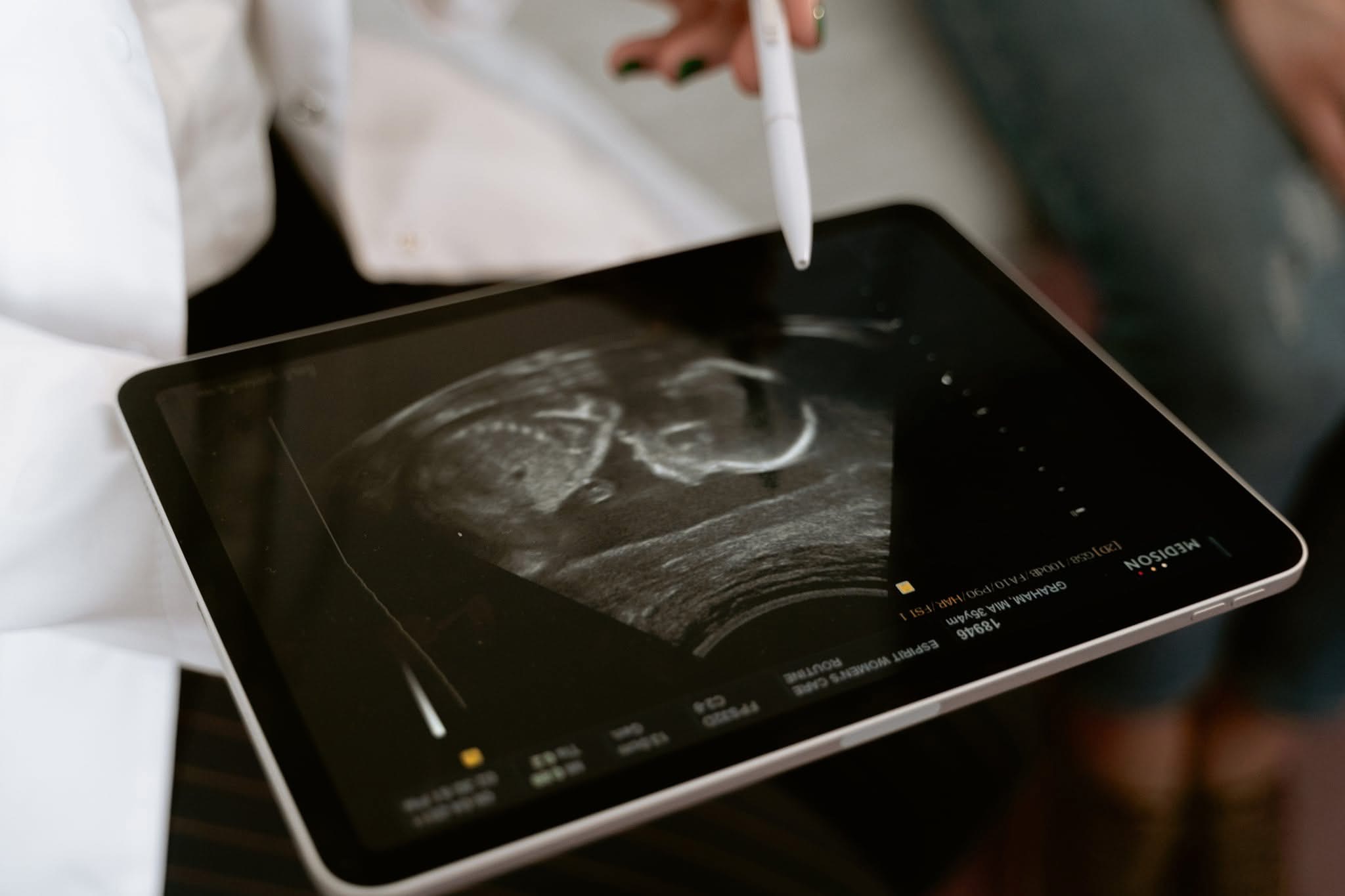
The brochures promise precision. The website speaks of internationally trained IVF consultants and proven expertise. The testimonials glow. Fertility Point, the trading name of NMC Fertility (K) Limited, markets itself from its Upper Hill offices in Nairobi as a beacon of reproductive science for families across East Africa and beyond, a trusted gateway to parenthood for couples who have run out of other roads.
What the marketing materials do not mention is that the clinic is currently named in not one but two separate High Court cases alleging that children born through its services bear no genetic relationship to the specifications, or in one case the very parents, that commissioned them.
They do not mention that a decorated Kenyan whistleblower has publicly alleged that a university student died inside the clinic during an egg donation procedure last year, and that her death was subsequently covered up with the alleged involvement of senior law enforcement.
They do not mention that the clinic’s own IVF specialist spent years fighting it in the Employment and Labour Relations Court over a midnight dismissal she described as unlawful and punitive. The picture that emerges from Kenya’s court records, and from the public record of the man whose corporate umbrella now covers Fertility Point, is of a facility carrying institutional risks that its slick marketing has worked hard to obscure.
The Sperm That Wasn’t Hers
On 17 November 2018, a woman identified in court papers only as Ms JW walked into Fertility Point seeking intrauterine insemination. She had specific requirements. She had selected a donor according to preferred racial characteristics, provided those specifications to the clinic in writing, and trusted that a facility presenting itself as a specialised reproductive healthcare provider would honour them. She paid for a service. The clinic accepted her terms.
Nine months later, on 25 August 2019, she gave birth to a child whose racial profile did not match the donor she had selected, and who carried a medical condition she says should have been screened out of any donor sample. Doubts corroded her from the moment she saw the child. Scientific certainty arrived on 16 June 2021 when DNA testing confirmed the child was of mixed race. The result was devastating. Ms JW says it triggered profound psychological suffering of a kind no damages award will ever fully repair.
In August 2023, she filed suit seeking damages for emotional and psychological suffering, breach of contract, and punitive and exemplary damages. Fertility Point struck back hard. The clinic persuaded the magistrate’s court in September 2024 to throw the case out as time-barred under the three-year limitation period applicable to negligence claims, arguing the clock had started running at treatment or birth, not when DNA evidence arrived years later.
Ms JW appealed.
On 22 May 2026, the High Court ruled in her favour, finding the dispute could not be compressed into a simple negligence box because the relationship arose from a contractual arrangement with clearly agreed donor specifications. Allegations that the clinic failed to honour those specifications created what the court called a hybrid claim, simultaneously contractual and tortious. The magistrate’s court decision was set aside, the clinic’s preliminary objection dismissed, and the case reinstated for full hearing.
“The appellant’s case powerfully illustrates the inadequacy of the current legal framework.” — High Court of Kenya, May 2026
The court did not confine itself to the technicalities of limitation law. In language remarkable for its bluntness, the judge observed that the existing Kenyan legal framework is ill-suited to address the unique challenges presented by assisted reproductive technology disputes, pointed directly at the long-delayed Artificial Reproductive Technology Bill, and told Parliament that its enactment is long overdue.
The ruling was, in effect, a public indictment of two institutions simultaneously: a fertility clinic that allegedly ignored a patient’s explicit instructions, and a legislature that has allowed Kenya’s reproductive health sector to operate in a regulatory desert for years.
The Second Case: Another Baby, Another DNA Shock
If the Ms JW case could be treated as an isolated historical dispute, a second independent High Court matter forecloses that comfort. In Civil Case E025 of 2025, styled AAD and ANA versus NMC Fertility (K) Limited and three others, an American couple has sued the clinic alleging that a child born to a gestational surrogate on 19 January 2025 is not biologically theirs. According to court filings, the couple engaged Fertility Point for IVF services in April 2024.
Their eggs and sperm were collected, an embryo created, and it was implanted into a surrogate. When the couple later arranged for the child to travel and required documentation, DNA testing revealed what they say is an absence of any genetic link between them and the child they believed was theirs.
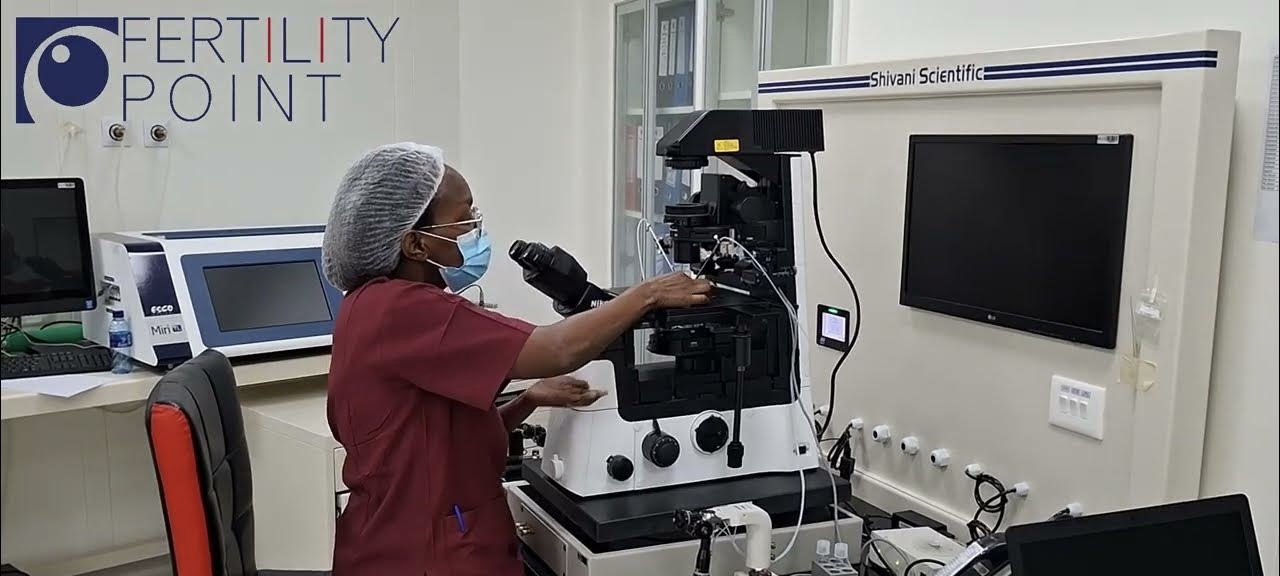
The couple sought urgent orders to compel the clinic and associated parties to preserve all IVF records from April 2024 through to the birth date. In January 2026, Justice HK Chemitei granted partial relief, ordering the clinic and all respondents to preserve records and release certain documentation. The case remains active in the High Court. Two DNA shocks. Two sets of intended parents alleging their instructions, or their very genes, were discarded somewhere inside Fertility Point’s laboratory chain. The clinic has not been found liable in either matter. What cannot be contested is that two separate families are navigating courts over children who, according to DNA evidence, are not the children they were supposed to have.
The Student Who Went In and Did Not Come Out
The genetic disaster cases are alarming enough. What a prominent Kenyan whistleblower has alleged goes further, into territory that, if proven, would constitute not medical negligence but suspected criminal concealment of a patient’s death.
On 15 April 2025, Nelson Amenya, the blue-tick activist who in 2024 single-handedly exposed the secret government deal to hand Jomo Kenyatta International Airport to the Adani Group, forcing a presidential reversal of the agreement, published a detailed account on his X platform. Amenya is not a fringe voice.
He is a recipient of Kenya’s Top 40 Under 40 recognition, a Daily Nation columnist, and a figure whose previous disclosures have been validated at the highest levels of Kenyan public life. He has, since the JKIA exposure, faced judicial reprisals and harassment extensively documented by international press freedom organisations, which has done nothing to diminish his public credibility.
In his April 2025 post, which reached at least 44,000 impressions before the linked thread was removed from public view, Amenya stated that around November of the previous year a university student walked into Fertility Point’s Upper Hill clinic to donate her eggs to a friend.
According to his account, the life-monitoring machines at the facility were non-functional, described as decoration since they stopped working sometime back.
The student died during the procedure.
Amenya’s post alleges that rather than transparently reporting the death, staff gathered oxygen tanks and moved the patient to a recovery room, apparently attempting to manage the situation internally.
The companion who had accompanied the student, growing impatient at the extended duration of the procedure, began raising questions.
A doctor from Lifecare Hospital, a facility within the same Jayesh Saini-controlled healthcare network that owns Fertility Point, was called to assess the situation.
According to Amenya, that doctor played along with clinic staff rather than independently reporting the death.
The student was then transported, Amenya alleges, not to Lifecare for emergency treatment but directly to a mortuary, with the transfer presented as a hospital referral.
Most gravely, Amenya states that a report of the death was forged with the assistance of DCI officers, and that Rufus Maina, the legal officer closely associated with Jayesh Saini’s healthcare empire, allegedly paid certain DCI personnel to bury the investigation.
Amenya further states that the deceased’s father, a university lecturer based in Eldoret, refused to speak to the media, which he characterised as consistent with the family having been warned against going public.
This publication cannot independently confirm the death at the time of writing. No death certificate, no OB number and no named victim has been provided to us. The linked portion of Amenya’s post, which presumably contained further detail, is unavailable.
Amenya’s primary account is stated as information received rather than eyewitness testimony. These are the appropriate caveats and they are stated plainly. They are not, however, reasons to ignore the allegation.
Amenya’s track record as a whistleblower is among the strongest of any public citizen in Kenya’s recent history. The specific details in his account, naming Rufus Maina, Lifecare Hospital, and a cover-up routed through the DCI, are not random. They are precisely calibrated details whose accuracy or falsity can be investigated.
The linked thread was taken down. 44,000 people had already seen it. Deletion is not denial.
The connection between Rufus Maina and Jayesh Saini’s healthcare empire is publicly documented and confirmed by multiple credible sources including the Daily Nation.
Maina is identified in corporate records as a director of companies within the Africare group, which encompasses Fertility Point, LifeCare Hospitals, Bliss Healthcare, and Nairobi West Hospital.
Amenya’s identification of Maina by name in the context of a Fertility Point incident is therefore not random. It is a specific allegation against a specific individual with a documented, verifiable role in the clinic’s ownership structure.
This publication has formally sought comment from Fertility Point, from Jayesh Saini’s office, and from the Directorate of Criminal Investigations on the allegations contained in Amenya’s post. No response had been received at the time of publication. The DCI has not publicly confirmed or denied any investigation into a patient death at Fertility Point Upper Hill. No public inquest has been announced. If the allegation is false, the clinic, Saini, Maina and the DCI have the full right and opportunity to say so, on record, to this publication.
The Doctor Who Was Thrown Out in the Dark
The two genetic catastrophe cases and the alleged death are not the only legal storms gathered over Fertility Point. Employment and Labour Relations Court records show the clinic spent years fighting its own IVF specialist after dismissing her in circumstances she characterised as unlawful, vindictive and designed to destroy her career in Kenya.
Dr Sarita Sukhija joined NMC Fertility (K) Limited on 5 June 2018 as an IVF Consultant on a salary of USD 11,000 per month. She worked there for over two and a half years. In March 2020, the clinic unilaterally cut her minimum guaranteed salary and moved her to a per-case payment structure, according to her court filings.
By 14 December 2020, the relationship had collapsed entirely. She was summoned to a meeting with the CEO and HR head and told to leave the premises immediately and return to India. Police officers were stationed at her workplace to bar her from entry.
What followed was worse. The clinic allegedly wrote to the Kenya Medical Practitioners and Dentists Board making what she described as false accusations against her, resulting in the revocation of her practising certificate. It denied her a No Objection Certificate, trapping her professionally in Kenya while simultaneously preventing her from practising medicine here. She alleged the clinic attempted to have her deported.
The Employment and Labour Relations Court delivered judgment on 4 February 2025, awarding her USD 7,811.57 in unpaid leave and air tickets. She subsequently filed a review application contending the court had failed to address her claim for terminal dues of USD 50,840. The litigation record paints a picture of an employer that weaponised regulatory bodies against a departing clinician.
The Man Behind the Machine: Jayesh Saini’s Empire
To understand what Fertility Point is, you must understand who controls it. The clinic is not an independent practice. It sits inside a sprawling corporate empire assembled by Jayesh Saini, whose Africare group encompasses LifeCare Hospitals across five major counties, Bliss Healthcare with over 65 outpatient centres in 37 counties, Dinlas Pharma, Medicross, Nairobi West Hospital, and Fertility Point Kenya. Saini presents publicly as a transformational healthcare entrepreneur. The record of his group’s encounters with Kenyan regulatory and investigative institutions tells a different story.
Saini’s companies have faced DCI scrutiny over alleged NHIF misappropriation, with investigators obtaining court orders to search his father’s hospital servers over suspected fund diversions. His Gesto Pharmaceuticals was accused of supplying substandard drugs to KEMSA. He was identified as a principal figure in the shadowy SHA digital health platform contract, a Ksh 104.8 billion arrangement linking his proxy Rufus Maina, Adani-connected entities, and President Ruto’s personal lawyer Adil Khawaja.
He was also named in a case alleging procurement of Ksh 120 million spyware for monitoring opposition figures. It was Amenya himself who first exposed Saini’s role in the Adani-JKIA deal, a disclosure for which Saini subsequently sued Amenya in France in a case that international press freedom bodies characterised as a strategic lawsuit designed to silence a whistleblower. The two men are not strangers to each other’s public allegations.
That context matters when assessing Amenya’s April 2025 post. This is not a random member of the public making an accusation against an unknown clinic. This is the same whistleblower who exposed Saini’s airport deal, now alleging a patient died inside Saini’s fertility clinic and that Saini’s legal officer paid police to suppress the investigation.
The Parent Company’s Global Fraud Implosion
Beneath the Saini layer lies a further complication: the NMC Healthcare brand itself. NMC, once listed on the London Stock Exchange and presenting as one of the largest private healthcare providers in the Middle East, collapsed in 2020 after revealing more than four billion dollars in undisclosed borrowings. Its administrators later described what happened as fraud on a massive scale.
The UK’s Financial Conduct Authority censured the company in 2023 for market manipulation and deliberate failure to disclose debts. The administrator Alvarez and Marsal launched a USD 2.5 billion negligence claim against auditor EY over its audits of NMC accounts between 2012 and 2018. Total creditor exposure across more than 80 financial institutions ran to billions of dollars.
Fertility Point’s own website continues to describe itself as part of NMC Fertility, one of the largest providers of fertility services in the world. Patients browsing its services from Upper Hill to Kisumu to Mombasa see no mention of any of this. They see success rates and state-of-the-art embryology laboratories. They do not see the court dockets.
The Regulatory Vacuum That Enables the Worst
Kenya’s fertility industry operates without a dedicated regulatory framework. The Kenya Medical Practitioners and Dentists Council licences facilities and doctors but has no statutory instrument setting specific standards for donor screening, gamete chain-of-custody protocols, mandatory national registries or disclosure obligations to patients.
The National Assembly approved amendments to the Assisted Reproductive Technology Bill in November 2025, but the legislation has not yet been fully enacted.
The High Court in Ms JW’s case stated plainly that existing contract and tort laws were developed for conventional commercial claims and do not adequately address the ethical, medical and deeply personal issues arising from fertility treatment, and that harm in these cases may not become apparent for years.
Without that framework, what fills the vacuum is institutional self-regulation, and in the case of a clinic sitting inside a corporate group with Fertility Point’s documented litigation history, that is not enough.
There is no mandatory reporting of suspected patient deaths to any independent authority. There is no prescribed protocol requiring external review when a patient does not recover from a procedure.
There is no national registry that would surface patterns of adverse events across a clinic’s years of operation. The families whose stories are now playing out in Nairobi’s courts, and possibly in a mortuary in Upper Hill, are paying for that failure in the most irreversible way.
The Children, and the Student Who Never Came Home
In the end, whatever the courts eventually determine, there are real people living with the consequences of what allegedly happened inside Fertility Point’s operations. Ms JW carries psychological suffering that began when she saw a child whose face told her something had gone catastrophically wrong.
The AAD intended parents are navigating life with a child whose biological origins are the subject of public High Court litigation. And somewhere in Eldoret, if Amenya’s account holds, a father who is a university lecturer is living with the loss of his daughter, a young woman who walked into a fertility clinic in Upper Hill to do something generous for a friend, and never walked out.
None of these outcomes are adjudicated findings. Fertility Point has the right to contest every allegation at trial. Jayesh Saini and Rufus Maina have the right to respond to the specific allegations against them, and this publication has sought that response. The DCI has the right, and the duty, to confirm or deny whether any investigation into a patient death at the clinic was ever opened or closed.
What cannot be contested is the accumulation. Two active genetic catastrophe cases in the High Court. A whistleblower of national standing alleging a covered-up death involving the clinic’s ownership network and the DCI.
A dismissed IVF consultant alleging her medical licence was weaponised against her. A parent company whose global name became synonymous with institutional fraud. A tycoon owner whose other healthcare entities have faced regulatory investigation, KEMSA drug supply accusations, NHIF fraud probes, and a legal action in France designed, according to international bodies, to silence the very whistleblower now making allegations about his fertility clinic.
Parliament has had the ART Bill since 2022 and has dawdled. The KMPDC has licenced Fertility Point as a Level 3 medical centre and said nothing public about any of these proceedings. The High Court has twice delivered language that amounts to a judicial rebuke of a regulatory system that has left patients exposed.
The clinic sells hope to the most vulnerable customers on earth: people who desperately want children, or young women who want to help someone they love have one. What the record now shows is that for at least some of those people, what they received instead was a DNA shock, a disputed embryo, an alleged corpse quietly moved to a mortuary, or a bill for suffering that no court has yet been asked to fully calculate.
Kenya Insights will continue investigating the alleged patient death. If you have information about the incident described in Nelson Amenya’s April 2025 post, or about any other adverse event at Fertility Point, contact us through secure channels listed on our website.
Kenya Insights allows guest blogging, if you want to be published on Kenya’s most authoritative and accurate blog, have an expose, news TIPS, story angles, human interest stories, drop us an email on [email protected] or via Telegram





US Embassy Defends Ebola Facility in Laikipia, Says It Doesn’t Pose Health Risks To Locals

The Man Who Owns Maraga: Inside The Sexual Harassment Scandal Threatening UGM From Within

Fertility Point’s House of Horrors: Wrong Sperm, Disputed Babies, a Dead Donor, and a Clinic That Cannot Stay Out of Court

Trump Confirms He Called Netanyahu Crazy In Phone Call

How Mohamed Jaffer Tightened His Stranglehold on Mombasa Port as Parliament Looked Away and a Dirty Fuel Scandal Engulfed His Empire

TRUST BETRAYED: How Senior DTB Bank Insiders Allegedly Looted Sh149 Million From a Customer’s Account Over Five Years

Govt Confirms NYOTA Second Grant Disbursement Date

Untouchable? How Bitok’s History Has Been Riddled With Mega Scandals and Why The PS Has Become Ruto’s Unnecessary Baggage

Google Must Let UK Publishers Opt Out Of AI Search Under New Rules

Maraga’s 2027 Bid Hit by Explosive Sexual Harassment Claims as Former Insider Alleges Cover-Up and Victim Intimidation

Why Ruto’s Favourite Candidate Adan Mohammed Could Be Locked Out of the KRA Top Job

THE GREAT HOLLOWING: How James Mworia Extracted KES 750 Million While 33,000 Centum Shareholders Lost Everything

Este Medical Kenya Fights American’s Explosive Complaints

Safaricom’s Sh1.4 Billion Reckoning: How Kenya’s Most Profitable Company Stole a Man’s Idea and Got Caught

LifeCare on the Brink: SHA Fraud, Stolen Wages, and the Rotten Empire Jayesh Saini Built

The Rot Inside Absa: How Bank Insiders Are Looting Nairobi’s Customers

The $24 Million Heist at the End of the World

THE INSURER THAT TOOK YOUR PREMIUM AND FORGOT YOUR NAME: How ICEA Lion Left a Client Begging for Sh7.8 Million Across Four Months

Denial Under Duress: The Untold Collapse Threatening David Lagat’s DL Group’s Empire

Court Confirms Safaricom Customers Data Was Sold To Betting Companies In Seven-Year Cover-Up
-
 Business2 days ago
THE GREAT HOLLOWING: How James Mworia Extracted KES 750 Million While 33,000 Centum Shareholders Lost Everything
-
 News1 week ago
Este Medical Kenya Fights American’s Explosive Complaints
-
 Investigations1 week ago
LifeCare on the Brink: SHA Fraud, Stolen Wages, and the Rotten Empire Jayesh Saini Built
-

 Americas1 week ago
Inside FAFSA Fraud: How Kenyan Cybercriminals Siphoned Millions from America’s Sh12 Billion Student Loan System
-

 News6 days ago
Eight Students Arrested In Kenya After Suspected Deadly School Arson Attack
-

 Investigations3 days ago
Betika Faces DCI Probe, Directors Arrest and License Revocation Over Massive 29.5 Million Safaricom Customers’ Data Breach
-
 Investigations1 week ago
LSK On The Spot For Renewing Rogue Lawyer Dennis Onyango’s Licence Despite Mounting Evidence He Held Foreign Investors’ Millions Hostage
-
 News4 days ago
How Uhuru’s Deal With Obama In 2015 Paved Way For America’s Ebola Plan In Kenya