
Investigations
KNH ON THE BRINK: How Corruption, Revenue Plunder and State Neglect Are Destroying Kenya’s Flagship Hospital
KNH has been systematically looted. Its procurement corridors became personal revenue streams. Four years of consecutive deficits are not a fiscal accident — they are the arithmetic of theft.

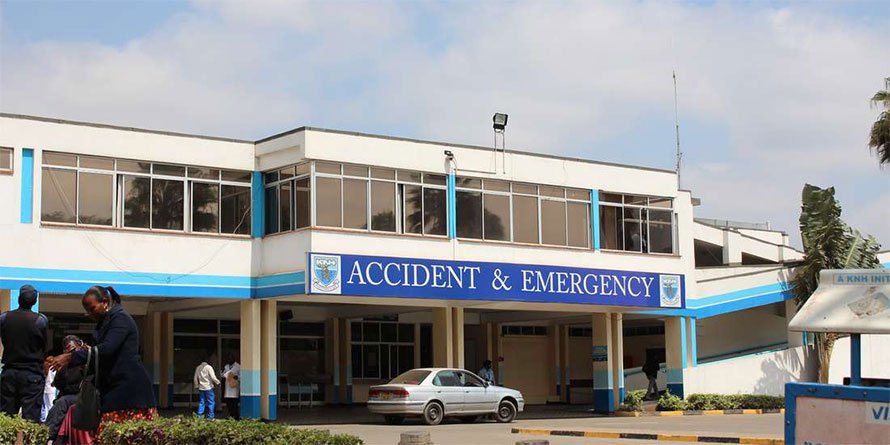
For six decades, Kenyatta National Hospital has borne the weight of a nation’s health. East and Central Africa’s largest referral hospital, a 2,000-bed institution straddling Nairobi’s Upper Hill, has cut open hearts, transplanted kidneys and held the hands of the dying poor who had nowhere else to go.
Today, it is dying itself.
A fresh audit report by Auditor-General Nancy Gathungu for the financial year ending June 30, 2025, documents the formal descent into what she terms ‘technical insolvency’ — the fourth consecutive year in which the hospital has spent more than it earned.
But the auditor’s language, clinical and measured as it must be, barely captures the full horror of what has been happening inside KNH’s walls and procurement corridors.
What the audit cannot say in polite accounting prose, Kenya Insights says plainly: KNH has been systematically looted, its revenues leaked, its infrastructure projects corrupted, and its patients — among them the most vulnerable Kenyans alive — abandoned to a collapsing institution that a succession of managers, contractors and Ministry of Health officials have treated as a personal revenue stream. Four consecutive years of deficit spending are not a fiscal accident. They are the arithmetic of theft.
KNH has been systematically looted. Its procurement corridors became personal revenue streams. Four years of consecutive deficits are not a fiscal accident — they are the arithmetic of theft.
The numbers alone are staggering.
In 2024/25, the hospital’s deficit reached Sh2.6 billion — a figure Sh2.3 billion worse than the Sh299 million shortfall recorded the previous financial year.
Its total expenditure budget stood at Sh22.5 billion yet only Sh17.5 billion in funding was received, a 22 percent underfunding that translated directly into a 19 percent under-absorption of its spending budget. The auditor notes this gap ‘may have affected the hospital’s mandate.’ It has. Patients know it. Doctors know it. The morgue knows it. The only people who appeared not to know it — or more precisely, not to care — are the network of executives, contractors and officials who have spent years feeding off an institution that is supposed to feed the sick.
THE CEO, THE OXYGEN SCANDAL, AND THE SECRET ACCOUNTS
No single episode captures the moral catastrophe at KNH more completely than the oxygen plant scandal that has consumed the institution since 2022. In that year, the Ministry of Health awarded a Sh443.6 million tender to Biomax Africa Ltd for the supply, installation and commissioning of a medical oxygen-generating plant — a plant that would produce 8,000 litres of oxygen per minute and free the hospital from its expensive dependence on commercial oxygen suppliers.
The contractor was given six months to deliver.
Three years later, the plant still does not work.
The facts that have emerged from Ethics and Anti-Corruption Commission investigations are damning. Biomax Africa, working with French manufacturer Novair Group, submitted bid documents that were forged.
The Kenya Bureau of Standards quality approval marks were fake.
The performance bonds from CIC Insurance and Intra Africa Assurance were fabricated.
The work history citing a similar project in Machakos County was invented. Former Health Principal Secretary Susan Mochache and other Ministry officials who sat on the tender evaluation committee are accused by the EACC of failing to conduct the most basic due diligence — a failure that handed a Sh443 million public contract to a company armed with fraudulent papers.
The EACC forwarded its investigation report to Director of Public Prosecutions Renson Ingonga in June 2025 recommending that Mochache, Biomax Director Leonard Muriuki Njeru and ten other suspects be prosecuted. The DPP was still reviewing the file as of publication.
While the plant collected dust, KNH was haemorrhaging cash buying oxygen from private vendors.
Between July 2023 and February 2024 alone, the hospital spent more than Sh168 million on liquid oxygen.
Since 2022, when the contract was signed, the institution has spent more than Sh565 million purchasing oxygen externally — money that would have been unnecessary had the plant been delivered.
At one point, the oxygen purity coming out of the plant was as low as 60 percent — far below the 95 percent required for medical use — meaning that even when the plant briefly operated, it was pumping substandard air into the lungs of critically ill patients.
This detail alone should have triggered criminal proceedings.
Instead, KNH granted Biomax Africa at least three contract extensions.
Since 2022, KNH has spent over Sh565 million buying oxygen from private vendors — wasted because a Sh443 million plant, paid for by Kenyans, was delivered on forged documents and still does not work.
At the centre of the scandal is Dr Evanson Njoroge Kamuri, the dermatologist-turned-CEO who ran KNH from 2019 until his suspension in mid-2025.
In May 2024, the EACC obtained court orders freezing Sh28 million in Kamuri’s Housing Finance accounts.
A month later, the High Court expanded the freeze to Sh48.5 million held across eight accounts at HFC Bank, National Bank and Standard Chartered, while blocking him from transacting six parcels of land in Nairobi, Kirinyaga and Kajiado.
The EACC’s affidavit stated preliminary investigations found Kamuri had accumulated assets not commensurate with his known income ‘to a tune of Sh800 million’ on a gross monthly salary of Sh278,725.
By August 2025, having concluded its investigations, the EACC returned to court with findings that Kamuri had built assets worth Sh466.5 million between 2015 and 2024, of which Sh229.4 million remained unexplained.
Anti-Corruption Court judge Lucy Njuguna granted preservation orders on those assets pending forfeiture proceedings.
The EACC alleges Kamuri endorsed irregular payments totalling Sh290 million on the oxygen plant contract as well as on a second troubled tender for the hospital’s Enterprise Resource Planning system.
The ERP contract — also flagged in the probe — was meant to digitise KNH’s hospital management but became another procurement controversy that investigators say was used to channel funds to entities linked to the CEO.
Kamuri has denied wrongdoing, insisting the Ministry bore primary responsibility as the procuring entity.
Whether his repeated letters to then PS Harry Kimtai were sincere calls for help or calculated paper trails against a mounting legal threat is a question the DPP will eventually have to answer.
The scandal took a more lurid turn when the EACC and the Financial Reporting Centre discovered that Sh4 million linked to Kamuri had been deposited in May 2024 into the Standard Chartered account of Jacqueline Kavete Mbuli, who told the court she had no idea why the money appeared there and had tried to have the bank reverse it.
Justice Njuguna extended the preservation order on those funds in April 2025, ruling that the need to prevent dissipation of assets under investigation outweighed the CEO’s objections.
Whistleblowers within KNH, speaking to Kenya Insights on condition of anonymity, allege the pattern was broader — that Kamuri used associates to route cash, their loyalty and career advancement intertwined with financial complicity.
On December 29, 2024, Kamuri attended a Board of Management meeting and refused to sign a report that documented anomalies in the Biomax contract, arguing the board had no power to investigate procurement matters.
Seven months earlier, the EACC had already opened its file on exactly those matters. Within weeks, he was suspended.
SH6.7 BILLION IN ROTTING DEBTS AND SH188 MILLION THAT VANISHED
The audit’s financial findings go well beyond the oxygen scandal.
The auditor-general reveals that nearly Sh6.7 billion in patient debts have remained uncollected for more than three years.
Despite the hospital having a credit policy, its unpaid bills grew by over Sh1.6 billion in a single financial year — evidence of a debt recovery operation so dysfunctional it can barely be called one.
The crisis has a face: 17,906 patients who received treatment at KNH and walked out without paying, leaving behind Sh866.6 million in unpaid bills.
The hospital spent Sh74.5 million on outsourced security in 2024/25 yet those guards could not stop nearly 18,000 patients from absconding.
Two murders also took place on the hospital premises during the same period, raising questions about what the security contract was actually purchasing.
More alarming than the absconded patients is Sh188.8 million in revenue the audit found was never officially receipted.
The hospital reported earning over Sh9.5 billion from medical services in 2024/25, but audit teams discovered this substantial sum floating outside the official receipting system, making it impossible to verify whether the income declared was complete or accurate.
When revenue is collected but not receipted, the question is not complicated: where did it go? KNH has not answered that question publicly. The auditor has asked it in the gentlest possible official language. The money, for now, remains a ghost.
Sh188.8 million in revenue was collected but never officially receipted. When money is collected and not recorded, the question is not complicated: where did it go?
The audit further exposes a Sh110 million discrepancy in what KNH says it owes the Kenya Medical Supplies Authority and what KEMSA’s own records show. KNH accounts declare a debt of Sh6.7 million to the supply authority.
KEMSA’s records put the figure at over Sh117 million. The gap of more than Sh110 million is unexplained.
This is not a rounding error.
This is a hospital that either does not know what it owes its medical supplier, or does not want it known.
The finding raises fundamental questions about how KNH manages its procurement liabilities and whether suppliers are being paid double, not at all, or through channels that bypass official accounting entirely.
In the background of all this sits the government’s own failure to honour its obligations.
The audit reveals Sh268 million in grant money owed by the government to KNH for more than three years, with no payment plan and no timeline.
The auditor raised serious doubts about whether this money will ever be recovered.
Combined with the 22 percent underfunding of KNH’s budget, the picture that emerges is of a government that demands accountability from its hospital while exempting itself from the basic obligation of paying what it owes.
A SH10.2 BILLION PENSION HOLE AND THOUSANDS OF RETIREES AT RISK
Hidden beneath the procurement scandals and revenue leakages is a slow-motion human catastrophe that will outlast any individual corruption case.
KNH’s staff pension scheme is sitting on a Sh10.2 billion deficit.
The scheme requires Sh14.6 billion in assets to cover its obligations to current and future retirees. It holds Sh4.3 billion.
That means for every ten shillings it needs, it has less than three.
Thousands of KNH employees — nurses, doctors, radiographers, lab technicians — who have spent their working lives in public service are staring at a retirement system that cannot pay them.
KNH has repeatedly sought government intervention to bridge this gap. The audit found no evidence that any funding has been received and no alternative plan exists to manage the growing liability.
Without a bailout, the hospital faces the prospect of legal action from retirees and the complete collapse of its pension obligations.
A hospital already in technical insolvency, carrying a Sh10.2 billion pension hole it cannot fill, is a hospital that could stop being able to pay its retired staff at any moment.
It is also a hospital struggling to retain its current workforce, who are watching this unfold in real time and calculating their exit.
SHA BILLIONS WITHHELD AS THE HOSPITAL BLEEDS
KNH’s financial collapse has been deepened by the chaotic rollout of the Social Health Authority, the government’s flagship replacement for the National Hospital Insurance Fund.
SHA was launched in October 2024 with promises of faster, more transparent reimbursements.
The reality has been a disaster for facilities across Kenya, and KNH has been no exception. Despite collecting between Sh40 million and Sh60 million daily from patients, KNH was being starved of operational funds by a National Treasury directive, creating critical shortages of blood test reagents, essential drugs and nutritional supplies for inpatients.
The hospital was simultaneously owed approximately Sh1.58 billion by SHA in pending claims.
Nationally, the SHA scandal has taken on dimensions that dwarf individual hospital mismanagement.
A Ministry of Health audit revealed in January 2026 that the authority lost Sh11 billion to fraud between October 2024 and April 2025, with the bulk of false claims submitted by ghost hospitals that existed only on paper.
SHA had paid out Sh50 billion of the Sh93 billion in claims submitted since its inception — a reimbursement rate that hospital associations say proves the scheme cannot cover what it has promised. Parliament’s Health Committee was told SHA owed providers Sh30 billion in pending bills, some inherited from NHIF.
The scheme sold to Kenyans as universal healthcare has become another mechanism for looting, and KNH, already technically insolvent, is caught in the crossfire.
SHA lost Sh11 billion to fraud in its first seven months. KNH is owed Sh1.58 billion in pending claims. The scheme sold as universal healthcare has become another vehicle for looting while patients go without drugs, oxygen and food.
STALLED INFRASTRUCTURE, BROKEN EQUIPMENT AND DEAD PATIENTS
The oxygen plant is not the only stalled project at KNH.
The audit documents a pattern of infrastructure failure that has cost taxpayers hundreds of millions without producing functioning services.
The Sh500 million allocation for a linear accelerator for cancer treatment went unspent because the actual funds were never released.
Existing cancer treatment equipment continues to fail, with patients facing prolonged interruptions to radiotherapy.
Meanwhile, the hospital continues to source oxygen at costs exceeding Sh596 million for the year, keeping 700 patients reliant on external supply for a gas that was supposed to be produced on-site three years ago.
The human consequences of these failures are not abstract.
KNH treated nearly 500,000 Kenyans in the year to June 2025 — 390,000 outpatients and 65,000 inpatients. It performed 37,318 specialised surgeries, 1,045 heart surgeries and 22 kidney implants.
These are people whose lives depended on the hospital functioning.
Two of them were murdered in the wards. Kennedy Kalombotole, arrested in July 2025 for killing Edward Maingi Ndegwa in Ward 7B, was also a suspect in the February 2025 killing of Gilbert Kinyua. Court documents revealed the suspect had first been admitted to KNH’s Intensive Care Unit in November 2022 and migrated through the wards for years without being discharged or expelled.
Security costing Sh74.5 million annually could not detect this. It also could not stop 17,906 patients walking out with nearly Sh867 million in unpaid bills.
The forensic audit KNH itself commissioned in 2023 — to investigate payment irregularities where payee details were manipulated to divert funds to unintended recipients, including fictitious, inflated and unapproved payments — represents yet another thread in the same unravelling cloth. Whether those investigations produced prosecutions has not been confirmed on public record.
The hospital has not updated the public.
Parliament has not pressed for answers. The pattern continues.
THE SYSTEM THAT MADE THIS POSSIBLE
The collapse of KNH is not the story of one bad CEO or one fraudulent contractor.
It is the story of a system that created the conditions for all of it: procurement structures that allow the Ministry of Health to award tenders worth hundreds of millions to entities with forged documents; oversight frameworks so porous that a contractor can deliver oxygen at 60 percent purity and receive extensions rather than termination; and a government that chronically underfunds its flagship hospital while demanding it maintain world-class healthcare standards.
Whistleblowers who spoke to Kenya Insights described KNH under recent leadership as a personal fiefdom where loyalty was rewarded, resistance punished, and the hospital’s considerable financial flows treated as accessible to those with the right connections.
The EACC’s own documents allege that PS Harry Kimtai was approached to assist the CEO amid the oxygen scandal probe, with a whistleblower dossier claiming Sh20 million was delivered to the PS and Sh80 million routed through legislators on the parliamentary health committee.
These are allegations that Kimtai and the named legislators have denied. But the EACC found the dossier sufficiently credible to incorporate into its investigative trail — a detail that should alarm every Kenyan who pays taxes and, one day, may need care from a hospital that has become a crime scene.
KNH Acting CEO Dr Richard Lesiyampe told Kenya Insights that matters raised in the audit are before the Public Investments Committee of Parliament and that the hospital ‘remains committed to transparency, accountability, and continuous improvement.’
It is the kind of statement institutions issue when they have no better answer. Parliament’s oversight is real and welcome. But Kenya’s history of parliamentary health committee hearings producing accountability rather than additional negotiating leverage for the accused is not encouraging.
THE VERDICT
Kenyatta National Hospital is not facing imminent collapse because it is poorly managed.
It is facing imminent collapse because it has been deliberately milked.
A Sh443 million oxygen plant that does not work. Sh188.8 million in unreceipted revenue.
A Sh10.2 billion pension hole the government refuses to fill. Nearly Sh6.7 billion in uncollected debts.
A former CEO whose assets have been frozen three times over by the same commission that has now recommended his prosecution.
An SHA scheme haemorrhaging billions to ghost facilities while the real hospital that needs the money descends into technical insolvency. A security contract worth Sh74.5 million that could not stop 18,000 patients walking out on their bills or a murder suspect living in the wards for years.
Every shilling stolen from KNH is a shilling that cannot buy a reagent, cannot stock a ward with drugs, cannot pay a retiring nurse her pension, cannot repair a linear accelerator so that a cancer patient does not die waiting for a machine that costs less than what was paid for an oxygen plant that pumps air at half the required purity.
The institution that millions of Kenyans depend on as their last resort is being destroyed from within. That destruction has names, court files, frozen bank accounts and forged tender documents attached to it.
Kenya Insights calls on the DPP to move without further delay on the EACC’s June 2025 recommendations.
We call on the National Treasury to immediately fund the pension deficit and the SHA reimbursement backlog owed to KNH.
We call on Parliament to stop accepting money from people it is supposed to be investigating.
And we call on every Kenyan who has ever taken a sick child or ageing parent to Kenyatta National Hospital to understand that what is being destroyed is theirs — and to demand that it stop.
Kenya Insights allows guest blogging, if you want to be published on Kenya’s most authoritative and accurate blog, have an expose, news TIPS, story angles, human interest stories, drop us an email on [email protected] or via Telegram


Nyali MP Moha Jicho Pevu Caught Up In Alleged Sh44 Million KPA Debt Scam

Somalia Deputy PM Held at JKIA, Deported Over Questionable Acquisition of Kenyan Passport

The White-Coat Heist: How MP Shah Hospital Ran a Decade-Long Double-Extraction Racket While Hiding Behind Charity Status

The Patriarch, His Children, and a Buried Sh3.9 Billion Fraud: The Story of Titus Muya That Kenya Was Never Meant to Read

The Founder’s Ransom: How Titus Muya Had to Be Paid Sh231 Million to Let Go of Family Bank and Why That Bill Is Now Yours

Kenya’s gambling industry pushes back against a licensing bill

Kenya Airways Sinks Into Deeper Turbulence As American Supplier Sues In New York Court Over Sh129 Million Unpaid Debts

Kenyan player wins a Ksh3.2 million jackpot

IEBC Sets August 10 Date For 2027 General Election

Furious Ruto Lashes Out at Gideon Moi Over Repeated ‘Blackmail, Extortionist’ Headlines on The Standard and KTN

Businessman Philip Waithaka Kinuthia’s Minor Son Allegedly Drove Drunk, Killed Two Peponi Students in Ngong Road Horror Crash as Claims of Cover-Up Intensify

Inside NCBA’s Decline: How a Banking Giant Lost Its Strategic Edge

South Sudan: Adut Salva Kiir’s Shadow Treasury Exposed

Cement, Cash and Courts: How the Hashu Dynasty Crushed the Ramji Brothers for Fourteen Years and Why the Walls Are Now Closing In

Standard Chartered Ghosts Haunt Joshua Oigara At Stanbic As Whistleblower Spills Beans

Inside The Urban Planning Cartel That Owns Nairobi

THE VULTURE AND THE SCHEME How Nairobi West Hospital Became the Most Dangerous Institution in Kenya’s SHA Ecosystem and Why the Books Must Be Audited Now

The President’s Daughter and The Missing Witness: How Adut Salva Kiir’s Shadow Treasury Silenced Its Most Dangerous Critic

How Adil Popat Saved His Empire On The Eve Of Imperial Bank Collapse and Why Kenya’s Mainstream Media Buried The Story
The Patriarch, His Children, and a Buried Sh3.9 Billion Fraud: The Story of Titus Muya That Kenya Was Never Meant to Read
-
 News2 weeks ago
Businessman Philip Waithaka Kinuthia’s Minor Son Allegedly Drove Drunk, Killed Two Peponi Students in Ngong Road Horror Crash as Claims of Cover-Up Intensify
-
 Investigations1 week ago
THE VULTURE AND THE SCHEME How Nairobi West Hospital Became the Most Dangerous Institution in Kenya’s SHA Ecosystem and Why the Books Must Be Audited Now
-
 Business23 hours ago
The Patriarch, His Children, and a Buried Sh3.9 Billion Fraud: The Story of Titus Muya That Kenya Was Never Meant to Read
-
 Business5 days ago
BURRIED TWICE: The Victoria Bank CEO Yogesh Pattni Files
-
 Business1 week ago
Inside the Billion-Shilling Betrayal: How Senior Treasury Officials Plundered a UN Poverty Fund and Built a Real Estate Empire on the Backs of Kenya’s Rural Poor
-
 Business2 weeks ago
The Listing That Doesn’t Lie: What the Market Isn’t Saying About Family Bank’s NSE Debut
-

 Business1 week ago
The Banker Who Walked Away: How Yogesh Pattni Survived a Financial Crime Scandal That Shook Kenya
-
 News7 days ago
My Life Is In Danger: Investor Drops Bombshell Expose On Thomas Ogutu CEO VeGrid Ltd And Fugitive Nairobi CEC Charles Kerich – DCI Inaction And Corruption Network Exposed