
Business
Sold, Pledged and Vanished: The Mounting Controversies Over The Saruni Apartments On Riverside Drive
A luxury apartment at The Saruni, marketed as Nairobi’s sanctuary of privilege, has become the centre of a court battle exposing how property in Kenya’s high-end developments can be pledged as debt security, locked in legal disputes and left in limbo, while investors and creditors alike are left scrambling. Kenya Insights investigates a transaction gone badly wrong, and asks the hard question: who was protecting the buyer?

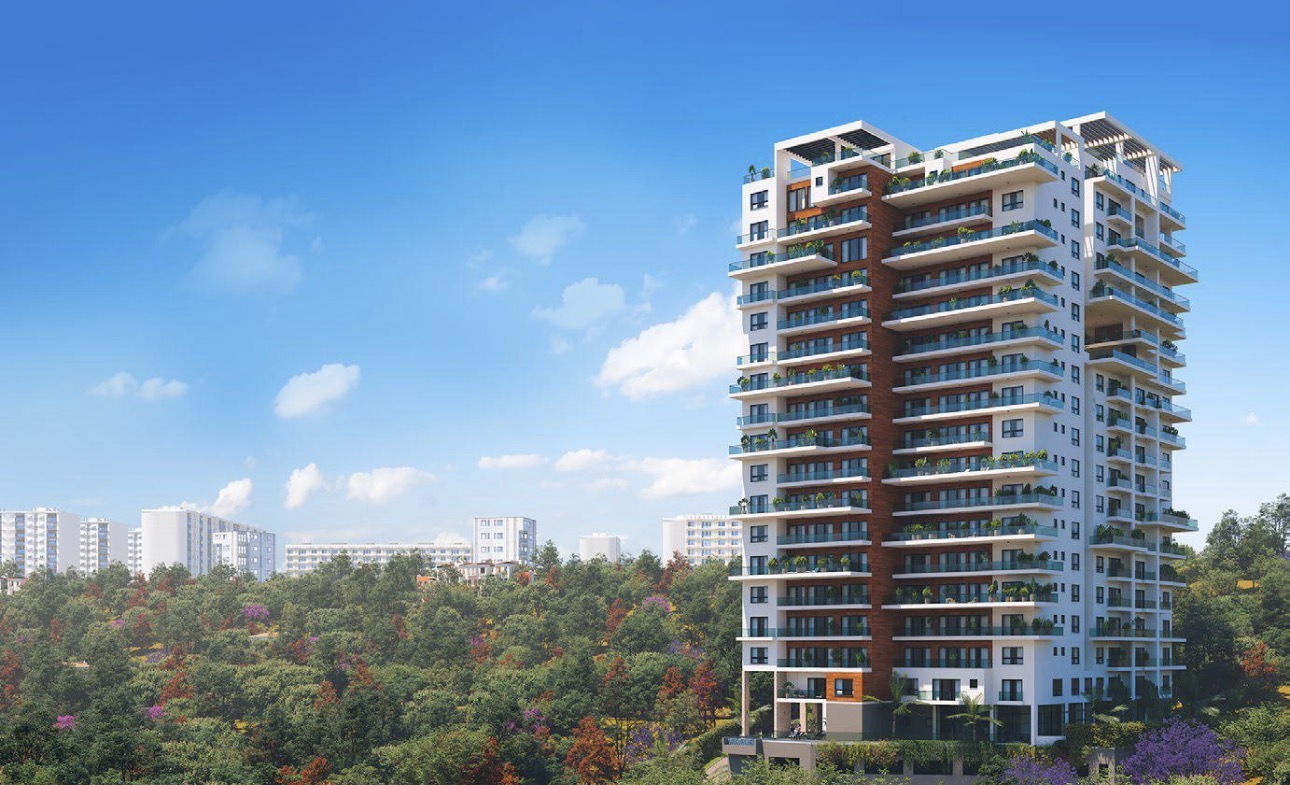
In the Nairobi of the brochure, The Saruni is a word that evokes serenity. The name is drawn from the Samburu language, meaning sanctuary, and the 19-floor residential tower rising from the leafy banks of Riverside Drive was designed to live up to that promise.
Sky gardens, an infinity pool, heated steam rooms, panoramic views, duplex penthouses priced upward of Ksh 93 million. This is the address where Nairobi’s elite, its successful entrepreneurs, its diaspora returnees, come to park their money in bricks and mortar and sleep soundly.
They might sleep less soundly today. Court documents filed in Nairobi reveal that at least one unit inside The Saruni, Apartment D-1406, a two-bedroom flat with an allocated parking bay, has become the subject of a legal tug-of-war so tangled it raises fundamental questions about the integrity of property transactions at the development, the adequacy of protections for buyers and creditors in Kenya’s luxury real estate sector, and what happens when the person holding your paperwork boards a flight and does not come back.
The man who pledged the apartment as security for a Ksh 222 million debt travelled to India for his wedding in December 2024. He has not returned. His phone goes unanswered.
THE DEAL, THE DEBT AND THE DISAPPEARANCE
The facts as pleaded in court are stark. Vora Dhrumit Divyesh purchased Apartment D-1406 at The Saruni from the developer, Riverside Strand Property Development Company Limited, under a sale agreement dated June 21, 2023.
The price was not disclosed in available filings, but two-bedroom units at The Saruni are publicly listed by agents from Ksh 21.4 million upward, with some listings for higher-floor units touching Ksh 25 million and beyond.
By December 5, 2024, Dhrumit found himself in significant financial difficulty. On that date, he signed a Debt Acknowledgment and Settlement Agreement with Dhir Kenya Ltd, acknowledging a total indebtedness of Ksh 222,842,178.
To secure partial repayment of that debt amounting to Ksh 14,000,000, Dhrumit agreed to transfer the Saruni apartment to Dhir Kenya Ltd, subject to obtaining the prior written consent of Riverside Strand, as mandated by Clause 7 of his original sale agreement with the developer.
That clause, a standard protection for developers against rogue assignments, required Dhrumit to obtain written approval before transferring or assigning his rights in the unit to any third party.
The deadline for obtaining that consent was January 30, 2025. It came and went.
Dhrumit, who had travelled to India in December 2024 to attend his own wedding, never returned. Dhir Kenya Ltd says it has been unable to reach him. His phone goes unanswered. His whereabouts are unknown.
The debt, all Ksh 222.8 million of it, remains unpaid. The apartment, meanwhile, sits in a grey zone, neither transferred to Dhir Kenya Ltd nor returned to the developer, and potentially available to be transferred by Dhrumit to any willing buyer who does not know about the settlement agreement.
Dhir Kenya Ltd has now moved to the High Court seeking a temporary injunction to prevent Dhrumit, or anyone acting on his behalf, from obtaining Riverside Strand’s consent to transfer the apartment to any party other than itself.
The company argues, with considerable force, that it faces irreparable harm if the court does not intervene. Money owed. Asset pledged. Debtor fled. No injunction means the apartment could be silently sold from under them.
THE SARUNI: LUXURY THAT CANNOT PROTECT ITSELF FROM ITS OWN BUYERS
To understand the full dimensions of this controversy, it is necessary to understand what The Saruni is and what it is not.
Developed by Riverside Strand Property Development Company Limited, the project sits on a subdivided portion of Land Reference Number 991/6 along Riverside Drive, one of Nairobi’s most coveted residential corridors.
The project team is credentialed. Turner and Townsend serve as project managers. Innovative Planning and Design Consultants are the architects. Solitaire Construction Limited handled the main contracting works. The building has 95 units across 18 floors, with 131 parking slots and 13 visitor bays.
The brochure prices are eye-watering. One-bedroom units are listed from Ksh 12.8 million, two-bedrooms from Ksh 21.4 million, three-bedrooms from Ksh 39.6 million, and four-bedroom duplex penthouses from Ksh 93.2 million.
For mortgage buyers, agents impose an additional 20 percent premium.
This is not mass-market housing. The buyers here are people of means, professionals, entrepreneurs, investors. And yet, in the case of Apartment D-1406, one of those buyers managed to pledge the unit as collateral on a debt of Ksh 222 million without the developer apparently knowing until the matter ended up in court.
That is the precise danger that Clause 7 of the sale agreement was designed to prevent. Standard in off-plan and new development contracts, the no-transfer-without-consent clause is meant to ensure developers maintain control over who owns units in their buildings, protect the quality of the buyer register and prevent buyers from making unauthorised assignments.
But the clause is only as strong as the ability to enforce it. If a buyer pledges the unit informally as debt security through a private agreement, and the developer has no knowledge of that arrangement, the clause offers no protection at all.
Dhir Kenya Ltd did not buy the apartment from Dhrumit. It simply agreed to accept a transfer of the apartment as security for debt. The developer, Riverside Strand, was not a party to that arrangement.
A Ksh 222 million debt. A pledged apartment. A developer excluded from a private agreement they were contractually central to. This is how luxury property in Nairobi can become a financial weapon.
A PATTERN KENYA HAS SEEN BEFORE
The Saruni case is not an isolated incident. It sits within a deeply troubling pattern in Kenya’s real estate sector, one that stretches from the upmarket towers of Westlands and Riverside to the suburban off-plan estates of Ruiru, Athi River and the Coast, and has repeatedly demonstrated that buying property in Kenya, even at premium prices, is no guarantee of security.
The most spectacular recent collapse is that of Cytonn Investments, whose high-yield real estate vehicles sucked in over Ksh 11 billion from more than 3,000 investors before imploding in a cascade of defaults, insolvency petitions and ultimately court-ordered liquidation.
The Court of Appeal, upholding the High Court’s findings in November 2025, endorsed language describing Cytonn’s financial architecture as a scheme akin to fraud.
The properties now heading to auction under the Official Receiver include marquee Nairobi developments: The Alma valued at Ksh 1.43 billion, Kilimani apartments at Ksh 1.73 billion, Amara Ridge at Ksh 502 million.
Thousands of ordinary Kenyans, retirees, salaried workers, diaspora professionals, are still waiting to know what fraction of their savings they will recover.
Along Nairobi’s very own Riverside Drive, an earlier property dispute of similar complexity resulted in a decade-long legal battle that eventually reached the Supreme Court.
The dispute between Cape Holdings and Synergy Industrial Credit over 14 Riverside Drive saw Synergy pay approximately Ksh 750 million for office blocks under construction, only to allege that the developer refused to transfer the units and diverted funds.
The Supreme Court ultimately declined jurisdiction to hear the final appeal, leaving Cape Holdings facing a multi-billion shilling exposure.
In the off-plan segment, the fraud pattern is even more industrial.
Willstone Homes, Certified Homes, Mahiga Homes and a constellation of other developers have been exposed in investigations by Kenya Insights and the Daily Nation as collecting hundreds of millions of shillings from local and diaspora buyers for projects that either stalled, were never built, or concealed fraudulent land transactions.
In one egregious case documented by this publication, US-based investor Mellen Bwari Okari paid Ksh 57 million for five maisonettes in a White Park Gardens development, only to discover that the land described in her sale agreements was not in Ruai East, Nairobi County as stated, but in Mavoko, Machakos County. Worse still, the title number Block 3/90489 cited in all documents did not exist at the date of filing.
William Kiama paid Ksh 8 million for a one-bedroom apartment in Westlands through Vaal Real Estate Limited. Before he could take possession, the developer had sold the same unit to another buyer for Ksh 14 million, then attempted to terminate Kiama’s agreement while refusing to refund his money in full, claiming it was Kiama who had breached.
An arbitrator disagreed, awarding the full refund plus Ksh 4 million in punitive damages and 16 percent commercial interest backdated to 2021.
The Real Estate Stakeholders Association chairman, James Kinyua, admitted openly to the Daily Nation that there is a big problem in the industry, and that most people are not honest.
He acknowledged genuine concerns from both local and diaspora buyers and conceded that some companies had been deregistered from the association. The self-regulation, such as it is, has patently failed.
THE LEGAL MINEFIELD: WHAT THE SARUNI CASE REVEALS ABOUT BUYER RISK
The Dhir Kenya Ltd application exposes a structural vulnerability that sits not just in The Saruni but across every property development in Kenya where units are sold off-plan or on instalment.
When a buyer like Dhrumit signs a sale agreement with a developer, they acquire rights to the property but typically do not receive a title deed until completion and final payment. In the interim, the unit exists in a legal limbo.
The developer holds the underlying title.
The buyer holds contractual rights. And those contractual rights, depending on how the sale agreement is drafted, may be transferable, assignable, or usable as collateral, with or without the developer’s knowledge.
Clause 7 of Dhrumit’s sale agreement with Riverside Strand required written consent before any transfer.
But private debt arrangements, like the Debt Acknowledgment and Settlement Agreement Dhrumit signed with Dhir Kenya Ltd, operate outside the formal title system.
There is no charge registered at the Land Registry.
There is no caveat on the title. Riverside Strand did not register a caution on its own property against Dhrumit’s rights.
The result is that a private creditor, Dhir Kenya Ltd, holds a contractual promise to receive a transfer that requires the developer’s consent, and the developer has no formal legal obligation to give that consent, while the debtor has absconded to a foreign country.
This is precisely the scenario that causes irreparable harm, as Dhir Kenya Ltd correctly argues in its court filing.
If Dhrumit returns, or if someone acting under his authority approaches Riverside Strand and obtains consent to transfer the apartment to a different third party, a bona fide purchaser who acquires the unit in good faith and for value will generally be protected by law.
Dhir Kenya Ltd would then be left holding nothing but an unenforceable agreement against a man who may never set foot in Kenya again.
The Kenyan property system has a catastrophic blind spot: private debt agreements pledging property rights can be entered into, breached and exploited without triggering any formal legal notification to developers, registrars or future buyers.
THE DEVELOPER’S EXPOSURE
Riverside Strand Property Development Company is not accused of wrongdoing in this matter. The company appears to be caught, like many developers, in the cross-fire of transactions it had no hand in creating.
But the controversy does raise legitimate questions about the due diligence regime at The Saruni and similar high-end developments.
What mechanisms, if any, does Riverside Strand have to monitor whether buyers have made private assignments or pledged their unit rights as collateral?
How does the developer satisfy itself, before giving the consent required by Clause 7, that no other party has a prior claim to the transfer?
The fact that Dhir Kenya Ltd was forced to run to court suggests that the developer was not on notice of the settlement agreement before the injunction was sought. That is a governance gap.
Moreover, the question of completion timelines adds another layer of concern.
Estate Intel lists The Saruni’s expected completion as December 2025. Other marketing materials variously state June 2025 and December 2027 for related or comparable phases. Multiple listing agents are actively selling units.
The development’s public profile continues to grow. But a buyer who purchases today has no way of knowing, from publicly available information, how many units at the development are subject to private debt agreements, legal disputes, caveats or informal assignments.
That information does not exist in any accessible registry.
DUE DILIGENCE CHECKLIST: WHAT BUYERS MUST DO BEFORE SIGNING
For any investor considering a purchase at The Saruni or any comparable development in Kenya, the Dhir Kenya Ltd case is a red alert. The following checks, non-negotiable, must be completed before any money changes hands.
|
INVESTOR DUE DILIGENCE: THE SARUNI AND ALL LUXURY OFF-PLAN PURCHASES IN KENYA |
|
|
Official Land Search |
Conduct a search at the Land Registry on the parent title (LR No. 991/6 in this case) to confirm ownership, charges, cautions and restrictions before signing any agreement. |
|
Caveat / Caution Check |
Confirm no cautions, caveats or restrictions have been registered against the individual unit or the parent title by prior buyers, creditors or courts. |
|
Developer’s Title |
Verify that the developer holds clean title and that no financial institution has charged the land as security for construction financing that could supersede buyer rights. |
|
Unit-Specific History |
Ask the developer for a history of the specific unit you are buying. Has it been previously sold, assigned or pledged? Is there a prior sale agreement on record? |
|
Escrow or Stakeholder |
Insist that purchase funds be held in an independent escrow or by a reputable stakeholder pending title transfer, not paid directly to the developer’s operational account. |
|
Consent Clause |
Understand all transfer restriction clauses in your sale agreement. Know what triggers the developer’s right to withhold consent and what happens if a prior buyer has made private arrangements affecting the unit. |
|
Developer Litigation Search |
Search the cause list at the High Court and Environment and Land Court for any suits involving the developer, the project company or directors. |
|
Company Search |
Conduct a company search at the Business Registration Service on the developer entity. Check directorship, financial filing history and any winding-up petitions. |
|
Completion Timeline |
Demand a written, legally enforceable completion timeline with liquidated damages for delay. Verbal assurances are worthless. |
|
Independent Legal Advice |
Retain your own advocate, one not recommended by the developer, to review all documents. A standard sale agreement is not neutral. |
THE BIGGER PICTURE: REGULATORY FAILURE IN PLAIN SIGHT
Kenya does not have a dedicated property developer licensing and oversight regime with teeth. The National Construction Authority regulates construction but not the sale of units.
The Estate Agents Registration Board regulates agents but not developers.
The Capital Markets Authority stepped back from Cytonn’s unregulated products, leaving investors exposed.
No single body exists with the mandate and power to compel developers to disclose litigation, unit-specific encumbrances or prior assignment claims to prospective buyers.
The result is a market where luxury branding and premium pricing create a false sense of security. A Ksh 25 million apartment does not come with Ksh 25 million worth of legal protection.
It comes with the same inadequate disclosure environment as a Ksh 2 million plot in a peri-urban scheme.
Industry insiders have repeatedly called for mandatory escrow arrangements, stricter developer licensing, a centralised registry of unit-level encumbrances and criminal penalties for developers and individuals who make fraudulent assignments.
The legislative response has been, at best, incremental.
Meanwhile, the court system absorbs case after case.
The Cytonn liquidation is still grinding through asset realisation years after it began. The 14 Riverside Drive dispute took a decade to reach the Supreme Court and consumed vast legal resources on all sides.
The Saruni injunction application is, by comparison, a relatively simple matter. But it points to the same systemic failure.
Real estate in Kenya is where savings go to become legal disputes.
Until the regulatory architecture catches up with the sophistication of the transactions it governs, no address, however prestigious, can fully protect the buyer who does not protect themselves.
Kenya Insights allows guest blogging, if you want to be published on Kenya’s most authoritative and accurate blog, have an expose, news TIPS, story angles, human interest stories, drop us an email on [email protected] or via Telegram


Kenyan player wins a Ksh3.2 million jackpot

IEBC Sets August 10 Date For 2027 General Election

Furious Ruto Lashes Out at Gideon Moi Over Repeated ‘Blackmail, Extortionist’ Headlines on The Standard and KTN

Mombasa Gripped by ‘Male Organ Theft’ Panic as Social Media Fuels Mob Attacks and Fear

TOO MUCH PR, NOTHING TO SEE: How Gladys Wanga Built a Perfect Story of Transformation While Homa Bay Bled

Netanyahu Says Israel Must ‘Break Free from Dependence’ After Tensions With Trump Administration

Niger pulls Out Of International Criminal Court After Calling It Neo-Colonialist

Kenya Awards Sh154 Billion JKIA Upgrade Tender To Chinese Firm CRBC

The Untouchable: How KURA’s Silas Kinoti Has Survived A Decade Of Corruption Storms While Kenya’s Roads Bled

Fake Papers, Dirty Millions And The Analo Connect: How Kitisuru MCA Alvin Palapala Built a Shadow Empire Inside Nairobi’s Planning Machine

Businessman Philip Waithaka Kinuthia’s Minor Son Allegedly Drove Drunk, Killed Two Peponi Students in Ngong Road Horror Crash as Claims of Cover-Up Intensify

Inside NCBA’s Decline: How a Banking Giant Lost Its Strategic Edge

South Sudan: Adut Salva Kiir’s Shadow Treasury Exposed

Cement, Cash and Courts: How the Hashu Dynasty Crushed the Ramji Brothers for Fourteen Years and Why the Walls Are Now Closing In

Standard Chartered Ghosts Haunt Joshua Oigara At Stanbic As Whistleblower Spills Beans

Inside The Urban Planning Cartel That Owns Nairobi

THE VULTURE AND THE SCHEME How Nairobi West Hospital Became the Most Dangerous Institution in Kenya’s SHA Ecosystem and Why the Books Must Be Audited Now

The President’s Daughter and The Missing Witness: How Adut Salva Kiir’s Shadow Treasury Silenced Its Most Dangerous Critic

How Adil Popat Saved His Empire On The Eve Of Imperial Bank Collapse and Why Kenya’s Mainstream Media Buried The Story

Why John Ngumi Is Running From the EACC and Why the Sh415 Million Payday May Be the Least of His Worries
-
 News1 week ago
Businessman Philip Waithaka Kinuthia’s Minor Son Allegedly Drove Drunk, Killed Two Peponi Students in Ngong Road Horror Crash as Claims of Cover-Up Intensify
-
 Africa2 weeks ago
South Sudan: Adut Salva Kiir’s Shadow Treasury Exposed
-
 Business2 weeks ago
Standard Chartered Ghosts Haunt Joshua Oigara At Stanbic As Whistleblower Spills Beans
-
 Investigations6 days ago
THE VULTURE AND THE SCHEME How Nairobi West Hospital Became the Most Dangerous Institution in Kenya’s SHA Ecosystem and Why the Books Must Be Audited Now
-
 Africa2 weeks ago
The President’s Daughter and The Missing Witness: How Adut Salva Kiir’s Shadow Treasury Silenced Its Most Dangerous Critic
-
 Business2 weeks ago
How Adil Popat Saved His Empire On The Eve Of Imperial Bank Collapse and Why Kenya’s Mainstream Media Buried The Story
-
 Business2 weeks ago
Why John Ngumi Is Running From the EACC and Why the Sh415 Million Payday May Be the Least of His Worries
-
 Business5 days ago
Inside the Billion-Shilling Betrayal: How Senior Treasury Officials Plundered a UN Poverty Fund and Built a Real Estate Empire on the Backs of Kenya’s Rural Poor