
Business
Poison at the Pump: How Kenya’s Fuel Marking System May Be Exposing Millions to Cancer-Causing Chemicals
A formal legal notice by the Consumers Federation of Kenya alleges that brominated chemical compounds injected into every litre of marked petroleum in Kenya may be carcinogenic — and that EPRA has known about the risk. The explosive charge lands as the regulator’s own director-general sits in a police cell over substandard fuel imports, and as a Swiss company at the heart of the programme faces a history of bribery convictions. Kenya Insights investigates.

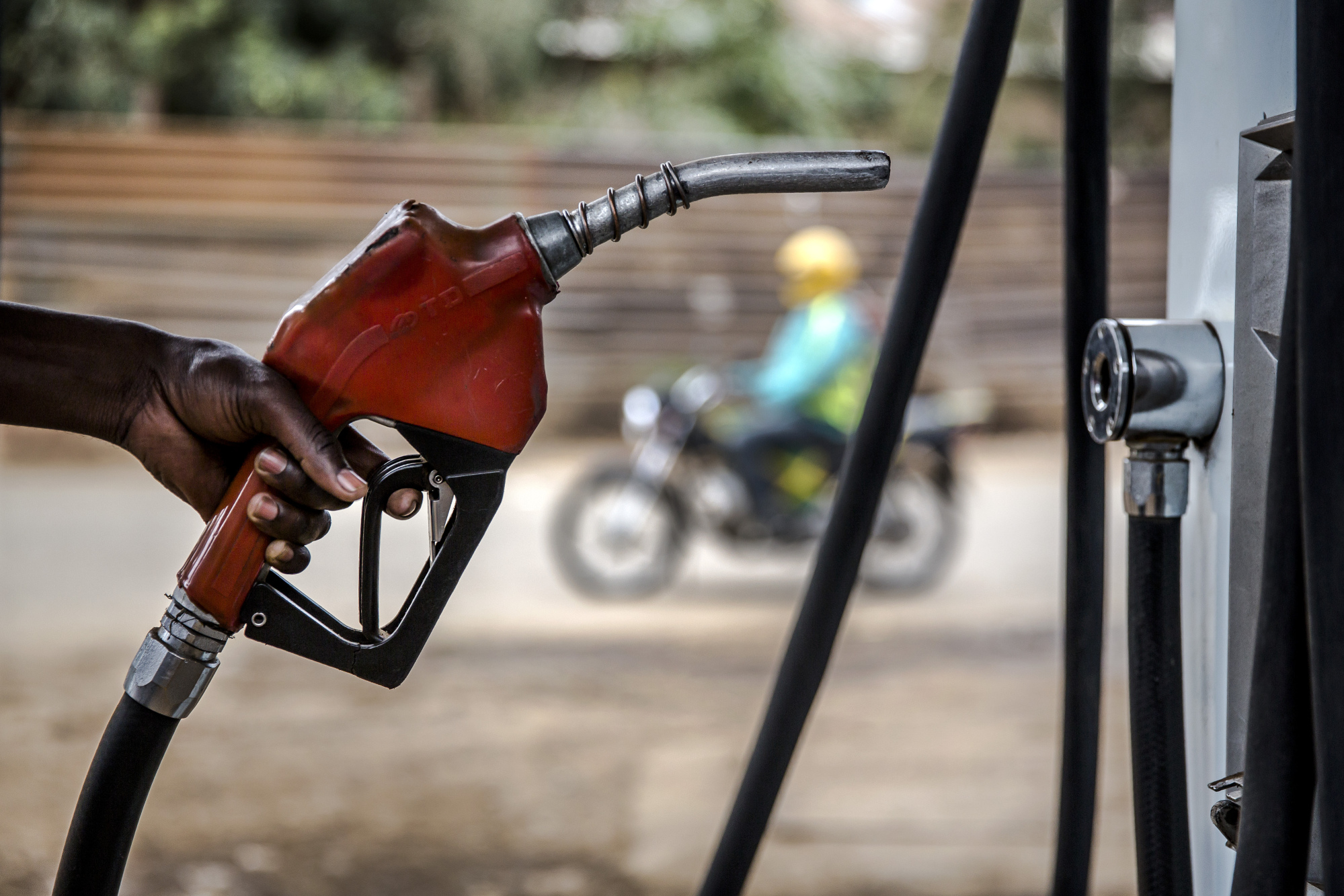
Every morning, across the length and breadth of Kenya, tens of millions of citizens queue at fuel stations from Moyale to Mombasa, Kisumu to Garissa, and fill their vehicles, matatus, bodas, generators, and cooking stoves. They have been told, repeatedly, by the Energy and Petroleum Regulatory Authority, that the fuel flowing from those pumps is protected by a sophisticated biochemical marking system. What they have never been told is what, precisely, is in that marker — or what it becomes when it burns.
A bombshell legal notice filed on March 31, 2026 by the Consumers Federation of Kenya (COFEK) to EPRA Director General Daniel Kiptoo Bargoria now alleges that the answer to both questions may be deeply alarming. According to the notice, the fuel marking system — administered in Kenya by Swiss corporation SICPA SA under a contract worth Sh2.35 billion — is suspected of releasing brominated compounds into petroleum products, compounds that the federation characterises as posing cancer risks to every Kenyan who breathes exhaust fumes or handles fuel.
The timing of the allegation is extraordinary. Even as COFEK’s letter was wending its way through EPRA’s official channels, DCI detectives were moving in the opposite direction — arresting Daniel Kiptoo himself, alongside Petroleum Principal Secretary Mohamed Liban and Kenya Pipeline Company Managing Director Joe Sang, over a separate but equally alarming scandal: the alleged importation of substandard, high-sulphur fuel that fell outside Kenya’s own regulatory specifications. The men spent Thursday night, April 3, 2026, in police custody at Gigiri Police Station.
In the space of four days, Kenya’s entire petroleum governance architecture has been called into question from two directions at once — the quality of the fuel entering the country, and the safety of the chemicals used to mark it. Together, the crises constitute what may be the most serious challenge to the integrity of Kenya’s fuel supply chain in recent memory.
“Every motorist, every hawker, every schoolchild breathing roadside air in Nairobi is an unwitting participant in this experiment.” — COFEK formal notice, March 31, 2026
THE COFEK BOMBSHELL
The Consumers Federation of Kenya is not, by nature, a sensationalist organisation. Operating under the Consumer Protection Act 2012 and anchored in Article 46 of the Constitution of Kenya — which guarantees the right to goods and services of reasonable quality — it has, over the years, built a reputation for measured, legally grounded interventions. Its letter of March 31, 2026 is therefore remarkable not only for what it alleges, but for the deliberateness with which it is constructed.
Addressed to EPRA Director General Daniel Kiptoo Bargoria and copied to the Head of Public Service, Cabinet Secretary for Energy Opiyo Wandayi, the Attorney General, the Auditor-General, the Ethics and Anti-Corruption Commission, and the Director of Public Prosecutions, the letter states that COFEK has spent at least three months reviewing whistleblower reports, documented complaints, and technical literature pointing to risks arising from the Fuel Integrity Solution. Its central contention: that the biochemical markers injected into petroleum products at the point of entry may generate brominated compounds during combustion, and that those compounds are potential carcinogens.
The federation explicitly names SICPA SA, the Swiss firm EPRA contracted to implement the Fuel Integrity Solution, as the vendor at the centre of its concern. The letter demands immediate and verifiable regulatory action and constitutes, in its own words, unequivocal notice of COFEK’s intention to commence legal proceedings should EPRA fail to respond adequately. A social media post accompanying the notice reveals that COFEK has already dispatched fuel samples to an independent laboratory in the United States, with results awaited.
EPRA had issued no formal public response to the letter as of publication date.
THE SCIENCE OF THE ALLEGATION
To understand what COFEK is alleging, it is necessary to understand what bromine chemistry in a combustion context actually means. The SICPA Fuel Integrity Solution works by injecting a patented biochemical tracer — whose precise molecular composition is proprietary and undisclosed — into petroleum at the point of entry or distribution. EPRA and SICPA have consistently described this marker as non-toxic and stable. The question COFEK is now forcing into the open is what happens to that marker under the conditions of an internal combustion engine, burning at temperatures that can exceed 600 degrees Celsius.
The scientific literature on brominated compounds in combustion environments is not reassuring. Research published across multiple peer-reviewed journals has established that when organic compounds containing bromine are subjected to high-temperature combustion, they can generate brominated polycyclic aromatic hydrocarbons — a class of chemicals whose toxic equivalency has been compared, in some environmental matrices, to dioxins. Separately, a 2021 review in the journal Environmental Science and Technology found that certain brominated flame retardants, which share structural properties with many organic bromine compounds, act as endocrine disruptors, with studies in humans and animals suggesting correlations with thyroid disorders, neurodevelopmental damage, reproductive harm, and oncological disease.
The critical scientific distinction — and the one that regulators will be forced to address — is between the chemical marker in its injected state, which SICPA claims is harmless, and what that marker’s constituent compounds may become upon thermal decomposition inside a vehicle engine. These are two entirely different chemical questions, and it is the second one that the available public documentation on the SICPA system appears never to have addressed publicly.
Without knowing the precise molecular structure of the SICPA marker, it is not possible to make definitive assessments of combustion by-products. COFEK’s decision to dispatch samples for independent analysis in the United States is, in this context, a rational evidential strategy. The results, when they arrive, will either validate or undermine the federation’s central allegation.
“What burns in your engine is not necessarily what was injected at the depot. The chemistry of combustion transforms compounds — sometimes into something far more dangerous.” — Public health researcher, speaking to Kenya Insights
THE SWISS COMPANY WITH A BRIBERY PAST
SICPA SA is headquartered in Lausanne, Switzerland, and describes itself as a global leader in secure traceability and authentication technologies. It has been active in Kenya since 2013, initially through its Excisable Goods Management System for the Kenya Revenue Authority, covering security stamps on tobacco and alcohol products. The company marks over 60 billion litres of fuel annually across multiple continents.
In April 2023, however, SICPA’s global reputation sustained a significant blow. The Office of the Attorney General of Switzerland issued a penalty order finding the company criminally liable for failing to take all necessary and reasonable organisational precautions to prevent its employees from bribing foreign public officials. The order related to bribery of high-ranking officials in the Colombian and Venezuelan markets between 2009 and 2011. SICPA was ordered to pay CHF 81 million — comprising a CHF 1 million fine and an CHF 80 million compensation claim based on profits from the relevant period. A former sales manager was handed a conditional prison sentence of 170 days.
The Swiss OAG’s findings identified organisational deficiencies in SICPA’s corporate governance, risk management, and compliance processes as having made the bribery possible. Investigations into SICPA’s conduct were reportedly also ongoing, at various stages, in Egypt, India, Kazakhstan, Pakistan, Senegal, Vietnam, and Ukraine at the time of the Swiss conviction. The company has since obtained ISO 37001 anti-bribery certification and says it will not appeal the Swiss order.
The bribery history takes on added weight in the Kenyan context because of how SICPA obtained its EPRA contract in the first place. Business Daily investigations published in August 2024 revealed that the fuel marking tender awarded to SICPA was worth Sh2.35 billion — more than three times the Sh694 million that competing firms Intertek Testing Services and Authentix had offered to do the same job. The tender was cancelled in December 2021 on the instruction of then-Interior Principal Secretary Karanja Kibicho, who directed EPRA’s Daniel Kiptoo to abandon the competitive process and award the contract to SICPA through a specially permitted procurement procedure.
Kenya’s Auditor-General Nancy Gathungu subsequently flagged the deal as having no justification for single-sourcing, arguing that taxpayers could not realise value for money. The Public Procurement and Regulatory Authority told Business Daily it had not been consulted on the cancellation. More damaging still, the Auditor-General found no evidence that the SICPA system had even been fully implemented nine months after the contract kicked off in 2023.
It is against this background — an overpriced, single-sourced contract pushed through by a political directive and whose vendor carries a bribery conviction — that COFEK’s health allegations must be assessed. The story of Kenya’s fuel marking programme is not simply a technical question. It is a procurement scandal with a potential public health dimension.
THE FUEL SECTOR IN FREEFALL
The COFEK allegations do not arrive in isolation. Kenya’s petroleum sector is, as of this week, experiencing what amounts to a systemic governance crisis on multiple simultaneous fronts.
On Thursday night, April 3, 2026, DCI detectives from the Operations Support Unit conducted a coordinated operation, picking up Petroleum Principal Secretary Mohamed Liban, EPRA Director General Daniel Kiptoo, and Kenya Pipeline Company Managing Director Joe Sang. A fourth official, identified as Simon Wafula, was also detained. Their homes were searched and unspecified cash and documents recovered. Capital FM reported that the fuel at the centre of the investigation is suspected to have elevated sulphur levels, rendering it non-compliant with Kenya’s petroleum specifications.
Sources familiar with the investigation told this publication that a KPC quality assurance manager had raised concerns after testing the consignment and declined to authorise its discharge, escalating the matter through internal channels before investigators were alerted. The fuel in question was linked to the government-to-government import arrangement launched in 2023 with Gulf suppliers including Saudi Aramco, ADNOC, and ENOC under a 180-day credit facility. The G2G deal, praised for stabilising supply amid foreign exchange pressures, now stands at the centre of a criminal probe.
The arrests come as Kenya grapples with a broader fuel supply anxiety driven by the ongoing conflict in the Middle East, which has pushed Brent crude prices sharply upward and complicated the country’s import logistics. Government Spokesperson Isaac Mwaura confirmed on April 4 that Kenya’s April fuel consignment had been secured, but the arrests of the very officials responsible for guaranteeing fuel quality have done nothing to steady public confidence.
Separately, over a period stretching back through 2025, EPRA has itself been conducting enforcement sweeps of petrol stations across the country, flagging outlets selling diesel blended with kerosene. The regulator’s own biannual statistics report noted that 23 stations were found non-compliant out of 10,598 samples collected from 2,305 outlets during the review period — a 99 per cent compliance rate that is now being held up for scrutiny in light of the arrested officials who presided over the very enforcement regime that generated those numbers.
The arrests of the Petroleum PS, EPRA Director General, and KPC Managing Director in a single night represents an unprecedented collapse of faith in Kenya’s fuel governance infrastructure.
WHAT THE REGULATOR HAS NOT SAID
EPRA has, over the years, mounted a vigorous public defence of the SICPA Fuel Integrity Solution. In promotional materials and official commentary, the authority has described the biochemical marker as patented, non-toxic, and stable. It has cited the programme’s World Bank and IMF recognition for improving fiscal governance. It has pointed to a compliance rate of 98.67 per cent across nearly 6,000 petroleum sites as evidence of the system’s effectiveness. What EPRA has never done, in any publicly accessible document reviewed by Kenya Insights, is publish the chemical composition of the marker, commission or release an independent toxicological assessment of its combustion by-products, or subject the health claims around the system to external peer review.
This opacity is precisely what COFEK is now demanding be ended. The federation’s legal notice asks EPRA to produce, among other things, a comprehensive scientific disclosure of the marker’s chemical constituents, an independent health impact assessment covering both direct handling and inhalation of exhaust emissions from marked fuel, and a regulatory framework that would require ongoing monitoring of consumer exposure. These are, on their face, demands that any regulatory authority operating in good faith should be able to accommodate — unless the answers to those questions are themselves unwelcome.
Cabinet Secretary for Energy Opiyo Wandayi, who was copied on COFEK’s letter, is the political head of a ministry whose top bureaucrat is now in police custody and whose regulatory arm faces a landmark public health complaint. His response — or the absence of one — will be a defining moment for the administration’s handling of the crisis.
THE CONSTITUTIONAL DIMENSION
COFEK grounds its intervention explicitly in Article 46 of the Constitution of Kenya, which establishes that consumers have the right to goods and services of reasonable quality, the right to information necessary for them to gain full benefit from goods and services, and the right to compensation for loss or injury arising from defects in goods or services. Article 42 further establishes the right to a clean and healthy environment.
If laboratory results from the American testing facility confirm the presence of toxic combustion by-products from the SICPA marker, the constitutional implications are substantial. Kenya would face the prospect of a class-action type constitutional petition on behalf of millions of consumers who have, without knowledge or consent, been exposed to potentially hazardous chemical compounds with every tank of fuel they have purchased. Section 6 of the Consumer Protection Act 2012, which COFEK also invokes, creates strict liability obligations for suppliers of defective goods — a category that, if the allegation is proven, could encompass every Oil Marketing Company that has handled marked fuel.
The legal proceedings that COFEK has threatened to initiate, should EPRA fail to act, would likely name the authority as a respondent for regulatory failure, and potentially SICPA as a second respondent for the deployment of a product with undisclosed hazardous properties. The Attorney General, who was copied on the notice, would be required to advise on the Crown’s liability exposure.
The immediate timeline is driven by two sets of results. The first is from the DCI investigation into substandard fuel imports, which investigators say will expand to encompass other officials within the petroleum supply chain. The second is from COFEK’s American laboratory, whose findings on the chemical composition and combustion by-products of the SICPA marker will either validate the federation’s allegations or force it to recalibrate its legal strategy.
EPRA, in the meantime, is effectively headless. Its Director General is in police custody. Its most recent public posture on the SICPA system — confident, promotional, data-rich — is now being held against it. The authority faces the prospect of having to respond simultaneously to a criminal investigation over one set of fuel quality failures and a constitutional complaint over the safety of the very system it has deployed to prevent them.
SICPA SA, reached for comment through its global communications channels, had not responded to Kenya Insights queries by the time of publication. The company has previously maintained that its fuel marking technologies are globally recognised and non-toxic.
For the millions of Kenyans who fill up at the pump each day, the questions being raised this week are not abstract. They are breathed in with every kilometre driven on marked fuel, absorbed with every spilled litre at a filling station forecourt, and inhaled with every puff of exhaust from the matatu that carries them to work. They deserve answers — and they deserve them now.
NB: This investigation is based on COFEK’s official legal notice of March 31, 2026; publicly available procurement records and audit findings relating to the SICPA-EPRA contract; the Swiss Attorney General’s 2023 penalty order against SICPA SA; peer-reviewed scientific literature on brominated compound toxicology; and independently sourced reporting on the April 3, 2026 DCI arrests. COFEK’s health allegations remain unproven pending independent laboratory verification. SICPA denies that its markers pose any health risk. The DCI investigation is ongoing and no charges have been formally filed. EPRA, SICPA, and the Office of the Cabinet Secretary for Energy had not responded to Kenya Insights queries at time of publication.
Kenya Insights allows guest blogging, if you want to be published on Kenya’s most authoritative and accurate blog, have an expose, news TIPS, story angles, human interest stories, drop us an email on [email protected] or via Telegram


FBI Foils Drone Attack Targeting White House

Messi, Ronaldo Set To Play In World Cup For 6th Time

How Joho Brokered Deal to Free 7 Kenyan Seafarers Jailed in Tanzania for 20 Years Over Human Trafficking

Calls Mount for Probe Into Garissa Woman Rep Edo Udgoon Siyad Over Alleged Role in Controversial Land Transactions Linked to Nzoia Sugar Disputes

Embarrassing State House Gaffe as Hussein Mohamed Names Wrong Japanese Prime Minister, Then Quietly Deletes Statement

A Packet of Milk, A Public Strip Search and 26 Years Thrown Away: The Ugly Face of Lipton Teas’ Kenyan Operations Exposed

The Listing That Doesn’t Lie: What the Market Isn’t Saying About Family Bank’s NSE Debut

8 Dead After US Air Force B-52 Bomber Crashes Shortly After Takeoff In California

Sh11 Billion Zakhem Debt Bombshell Rocks Kenya Pipeline Three Months After IPO, As Questions Mount Over What Investors Were Told

How A Convicted Zimbabwean Fraudster Quietly Bought His Way Into Kenya’s Sh375 Billion JKIA Mega-Deal

Inside NCBA’s Decline: How a Banking Giant Lost Its Strategic Edge

Businessman Philip Waithaka Kinuthia’s Minor Son Allegedly Drove Drunk, Killed Two Peponi Students in Ngong Road Horror Crash as Claims of Cover-Up Intensify

Cement, Cash and Courts: How the Hashu Dynasty Crushed the Ramji Brothers for Fourteen Years and Why the Walls Are Now Closing In

Standard Chartered Ghosts Haunt Joshua Oigara At Stanbic As Whistleblower Spills Beans

Inside The Urban Planning Cartel That Owns Nairobi

South Sudan: Adut Salva Kiir’s Shadow Treasury Exposed

Why Ruto’s Favourite Candidate Adan Mohammed Could Be Locked Out of the KRA Top Job

Why John Ngumi Is Running From the EACC and Why the Sh415 Million Payday May Be the Least of His Worries

The President’s Daughter and The Missing Witness: How Adut Salva Kiir’s Shadow Treasury Silenced Its Most Dangerous Critic

Betika Faces DCI Probe, Directors Arrest and License Revocation Over Massive 29.5 Million Safaricom Customers’ Data Breach
-
 Business7 days ago
Inside NCBA’s Decline: How a Banking Giant Lost Its Strategic Edge
-
 News1 day ago
Businessman Philip Waithaka Kinuthia’s Minor Son Allegedly Drove Drunk, Killed Two Peponi Students in Ngong Road Horror Crash as Claims of Cover-Up Intensify
-
 Investigations2 weeks ago
Cement, Cash and Courts: How the Hashu Dynasty Crushed the Ramji Brothers for Fourteen Years and Why the Walls Are Now Closing In
-
 Business6 days ago
Standard Chartered Ghosts Haunt Joshua Oigara At Stanbic As Whistleblower Spills Beans
-
 Investigations2 weeks ago
Inside The Urban Planning Cartel That Owns Nairobi
-
 Africa5 days ago
South Sudan: Adut Salva Kiir’s Shadow Treasury Exposed
-
 Business5 days ago
Why John Ngumi Is Running From the EACC and Why the Sh415 Million Payday May Be the Least of His Worries
-
 Africa6 days ago
The President’s Daughter and The Missing Witness: How Adut Salva Kiir’s Shadow Treasury Silenced Its Most Dangerous Critic