
Business
Sugar Empire in the Dock: How Kibos’s Mombasa Refinery Landed 1,481 Phantom Tonnes at the Port — and Why Nine Government Agencies Are Now Watching Its Every Move
The same Kibos that now controls the publicly-owned Chemelil Sugar Company under a controversial 30-year government lease.

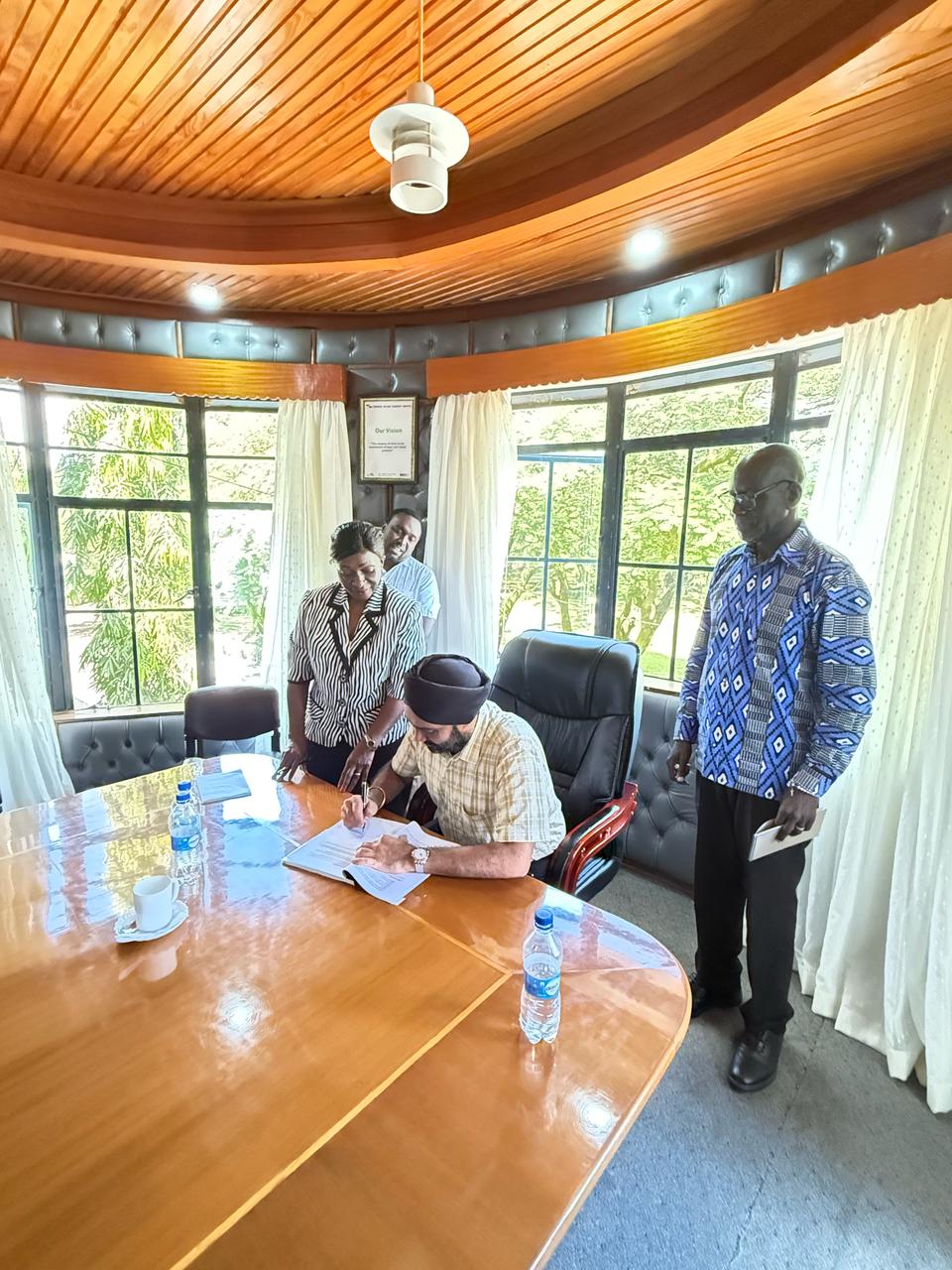
There is a 27,839-metric tonne consignment of raw sugar sitting at Mombasa Port that the government of Kenya refuses to release. It has been sitting there, accumulating demurrage costs by the day, ever since a multi-agency verification exercise returned a finding that should trouble every taxpayer in this country.
When officers checked what Mombasa Sugar Refineries Limited had declared against what the Kenya Ports Authority’s OutTurn Report actually showed, they found a discrepancy of 1,481 metric tonnes of sugar that nobody could account for.
That is not a rounding error.
That is a small mountain of sweetener, and in Kenya’s sugar sector, unaccounted tonnage at the point of entry has historically had only one destination: the retail market.
The consignment belongs to Mombasa Sugar Refineries Limited, or MSRL, which is a subsidiary of the Kisumu-based Chatthe family conglomerate that trades under the Kibos Sugar and Allied Industries banner.
The same Kibos that now controls the publicly-owned Chemelil Sugar Company under a controversial 30-year government lease.
The same Kibos whose Kisumu factories were ordered closed by the Environment and Land Court in 2019 after a judge found that its Environmental Impact Assessment licence had been obtained illegally, and whose associated distillery and power companies stood accused of discharging toxic effluent into Rivers Kibos and Nyamasaria for years.
The same Kibos whose communications manager, Joyce Opondo, signed the Declaration of Compliance submitted to the Kenya Sugar Board on 27th March 2026, the document at the centre of this scandal.
That declaration did not prevent the consignment from being held. It did not resolve the 1,481-tonne question.
What it did was trigger one of the most extensive and revealing surveillance frameworks ever imposed on a private importer in Kenya’s sugar sector, a 15-point compliance architecture covering every kilogram of raw sugar from Mombasa Port to the Kisumu factory floor, administered by a nine-agency Multi-Agency Team drawing on the Kenya Sugar Board, the Kenya Revenue Authority, the Kenya Ports Authority, the Kenya Bureau of Standards, the Kenya Trade Network Agency, and the National Police Service. Nine agencies.
For one consignment. The scale of official anxiety embedded in that number is impossible to ignore.
The Chatthe Dynasty and Its Empire
For nearly 90 years, the Chatthe family has been involved in large-scale sugarcane farming in the Kibos area of Kisumu. In 1983, Chanan Singh Chatthe and his three sons — Satwant, Sukhwinder, and Ragbhir — founded M/s Channan Agricultural Contractors, initially transporting cane for Mumias, Chemelil, and South Nyanza Sugar.
From that logistical base, the family made a decisive vertical leap. Kibos Sugar and Allied Industries Ltd was officially launched on September 1, 1999, located about ten kilometres east of Kisumu.
Today, the Chatthe Group has grown into one of the most diversified agro-industrial conglomerates in the Lake Region economy, with subsidiaries spanning sugar milling, ethanol distillation, paper and packaging, power generation, and now industrial sugar refining through MSRL itself.
The current public face of the empire is Jassi Chatthe, the managing director who during the handover of Chemelil Sugar told assembled farmers and staff that his family were sixth-generation Asian Kenyans with roots sunk deeper into western Kenya soil than their critics would acknowledge.
At the Chemelil handover, Kibos director Jassi Chatthe told staff and farmers that the company is owned by sixth-generation Asian Kenyans, adding: “We are not strangers, as claimed by the local MP.”
The political context for that statement was charged. Kisumu MPs including James Nyikal, Aduma Owuor, and Ruth Odinga had called for termination of the lease agreements, viewing the handover of public sugar infrastructure to private interests as a dispossession of community assets.
The Ombudsman later intervened after a citizen lodged a complaint seeking full disclosure of the lease award process, and the Agriculture Principal Secretary was ordered to produce institutional records on how the four sugar companies were leased or face prosecution for obstruction , a demand he allegedly ignored twice.
The Chemelil takeover has already generated its own crisis. After the dissolution of Chemelil Sugar Company Limited on October 31, 2025, and its replacement by Chemelil Sugar Company 2025 Limited under the Chatthe Group’s lease arrangement, all teaching and non-teaching staff at the adjacent Chemelil Sugar Academy were reportedly declared redundant in the middle of national KCSE examinations, with salaries for November and December suspended despite the school operating on fees collected from parents.
More than 500 students missed the first term of 2026 as the dispute festered.
Parents accused the Chatthe Group of overstepping its mandate — brought in as an investor for the sugar factory, it allegedly extended control to the school without investing any capital in its infrastructure.
The Phantom 1,481 Tonnes
Against that backdrop of institutional expansion and contested governance, the Mombasa consignment arrived. The MAT’s verification activities covered three sites: Mombasa Port, the Nairobi Freight Terminal, and MSRL’s processing plant in Kisumu. The KPA OutTurn Report triggered the crisis.
The consignment arrived with 1,481 metric tonnes more sugar than had been declared, a discrepancy that under the binding conditions of the release required MSRL to formally account for the excess and seek clearance through the KenTrade and iCMS platforms before a single bag could leave the port.
MSRL has pushed back, formally writing to KPA to dispute the computation and triggering a three-way reconciliation process between itself, KPA, and KRA. The consignment remains blocked at the port Container Freight Station pending resolution.
Beyond the raw quantity dispute, the MAT’s physical inspection surfaced an additional irregularity that deserves to be read carefully.
Inspectors at Mombasa Port found that the bags in the consignment were packaged in varying weights of between 46 and 49 kilograms. Standard commercial sugar bags carry uniform weight.
Non-uniform packaging in a consignment of industrial raw sugar marked “NOT FIT FOR HUMAN CONSUMPTION” is precisely the kind of anomaly that signals pre-existing repackaging, or preparation for it.
In Kenya’s sugar sector, this is not an abstract concern. Kenya has a well-documented history of industrially imported sugar, condemned and held at port, being secretly released into the domestic retail market.
In 2023, President Ruto suspended 27 officers from KRA, KEBS, and the National Police Service after a condemned consignment of 20,000 bags was found to have been released without due process and without payment of applicable taxes.
In that case, sources pointed to politicians from Central Kenya and senior government officials as having orchestrated the operation. Only 14 bags were eventually recovered.
The rest had vanished.
A Cradle-to-Grave Surveillance Architecture
The 15-point compliance declaration that MSRL signed on 27th March 2026 reads less like a standard regulatory requirement and more like the terms imposed on an entity the government does not trust to act without supervision at every stage of the supply chain.
Every truck carrying sugar from Mombasa to Nairobi must travel via the Standard Gauge Railway and then onward to Kisumu by road in close-bodied, RECTS-compliant vehicles moving in government-approved convoys.
Any truck that breaks from convoy must be immediately reported to MAT. Each vehicle must carry tamper-proof customs seals and Regional Electronic Cargo Tracking System e-seals, armed at the loading point and disarmed only at the Kisumu destination. MAT officers are deployed at designated checkpoints along the entire route. MSRL must install CCTV across all storage and processing areas, with footage retained for the full duration of the consignment cycle, and MAT retains on-demand access to every frame.
MSRL must maintain a real-time production register recording daily input-output ratios, refined sugar quantities, by-products, process losses, and all sales including buyer identity, PIN number, invoice number, and price.
White refined sugar produced from the consignment may only be sold to manufacturers, not retailers or the general public, and every bag must carry the marking “WHITE REFINED SUGAR — FOR INDUSTRIAL USE ONLY.”
Perhaps the most significant provision is the final audit clause. Upon exhaustion of the consignment, MAT must undertake a comprehensive reconciliation of all quantities from port to final sale, including monthly VAT returns.
The audit report must land on the desk of the Cabinet Secretary for National Treasury within 14 days. And in the Declaration itself, MSRL expressly acknowledged that any diversion by its staff, representatives, or agents constitutes its primary liability, a provision that cuts through corporate veil arguments and places personal accountability squarely on the company’s leadership.
The Kenya Sugar Board, one industry source told Kenya Insights, issued conditions it lacks the institutional capacity to enforce on its own. That admission, if accurate, is damning in a different direction: it suggests that the architecture of oversight around this consignment is largely theatrical, dependent on inter-agency goodwill and political will rather than autonomous enforcement capacity.
A History of Fire
The Mombasa Port standoff does not emerge from a clean corporate record. Kibos Sugar and its affiliated companies have spent the better part of the last decade navigating serious legal and regulatory challenges. In 2019, the Environment and Land Court in Kisumu ordered the closure of Kibos Sugar and Allied Industries after finding that the company’s Environmental Impact Assessment licence had been obtained illegally, revoking the licence and ordering a fresh EIA within 120 days.
The ruling also affected Kibos Power Limited and Kibos Distillers Limited. The community that brought the petition had for years complained about the pollution of Rivers Nyamasaria and Kibos from industrial waste, with residents living in fear of disease.
At one stage, during environmental inspections following a complaint, the company’s communications manager Joyce Opondo attributed contamination of a local river to a clean-up exercise gone wrong, describing it as an accidental discharge , the same Joyce Opondo who signed the March 2026 compliance declaration at Mombasa Port.
In the appeal proceedings that followed the 2019 closure order, the Court of Appeal found that documents purportedly from the Kisumu County Assembly’s Water, Environment and Natural Resources Committee, submitted by Kibos as evidence of regulatory compliance, had never been discussed in the County Assembly and were not found in any deliberations in the Hansard Record, with the Vice Chairman of the relevant committee confirming that the Report was a forgery.
The world the Chatthe Group now occupies is one of enormous public stakes. Through its 30-year lease of Chemelil Sugar and its MSRL refining subsidiary, the group sits astride a significant portion of Kenya’s sugar processing chain.
The government handed Kibos the lease of a formerly state-owned factory at Chemelil at rental fees of Ksh 40,000 per hectare annually plus concession fees of Ksh 4,000 per tonne of sugar produced.
That same government is now deploying nine of its agencies to stand watch over a single MSRL import consignment because it cannot determine what happened to 1,481 tonnes of sugar that nobody can account for.
Three outcomes now sit on the table. If the three-way KPA-KRA-MSRL reconciliation resolves the quantity dispute in MSRL’s favour, the consignment is released under the strict MAT conditions.
If the excess tonnage is confirmed as genuinely unaccounted for, MSRL faces formal duty and tax assessments on the additional quantity, potential seizure, and possible prosecution.
And if the dispute remains unresolved, the consignment sits indefinitely at Mombasa Port, with demurrage costs mounting and commercial pressure building on a company that controls public sugar infrastructure and employs thousands.
What is not on the table is a return to normalcy.
The sugar sector’s most powerful private dynasty, the family that built an empire from transporting other people’s cane, that took a condemned 2019 court closure order and had it quashed on appeal, that absorbed a publicly-owned factory and immediately plunged it into a school controversy, that now stands accused of landing nearly 1,500 ghost tonnes of raw sugar at the republic’s main port, has placed itself at the centre of the most politically sensitive sugar procurement dispute in recent Kenyan memory.
The consignment is still sitting at the CFS. The nine agencies are still watching. The 1,481 tonnes are still unaccounted for.
Kenya Insights allows guest blogging, if you want to be published on Kenya’s most authoritative and accurate blog, have an expose, news TIPS, story angles, human interest stories, drop us an email on [email protected] or via Telegram


Somalia’s Disputed President Allegedly Siphons Up to $6 Million Monthly from Kenyan Miraa Trade, Sharing the Spoils with Nairobi’s Shadow Cartels

Ahmed Adan Hefow: Governor Otuoma’s Trusted Right-Hand Man at the Centre of Busia’s Deepening Finance Scandal

Karua Detained at Entebbe as Uganda Blocks Besigye Lawyer From Entering Country

How KCB and Airtel Turned Kenya’s Unbanked Into a Data Goldmine Behind a ‘Financial Inclusion’ Deal

The Chivayo Network: How a Convicted Fraudster Won Access to Presidents, Passports and Billion-Dollar Deals Across Africa

BURRIED TWICE: The Victoria Bank CEO Yogesh Pattni Files

Court Stops Transfer Of EABL Shares To Asahi By Diageo In A Fresh Snag

Death Before Justice: Stephen Ngei, Victim of Sh180 Million Laptop Tender Scam Linked to Allan Chesang, Killed in Highway Crash

Court Brands Sh1.1 Billion Fee Demand by Lawyer Victor Swanya “Excessive and Exorbitant,” Exposes How City Hall Lets Public Money Bleed Through Legal Bills

Trump Unveils New Air Force One

Businessman Philip Waithaka Kinuthia’s Minor Son Allegedly Drove Drunk, Killed Two Peponi Students in Ngong Road Horror Crash as Claims of Cover-Up Intensify

Inside NCBA’s Decline: How a Banking Giant Lost Its Strategic Edge

Cement, Cash and Courts: How the Hashu Dynasty Crushed the Ramji Brothers for Fourteen Years and Why the Walls Are Now Closing In

Standard Chartered Ghosts Haunt Joshua Oigara At Stanbic As Whistleblower Spills Beans

South Sudan: Adut Salva Kiir’s Shadow Treasury Exposed

Inside The Urban Planning Cartel That Owns Nairobi

THE VULTURE AND THE SCHEME How Nairobi West Hospital Became the Most Dangerous Institution in Kenya’s SHA Ecosystem and Why the Books Must Be Audited Now

The President’s Daughter and The Missing Witness: How Adut Salva Kiir’s Shadow Treasury Silenced Its Most Dangerous Critic

How Adil Popat Saved His Empire On The Eve Of Imperial Bank Collapse and Why Kenya’s Mainstream Media Buried The Story

Why John Ngumi Is Running From the EACC and Why the Sh415 Million Payday May Be the Least of His Worries
-
 News1 week ago
Businessman Philip Waithaka Kinuthia’s Minor Son Allegedly Drove Drunk, Killed Two Peponi Students in Ngong Road Horror Crash as Claims of Cover-Up Intensify
-
 Business2 weeks ago
Inside NCBA’s Decline: How a Banking Giant Lost Its Strategic Edge
-
 Business2 weeks ago
Standard Chartered Ghosts Haunt Joshua Oigara At Stanbic As Whistleblower Spills Beans
-
 Africa2 weeks ago
South Sudan: Adut Salva Kiir’s Shadow Treasury Exposed
-
 Investigations4 days ago
THE VULTURE AND THE SCHEME How Nairobi West Hospital Became the Most Dangerous Institution in Kenya’s SHA Ecosystem and Why the Books Must Be Audited Now
-
 Africa2 weeks ago
The President’s Daughter and The Missing Witness: How Adut Salva Kiir’s Shadow Treasury Silenced Its Most Dangerous Critic
-
 Business2 weeks ago
How Adil Popat Saved His Empire On The Eve Of Imperial Bank Collapse and Why Kenya’s Mainstream Media Buried The Story
-
 Business2 weeks ago
Why John Ngumi Is Running From the EACC and Why the Sh415 Million Payday May Be the Least of His Worries