
News
The Debt They Would Not Pay: How Standard Group Ducked Sh50 Million In Regulatory Fee For Years, Then Called It A Witch-Hunt
A tribunal has cleared the Communications Authority to shut down KTN News, Radio Maisha and four other Standard Group stations over Sh48.9 million in unpaid fees accumulated across multiple years. The media house, controlled by the Moi family and haemorrhaging over a billion shillings annually, insists it is a victim of political persecution. The facts on the record tell a more uncomfortable story.

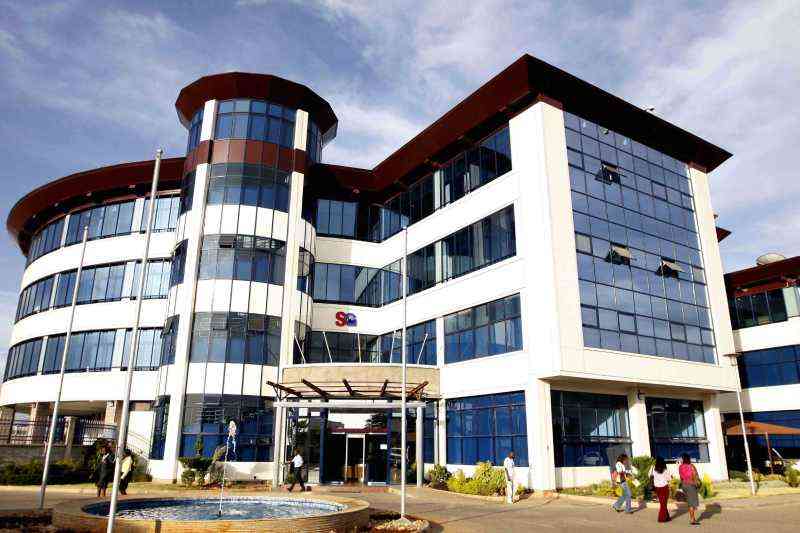
The Communications and Multimedia Appeals Tribunal delivered its ruling on Friday with the quiet efficiency of a court that had heard enough. It dismissed the appeal by Standard Group PLC without sentiment and without ambiguity, clearing the way for the Communications Authority of Kenya to revoke six broadcasting licences belonging to one of the country’s oldest media organisations. The affected properties are Radio Maisha, Spice FM, Vybez Radio, Berur FM, KTN Burudani and KTN News.
The debt at the centre of this crisis is not a secret, nor is it disputed. Standard Group itself does not dispute it. What it disputes is the consequence, and it is that peculiar stance, paying nothing while contesting everything, that has brought the company to the edge of broadcasting oblivion.
The outstanding amount as confirmed by the Communications Authority stands at Sh48,874,524.10, comprising Sh13,880,334.37 in licence fees and Sh34,994,189.73 in Universal Service Fund levies. These are not penalties, not fines, not punitive extractions. They are the basic regulatory cost of holding a broadcasting licence in Kenya, fees that every other station in the country is expected to remit annually as a condition of operating on the public airwaves.
Standard Group has not paid them. Not for one year, not for two, but across multiple consecutive years. The CA began formal engagement with the media house as far back as June 2023. It held meetings in December 2023 and again in February 2024. It issued a Notice of Contravention on December 4, 2023, giving Standard 45 days to regularise its position. That notice lapsed on January 17, 2024, without payment. The Authority then issued formal Notices of Revocation in September 2024. Those too lapsed, on March 24, 2025, without the debt being cleared.
At no point in this timeline spanning nearly three years did Standard Group settle the outstanding amount. At no point did it make a single regulatory payment toward the accumulated arrears. It is that stark, uncontested fact that the Tribunal found determinative.
In its appeal, Standard Group leaned heavily on one argument: that it had entered into a settlement agreement with the Communications Authority on December 24, 2024, and that the Authority’s revocation notices therefore constituted a breach of that agreement.
On its face, the claim has a surface plausibility. The media house says it made an initial payment of Sh10 million on December 27, 2024, with further payments contingent on the completion of a rights issue. It described this as honouring the terms of a negotiated plan.
The Tribunal rejected this framing entirely. The revocation notices had been formally issued in September 2024, three full months before the claimed December agreement. The Tribunal held that regulatory obligations under the Kenya Information and Communications Act cannot be extinguished or overridden by a private arrangement arrived at after the enforcement process has already been formally commenced. Legitimate expectations, the Tribunal stated in terms, cannot override statutory duties.
More damaging still is the CA’s account, which flatly contradicts Standard Group’s version of events. The Authority has consistently maintained that Standard Group never formally submitted a payment plan, despite being asked to do so. In its own statement released alongside the Tribunal’s ruling, Standard Group conceded this point with a candour that undermined its broader victim narrative.
‘We make no secret of the fact that no payments have been made to the CA toward the outstanding fees,’ the statement read. ‘The Authority has repeatedly asserted that we entered into a payment plan. We did not.’
Read that again. The company spent months arguing before the Tribunal that the CA had breached an agreement. In the same breath, it acknowledged publicly that no payment plan was ever formalised. If there was no payment plan, there was nothing for the CA to breach. The Tribunal saw through this contradiction. So should the public.
Standard Group’s central defence in the court of public opinion is that it cannot pay the CA because the government has not paid it. The media house claims the state owes it Sh1.2 billion in unpaid advertising fees, and that it is unconscionable to demand regulatory compliance from a creditor while withholding payment.
This argument has emotional resonance. The relationship between Kenyan government advertising and media editorial independence is genuinely corrosive, and the practice of using advertising as a tool of political leverage has been documented across multiple media houses. The government does owe the media industry substantial sums.
But the argument, however resonant emotionally, fails legally and practically. Regulatory fees and advertising receivables are entirely separate legal obligations. The CA does not owe Standard Group advertising money; the state does. The CA’s mandate is the enforcement of the Kenya Information and Communications Act, not the management of inter-governmental payment schedules. Telling the regulator to wait until the Treasury pays is like telling a landlord that rent will come when a different tenant pays a different bill. The Tribunal made this separation explicit.
What Standard Group’s leadership has been less eager to discuss is the full picture of the company’s financial condition, which extends well beyond government advertising delays. The group’s audited results for the year ended December 31, 2024, make grim reading. Revenue collapsed by 23 percent to Sh1.8 billion, down from Sh2.4 billion the previous year. The loss before tax ballooned to Sh1.1 billion, up from Sh723 million in 2023. Total assets shrank to Sh3.84 billion while the company’s equity position turned deeply negative, standing at negative Sh2.22 billion.
The company has been loss-making every year since 2019, when it posted a Sh484 million loss after launching Spice FM, Vybez Radio and KTN Burudani, the very stations now facing revocation. It recorded losses through the pandemic years, losses through the economic recovery, and ever-deepening losses in 2023 and 2024. A Sh1.5 billion rights issue has been mooted to rescue the balance sheet, but as of this writing it remains unrealised, its proceeds still theoretical.
In this context, the non-payment of Sh48.9 million in regulatory fees is not a political choice or an act of resistance. It is the consequence of a company that is structurally insolvent, spending Sh2.9 billion while earning Sh1.8 billion, and unable to meet obligations to creditors, employees and regulators simultaneously.
Standard Group is not a neutral corporate entity. It is a media house with a controlling ownership structure deeply embedded in Kenyan political dynasties. S.N.G Holdings Limited, believed to be associated with the Moi family and their associates, holds approximately 69 percent of the company. Trade World Kenya Limited holds a further 10.9 percent and Miller Trustees Limited holds 10.53 percent, both widely understood to be connected to the same network.
The late President Daniel arap Moi’s family, now led by former Senator Gideon Moi, has been the dominant force in Standard Group since the Moi-era buyout of the newspaper from Lonrho in 1995. When President Uhuru Kenyatta’s associates attempted to acquire Standard Group in the years before 2020, negotiations reportedly collapsed after Gideon Moi demanded a premium price and declined to relinquish editorial control. He reportedly told associates that the Standard was not a business asset but a political one.
Gideon Moi backed Raila Odinga’s presidential bid against William Ruto in the 2022 election. Ruto won. The political arithmetic of the present confrontation is therefore not invisible. A media house controlled by the Moi family, which supported the losing candidate, is now facing regulatory action from an authority operating under a government led by the man who beat that candidate.
None of this context excuses the non-payment of regulatory fees. But it is the context within which Standard Group’s political vendetta claim must be assessed. There is a legitimate concern that enforcement actions in Kenya’s media sector are selectively applied and politically timed. There is also a documented pattern of the CA revoking licences across the industry, having moved against 75 broadcasters in 2024 and more than 42 television stations in 2025 for various compliance failures. The regulator’s actions against Standard Group sit within that broader enforcement pattern, though the political backdrop cannot be entirely dismissed.
Standard Group has presented itself throughout this crisis as a fearless truth-teller being punished for exposing government wrongdoing. Acting Chief Executive Editor Chaacha Mwita has spoken of the company’s commitment to journalism and its refusal to be silenced. These are noble words, and the protection of press freedom in Kenya is a cause that deserves vigorous defence.
The difficulty is that Standard Group’s editorial record in the period leading up to this crisis does not entirely support the self-portrait of a rigorous, independent watchdog operating to unimpeachable professional standards.
The Media Council of Kenya raised documented concerns about the Abducted headline the publication ran concerning Cabinet Secretary Raphael Tuju during the coverage of his property dispute. The headline was later challenged as factually inaccurate, a significant editorial failing for a media house claiming the mantle of truth-telling. Tuju himself was a former news anchor at KTN, the very station whose licence now faces cancellation, an irony that has been little remarked upon in Standard’s own coverage of its predicament.
The Media Council also raised concerns about systemic sensationalism prioritised over factual verification and about the media house’s alleged refusal to extend the right of reply in certain stories. These are not trivial editorial complaints. They go to the heart of whether a media organisation deserves the public trust it is now mobilising in its defence.
Standard Group has announced its intention to pursue the matter in the High Court, citing Section 102G of the Kenya Information and Communications Act, which it argues requires automatic preservation of the status quo upon the filing of an appeal. The media house has warned the CA that any gazettement of the revocation notices will be met with immediate contempt proceedings.
Whether the High Court will grant emergency relief remains to be seen. The Tribunal’s ruling was unambiguous: the revocation was lawful, valid and procedurally fair. The CA followed due process at every step, issuing contravention notices, holding multiple meetings, granting extensions and concessions, and issuing formal revocation notices only after all those steps had been exhausted. The Tribunal awarded costs to the CA, a further signal of how comprehensively Standard Group’s appeal failed on the merits.
A High Court appeal would need to identify a constitutional question, a question of law or a specific procedural error in the Tribunal’s process. Relitigating the factual findings, including the undisputed existence of the debt and the undisputed history of non-payment, is not an available ground. Standard Group’s legal team will need to construct a narrower and more technically precise argument than the politically charged narrative the company has deployed in its public communications.
The stakes of this case extend beyond Standard Group. Kenya’s broadcasting landscape is already thin. The potential shutdown of KTN News, Radio Maisha and Spice FM would represent a significant contraction in media plurality at a moment when the country needs more independent voices, not fewer. Hundreds of journalists employed across these platforms face unemployment if the licences are formally revoked.
These are real human consequences, and they deserve to be named. But they are consequences that flow from years of financial mismanagement, structural losses and the repeated failure to meet basic regulatory obligations. The CA did not create this crisis. It gave Standard Group nearly three years of notices, meetings, extensions and opportunities to regularise its position. The media house used that time to accumulate more losses, launch a rights issue it has not completed and pay itself a legal defence.
The remedy, as Mwita himself articulated, is theoretically simple. The government should pay Standard Group what it owes. Standard Group should pay the CA what it owes. But Standard Group has had since at least 2023 to begin partial payments, to demonstrate good faith, to submit a formalised repayment schedule with guaranteed tranches. It did none of these things with sufficient rigour to satisfy the regulator or the Tribunal.
Crying political vendetta is the oldest play in the Kenyan media governance book. Sometimes it is entirely warranted. Sometimes it is a shield behind which genuine institutional failure seeks cover. In Standard Group’s case, it appears to be both things at once, which is precisely what makes this story so difficult and so important to tell honestly.
The media house may yet win in the High Court. It may yet secure the injunction and the breathing room to restructure its finances and resume payments. But it will not be able to claim, not with the tribunal’s ruling on the record, that it was brought to this point by anything other than its own choices.
Kenya Insights allows guest blogging, if you want to be published on Kenya’s most authoritative and accurate blog, have an expose, news TIPS, story angles, human interest stories, drop us an email on [email protected] or via Telegram


Somalia’s Disputed President Allegedly Siphons Up to $6 Million Monthly from Kenyan Miraa Trade, Sharing the Spoils with Nairobi’s Shadow Cartels

Ahmed Adan Hefow: Governor Otuoma’s Trusted Right-Hand Man at the Centre of Busia’s Deepening Finance Scandal

Karua Detained at Entebbe as Uganda Blocks Besigye Lawyer From Entering Country

How KCB and Airtel Turned Kenya’s Unbanked Into a Data Goldmine Behind a ‘Financial Inclusion’ Deal

The Chivayo Network: How a Convicted Fraudster Won Access to Presidents, Passports and Billion-Dollar Deals Across Africa

BURRIED TWICE: The Victoria Bank CEO Yogesh Pattni Files

Court Stops Transfer Of EABL Shares To Asahi By Diageo In A Fresh Snag

Death Before Justice: Stephen Ngei, Victim of Sh180 Million Laptop Tender Scam Linked to Allan Chesang, Killed in Highway Crash

Court Brands Sh1.1 Billion Fee Demand by Lawyer Victor Swanya “Excessive and Exorbitant,” Exposes How City Hall Lets Public Money Bleed Through Legal Bills

Trump Unveils New Air Force One

Businessman Philip Waithaka Kinuthia’s Minor Son Allegedly Drove Drunk, Killed Two Peponi Students in Ngong Road Horror Crash as Claims of Cover-Up Intensify

Inside NCBA’s Decline: How a Banking Giant Lost Its Strategic Edge

Cement, Cash and Courts: How the Hashu Dynasty Crushed the Ramji Brothers for Fourteen Years and Why the Walls Are Now Closing In

Standard Chartered Ghosts Haunt Joshua Oigara At Stanbic As Whistleblower Spills Beans

South Sudan: Adut Salva Kiir’s Shadow Treasury Exposed

Inside The Urban Planning Cartel That Owns Nairobi

THE VULTURE AND THE SCHEME How Nairobi West Hospital Became the Most Dangerous Institution in Kenya’s SHA Ecosystem and Why the Books Must Be Audited Now

The President’s Daughter and The Missing Witness: How Adut Salva Kiir’s Shadow Treasury Silenced Its Most Dangerous Critic

How Adil Popat Saved His Empire On The Eve Of Imperial Bank Collapse and Why Kenya’s Mainstream Media Buried The Story

Why John Ngumi Is Running From the EACC and Why the Sh415 Million Payday May Be the Least of His Worries
-
 News1 week ago
Businessman Philip Waithaka Kinuthia’s Minor Son Allegedly Drove Drunk, Killed Two Peponi Students in Ngong Road Horror Crash as Claims of Cover-Up Intensify
-
 Business2 weeks ago
Inside NCBA’s Decline: How a Banking Giant Lost Its Strategic Edge
-
 Business2 weeks ago
Standard Chartered Ghosts Haunt Joshua Oigara At Stanbic As Whistleblower Spills Beans
-
 Africa2 weeks ago
South Sudan: Adut Salva Kiir’s Shadow Treasury Exposed
-
 Investigations4 days ago
THE VULTURE AND THE SCHEME How Nairobi West Hospital Became the Most Dangerous Institution in Kenya’s SHA Ecosystem and Why the Books Must Be Audited Now
-
 Africa2 weeks ago
The President’s Daughter and The Missing Witness: How Adut Salva Kiir’s Shadow Treasury Silenced Its Most Dangerous Critic
-
 Business2 weeks ago
How Adil Popat Saved His Empire On The Eve Of Imperial Bank Collapse and Why Kenya’s Mainstream Media Buried The Story
-
 Business2 weeks ago
Why John Ngumi Is Running From the EACC and Why the Sh415 Million Payday May Be the Least of His Worries