
Business
Getting Away With It: How Kenya’s Most Politically Connected Fuel Company Gulf Energy Is Pocketing Billions While Rival Firms Face Public Wrath
The One Petroleum fuel was cheaper. The Gulf Energy fuel was more expensive. The government rejected the cheaper cargo, subsidised the pricier one with Sh6.2 billion of public money, cut VAT to obscure the bill — and is still defending the company that started the crisis. Follow the money.

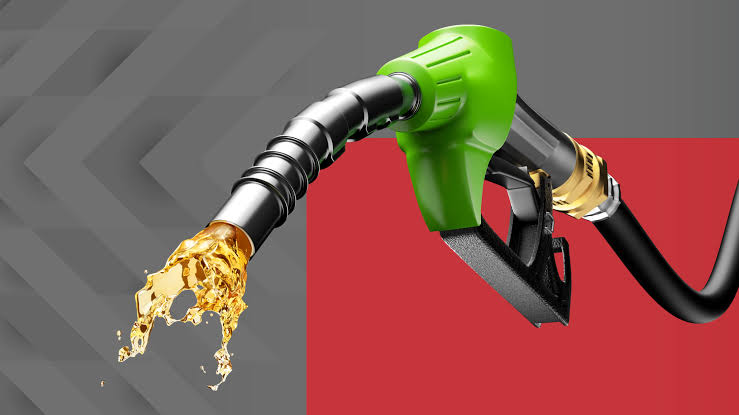
On Tuesday, April 15, 2026, Kenyans woke up to the most painful fuel prices in years. Super petrol in Nairobi hit Sh206.97 per litre — a Sh28.69 jump in a single month. Diesel surged to Sh206.84, up Sh40.30 — the biggest single-cycle diesel increase in living memory, closing to within thirteen cents of petrol parity. Kerosene, used by the poorest Kenyan households for cooking and lighting, was left unchanged at Sh152.78.
The government announced it had cut VAT from 16 percent to 13 percent. It confirmed it was deploying Sh6.2 billion from the Petroleum Development Levy Fund to cushion consumers. President Ruto’s office called the crisis a result of an emergency procurement ‘in blatant breach of the G2G framework.’ Four civil servants were in police custody, charged with economic crimes.
And Gulf Energy — the company whose failure to deliver a contracted 85,000 metric ton petrol cargo triggered the entire cascade — remained a nominated importer for the next cycle, untouched by law enforcement, unpenalised by the ministry, and standing to pocket billions from every litre now flowing through Kenya’s compromised supply chain.
This is the story of how Kenya’s most politically-connected fuel company built a monopoly using public money, failed its sovereign obligations at the worst possible moment, allowed rival firms to be scapegoated, and walked away from the wreckage with its contracts intact while Kenyans foot the bill.
THE PRICE THAT REVEALS EVERYTHING
Begin with a number that Energy CS Opiyo Wandayi has not been asked to explain clearly enough in public. According to an official ministry statement published during the scandal, fuel supplied by One Petroleum aboard MV Paloma landed in Mombasa at Sh198,855 per metric ton. Fuel supplied under the G2G arrangement by Gulf Energy via MT FOS Mercury cost Sh140,111 per metric ton. The difference is Sh58,744 per metric ton — equivalent to approximately Sh43.4 per litre. The cheaper fuel was One Petroleum’s. The more expensive fuel was Gulf Energy’s.
Now read that against what Wandayi told Parliament on April 13. The CS told the National Assembly’s Energy Committee that if the One Petroleum consignment had been factored into the April price computation, consumers would have faced a Sh14 per litre increase. The ministry’s decision to exclude that cargo from the pricing calculation was presented as a government act of consumer protection. But here is the contradiction that has not received adequate attention: the government simultaneously accepted Gulf Energy’s more expensive G2G cargo into the computation. The result is not protection — it is substitution. Kenya rejected the Sh198,855 per ton cargo and accepted the Sh140,111 cargo, but the prices still rose by Sh28.69 for petrol and Sh40.30 for diesel. The government then deployed Sh6.2 billion in levy funds and reduced VAT to soften a price surge that was structurally driven, in part, by the very G2G cargo it is defending.
Wandayi told Parliament that excluding the One Petroleum fuel saved Kenyans a Sh14 increase. He did not explain why the fuel that replaced it cost Kenyans Sh28 to Sh40 more per litre anyway — and why public money is now being used to hide that bill.
The mathematics are straightforward and damning. Kenya’s monthly petrol consumption stands at approximately 450 million litres. The pricing differential between what One Petroleum or an equivalent market entrant would have charged under open procurement versus what Gulf Energy’s G2G rate implies, given the extraordinary spike in the landed cost of super petrol from US$582.11 to US$823.87 per cubic metre — a 41.53 percent single-month surge — represents a transfer from Kenyan consumers and the public levy fund to the G2G framework beneficiaries of between Sh6 billion and Sh12 billion per month at peak crisis pricing. That money is not going to global oil markets. A significant portion of it is staying within the Gulf Energy supply chain — a supply chain whose majority beneficial ownership sits, deliberately, in Mauritius.
EPRA APRIL 15 REVIEW: THE NUMBERS GOVERNMENT DOESN’T WANT YOU TO READ TOGETHER
|
Super Petrol landed cost: +41.53% (US$582.11 → US$823.87/cubic metre) |
|
Diesel landed cost: +68.72% (US$636.45 → US$1,073.82/cubic metre) |
|
Kerosene landed cost: +105.15% (US$639.48 → US$1,311.93/cubic metre) |
|
One Petroleum MT Paloma fuel: Sh198,855/metric ton |
|
Gulf Energy MT FOS Mercury G2G fuel: Sh140,111/metric ton |
|
Difference: Sh58,744/ton = ~Sh43.4 per litre CHEAPER for One Petroleum |
|
VAT cut from 16% to 13% (Legal Notice No. 69, April 14, 2026) |
|
PDL Fund deployed: Sh6.2 billion in consumer cushioning |
|
Net pump price outcome: Super petrol +Sh28.69 | Diesel +Sh40.30 |
|
Monthly consumption: ~450 million litres |
|
Estimated monthly transfer at crisis pricing: Sh6–12 billion |
THE GACHAGUA-NYORO ACCUSATION AND WHAT IT MEANS
In the immediate aftermath of the April 2 arrests, the political opposition moved quickly to frame the scandal not as a story of rogue civil servants but as a turf war within the petroleum cartel.
Former Deputy President Rigathi Gachagua, speaking at a thanksgiving ceremony in Murang’a on April 4, offered the most explicit version of this narrative: ‘The only crime they have committed is to deny William Ruto more profit for the benefit of the people of Kenya.’
He accused the President of masterminding the arrests to protect interests in the oil sector. ‘The DCI has now become rogue,’ Gachagua said, demanding the DCI director’s contract not be renewed.
Kiharu MP Ndindi Nyoro was equally direct in parliamentary forums and public statements. He described the G2G arrangement as having been captured by a single oil company that had monopolised the sector, adding the explosive detail that this same company ‘that deals with G2G and had those 75 percent of the volumes is the same company that is dealing with exploiting our Turkana oil resources.
The reference to Turkana is not cryptic. In September 2025, Gulf Energy’s affiliate Auron Energy E&P Limited completed the acquisition of Tullow Oil’s entire Kenyan working interests — the Lokichar oil fields — for a minimum of US$120 million. From downstream fuel distributor to upstream oil explorer, Gulf Energy now spans Kenya’s entire petroleum value chain.
The UDA’s response was to label both men reckless, superficial, and acting ‘at the behest of their Mombasa-based benefactor’ — a phrase that, while not naming any individual, gestured unmistakably at the Mombasa political and business network that intersects with Gulf Energy’s founding shareholder structure.
UDA Secretary General Hassan Omar Hassan dismissed the characterisations as politically motivated and warned that Gachagua’s apparent familiarity with the alleged scheme warranted investigative scrutiny.
ODM, meanwhile, walked a more cautious line. Oburu Odinga issued a statement expressing outrage at the scandal while cautioning against the ‘public lynching’ of CS Wandayi and Trade CS Lee Kinyanjui, arguing that the two are not accounting officers. ‘Should professional investigations place responsibility on their actions, then there must be no sacred cows,’ the statement read — carefully leaving the door open while defending Wandayi from immediate political pressure.
The ODM-UDA 10-point anti-corruption agenda was cited. The irony of a coalition government citing its own anti-corruption compact to manage the fallout from a scandal implicating the coalition’s own Energy ministry was not lost on the Kenyan public.
Ndindi Nyoro said it directly: the company with 75 percent of G2G petrol volumes is the same company that has acquired Turkana oil blocks. One company. Both ends of Kenya’s petroleum chain. Mauritius-registered beneficial ownership. Zero arrests.
WANDAYI’S CONTRADICTION AND THE ANATOMY OF A COVER STORY
CS Wandayi’s appearance before the National Assembly’s Energy Committee on Monday April 13 was, as the Daily Nation observed, less an accountability session and more a distancing act. The minister’s central claim was that the procurement of the One Petroleum consignment was conducted without his knowledge, approved at PS level by Mohamed Liban, and that he only learnt of the importation after the fact.
‘This deviation would have required higher approval. The approval was not sought, and if it had been sought, I would have acted on it and escalated the matter to the President,’ he told the committee. He denied knowing why the three officials resigned, and denied any evidence of coercion.
What Wandayi did not explain — and was not pressed adequately to explain — is the quality exemption. The ministry’s own letter dated March 25, 2026 confirmed that the Gulf Energy cargo being offered as a replacement contained RON 91 petrol instead of Kenya’s mandatory RON 93, carried elevated sulphur content, and included manganese — a metallic additive explicitly banned under Kenyan petroleum regulations.
The exemption was granted ‘in the interest of security of supply.’ The CS has not publicly acknowledged his ministry’s role in granting that waiver. He has not been asked why a ministry whose mandate is to ensure quality was approving below-specification fuel from the company it was supposed to hold accountable for triggering the crisis.
Wandayi told the committee that the ministry had ‘stopped the delivery of a second cargo under similar circumstances, thus protecting and securing public interest.’ He framed this as evidence of decisive action. But the second cargo had already been excluded from the price computation — a concession the government made only after the first cargo triggered arrests, a presidential statement, and a DCI investigation.
The question is not whether the second cargo was stopped. The question is whether both cargoes should ever have existed as emergency procurement options while Gulf Energy’s contractual failure remained uninvestigated and unpunished.
EPRA acting director Joseph Oketch told the same parliamentary committee that 12 oil marketers had been issued show-cause letters for allegedly creating artificial shortages through restricted sales to independent dealers.
This is a significant expansion of the accountability net — but it still conspicuously stops short of Gulf Energy, whose contracted failure is the predicate for everything that followed.
THE SH6.2 BILLION SUBSIDY: PUBLIC MONEY TO MASK A PRIVATE FAILURE
The deployment of Sh6.2 billion from the Petroleum Development Levy Fund to cushion the April-May price cycle requires the most careful public scrutiny. The PDL is not a crisis windfall or emergency war chest.
It is money collected systematically from every Kenyan who buys fuel — a levy built up over years specifically to stabilise prices during supply disruptions. Its deployment is supposed to be a last resort, a buffer against genuinely unforeseeable external shocks.
What the April 2026 deployment actually represents is different in character. The crisis that necessitates the subsidy was created, at its origin point, by Gulf Energy’s contractual failure to deliver 85,000 metric tons of petrol under cargo code KG05/2026 — a failure admitted by the company itself at a crisis meeting on March 18.
The emergency procurement at inflated prices, which drove up the landed cost computation underlying the new pump prices, followed directly from that failure.
The VAT reduction from 16 to 13 percent, signed by Treasury CS John Mbadi via Legal Notice No. 69 on April 14, followed from the same arithmetic. The net result is that Kenyan consumers and the PDL Fund — not Gulf Energy, not One Petroleum, not the ministry — are absorbing the cost of a supply chain failure that originated with a politically protected company.
Monthly consumption (est.): 450 million litres
Sh17.49 penalty per litre (emergency fuel surcharge, pre-April cycle): Sh7.87 billion total
PDL fund deployed: Sh6.2 billion
VAT reduction value passed to consumers: ~Sh3 per litre
Gulf Energy penalty: Zero
Gulf Energy suspension: None
Gulf Energy next cycle status: Nominated importer
THE FOUNDER’S NETWORK: SHAHBAL, NJOGU, LIMOH AND THE OFFSHORE ARCHITECTURE
To understand why Gulf Energy operates as though it is above accountability, one must trace the web of relationships between its founding shareholders, their current institutional positions, and the Mauritius-registered structures that sit above the company’s operating entity.
Suleiman Said Shahbal banked Sh2.4 billion from the Rubis Energy buyout of Gulf Energy in 2019 — proceeds from his 25 percent stake held through Monte Carlo Investments Limited. He is now a Member of Parliament at the East African Legislative Assembly, where he chairs the Communication, Trade and Investment Committee.
He is the founder of Gulf African Bank, the country’s first Islamic bank, and the chairman of GulfCap Group, which is currently co-developing a Sh120 billion real estate project in Kisumu in partnership with a prominent political family.
His Gulf Power Limited — majority-owned through another Mauritius entity, Gallant Power Limited — supplies electricity to Kenya Power at rates senators have questioned as nearly four times the national average.
When senators pressed the Gulf Power managing director in 2023 to identify the beneficial owners of Gallant Power, he declined to produce the list.
Francis Koome Njogu, who banked Sh1.9 billion from the Rubis deal and who remains CEO of Gulf Energy alongside Paul Kiprotich Limoh, was appointed by President Ruto to the National Investment Council in 2022 — the advisory body that shapes the government’s position on high-value strategic investments.
He co-owns Noora Power Limited with Shahbal.
He owns 50 percent of Gulf Power through the same Noora Power structure. His presence on the National Investment Council — advising a government whose single largest G2G petroleum contract flows to a company in which he holds executive leadership — is a conflict of interest that has never been publicly addressed.
Paul Kiprotich Limoh, who also cleared approximately Sh1.2 billion from the Rubis buyout as a co-shareholder, is now the company’s CEO and principal public spokesperson. It was Limoh who appeared before Senate committees in 2023 to confirm Gulf Energy had paid US$686 million in G2G remittances.
It was to Limoh that Petroleum PS Mohamed Liban addressed the March 17 warning letter about the missing petrol cargo. And it is Limoh who, despite all that has followed, is planning Gulf Energy’s next import cycle.
The Mauritius layer is the final and most important piece of this architecture. The Competition Authority of Kenya approved the acquisition of 80 percent of Gulf Energy Limited by Auron Energy Limited — registered in Mauritius.
The beneficial ownership of this Auron entity has never been disclosed in Kenya’s public corporate registries.
Social media and industry sources have consistently pointed to a ‘top Kenyan politician’ as the beneficial owner, a claim that neither the company nor the government has addressed.
It is this opacity — deliberately designed, deliberately maintained, and never challenged by the regulatory authorities that are supposed to demand disclosure — that gives Gulf Energy its effective immunity from accountability.
Francis Koome Njogu sits on the National Investment Council advising a government that hands his company 80 percent of Kenya’s petrol imports. That is not a coincidence. That is a governance failure with a price tag: Sh6.2 billion and counting.
CIVIL SOCIETY AND THE CALLS GOING UNANSWERED
The National Integrity Alliance — comprising Transparency International Kenya, Inuka Kenya Ni Sisi!, the Kenya Human Rights Commission, and the Institute of Social Accountability — published a statement on April 10, 2026, describing the scandal as ‘Profiting from Poison.’ The coalition observed that actors in the energy sector had prioritised profit over public safety and constitutional obligations.
It called for the Cabinet Secretaries for Energy and Trade to step aside pending independent investigations, urged the Auditor General to conduct a full audit of the G2G framework, and recommended the Ethics and Anti-Corruption Commission formally assess corruption risks within the arrangement.
None of these demands have been acted upon. Wandayi remains in office.
The G2G framework remains intact and unaudited. Gulf Energy remains nominated.
The EACC has not publicly confirmed it is examining the framework’s structural corruption risks.
The Auditor General has not announced a G2G audit.
The DCI’s investigation, which investigators have said will follow bank accounts wherever they lead, has produced five arrests on the civil servant side and zero arrests on the private sector side — a disparity that the DCI’s own public statements about ‘a wider network beyond arrested officials’ have yet to resolve.
THE VERDICT KENYA MUST DEMAND
There is a legal standard and there is a political standard, and in this scandal they are running on entirely different tracks. The legal standard — bank account tracing, Mutual Legal Assistance with international partners, charges under the Anti-Corruption and Economic Crimes Act — is nominally proceeding.
The political standard, which is the one that determines whether the G2G framework’s structural corruption is addressed, is stalled behind a wall of coalition mathematics, Mauritius registration numbers, and cabinet ministers who do not know, did not approve, and were not there.
But the EPRA April 15 review makes one thing impossible to deny: Kenyans are paying. Super petrol at Sh206.97. Diesel at Sh206.84.
A government that had to cut VAT and raid its own levy fund to soften prices caused by a chain of events originating with a politically-connected company’s contract failure.
The public PDL Fund has been drawn down. Matatu fares will rise. Food prices will climb. Manufacturing costs will increase. Every Kenyan who buys fuel in the next thirty days is paying a premium that traces a direct line back to Gulf Energy’s failure to sail MT Elka Apollon from Jebel Ali in March.
Gulf Energy has not been penalised. Gulf Energy has not been suspended. Gulf Energy’s Mauritius-registered beneficial ownership has not been disclosed. Francis Koome Njogu’s role on the National Investment Council has not been reviewed. CS Wandayi has not resigned.
And at Sh140,111 per metric ton, with 450 million litres consumed monthly, Gulf Energy’s G2G arrangement will generate revenues of billions in the next cycle alone — revenues flowing through a corporate structure deliberately designed so that Kenyans cannot see who, ultimately, is being paid.
Ndindi Nyoro said it most plainly: the company with 75 percent of G2G petrol volumes is the same company now controlling Turkana oil. One company. Both ends of the petroleum chain. Beneficial ownership in Mauritius. Absolute immunity from sanction.
Someone is pocketing the difference. The EPRA review numbers prove it. The public subsidy funds prove it. The political deflection proves it. The only question left is whether Kenya’s investigators will prove it in court — or whether Gulf Energy’s political cover will, once again, hold.
Kenya Insights allows guest blogging, if you want to be published on Kenya’s most authoritative and accurate blog, have an expose, news TIPS, story angles, human interest stories, drop us an email on [email protected] or via Telegram


Ahmed Adan Hefow: Governor Otuoma’s Trusted Right-Hand Man at the Centre of Busia’s Deepening Finance Scandal

Karua Detained at Entebbe as Uganda Blocks Besigye Lawyer From Entering Country

How KCB and Airtel Turned Kenya’s Unbanked Into a Data Goldmine Behind a ‘Financial Inclusion’ Deal

The Chivayo Network: How a Convicted Fraudster Won Access to Presidents, Passports and Billion-Dollar Deals Across Africa

BURRIED TWICE: The Victoria Bank CEO Yogesh Pattni Files

Court Stops Transfer Of EABL Shares To Asahi By Diageo In A Fresh Snag

Death Before Justice: Stephen Ngei, Victim of Sh180 Million Laptop Tender Scam Linked to Allan Chesang, Killed in Highway Crash

Court Brands Sh1.1 Billion Fee Demand by Lawyer Victor Swanya “Excessive and Exorbitant,” Exposes How City Hall Lets Public Money Bleed Through Legal Bills

Trump Unveils New Air Force One

MR. NO SHOW: Finance Bill 2026 Exposes Ndindi Nyoro’s Political Conmanship

Businessman Philip Waithaka Kinuthia’s Minor Son Allegedly Drove Drunk, Killed Two Peponi Students in Ngong Road Horror Crash as Claims of Cover-Up Intensify

Inside NCBA’s Decline: How a Banking Giant Lost Its Strategic Edge

Cement, Cash and Courts: How the Hashu Dynasty Crushed the Ramji Brothers for Fourteen Years and Why the Walls Are Now Closing In

Standard Chartered Ghosts Haunt Joshua Oigara At Stanbic As Whistleblower Spills Beans

South Sudan: Adut Salva Kiir’s Shadow Treasury Exposed

Inside The Urban Planning Cartel That Owns Nairobi

THE VULTURE AND THE SCHEME How Nairobi West Hospital Became the Most Dangerous Institution in Kenya’s SHA Ecosystem and Why the Books Must Be Audited Now

How Adil Popat Saved His Empire On The Eve Of Imperial Bank Collapse and Why Kenya’s Mainstream Media Buried The Story

The President’s Daughter and The Missing Witness: How Adut Salva Kiir’s Shadow Treasury Silenced Its Most Dangerous Critic

Why John Ngumi Is Running From the EACC and Why the Sh415 Million Payday May Be the Least of His Worries
-
 News1 week ago
Businessman Philip Waithaka Kinuthia’s Minor Son Allegedly Drove Drunk, Killed Two Peponi Students in Ngong Road Horror Crash as Claims of Cover-Up Intensify
-
 Business2 weeks ago
Inside NCBA’s Decline: How a Banking Giant Lost Its Strategic Edge
-
 Business2 weeks ago
Standard Chartered Ghosts Haunt Joshua Oigara At Stanbic As Whistleblower Spills Beans
-
 Africa2 weeks ago
South Sudan: Adut Salva Kiir’s Shadow Treasury Exposed
-
 Investigations4 days ago
THE VULTURE AND THE SCHEME How Nairobi West Hospital Became the Most Dangerous Institution in Kenya’s SHA Ecosystem and Why the Books Must Be Audited Now
-
 Business2 weeks ago
How Adil Popat Saved His Empire On The Eve Of Imperial Bank Collapse and Why Kenya’s Mainstream Media Buried The Story
-
 Africa2 weeks ago
The President’s Daughter and The Missing Witness: How Adut Salva Kiir’s Shadow Treasury Silenced Its Most Dangerous Critic
-
 Business2 weeks ago
Why John Ngumi Is Running From the EACC and Why the Sh415 Million Payday May Be the Least of His Worries