
Investigations
Inside Details Of Sh78 Billion Fraud in KPC’s Mombasa-Nairobi Line 5 Pipeline Project That Has Continued To Bleed The Country
How a Lebanese contractor, a Nigerian bank, a secretive debenture signed in Lagos, and a decade of weaponised litigation turned Kenya Pipeline Company’s flagship infrastructure project into the most expensive procurement scandal in post-independence Kenya

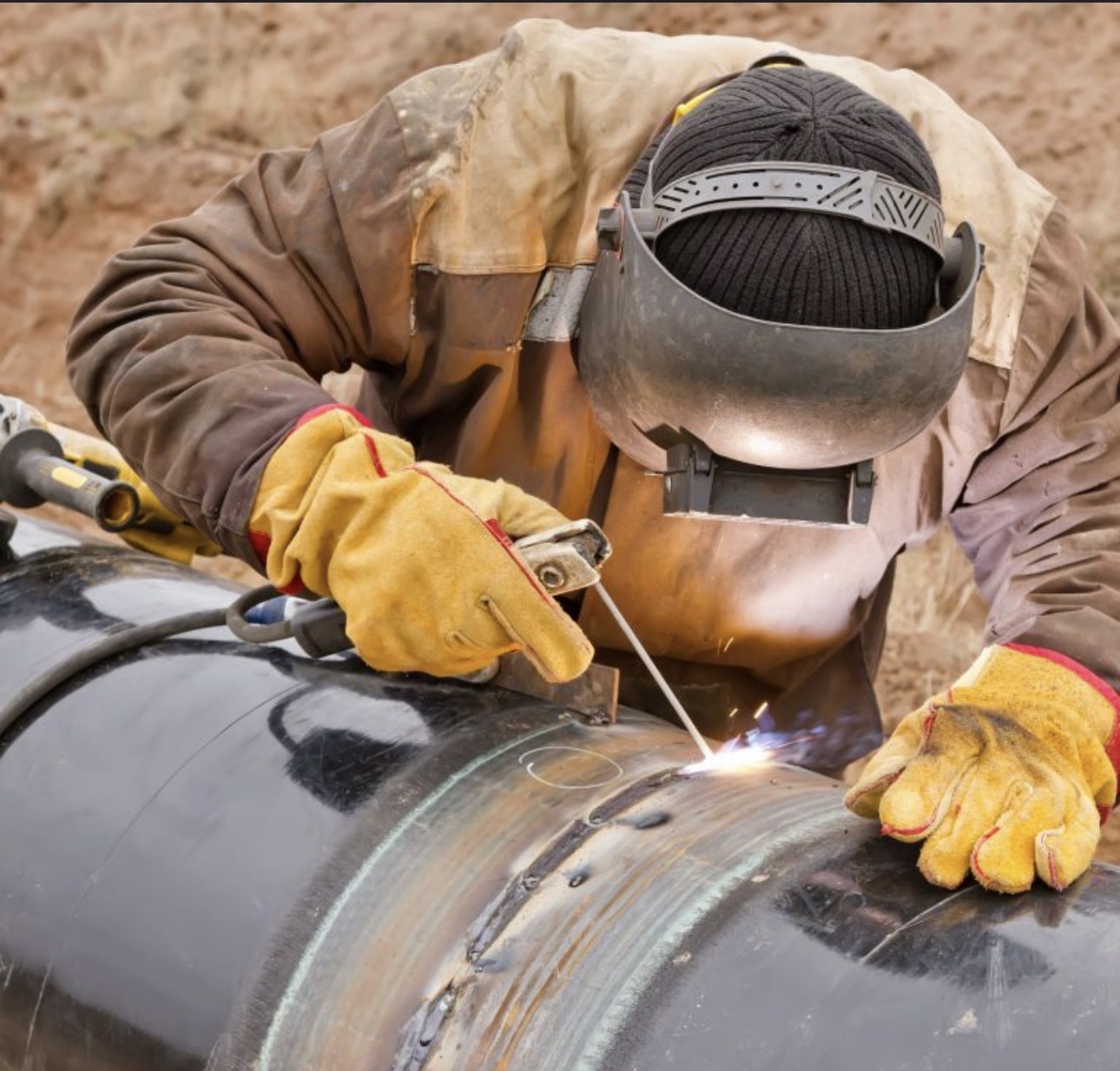
The pipeline was supposed to be a triumph. Stretching 450 kilometres from the port of Mombasa to Nairobi, the new 20-inch multi-product conduit was Kenya’s most ambitious petroleum infrastructure project since independence, a Vision 2030 centrepiece awarded in July 2014 to Lebanese construction firm Zakhem International Construction Limited for a contract valued at approximately USD 484.5 million. It was commissioned in 2018. It was handed over. It was celebrated. And then, almost immediately, it became something else entirely: the locus of a financial extraction scheme so elaborate, so sustained, and so damaging to the Kenyan public that independent analysts now place the total documented exposure to taxpayers at over KSh 78 billion and still rising.
That figure is not a projection or an estimate conjured for effect. It is derived from audited financial statements, High Court filings, Auditor-General reports, and the records of at least sixteen interconnected civil suits that have wound through the Milimani Commercial Court since 2018, engaging five different judges, triggering four recusal applications, and attracting a Directorate of Criminal Investigations inquiry into whether a sitting High Court judge was improperly approached to tilt the outcome. What began as a procurement dispute has metastasised into a matrix of garnishee orders, Mareva injunctions, consent judgments, and counter-applications that have effectively turned Kenya’s judiciary into an instrument of financial extraction from a state corporation.
Activist and politician Morara Kebaso brought the matter back into public focus in early April 2026, when a video he originally posted in September 2024 resurfaced on social media.
In the nearly 35-minute recording, Kebaso presents bank transfer documents, Auditor-General excerpts, and High Court filings, alleging what he describes as dirty dealings involving excessive post-completion payments, opaque variations, and the routing of public funds through prominent advocates. The video, amplified by the Nyakundi Report account on X, has reignited demands for a parliamentary probe and a full forensic audit. KPC has not issued a direct public response to the resurfaced claims.
But Kebaso’s intervention, however pointed, tells only the surface layer of a story that is far darker and far more structurally dangerous than any single video can convey. Kenya Insights has reviewed court records, financial statements, and legal filings spanning twelve years to assemble the most comprehensive account yet of how Kenyan public infrastructure funds were pledged to a foreign bank through instruments that KPC’s own leadership appeared not to understand, and how a Lebanese construction dynasty then used that pledge as the foundation for a decade of litigation that has bled the corporation of billions while shielding the original wrongdoing from prosecutorial scrutiny.
THE DEBENTURE THAT PRECEDED EVERYTHING
The architecture of the scheme was assembled eight years before the pipeline contract was signed. In February 2006, a Lebanese construction company registered in Nigeria as Zakhem Construction Nigeria Limited executed a Deed of Debenture with Ecobank Nigeria PLC in Lagos. The instrument pledged all of Zakhem’s present and future assets globally, including future receivables, as security for financial facilities that Ecobank might extend. To most observers, such instruments are routine commercial arrangements. In this case, the debenture was a loaded mechanism that would lie dormant for nearly a decade before being activated with devastating consequences for the Kenyan public.
In July 2014, KPC awarded the Mombasa-Nairobi Line 5 pipeline contract to Zakhem International Construction Limited, the Cypriot-registered arm of the Zakhem group, for approximately KSh 49.5 billion at prevailing exchange rates. Within months of that award, Zakhem secured a financing facility estimated at USD 300 million from Ecobank Nigeria, using the KPC contract proceeds as collateral. The instrument activating that pledge was a set of domiciliation letters, dated October 2014, in which Zakhem gave what court filings describe as unconditional and irrevocable instructions directing KPC to channel 70 percent of all contract payments into Zakhem’s account at Ecobank Nigeria, with the remaining 30 percent routed to Ecobank Kenya.
KPC confirmed receipt of those Domiciliation Letters on 13 October 2014, placing its dated stamp upon them. What the corporation did not disclose, and what would become the central controversy of litigation that continues to this day, is that by stamping those letters, KPC had effectively bound itself as a party to a three-way financial obligation involving a Nigerian bank, a Cypriot holding company, and a Nigerian construction entity, all connected by an eight-year-old debenture that predated the KPC contract entirely. Ecobank had engineered itself a senior claim over contract proceeds that ranked, in practical terms, ahead of anything KPC’s own legal advisers had contemplated. None of this was disclosed in KPC’s annual reports for years, even after the corporation had been named as a defendant in a lawsuit demanding over USD 52 million.
The financing consortium that KPC’s own documentation acknowledges included CFC Stanbic, Citibank Kenya, Co-operative Bank, Rand Merchant Bank, and Standard Chartered. Ecobank was not among them. Yet by virtue of the domiciliation letters, Ecobank’s claim to contract proceeds was arguably superior to any arrangement KPC had formally sanctioned. Legal experts have since argued that by accepting those letters, KPC created a binding financial obligation to a foreign bank without parliamentary approval or Treasury oversight, in potential violation of the Public Finance Management Act.
THE BALLOON THAT NEVER STOPPED INFLATING
The contract itself was a source of controversy from the outset. Zakhem International Construction Cyprus had submitted two different bid figures during the procurement process, USD 591 million and USD 485 million, a discrepancy that competitors alleged was irregular. KPC awarded the contract at the lower figure. Construction commenced shortly after signing, with project completion and handover to KPC occurring in July 2018 following a commissioning process. But the price had already moved well beyond the original contract value through a sequence of variation orders and extensions of time that KPC’s Auditor-General-reviewed accounts would later acknowledge as design changes and omitted works.
By the financial year ending June 2019, official records showed total expenditure on the Line 5 project reaching KSh 51.4 billion, a material increase from the original contract sum. The Auditor-General’s reports for successive years flagged billions in additional disbursements to the contractor, including a red-flagged payment of KSh 2.8 billion in a single financial year. KPC’s own 2018 financial statements contained a startling admission: that until matters related to contract variations and extensions of time were resolved, it was not possible to confirm that the carrying value of the pipeline as stated in the accounts was true and fair. That was not a footnote. That was an auditor’s signal that the numbers could not be vouched for.
The variation dispute had by then been transplanted from the boardroom into the courts. A partial decree of USD 44 million was awarded against KPC by Justice Grace Nzioka in June 2020, covering unpaid sums that both parties had been negotiating to resolve but which the intervention of the Directorate of Criminal Investigations in July 2019, which ordered KPC to suspend all payments to Zakhem pending its own inquiry, had transformed into a court battle. The DCI’s intervention, whatever its merits, produced an outcome that would prove financially catastrophic. The delay in paying the agreed amount triggered contractual interest charges of approximately 6 percent per annum. By independent calculations, those avoidable penalties cost Kenyan taxpayers upwards of KSh 3 billion.
THE LAWSUIT THAT BLED THE NATION
In 2018, Ecobank Nigeria Limited and its Kenyan subsidiary filed Civil Suit 292 of 2018 at the Commercial and Tax Division of the High Court of Kenya, naming KPC as the fifth respondent. The bank’s case rested on those domiciliation letters from 2014. Its position was that Zakhem had colluded with KPC to divert contract proceeds to Stanbic Bank rather than through the Ecobank accounts as instructed, causing Ecobank to suffer a loss of USD 52.3 million, the outstanding balance of the USD 206 million it claims to have advanced for the project. KPC, which had not borrowed directly from Ecobank and had not been a party to the 2006 debenture, found itself defending a claim arising purely from its own acceptance of those domiciliation letters.
The corporation reportedly spent at least KSh 90 million in legal fees in a single year defending the suit. High Court Judge Mary Kasango issued permanent orders in November 2018 barring KPC from paying contract proceeds to any party other than Ecobank Nigeria and Ecobank Kenya, effectively freezing KPC’s ability to settle its acknowledged debts to Zakhem while simultaneously exposing it to interest penalties for non-payment. The bind was structurally inescapable. By the time a final decree in the Ecobank matter was issued on 16 February 2024, consolidating an earlier partial decree, the award in favour of Ecobank Nigeria and Ecobank Kenya had grown to USD 31.9 million in undisputed and disputed sums combined.
The list of case references alone tells the story of a judiciary under siege. Civil Suit 292 of 2018, HCCC E322 of 2019, HCC Misc E042 of 2021, HCCC E276 of 2019, Civil Case E132 of 2020, Civil Case E202 of 2020, Miscellaneous Civil Application E1215 of 2020, HCCC Misc E329, E330, and E331 of 2022, Civil Application E503 of 2024, Civil Application E420 of 2024, Civil Application E436 of 2023, Miscellaneous Application E395 of 2025, and Miscellaneous Application E590 of 2025. That is not a record of different legal disputes. It is a matrix of interconnected applications, stay orders, garnishee proceedings, recusals, appeals, arbitrations, and counter-applications, all orbiting the same contract while the clock on interest ran continuously at the expense of the Kenyan taxpayer.
The recusal attempts alone were extraordinary in their audacity. Four judges handled the matter before being recused or transferred. Justice Abigail Mshila, the late Justice David Majanja, Justice Wilfrida Okwany, and Justice Freda Mugambi all passed through the matter. Senior Counsel Ahmednasir Abdullahi, representing Zakhem, then filed an application demanding that Justice P.J. Otieno also recuse himself. Justice Otieno refused on 8 August 2024, observing that abandoning the case after substantive judicial resources had been invested would perpetuate the very delays that the litigation had created. The Court of Appeal separately ordered the DCI to file a report on allegations that Professor Tom Ojienda, acting for subcontractor Oilfields Engineering and Supplies, had allegedly approached Justice Otieno to tilt the outcome in his client’s favour. That report, if it has been completed, has not been made public.
THE SETTLEMENT THAT WAS NOT FINAL
In September 2023, KPC and Zakhem recorded a consent judgment of USD 69.6 million, approximately KSh 9 billion at prevailing rates, which KPC’s own financial reporting described as the resolution of a long legal dispute with one of its contractors. It was not final. It was not even a pause. Within months of the consent judgment being recorded, Zakhem was back in court. Ahmednasir Abdullahi filed applications seeking to freeze KPC’s bank accounts at Standard Chartered Bank over an alleged remaining debt of KSh 926 million.
That application was dismissed by Justice Wayua Mong’are on 29 May 2025, on the grounds that Zakhem was raising the same arguments before a court of concurrent jurisdiction that it had already placed before another court, which the law does not permit. But Zakhem immediately regrouped. In June 2025, fresh garnishee applications were filed against KPC’s accounts at Equity Bank, Stanbic, KCB, NCBA, Citibank, Co-operative Bank, and Absa. The High Court ultimately ordered Equity Bank to release KSh 485 million from KPC’s accounts and pay it directly into the trust account of Ahmednasir Abdullahi Advocates LLP, finding that KPC had failed to comply with a January 2021 order to pay that balance after settling its tax obligations with the Kenya Revenue Authority.
The KRA angle adds another dimension to the damage. Following the June 2020 decree awarding Zakhem USD 44 million, KPC made two payments to KRA as part of Zakhem’s assessed tax liabilities, KSh 3.09 billion in October 2020 and KSh 915 million in January 2021. KPC then argued that additional KRA agency notices consumed the remaining balance owed to Zakhem. The court rejected that position, finding that any payments made beyond the court-ordered amounts were at KPC’s own risk. The effect was that KPC had remitted over KSh 4 billion to KRA and still owed Zakhem the outstanding balance, leaving the corporation exposed on two separate financial fronts simultaneously.
It was in this context that the July 2024 payments described in Kebaso’s video must be understood. The certificate of urgency filed by Ahmednasir on 1 August 2024 in the High Court’s Commercial Division confirmed that KPC had by then released USD 25 million out of USD 31.3 million owed pursuant to the February 2024 decree in favour of the Ecobank entities, with funds preserved in the trust accounts of Ahmednasir Abdullahi Advocates LLP and Majanja Luseno and Company pending the resolution of a Mareva injunction sought by the Oilfields subcontractor. High Court Judge P.J. Otieno ordered on 8 August 2024 that those funds be preserved and not disbursed pending determination of the competing claims.
THE SUBCONTRACTORS LEFT BEHIND
While billions moved between corporate accounts and law firm trust funds, the companies that actually performed the physical labour on the Line 5 project were left to chase payment through their own separate litigation. Oilfields Engineering and Supplies Limited, a local subcontractor engaged by Zakhem, moved to court in 2024 seeking to freeze KSh 4.1 billion that was to be paid by KPC to Zakhem, arguing that Zakhem owed it money for completed work. That court fight became so vicious, with accusations of judicial interference and counter-allegations of manipulated arbitration, that the matter was effectively frozen at the appellate level while the DCI investigation dragged on.
Azicon Kenya Limited, which handled electrical, instrumentation, and telecommunications installations on the project, received formal certification for payment in March 2019 and had still not been paid by mid-2025. A Nairobi court ordered Zakhem to settle KSh 537.3 million owed to Azicon, clearing the way for enforcement action. Ruhpumpen Global Limited, another subcontractor, had sued KPC alleging it was induced to favour Ebara Corporation in equipment procurement, though that case was ultimately dismissed. The pattern is consistent: the main contractor extracted billions from a state corporation, the foreign bank that financed the contractor extracted further billions through litigation, and the Kenyan subcontractors who built the thing were left to pursue enforcement through courts that were themselves ensnared in the larger dispute.
THE IPO AND THE CONTINGENT LIABILITY NO ONE DISCUSSED
This is the context in which Kenya Pipeline Company conducted its landmark initial public offering in January 2026. The government sold 65 percent of KPC, offering 11.81 billion shares at KSh 9 per share and targeting gross proceeds of KSh 106.3 billion, in what Reuters described as East Africa’s biggest IPO in local currency terms in over a decade. The offer exceeded its target by 5.7 percent, according to Bloomberg, closing on 24 February 2026 with listing on the Nairobi Securities Exchange on 9 March 2026. For the year ended 30 June 2025, KPC reported revenue of KSh 38.6 billion and profit of KSh 7.49 billion. The transaction was positioned, in President Ruto’s own framing, as a once-in-a-generation opportunity for ordinary Kenyans to own a share of their national energy artery.
What was not foregrounded in that framing was the fact that as of the close of the IPO, active garnishee applications from Zakhem remained pending against KPC’s accounts at seven separate banks, that the total documented financial exposure from the Zakhem-Ecobank litigation exceeded KSh 78 billion by the most conservative accounting, and that no forensic investigation into the original domiciliation arrangements had been publicly ordered. The KPC prospectus, by regulatory requirement, would have disclosed material litigation. Whether the full scope of that exposure was sufficiently communicated to retail investors who were encouraged by government to participate in a patriotic act of share-buying is a question that Kenya’s Capital Markets Authority and Nairobi Securities Exchange have not yet publicly addressed.
Former KPC Managing Director Joe Sang, who served during the critical phases of the contract and the subsequent litigation, resigned following a separate fuel procurement scandal in which Petroleum PS Mohamed Liban and EPRA Director General Daniel Kiptoo Bargoria were also arrested following a public signal from the President. Their resignations came within two days of the arrests. The state can move when it chooses to. The Zakhem-Ecobank exposure, which dwarfs the fuel procurement matter in both scale and duration, has attracted no equivalent executive accountability.
WHAT ACCOUNTABILITY REQUIRES
Ahmednasir Abdullahi has stated publicly on X that the KPC payments described in Kebaso’s video were not legal fees to his firm and that he does not act for KPC in the matter. He dismissed suggestions of personal enrichment as misguided. KPC has not issued a direct public response to the resurfaced allegations. Faith Boinett, who chairs the KPC board and was reappointed to that position by President Ruto, has also not commented publicly on the Zakhem litigation exposure or the adequacy of disclosures made during the IPO.
The questions that remain unanswered are not complicated. Who within KPC authorised the acceptance of the October 2014 domiciliation letters and on what legal advice? Did the National Treasury, which has board representation at KPC, receive any disclosure of the Ecobank domiciliation arrangement before or after it was executed? What is the total sum disbursed by KPC in all forms, including principal payments, interest, penalties, legal fees, and tax payments, in connection with the Zakhem contract since commissioning in 2018? And why, despite the DCI being ordered by the Court of Appeal to investigate allegations of judicial interference in the proceedings, has no report been made public and no prosecution initiated?
The Director of Public Prosecutions and the DCI Director face a specific evidentiary record that is already assembled in court files, audit reports, and financial statements. The 2006 debenture was registered in Nigeria. The domiciliation letters were stamped in Kenya in 2014. The contract was awarded, the pipeline was built, and the financial extraction has been running ever since through mechanisms that the courts, the auditors, and parliamentary committees have each partially illuminated but none has comprehensively prosecuted. A full forensic investigation into the banking records, the legal instruments, and the decision-making chain within KPC between 2014 and 2018 is not optional. It is the minimum that accountability to the Kenyan public requires.
For now, the pipeline pumps fuel. The litigation pumps money. And the KSh 78 billion figure grows.
Kenya Insights allows guest blogging, if you want to be published on Kenya’s most authoritative and accurate blog, have an expose, news TIPS, story angles, human interest stories, drop us an email on [email protected] or via Telegram










How Adil Popat Saved His Empire On The Eve Of Imperial Bank Collapse and Why Kenya’s Mainstream Media Buried The Story

South Sudan: Adut Salva Kiir’s Shadow Treasury Exposed

Wajir North MP Ibrahim Abdi Dissatisfied With2026/27 Budget, Claims It Totally Excludes North Eastern Region

The Eldoret Tax Fortress: How David Langat Turned an Industrial Park Dream Into Kenya’s Most Sophisticated Domestic Tax Haven

Why John Ngumi Is Running From the EACC and Why the Sh415 Million Payday May Be the Least of His Worries

Shiquo Hii Style Store Was Not Raided, Anti-Counterfeit Authority Confirms; Says Influencer Used Empty Shelves for Content as She Relocates

Treasury CS Mbadi Unveils Sh4.8 Trillion Budget Estimates

Fraud, Misrepresentation and A Decade Of Evasion: How Indo Africa Finance Pocketed Sh150 Million Youth Funds and Fought To Keep Every Cent

Kenya Picks Chinese Firm For Sh375 Billion JKIA Upgrade Project After Adani Fallout

The President’s Daughter and The Missing Witness: How Adut Salva Kiir’s Shadow Treasury Silenced Its Most Dangerous Critic

Cement, Cash and Courts: How the Hashu Dynasty Crushed the Ramji Brothers for Fourteen Years and Why the Walls Are Now Closing In

Inside The Urban Planning Cartel That Owns Nairobi

Standard Chartered Ghosts Haunt Joshua Oigara At Stanbic As Whistleblower Spills Beans

Inside NCBA’s Decline: How a Banking Giant Lost Its Strategic Edge

Why Ruto’s Favourite Candidate Adan Mohammed Could Be Locked Out of the KRA Top Job

LifeCare on the Brink: SHA Fraud, Stolen Wages, and the Rotten Empire Jayesh Saini Built

Betika Faces DCI Probe, Directors Arrest and License Revocation Over Massive 29.5 Million Safaricom Customers’ Data Breach

Este Medical Kenya Fights American’s Explosive Complaints

Fresh Move Launched to Remove Kenya Railways MD Mainga From Office After Awarding Sh817 Million Consultancy Contract

The Rot Inside Absa: How Bank Insiders Are Looting Nairobi’s Customers
-
 Investigations1 week ago
Cement, Cash and Courts: How the Hashu Dynasty Crushed the Ramji Brothers for Fourteen Years and Why the Walls Are Now Closing In
-
 Investigations7 days ago
Inside The Urban Planning Cartel That Owns Nairobi
-
 Business2 days ago
Standard Chartered Ghosts Haunt Joshua Oigara At Stanbic As Whistleblower Spills Beans
-
 Business3 days ago
Inside NCBA’s Decline: How a Banking Giant Lost Its Strategic Edge
-
 Investigations2 weeks ago
Betika Faces DCI Probe, Directors Arrest and License Revocation Over Massive 29.5 Million Safaricom Customers’ Data Breach
-
 Investigations1 week ago
Fresh Move Launched to Remove Kenya Railways MD Mainga From Office After Awarding Sh817 Million Consultancy Contract
-

 Business1 week ago
TRUST BETRAYED: How Senior DTB Bank Insiders Allegedly Looted Sh149 Million From a Customer’s Account Over Five Years
-
 News2 weeks ago
How Uhuru’s Deal With Obama In 2015 Paved Way For America’s Ebola Plan In Kenya