
News
PROFITING FROM THE MISSILES: The Kenyan Tycoons Cashing In on the War Against Iran
As American bombs rewrote the map of the Middle East and Iranian missiles closed the Strait of Hormuz to commercial shipping, a small and quietly elated circle of Kenyan industrialists, port operators, aviation executives and consumer goods manufacturers discovered, to their barely concealed delight, that one man’s geopolitical catastrophe is another man’s best financial year in a generation.

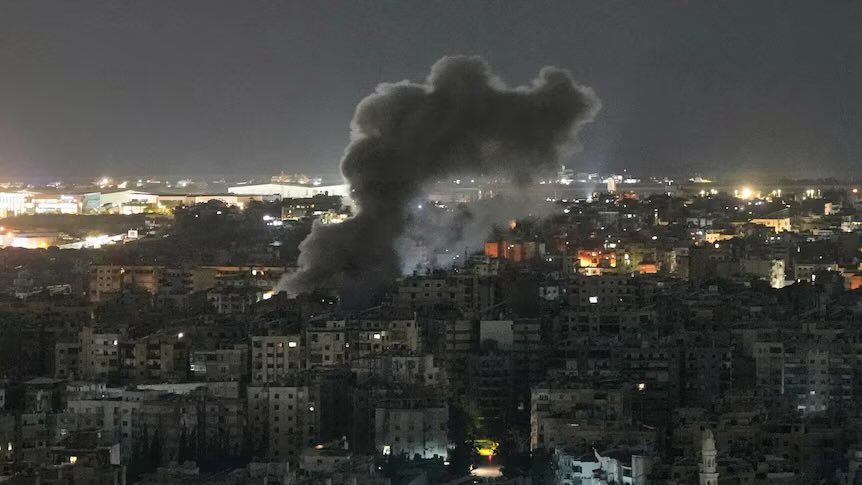
When the United States and Israel launched Operation Epic Fury against Iran on 28 February 2026, killing Supreme Leader Ali Khamenei and triggering what has since been described as the most severe disruption to global maritime trade since the Second World War, the immediate instinct among Nairobi’s business establishment was defensive. Fuel rationing, inflation, a weakening shilling, disrupted trade routes worth hundreds of billions of shillings. The models were grim. The projections were grimmer.
Nobody modelled what actually happened.
Within seventy-two hours of the Iranian Revolutionary Guard Corps issuing radio warnings prohibiting Western-linked vessel passage through the Strait of Hormuz, a cascade of unintended consequences began to flow southward along the Indian Ocean. Ships that had been bound for Dubai, Abu Dhabi, and Jebel Ali found themselves wandering in open water, their insurers unwilling to issue cover for Hormuz transit at any price approaching commercial sanity. War-risk insurance premiums for vessels attempting the Strait surged past $200,000 per transit. Shipping companies did the arithmetic quickly. Many of their vessels began turning south, toward the only deep-water corridor that made geographic and financial sense: the Kenyan coast.
What followed was a commercial windfall that Kenya’s most agile tycoons, port operators, logistics barons and manufacturers were positioning themselves to capture, even as millions of ordinary Kenyans braced for the inflationary consequences of a disrupted global fuel supply.
One man’s geopolitical catastrophe is another man’s best financial year in a generation.
THE PORT OF LAMU: FROM SLEEPY CURIOSITY TO GLOBAL LIFELINE
There is no more dramatic symbol of Kenya’s unexpected war dividend than Lamu Port. For most of its short operational life, the facility on a UNESCO-listed island 340 kilometres north of Mombasa had been precisely the kind of infrastructure project that development economists write cautionary papers about: expensive, strategically visionary, chronically underutilised. Since it opened in 2021, the port had serviced a cumulative total of fewer than two hundred and fifty vessels. In the first quarter of 2025, it handled exactly two container ship calls.
Then came the missiles.
By 11 March 2026, less than two weeks after Operation Epic Fury began, the Kenya Ports Authority confirmed that Lamu had already received forty-three vessels in the year to date. By 19 March, that figure had jumped to seventy-four, representing roughly one-third of all ships the port had ever serviced in its entire existence. KPA Managing Director Captain William Ruto, the port’s most improbable namesake, offered the most candid assessment available from any Kenyan public official: revenues had already reached into the hundreds of millions of shillings from the surge alone. “We are overwhelmed,” he told reporters in Lamu. “The conflicts come with both blessings and challenges in business.”
The vessels arriving were not carrying ordinary cargo. The MV Grande Auckland, a nine-thousand-capacity pure car carrier operated by Italy’s Grimaldi Lines, made its maiden Lamu call carrying a full load of high-end vehicles originally destined for Jebel Ali. It discharged four hundred and sixty-nine cars at the Kililana terminal, including Porsches that were photographed in a port warehouse and whose images circulated internationally, before continuing to Mumbai with its remaining cargo. Days later, the MV Grande Florida Palermo arrived from Yokohama, Japan, laden with three thousand eight hundred motor vehicles originally contracted for Saudi Arabia. Another vessel carrying five thousand units was confirmed expected imminently. More than four thousand luxury vehicles now sit at Lamu, effectively stranded until the security situation in the Gulf stabilises.
The economics behind the diversion are mechanical in their simplicity. Lamu’s natural berths offer a draught of 17.5 metres, deeper than Mombasa’s 15-metre maximum, allowing it to accommodate the ultra-large carriers that the crisis is routing southward. Its location on the Indian Ocean places it roughly 3,300 kilometres from Dubai, close enough to make a forced diversion commercially bearable. And crucially, shippers using roll-on/roll-off vessels to offload thousands of cars at Lamu can then ferry individual vehicles to the Gulf on smaller craft that evade the war-risk insurance threshold entirely, an arbitrage that has turned Lamu’s once-mocked camels-and-dhows reputation into a logistics footnote.
The port fees generated by a single five-thousand-vehicle shipment run into the tens of millions of shillings for Kenya Ports Authority alone, before calculating customs duties and associated warehousing charges. If the diversion rates of the past month continue through the year’s second and third quarters, the KPA and the Kenya Revenue Authority stand to collect revenues that would have been unimaginable in any pre-war forecast. KRA’s projections, according to officials who declined to be named, suggest customs duties on diverted vehicle shipments alone could approach Sh45 billion per major consignment, with total additional port-related revenues potentially reaching Sh1.8 billion over nine months when warehousing, bunkering and logistics taxes are aggregated. That is a 215 percent increase over the comparable period last year.
Four thousand Porsches parked on a UNESCO heritage island is not a scene from a development plan. It is the disorienting arithmetic of war.
KENYA AIRWAYS: THE NATION’S MOST PROFITABLE NATIONAL CARRIER, SUDDENLY
In normal times, Kenya Airways exists primarily as a source of parliamentary anxiety, audit committee headaches, and recurring newspaper editorials demanding its privatisation. The national carrier posted a pre-tax loss of $138 million in 2025. Its Dubai and Sharjah routes, among its most commercially vital links to the Gulf’s enormous African diaspora, were suspended indefinitely the morning of 1 March 2026, when Gulf airspace closed. The initial damage assessment was severe.
Nobody accounted for what Dubai’s closure would do to the global passenger market.
Emirates, Etihad, Qatar Airways and Saudia collectively operate among the most extensive airline networks on earth, routing hundreds of millions of passengers between Europe, America, Asia and Africa through their Gulf hubs every year. When Gulf airspace closed, all four carriers either suspended or drastically curtailed operations. Emirates was reported at sixty-eight percent of normal service levels by mid-March. Qatar Airways had recovered to barely eighteen percent of pre-war operations, parking twenty aircraft in a Spanish storage facility. Etihad was barely functioning at forty-nine percent. The passengers who had been routed through Dubai and Doha had to go somewhere.
They came to Nairobi.
Kenya Airways acting CEO George Kamal, speaking at a press briefing in Nairobi, reported a thirty-two percent improvement in seat occupancy on long-haul routes, from an average seventy percent load factor to ninety percent, with some individual flights reaching ninety-nine percent capacity. “We took advantage of the current situation and mainly rerouted a lot of customers from Europe,” Kamal told journalists. “We see an increase from Europe, Asia and the US through Nairobi as a hub now.” The airline, which flies directly to London, Amsterdam, Paris, New York, Mumbai, Bangkok and Guangzhou, confirmed it was adding flights on multiple routes. Cargo shipments tell an equally striking story: daily freight volumes grew from approximately seventy tonnes per day to one hundred and eighty tonnes since January, as exporters bypassing closed Middle Eastern hubs discovered Nairobi’s commercial utility.
The beneficiaries of Kenya Airways’ sudden commercial renaissance extend well beyond the airline itself. The jet fuel re-export business at Jomo Kenyatta International Airport, which had grown into one of Kenya’s top five foreign exchange earners, worth an estimated Sh100 billion annually, was under threat from Gulf carrier suspensions. But the surge in long-haul traffic through JKIA has partially compensated for the loss of Gulf carrier fuelling, while simultaneously rewarding the oil marketing companies that supply jet fuel to the airport’s fuel farm. Companies including Total Energies Kenya, Rubis Energy Kenya and Vivo Energy, which operates the Shell brand locally, are positioned to benefit from the extraordinary volumes of fuel being consumed by long-haul aircraft that have rerouted through Nairobi.
BIDCO AFRICA: THE SHAH FAMILY’S QUIET BILLION-DOLLAR MOMENT
Vimal Shah does not habitually attract the kind of attention that Lamu’s Porsches or Kenya Airways’s packed flights generate. The sixty-four-year-old chairman of Bidco Africa, East Africa’s dominant manufacturer of edible oils, soaps, fats and personal care products, has spent four decades building a business that operates in eighteen African countries under more than sixty brands, including the household names Kimbo, Elianto, SunGold and Golden Fry. He holds the Chancellor’s chair at Maasai Mara University. Forbes once listed his family’s net worth at $1.6 billion, a figure Shah publicly dismissed as inflated even when the market was against him.
In March 2026, the market is very much in his favour.
The Strait of Hormuz’s effective closure has severed the supply chains that normally deliver competing edible oils from Gulf-region processors to East African supermarket shelves. Gulf-origin vegetable oils, which had commanded a significant share of the Kenyan retail market through price competitiveness and volume, are now stranded or rerouted on vessels adding weeks and thousands of dollars in additional freight costs to every consignment. The competitive arithmetic has shifted entirely. Bidco, which manufactures domestically with established regional supply chains and commands approximately forty-nine percent of Kenya’s edible oil market, has found its Middle Eastern competitors effectively removed from its shelves by an act of geopolitical force.
The same logic applies to Bidco’s soap and detergent lines. With Gulf manufacturers unable to ship competitively into East African markets, Bidco’s Kimbo, Nuru and Power Boy brands are filling retail space that imported competitors previously occupied. Raw material costs have risen, given that Bidco itself depends partly on imported palm oil, but the elimination of finished-product competition has more than compensated. Industry analysts in Nairobi estimate that if the supply disruption continues through the second quarter of 2026, Bidco’s regional revenues could show a gain of fifteen to twenty-five percent over the same period in 2025, depending on how aggressively the company converts market share opportunity into volume.
The Shah family, which privately holds Bidco through the Hemby Holdings structure, is not required to publish quarterly earnings or provide guidance to financial markets. The most reliable measure of Bidco’s performance is what happens on the shelves. Across Nairobi’s supermarket chains, Bidco products that were previously in price competition with Gulf-origin alternatives are now, for practical purposes, the market. That is a position Shah and his family have spent forty years trying to achieve through product quality and regional expansion. The war gave them what decades of effort approached but never fully delivered.
The war gave the Shah family what forty years of effort approached but never fully delivered: a market without Gulf competition.
MANU CHANDARIA AND THE COMCRAFT GROUP: STEEL, ALUMINIUM AND THE LAPSSET CORRIDOR
At eighty-nine years of age, Manu Chandaria remains one of East Africa’s most significant industrialists, operating the Comcraft Group across more than forty countries with interests spanning steel manufacturing, aluminium processing, plastics and building materials. His Chandaria family holdings in Kenya include the Mabati Rolling Mills brand, the dominant manufacturer of iron sheets in East Africa, along with a portfolio of industrial operations that span the region’s construction and manufacturing supply chains.
Comcraft’s strategic position in the current crisis derives from the same dynamic that is benefiting Bidco: the removal of Gulf competition from East African markets. Gulf states, particularly the UAE and Saudi Arabia, had established significant steel and aluminium manufacturing and re-export capacities aimed at African markets over the past decade. With those capacities now either damaged, stranded or commercially inaccessible, regional manufacturers find themselves as the default suppliers to construction and infrastructure projects that cannot wait for the war to end.
The LAPSSET corridor is where Chandaria’s position becomes particularly powerful. Kenya and Ethiopia launched joint military patrols along the corridor on 4 March 2026, formally securitising the route as a strategic national and regional asset for the first time in the corridor’s history. The practical implication is that construction and infrastructure work along the LAPSSET route, including roads, pipelines, railway extensions and port facilities, is now being accelerated under wartime economic conditions. Comcraft, as East Africa’s leading steel and aluminium processor, is the default supplier for construction materials across that corridor. The Group is, according to sources familiar with the company’s operations, trading directly with partners in India and the Gulf’s neutral-shipping corridors to maintain supply to its own manufacturing operations while competitors remain stranded.
THE BUNKERING BONANZA: MOMBASA’S HIDDEN WAR DIVIDEND
One of the least discussed but most lucrative dimensions of the war’s impact on Kenya concerns bunkering. Ships rerouting around the Cape of Good Hope and across the Indian Ocean to avoid the Hormuz and Red Sea corridors are travelling thousands of additional nautical miles, exhausting their fuel reserves at accelerated rates. They require reprovisioning at Indian Ocean ports before they can continue to their destinations. Mombasa and, increasingly, Lamu are among the most practically situated reprovisioning stops on the affected routes.
The oil marketing companies that dominate Mombasa’s bunkering industry stand to capture extraordinary revenues from this dynamic. Rubis Energy Kenya, Total Energies Kenya, and the trading arms of Vitol and Trafigura, which handle a significant share of Kenya’s fuel trading, are positioned to supply bunker fuel to diverted vessels at a moment when global demand for such reprovisioning is at a historical high. The Port of Mombasa had been developing its bunkering infrastructure as a strategic priority before the war; the war has simply accelerated the timeline on which that investment will generate returns. Bunkering demand at Kenyan ports is estimated by shipping industry analysts to have risen between thirty and forty percent in the weeks since Operation Epic Fury began.
The revenues do not flow only to the oil companies. Port fees, pilotage charges, mooring services and stevedoring all accumulate with every additional vessel call. Kenya Ports Authority, which was in the process of converting from a state corporation to a public limited company under the Government Owned Enterprises Act assented to in November 2025, finds itself entering its new commercial structure at a moment of genuinely extraordinary revenue opportunity. KPA now has ministerially confirmed operational autonomy to make equipment purchases without government interference, a governance reform that was announced in February 2026 and whose commercial significance was dramatically amplified by the events that followed nine days later.
THE AIRFREIGHT ARBITRAGE: HOW NAIROBI BECAME ASIA’S BACK DOOR TO EUROPE
The closure of the Strait of Hormuz did not merely disrupt sea freight. It also transformed the economics of air cargo. With approximately eighteen percent of global air freight normally transiting through Gulf hub airports, and with Emirates, Etihad and Qatar’s cargo operations curtailed alongside their passenger services, European and Asian shippers requiring rapid delivery of electronics, pharmaceuticals, precision components and perishable goods found themselves competing for capacity on carriers that could actually fly the routes.
Kenya Airways’s cargo surge, from seventy tonnes to one hundred and eighty tonnes of daily freight, is one dimension of this shift. But the more significant and enduring prize is Nairobi’s positioning as a transhipment node in the emergency air bridge that has formed to move consumer electronics from Asian manufacturing centres to European markets, bypassing the seventeen-thousand-kilometre sea detour that the Hormuz closure has imposed on ocean freight. The Jomo Kenyatta International Airport free trade zone, long a subject of government promotional literature and limited commercial traction, is attracting logistics operators who had previously regarded Nairobi primarily as a final destination rather than a through-routing point. That structural shift, if it persists beyond the immediate crisis, would represent a more valuable long-term asset than any of the immediate war-driven revenue flows.
THE LOSERS IN THE ROOM
Intellectual honesty requires acknowledging that the tycoons and entities profiting from the war are not the full story of what Iran’s missiles have done to Kenya’s economy. The country’s horticulture sector, which employs up to half a million Kenyans directly and generates over $800 million annually for the economy, is haemorrhaging. The Kenya Flower Council reported losses exceeding $4.2 million in the three weeks following the outbreak of hostilities. Exports at farms like Isinya Flower Farms in Kajiado have fallen by more than fifty percent. Cargo freight rates to Europe have spiked to $5.80 per kilogramme, a ten-year high, as Middle Eastern hub airports that normally provide transit capacity for Kenyan horticultural exports to European markets have become inaccessible.
Kenya’s fuel supply chain is also genuinely stressed. The country obtains all its petroleum imports through government-to-government arrangements with Gulf producers and refiners. Those arrangements, which were renegotiated with a thirteen percent price reduction in April 2025, are now under structural strain as the supply corridors they depend on are disrupted. The Kenya Petroleum Outlets Association has reported that twenty percent of independent retail outlets have been affected by supply constraints, with some facing stock exhaustion. The Kenya Pipeline Company, which holds strategic reserves of more than one hundred and two million litres of petrol, one hundred and forty-six million litres of diesel and one hundred and sixty-seven million litres of kerosene, is providing a buffer but not an infinite one.
The Nairobi Securities Exchange has absorbed significant damage. The NSE recorded its worst week since 2008 in the seven days ending 26 March 2026, with KSh 215.58 billion wiped from market capitalisation in four trading sessions. Safaricom alone shed KSh 54 billion in a single session. Brent crude above $106 per barrel, combined with the certainty of an EPRA fuel price review on 15 April, is feeding the kind of inflationary anxiety that the central bank can acknowledge but cannot easily contain.
The beneficiaries of the war are a small, wealthy and largely private cluster of industrialists and quasi-state entities. The losers are a much larger and poorer group: flower farm workers in Kajiado, fuel retailers in Nairobi’s outer estates, investors on the NSE, and the nineteen million Kenyans who will see the April fuel price review reflected in their transport costs, food prices and utility bills.
The beneficiaries of the war are a small, wealthy and largely private cluster. The losers are a much larger and poorer group.
THE STRUCTURAL QUESTION: WINDFALL OR TRANSFORMATION?
The question that animates Kenya’s policy community is whether the current disruption represents a temporary windfall or the beginning of a structural reorientation of East African trade. The distinction matters enormously. A windfall produces a brief revenue surge that dissipates when normal conditions return. A structural reorientation permanently increases the value of Kenya’s geography, infrastructure and productive capacity in global supply chains.
The evidence on this question is genuinely mixed. The LAPSSET corridor, which had languished as an infrastructure aspiration for fourteen years since its announcement in 2012, has now been militarily secured and is carrying live commercial traffic at volumes that justify the investment. That is a structural shift of the kind that wars occasionally crystallise from ambition into reality. Kenya’s positioning as an alternative aviation hub, if the war persists long enough for shipping relationships to solidify, could yield long-term contract value that outlasts the immediate crisis.
Against that, the deeper structural vulnerabilities remain: a fuel import dependency that is exposed to every Gulf disruption, a manufacturing sector that is not deep enough to absorb sustained input cost shocks, a financial market that sold off viciously on the first serious external shock in years, and a government that is spending its windfall port revenues servicing Eurobond obligations rather than investing in the port infrastructure that is generating them.
President Ruto has a 2027 election to prepare for. The war has given him a budget breathing room he did not have in February. Whether his administration translates that breathing room into infrastructure investment or into political incumbency management will determine whether Kenya’s Iranian missile windfall outlasts the cease-fire negotiations that are, as of this publication, being described as ongoing in a number of diplomatic capitals.
The tycoons in Vimal Shah’s position are not waiting for the government to decide. They are already at full capacity, supplying a market from which their competitors have been temporarily expelled. That is the nature of opportunism at the industrial scale. The missiles provided the opening. The question is who, and what, fills the space permanently.
Kenya Insights allows guest blogging, if you want to be published on Kenya’s most authoritative and accurate blog, have an expose, news TIPS, story angles, human interest stories, drop us an email on [email protected] or via Telegram


The President’s Helicopter: How Ruto’s Aviation Empire Lands a Historic Airbus Milestone While His Government Writes the Tax Code

“TikTok Who? YouTube Sorry. A Kenyan-Built Platform Just Dropped—and 20 African Ministers Showed Up To Launch It.”

Denial Under Duress: The Untold Collapse Threatening David Lagat’s DL Group’s Empire

Stung By West Africa Rejections, France Courts Rest Of Continent at Kenya Summit

THE INSURER THAT TOOK YOUR PREMIUM AND FORGOT YOUR NAME: How ICEA Lion Left a Client Begging for Sh7.8 Million Across Four Months

Safaricom’s Sh1.4 Billion Reckoning: How Kenya’s Most Profitable Company Stole a Man’s Idea and Got Caught

Bush Air Safaris Founder John Ndiritu Risks Losing Property Over Disputed Loan Claim

Bia Tosha’s Claim For Injunction Is Designed To Sabotage The Sh300bn Sale of EABL Shares

KDC Accelerates the Creative Economy, Innovation and Youth-Led Enterprise Growth at Africa Forward Summit

Luxury Play for Influence: Inside Kempinski’s High-Stakes Bet on Brazzaville

How Did a Sh468K KRA Salary Allegedly Turn Into Sh30 Billion? Questions Deepen Over Commissioner George Obel and Ciala Resort Owner’s Wealth

Nairobi Freezes Binance Accounts in Sweeping Anti-Fraud Crackdown as Global Scandal Record Haunts World’s Largest Crypto Exchange

The Man Behind the Badge: How Prof. Erastus Kanga Turned Kenya’s Premier Wildlife Agency into a Theatre of Corruption, Fear and Impunity

THE UNTOUCHABLE CLERK: How Fatuma Mwalupa Allegedly Turned Kwale Assembly Into a Personal Treasury and Outsmarted Scrutiny

THE BRAZEN RETURN: Triton Thief Yagnesh Devani, Who Pillaged Kenya of Sh7.6 Billion and Fled, Now Asks the Same Courts He Escaped to Restore His Stolen Wealth

Green Gold, Rotten Roots: How Kenya’s Biggest Avocado Firms Hijacked a Sh5.8 Billion Harvest Ban

TotalEnergies Moves to Sue TikToker for Sh10 Million Over Contaminated Fuel Claim as Kenya’s Petroleum Sector Burns

Kenyan Motorists Stare At Possible Engine Damage And Heavy Losses As Report Confirms Substandard Fuel In Circulation

Why the April 21 Flopped Protests Expose Kenya’s Rudderless Opposition

KETRACO CEO Advert Marred By Controversies As Fears Grow That Kipkemoi Kibias Is A Predetermined Candidate
-
 Investigations2 weeks ago
How Did a Sh468K KRA Salary Allegedly Turn Into Sh30 Billion? Questions Deepen Over Commissioner George Obel and Ciala Resort Owner’s Wealth
-
 Business2 weeks ago
Green Gold, Rotten Roots: How Kenya’s Biggest Avocado Firms Hijacked a Sh5.8 Billion Harvest Ban
-

 Africa1 week ago
The $24 Million Heist at the End of the World
-

 Investigations2 weeks ago
Serial Scammers Strike Again: How Kelvin ‘Sonko’ Onyango and Seth Steve Okute Built a Gold Fraud Empire on Kenya’s Reputation
-

 Investigations2 weeks ago
The Greek Heist: How Inform Lykos Allegedly Robbed Kenyan Taxpayers of Sh650 Million While Printing the Nation’s Exams and Ballots
-

 Investigations1 week ago
The Judge, The Disgraced Magistrate, The Auctioneer-Husband, The Fixer And The Lawyer: Anatomy Of A Sh16 Million Judicial Bribery Racket
-
 Business5 days ago
Safaricom’s Sh1.4 Billion Reckoning: How Kenya’s Most Profitable Company Stole a Man’s Idea and Got Caught
-

 Business2 weeks ago
Fly 748 Returns to Kenya’s Skies With Fresh Push for Affordable Coastal Travel