
News
Lobbyist’s Tweet Ignites Storm Around Equity Boss in Sh9.4B e-Citizen Saga
The audit suggests that Sh6.3 billion was channelled through a “Pesaflow” account held at Equity Bank without the requisite approvals from the National Treasury, raising red flags about parallel revenue streams operating outside formal government controls.

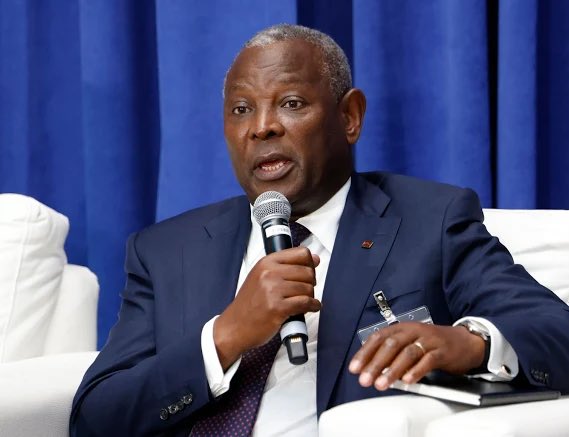
NAIROBI, April 1 — A late-night phone call, a defiant tweet and a trail of billions moving through opaque accounts have thrust Stephen Mutoro into the eye of a fast-escalating financial and political storm now brushing up against James Mwangi and one of Kenya’s most critical digital revenue systems.
The Secretary General of Consumer Federation of Kenya says he is standing his ground after accusing powerful interests of attempting to intimidate him into deleting a post in which he labelled Mwangi a “suspect” in the alleged Sh9.4 billion e-Citizen revenue scandal.
He insists the characterization was not an accusation of criminal guilt but a question of accountability grounded in parliamentary proceedings.
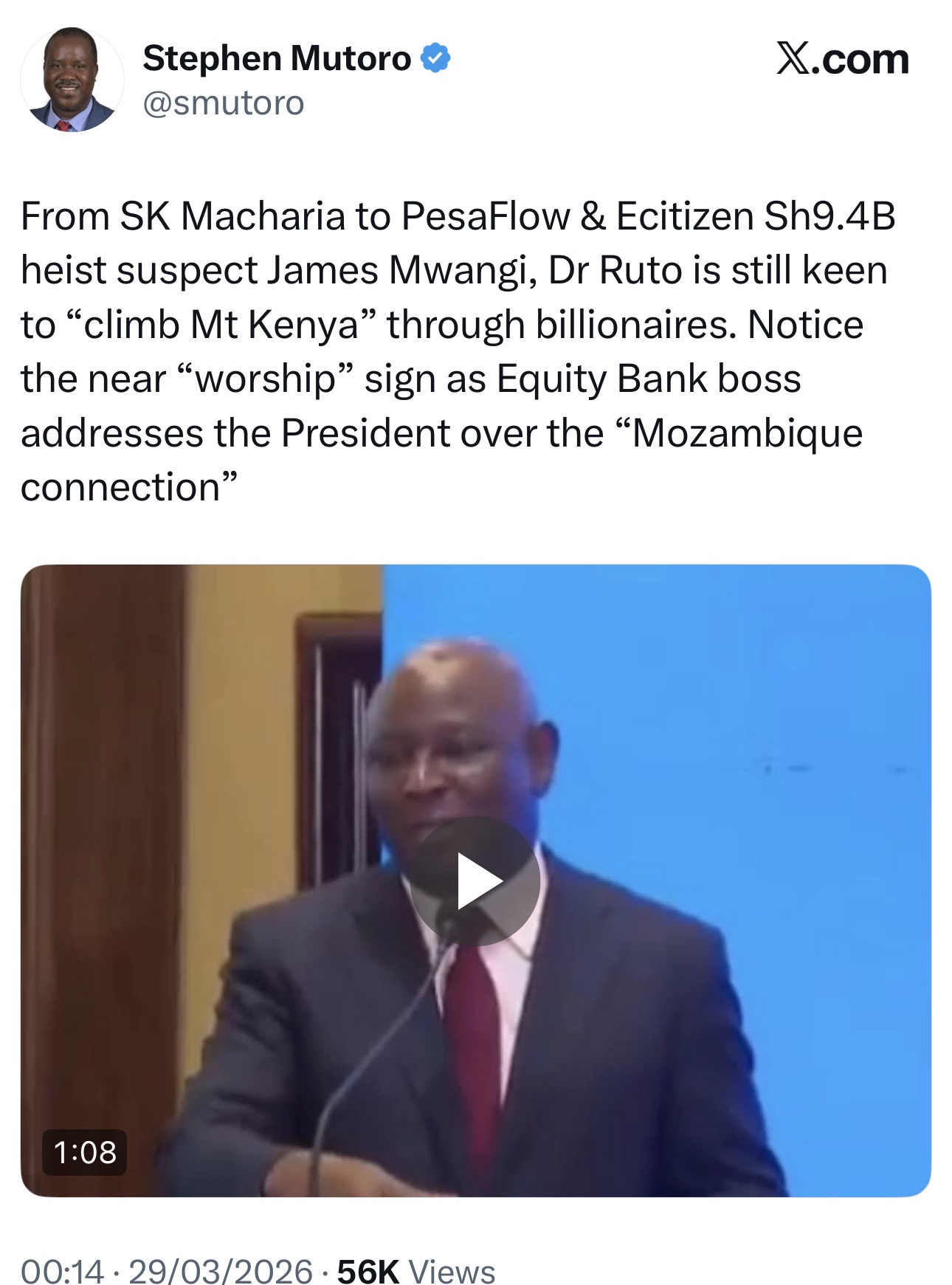
Screenshot
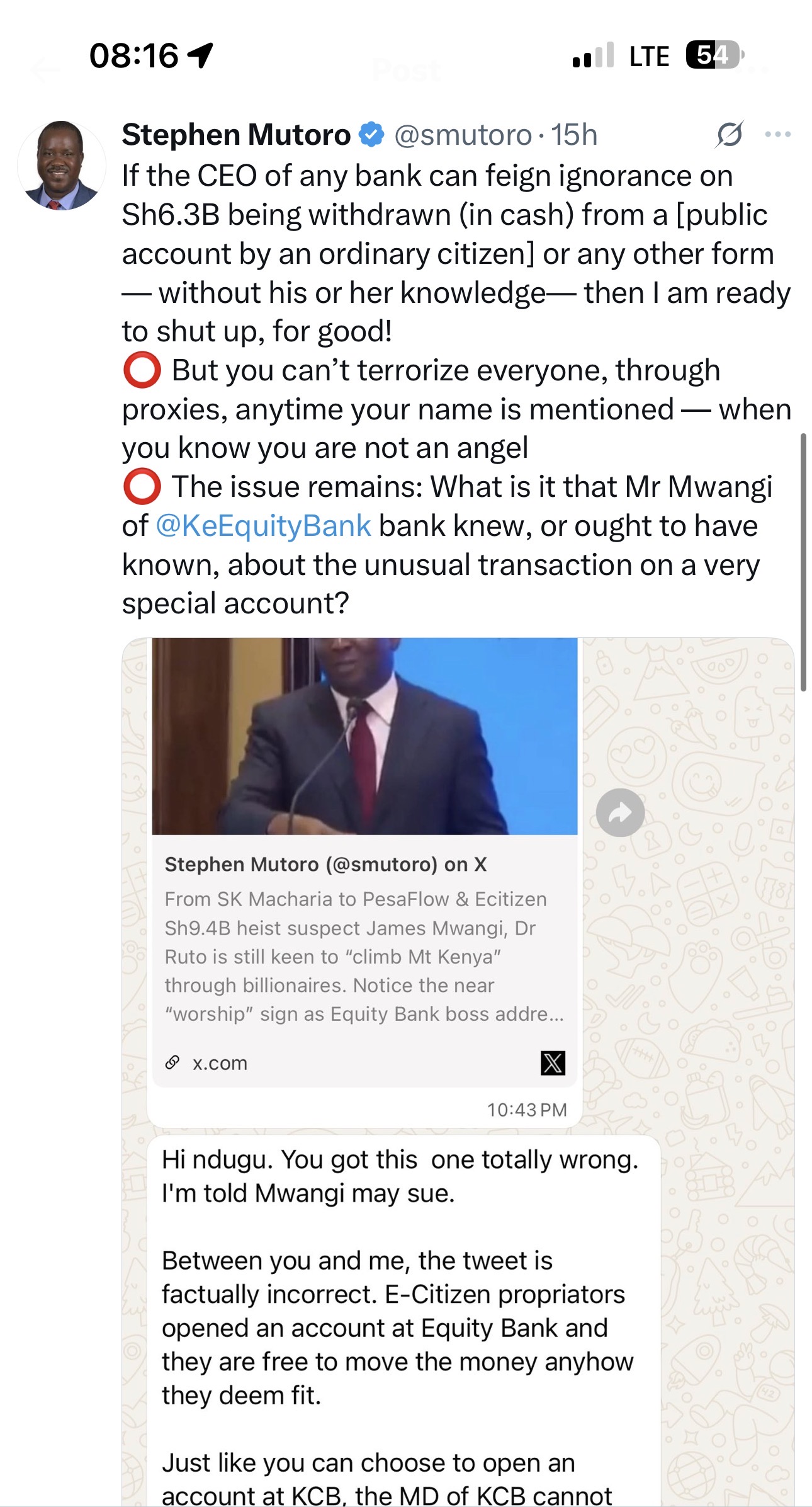
Screenshot
At the centre of the uproar is a special audit by Nancy Gathungu that paints a troubling picture of how billions of shillings flowed through the government’s eCitizen system between 2021 and 2024.
The audit suggests that Sh6.3 billion was channelled through a “Pesaflow” account held at Equity Bank without the requisite approvals from the National Treasury, raising red flags about parallel revenue streams operating outside formal government controls.
What makes the transaction trail particularly controversial is not just the scale but the method.
According to audit queries tabled before Parliament, the funds were allegedly withdrawn in cash or transferred in ways that have proven difficult to reconcile due to missing bank statements and incomplete documentation.
In Kenya’s tightly regulated banking environment, large cash withdrawals from accounts handling public funds typically trigger compliance protocols, including suspicious transaction reporting to regulators.
The apparent opacity in this case has therefore deepened suspicion.
Mutoro’s follow-up remarks sharpened the stakes. He publicly questioned how such volumes of money could exit a public-facing system without senior-level awareness within the banking chain.
His argument hinges less on direct culpability and more on fiduciary responsibility, a distinction that has nevertheless placed Mwangi under intense public scrutiny.
The audit further implicates a network of private firms contracted around the e-Citizen ecosystem, including Webmasters Africa Ltd, Electronic Citizen Solutions, Pesaflow Ltd and Goldrock Capital Ltd.
These entities are accused of collecting at least Sh2.6 billion in so-called convenience fees, often through flat-rate charges that appear inconsistent with official government gazette notices.
The structure of these fees, investigators note, may have effectively created a parallel revenue model benefiting private actors while eroding public collections.
Treasury Principal Secretary Chris Kiptoo has confirmed to lawmakers that some of the questioned accounts linked to the flow of funds were later frozen and shut down.
That intervention, however, came after significant sums had already moved through the system, raising concerns about delayed oversight and fragmented institutional coordination.
The matter is now squarely before the National Assembly’s Public Accounts Committee, chaired by Tindi Mwale, which has summoned Mwangi, Kiptoo, Attorney General Dorcas Oduor and representatives of the implicated firms.
Lawmakers are expected to interrogate not only the legality of the transactions but also the governance architecture that allowed them to occur.
Inside banking and regulatory circles, the case is being viewed as a stress test of Kenya’s public-private partnership model in digital finance.
Commercial banks routinely act as collection agents for government services, but such arrangements are governed by strict service-level agreements, treasury approvals and audit trails.
The alleged use of an unapproved account introduces questions about whether established controls were bypassed or simply failed.
Political undertones are also beginning to surface.
Figures such as Rigathi Gachagua have amplified claims around the missing billions, injecting the scandal into a broader narrative of elite capture and state-linked financial leakages ahead of a potentially charged electoral cycle.
For now, no charges have been filed against Mwangi, Equity Bank or any of the entities named in the audit queries. Being summoned before Parliament does not imply wrongdoing.
Yet the combination of a whistleblowing tweet, alleged behind-the-scenes pressure and unresolved audit gaps has transformed what began as a technical financial review into a high-stakes public accountability test.
Whether the parliamentary probe will untangle the money trail or deepen the intrigue now depends on what emerges from the hearings.
What is already clear is that the e-Citizen platform, once touted as a flagship of Kenya’s digital governance, is now under its most serious scrutiny since inception.
Kenya Insights allows guest blogging, if you want to be published on Kenya’s most authoritative and accurate blog, have an expose, news TIPS, story angles, human interest stories, drop us an email on [email protected] or via Telegram


Somalia’s Disputed President Allegedly Siphons Up to $6 Million Monthly from Kenyan Miraa Trade, Sharing the Spoils with Nairobi’s Shadow Cartels

Ahmed Adan Hefow: Governor Otuoma’s Trusted Right-Hand Man at the Centre of Busia’s Deepening Finance Scandal

Karua Detained at Entebbe as Uganda Blocks Besigye Lawyer From Entering Country

How KCB and Airtel Turned Kenya’s Unbanked Into a Data Goldmine Behind a ‘Financial Inclusion’ Deal

The Chivayo Network: How a Convicted Fraudster Won Access to Presidents, Passports and Billion-Dollar Deals Across Africa

BURRIED TWICE: The Victoria Bank CEO Yogesh Pattni Files

Court Stops Transfer Of EABL Shares To Asahi By Diageo In A Fresh Snag

Death Before Justice: Stephen Ngei, Victim of Sh180 Million Laptop Tender Scam Linked to Allan Chesang, Killed in Highway Crash

Court Brands Sh1.1 Billion Fee Demand by Lawyer Victor Swanya “Excessive and Exorbitant,” Exposes How City Hall Lets Public Money Bleed Through Legal Bills

Trump Unveils New Air Force One

Businessman Philip Waithaka Kinuthia’s Minor Son Allegedly Drove Drunk, Killed Two Peponi Students in Ngong Road Horror Crash as Claims of Cover-Up Intensify

Inside NCBA’s Decline: How a Banking Giant Lost Its Strategic Edge

Cement, Cash and Courts: How the Hashu Dynasty Crushed the Ramji Brothers for Fourteen Years and Why the Walls Are Now Closing In

Standard Chartered Ghosts Haunt Joshua Oigara At Stanbic As Whistleblower Spills Beans

South Sudan: Adut Salva Kiir’s Shadow Treasury Exposed

Inside The Urban Planning Cartel That Owns Nairobi

THE VULTURE AND THE SCHEME How Nairobi West Hospital Became the Most Dangerous Institution in Kenya’s SHA Ecosystem and Why the Books Must Be Audited Now

The President’s Daughter and The Missing Witness: How Adut Salva Kiir’s Shadow Treasury Silenced Its Most Dangerous Critic

How Adil Popat Saved His Empire On The Eve Of Imperial Bank Collapse and Why Kenya’s Mainstream Media Buried The Story

Why John Ngumi Is Running From the EACC and Why the Sh415 Million Payday May Be the Least of His Worries
-
 News1 week ago
Businessman Philip Waithaka Kinuthia’s Minor Son Allegedly Drove Drunk, Killed Two Peponi Students in Ngong Road Horror Crash as Claims of Cover-Up Intensify
-
 Business2 weeks ago
Inside NCBA’s Decline: How a Banking Giant Lost Its Strategic Edge
-
 Business2 weeks ago
Standard Chartered Ghosts Haunt Joshua Oigara At Stanbic As Whistleblower Spills Beans
-
 Africa2 weeks ago
South Sudan: Adut Salva Kiir’s Shadow Treasury Exposed
-
 Investigations4 days ago
THE VULTURE AND THE SCHEME How Nairobi West Hospital Became the Most Dangerous Institution in Kenya’s SHA Ecosystem and Why the Books Must Be Audited Now
-
 Africa2 weeks ago
The President’s Daughter and The Missing Witness: How Adut Salva Kiir’s Shadow Treasury Silenced Its Most Dangerous Critic
-
 Business2 weeks ago
How Adil Popat Saved His Empire On The Eve Of Imperial Bank Collapse and Why Kenya’s Mainstream Media Buried The Story
-
 Business2 weeks ago
Why John Ngumi Is Running From the EACC and Why the Sh415 Million Payday May Be the Least of His Worries