
Business
Stanbic Pays Sh32M for Blunder That Cost Customer Lucrative Tender Deal as Bank Warns of New Wave of Fraud

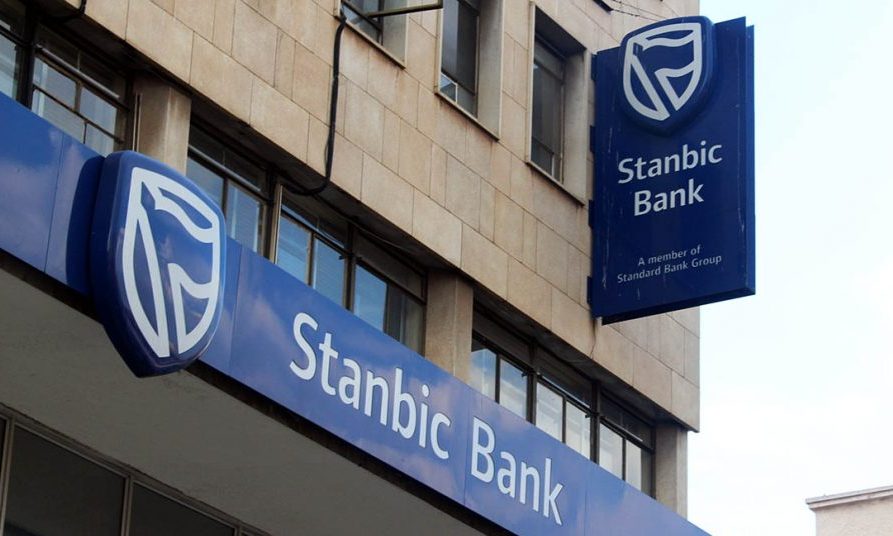
Lender faces double blow as Court of Appeal upholds damages award while midnight fraud cases surge among millennials
Stanbic Bank Kenya is grappling with a costly legal defeat and rising fraud incidents, highlighting the evolving challenges facing the banking sector in an increasingly digital landscape.
The Court of Appeal has upheld a Sh32.4 million damages award against the bank for a clerical error that cost Kenya Haulage Agency Limited a lucrative government contract.
The case, which dates back to 2011, centered on a seemingly minor mistake that had major financial consequences.
The Costly One-Day Error
The trouble began when Kenya Haulage Agency Limited bid for a Kenya Ports Authority (KPA) tender to supply 10 pneumatic rubber fenders.
The company instructed Stanbic Bank to issue the required tender security of Sh250,000, valid for 120 days as specified in the tender documents.
However, the bank issued a bid bond valid for only 119 days instead of the required 120 days.
This single-day discrepancy proved fatal, as KPA disqualified the company’s bid for non-compliance with the mandatory bond validity period.
In their June 5, 2025 judgment, Court of Appeal Justices Agnes Murgor, Pauline Nyamweya, and George Odunga ruled that the bank’s error was both foreseeable and directly caused the client’s loss.
“The loss of the actual tender was not only foreseeable but also a proximate loss in the circumstances, given the appellant’s actual knowledge as regards the purpose of the bank guarantee,” the judges stated.
The court found that Stanbic Bank owed a duty of care to its client and that the failure to follow express instructions amounted to negligence.
Kenya Haulage Agency had already secured goods for delivery and stood to make a profit of $250,860 (Sh32.4 million) from the contract.
A New Breed of Fraud
As Stanbic deals with the fallout from this legal setback, the bank is simultaneously warning customers about a surge in sophisticated fraud schemes targeting digital banking users.
Abraham Ongenge, Head of Personal and Private Banking at Stanbic Bank, revealed that fraud incidents are increasingly occurring during late-night hours, particularly between midnight and 1 AM on Friday and Saturday nights.
The primary targets are millennials – individuals born between 1981 and 1996 – who are more likely to be out socializing and using digital payment platforms.
“We are seeing a lot of fraud attempted on digital channels through some form of social engineering,” Ongenge explained during a recent media briefing.
“The consequence is that customers are losing money through tactics like people calling and posing as bank employees, asking for personal information to access accounts.”
The fraud patterns reveal how criminals are adapting to modern banking habits.
Many incidents involve social engineering tactics where unsuspecting customers in social venues are tricked into revealing passwords and other confidential information.
After millennials, baby boomers – those born between 1946 and 1964 – are the next most targeted group due to their substantial savings.
The fraud wave has also infiltrated the corporate sector, with criminals impersonating bank CEOs to deceive companies.
These sophisticated schemes involve fake emails that appear to come from bank executives, instructing firms to redirect payments to fraudulent accounts.
“They are changing email addresses and posing as chief executive officers, informing companies about changes of accounts and asking them to pay money into different accounts,” Ongenge warned.
The twin challenges facing Stanbic Bank – the legal defeat and rising fraud incidents – underscore the complex operational environment in which modern banks operate.
The Court of Appeal ruling serves as a stark reminder that even minor administrative errors can have significant financial consequences, while the fraud surge highlights the need for continuous investment in customer education and security technology.
As Ongenge noted, “The journey of banking has changed. We cannot move out of digital spaces. We have to be more responsible in investing in awareness and technology that allows us to protect our customers.”
The Sh32.4 million judgment against Stanbic Bank, combined with the rising costs of fraud prevention and customer protection, illustrates the mounting pressures on financial institutions to maintain operational excellence while adapting to an increasingly digital and risky environment.
Kenya Insights allows guest blogging, if you want to be published on Kenya’s most authoritative and accurate blog, have an expose, news TIPS, story angles, human interest stories, drop us an email on [email protected] or via Telegram













Putin Rejects Zelensky Meeting Proposal

Burkina Faso Junta Intensifies Crackdown on Critics

Analo Was Just the Tip of the Iceberg: Alai Names Powerful Nairobi Planning Cartel Linked to City Hall

Ruto Reshuffles Military Leadership, Names Major General John Nkoimo Deputy Army Commander

SUPREMO: How Simba Arati’s Wife Is Running Kisii County From Her Home With Terror

Why Is a US Ebola Facility in Kenya Sparking Protests?

10 Million Kenyans’ Personal Data Allegedly Being Sold on Dark Web in Chilling New Cybersecurity Scare

Cement, Cash and Courts: How the Hashu Dynasty Crushed the Ramji Brothers for Fourteen Years and Why the Walls Are Now Closing In

Fresh Move Launched to Remove Kenya Railways MD Mainga From Office After Awarding Sh817 Million Consultancy Contract

Ruto Says US Plan To Build Ebola Facility In Kenya Is The ‘Right Thing’

Why Ruto’s Favourite Candidate Adan Mohammed Could Be Locked Out of the KRA Top Job

LifeCare on the Brink: SHA Fraud, Stolen Wages, and the Rotten Empire Jayesh Saini Built

Este Medical Kenya Fights American’s Explosive Complaints

Safaricom’s Sh1.4 Billion Reckoning: How Kenya’s Most Profitable Company Stole a Man’s Idea and Got Caught

The Rot Inside Absa: How Bank Insiders Are Looting Nairobi’s Customers

THE INSURER THAT TOOK YOUR PREMIUM AND FORGOT YOUR NAME: How ICEA Lion Left a Client Begging for Sh7.8 Million Across Four Months

Denial Under Duress: The Untold Collapse Threatening David Lagat’s DL Group’s Empire

Inside FAFSA Fraud: How Kenyan Cybercriminals Siphoned Millions from America’s Sh12 Billion Student Loan System

Court Confirms Safaricom Customers Data Was Sold To Betting Companies In Seven-Year Cover-Up

Betika Faces DCI Probe, Directors Arrest and License Revocation Over Massive 29.5 Million Safaricom Customers’ Data Breach
-
 Investigations2 weeks ago
LifeCare on the Brink: SHA Fraud, Stolen Wages, and the Rotten Empire Jayesh Saini Built
-
 News2 weeks ago
Este Medical Kenya Fights American’s Explosive Complaints
-
 Americas2 weeks ago
Inside FAFSA Fraud: How Kenyan Cybercriminals Siphoned Millions from America’s Sh12 Billion Student Loan System
-
 Investigations5 days ago
Betika Faces DCI Probe, Directors Arrest and License Revocation Over Massive 29.5 Million Safaricom Customers’ Data Breach
-

 News1 week ago
Eight Students Arrested In Kenya After Suspected Deadly School Arson Attack
-

 News6 days ago
How Uhuru’s Deal With Obama In 2015 Paved Way For America’s Ebola Plan In Kenya
-

 Investigations2 weeks ago
LSK On The Spot For Renewing Rogue Lawyer Dennis Onyango’s Licence Despite Mounting Evidence He Held Foreign Investors’ Millions Hostage
-

 Investigations1 week ago
The Invisible Hand: Al Jazeera Further Exposes How Safaricom Became The Regime’s Most Powerful Spy