
Economy
World Bank Warns Kenya Faces High Risk of Debt Distress

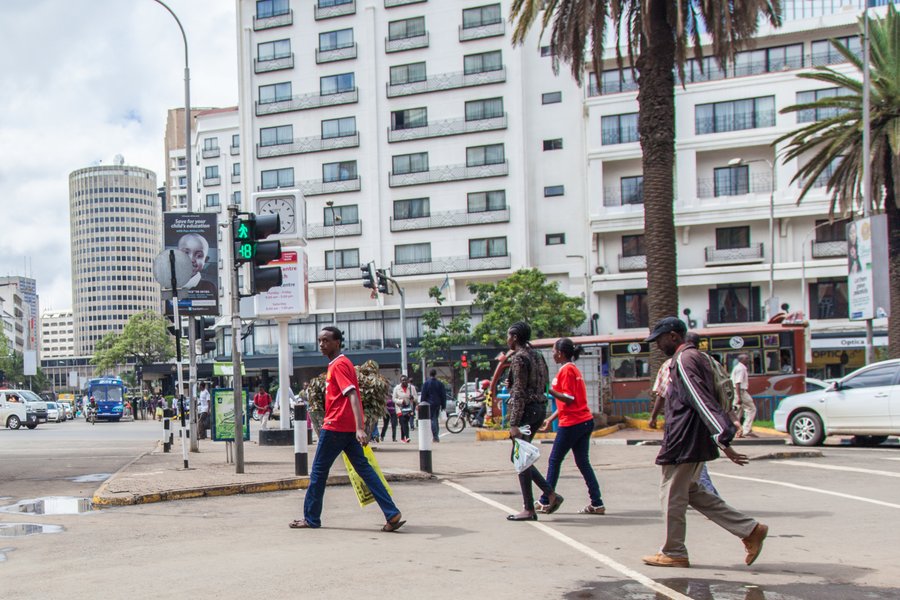
Kenya’s economic recovery may be gaining pace, but its fiscal foundations are becoming increasingly fragile, the World Bank has warned in its latest assessment, signalling heightened concerns about the country’s ability to manage its growing debt burden.
In a statement released on Tuesday, November 25, 2025, the World Bank said Kenya’s economy is projected to grow at an average of 4.9 per cent between 2025 and 2027, reflecting stronger private sector credit, easing monetary conditions, and renewed activity in sectors such as construction.
The Bank cited stable inflation, a firm shilling, and foreign exchange reserves at historic highs as evidence of improving macroeconomic stability.
Private sector credit grew five per cent year-on-year by September 2025, buoyed by lower lending rates and friendlier financing conditions.
However, the upbeat outlook is overshadowed by deepening fiscal risks.
The Bank warned that Kenya’s fiscal deficit for the FY2024/25 period widened to 5.9 per cent of GDP, significantly above the initial 4.3 per cent target.
This slippage was attributed to persistent revenue shortfalls and rigid expenditure patterns that continue to strain public finances.
Public debt rose to 68.8 per cent of GDP during the same period, pushing Kenya further into the high-risk category of debt distress.
Qimiao Fan, the World Bank’s Director for Kenya, Rwanda, Somalia, and Uganda, said the country’s growth potential remains strong but could be unlocked further by dismantling long-standing barriers to competition.
He argued that reforms aimed at opening markets, lowering consumer prices, and stimulating job creation would enable Kenya to tap into more inclusive and sustainable growth.
His sentiments were echoed by Jorge Tudela Pye, the World Bank Country Economist for Kenya, who noted that while the country’s headline economic indicators appear robust, the underlying fiscal position poses significant challenges.
“Many key macroeconomic indicators continue to show strength; however, the fiscal outlook remains subject to downside risks that could threaten sustained and inclusive economic growth,” he said.
The report also exposed ongoing weaknesses in Kenya’s labour market.
Formal employment remains stuck at around 15 per cent, and real wages continue to decline, reflecting structural constraints that have long limited productivity and job creation.
The Bank’s analysis, titled From Barriers to Bridges: Procompetitive Reforms for Productivity and Jobs in Kenya, highlights the urgent need for reforms aimed at boosting competition and accelerating private sector-led growth.
Kenya’s Product Market Regulation score of 2.92, higher than that of peer economies, illustrates the heavy restrictions that continue to choke business activity.
To level the playing field, the World Bank recommends cutting exchequer transfers to commercial state-owned enterprises and shifting to performance-based systems for public service obligations.
The Bank also calls for opening up electricity transmission and distribution to private capital, strengthening competition regulation in the telecommunications sector, and ensuring a fairer and more transparent allocation of fertiliser subsidies.
According to the World Bank, implementing these reforms could raise Kenya’s GDP growth by up to 1.35 percentage points and increase labour compensation growth by two percentage points.
This would create the equivalent of 400,000 jobs annually, offering a pathway out of the persistent employment and wage stagnation that has defined Kenya’s labour landscape.
The institution’s message is clear: Kenya is making strides in stabilising its economy and boosting investor confidence, but without bold fiscal consolidation and deep structural reforms, the momentum could falter.
The risk of debt distress is rising, and the cost of inaction could undermine the country’s long-term development ambitions.
Kenya Insights allows guest blogging, if you want to be published on Kenya’s most authoritative and accurate blog, have an expose, news TIPS, story angles, human interest stories, drop us an email on [email protected] or via Telegram


The Oil Company That Bankrolled a Private Hospital: How Bernard Amuor Makeny Allegedly Turned Nilepet Into His Personal ATM

Death Deferred: How Kenya’s Government Is Bending Aviation Law to Shield the Rogue Developers Strangling Wilson Airport

Hit South African Show Gets The World Talking About Polygamy and Cheating

South Sudan: Fifteen Years of Independence, US$70 Billion in Oil Wealth and GDP Per Capita Cut by Two-Thirds

COFEK Escalates Bid to Oust Gambling Boss Karimi as Fresh Court Battle Puts GRA Leadership Under Siege

Desperate Family Pleads For Ruto’s Help After Safaricom Defies Court Order in Son’s Murder, Exposing Deeper Data Privacy Crisis

Nyali MP Moha Jicho Pevu Caught Up In Alleged Sh44 Million KPA Debt Scam

Somalia Deputy PM Held at JKIA, Deported Over Questionable Acquisition of Kenyan Passport

The White-Coat Heist: How MP Shah Hospital Ran a Decade-Long Double-Extraction Racket While Hiding Behind Charity Status

The Patriarch, His Children, and a Buried Sh3.9 Billion Fraud: The Story of Titus Muya That Kenya Was Never Meant to Read

Businessman Philip Waithaka Kinuthia’s Minor Son Allegedly Drove Drunk, Killed Two Peponi Students in Ngong Road Horror Crash as Claims of Cover-Up Intensify

Inside NCBA’s Decline: How a Banking Giant Lost Its Strategic Edge

South Sudan: Adut Salva Kiir’s Shadow Treasury Exposed

Cement, Cash and Courts: How the Hashu Dynasty Crushed the Ramji Brothers for Fourteen Years and Why the Walls Are Now Closing In

Standard Chartered Ghosts Haunt Joshua Oigara At Stanbic As Whistleblower Spills Beans

Inside The Urban Planning Cartel That Owns Nairobi

THE VULTURE AND THE SCHEME How Nairobi West Hospital Became the Most Dangerous Institution in Kenya’s SHA Ecosystem and Why the Books Must Be Audited Now
The Patriarch, His Children, and a Buried Sh3.9 Billion Fraud: The Story of Titus Muya That Kenya Was Never Meant to Read

The President’s Daughter and The Missing Witness: How Adut Salva Kiir’s Shadow Treasury Silenced Its Most Dangerous Critic

How Adil Popat Saved His Empire On The Eve Of Imperial Bank Collapse and Why Kenya’s Mainstream Media Buried The Story
-
 News2 weeks ago
Businessman Philip Waithaka Kinuthia’s Minor Son Allegedly Drove Drunk, Killed Two Peponi Students in Ngong Road Horror Crash as Claims of Cover-Up Intensify
-
 Investigations1 week ago
THE VULTURE AND THE SCHEME How Nairobi West Hospital Became the Most Dangerous Institution in Kenya’s SHA Ecosystem and Why the Books Must Be Audited Now
-
 Business1 day ago
The Patriarch, His Children, and a Buried Sh3.9 Billion Fraud: The Story of Titus Muya That Kenya Was Never Meant to Read
-

 Business5 days ago
BURRIED TWICE: The Victoria Bank CEO Yogesh Pattni Files
-
 Business1 week ago
Inside the Billion-Shilling Betrayal: How Senior Treasury Officials Plundered a UN Poverty Fund and Built a Real Estate Empire on the Backs of Kenya’s Rural Poor
-

 Business2 weeks ago
The Listing That Doesn’t Lie: What the Market Isn’t Saying About Family Bank’s NSE Debut
-

 Business1 week ago
The Banker Who Walked Away: How Yogesh Pattni Survived a Financial Crime Scandal That Shook Kenya
-

 News1 week ago
My Life Is In Danger: Investor Drops Bombshell Expose On Thomas Ogutu CEO VeGrid Ltd And Fugitive Nairobi CEC Charles Kerich – DCI Inaction And Corruption Network Exposed