
Africa
Top 10 African IMF Debtors Ranked

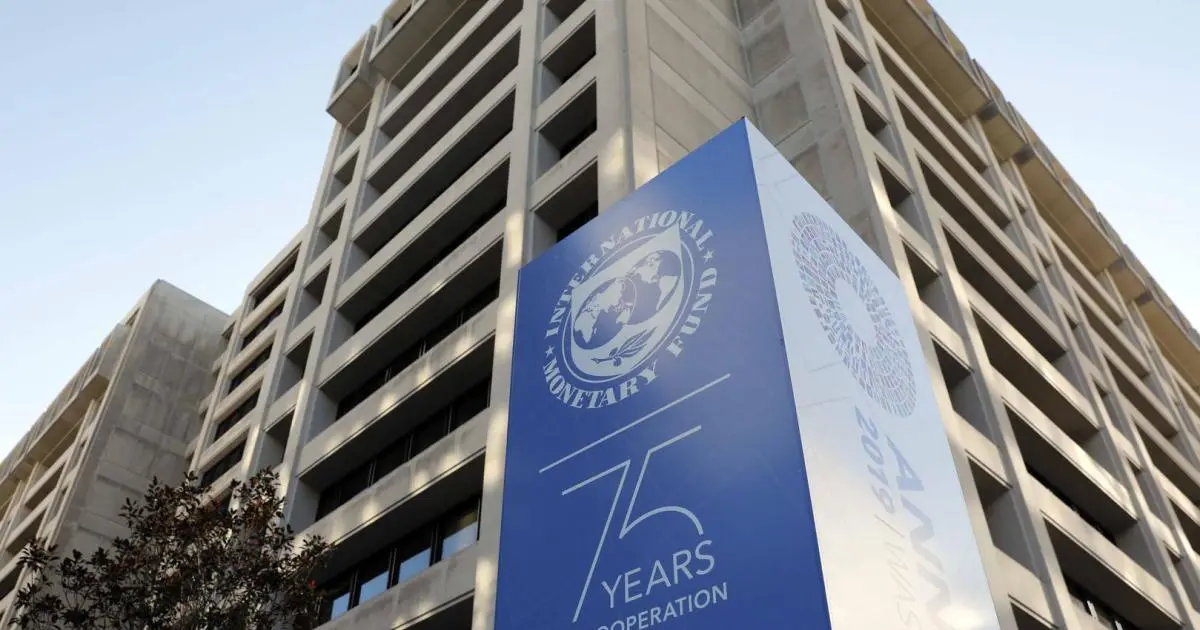
In July alone, the International Monetary Fund (IMF) has reportedly been reviewing loan disbursements to Egypt and Ethiopia, sparking renewed concerns over Africa’s increasing dependence on IMF support.
Though often described as essential for struggling economies, the long-term impact of rising IMF debt is becoming a growing issue across the continent.
Egypt received $1.2 billion after completing the fourth review of its $8 billion loan programme, bringing its total disbursement to $3.5 billion. However, the IMF warned that Egypt faces “high sovereign stress,” with its external debt projected to rise from $162.7 billion in 2024/25 to over $202 billion by 2030.
Ethiopia, on the other hand, secured $262 million following the third review of its programme, though its financial situation remains delicate.
The country is currently in talks to restructure $8.4 billion in debt with official creditors under the G20’s Common Framework and is also preparing to repay a $1 billion Eurobond.
The dual weight of IMF loans and commercial debt continues to stretch national budgets, slowing down growth-focused projects.
On July 8, the IMF released a new analytical note titled “How to Stabilise Africa’s Debt”, which stressed that debt stabilisation depends largely on “stronger institutions, growth-friendly fiscal reforms, and IMF-supported macro stability.”
Senegal presents a cautionary example. Disbursements were halted after officials admitted to underreporting debt, revising the debt-to-GDP ratio from 74% to over 100%. As a result, S&P downgraded the country, and IMF support remains on hold until a credible recovery plan is in place.
These examples underline a broader issue: although IMF loans can avert economic collapse, they often come with strict conditions, austerity demands, and limited space for domestic priorities.
Without effective debt management, countries risk falling into a repetitive cycle of borrowing and repayment, undermining both economic stability and public confidence.
As of July 2025, the IMF’s database lists the African countries with the highest debt burdens to the institution. Compared to last month, credit levels have increased for Egypt, Côte d’Ivoire, Ghana, the Democratic Republic of Congo, Ethiopia, and Tanzania, while other countries have seen reductions.
Top 10 African countries with the highest IMF debt in July 2025.
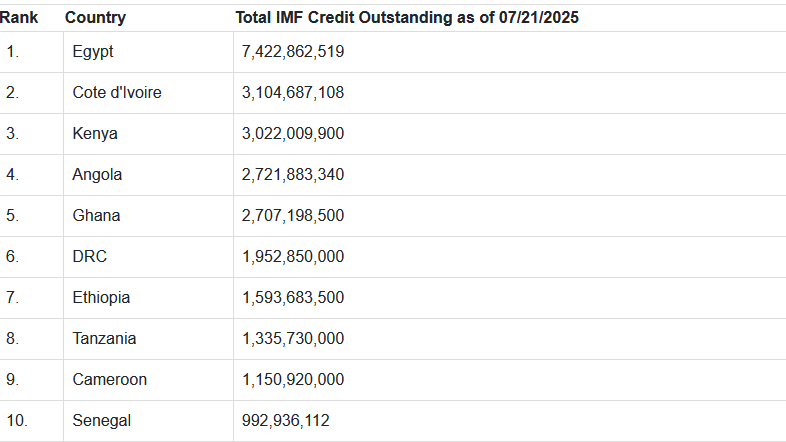
Credit: Business Insider
Kenya Insights allows guest blogging, if you want to be published on Kenya’s most authoritative and accurate blog, have an expose, news TIPS, story angles, human interest stories, drop us an email on [email protected] or via Telegram




Kenya Airways Sinks Into Deeper Turbulence As American Supplier Sues In New York Court Over Sh129 Million Unpaid Debts

Kenyan player wins a Ksh3.2 million jackpot

IEBC Sets August 10 Date For 2027 General Election

Furious Ruto Lashes Out at Gideon Moi Over Repeated ‘Blackmail, Extortionist’ Headlines on The Standard and KTN

Mombasa Gripped by ‘Male Organ Theft’ Panic as Social Media Fuels Mob Attacks and Fear

TOO MUCH PR, NOTHING TO SEE: How Gladys Wanga Built a Perfect Story of Transformation While Homa Bay Bled

Netanyahu Says Israel Must ‘Break Free from Dependence’ After Tensions With Trump Administration

Niger pulls Out Of International Criminal Court After Calling It Neo-Colonialist

Kenya Awards Sh154 Billion JKIA Upgrade Tender To Chinese Firm CRBC

The Untouchable: How KURA’s Silas Kinoti Has Survived A Decade Of Corruption Storms While Kenya’s Roads Bled

Businessman Philip Waithaka Kinuthia’s Minor Son Allegedly Drove Drunk, Killed Two Peponi Students in Ngong Road Horror Crash as Claims of Cover-Up Intensify

Inside NCBA’s Decline: How a Banking Giant Lost Its Strategic Edge

South Sudan: Adut Salva Kiir’s Shadow Treasury Exposed

Cement, Cash and Courts: How the Hashu Dynasty Crushed the Ramji Brothers for Fourteen Years and Why the Walls Are Now Closing In

Standard Chartered Ghosts Haunt Joshua Oigara At Stanbic As Whistleblower Spills Beans

Inside The Urban Planning Cartel That Owns Nairobi

THE VULTURE AND THE SCHEME How Nairobi West Hospital Became the Most Dangerous Institution in Kenya’s SHA Ecosystem and Why the Books Must Be Audited Now

The President’s Daughter and The Missing Witness: How Adut Salva Kiir’s Shadow Treasury Silenced Its Most Dangerous Critic

How Adil Popat Saved His Empire On The Eve Of Imperial Bank Collapse and Why Kenya’s Mainstream Media Buried The Story

Why John Ngumi Is Running From the EACC and Why the Sh415 Million Payday May Be the Least of His Worries
-
 News1 week ago
Businessman Philip Waithaka Kinuthia’s Minor Son Allegedly Drove Drunk, Killed Two Peponi Students in Ngong Road Horror Crash as Claims of Cover-Up Intensify
-
 Africa2 weeks ago
South Sudan: Adut Salva Kiir’s Shadow Treasury Exposed
-
 Investigations6 days ago
THE VULTURE AND THE SCHEME How Nairobi West Hospital Became the Most Dangerous Institution in Kenya’s SHA Ecosystem and Why the Books Must Be Audited Now
-
 Business2 weeks ago
How Adil Popat Saved His Empire On The Eve Of Imperial Bank Collapse and Why Kenya’s Mainstream Media Buried The Story
-
 Business2 weeks ago
Why John Ngumi Is Running From the EACC and Why the Sh415 Million Payday May Be the Least of His Worries
-

 Business3 days ago
BURRIED TWICE: The Victoria Bank CEO Yogesh Pattni Files
-
 Business6 days ago
Inside the Billion-Shilling Betrayal: How Senior Treasury Officials Plundered a UN Poverty Fund and Built a Real Estate Empire on the Backs of Kenya’s Rural Poor
-

 Business1 week ago
The Listing That Doesn’t Lie: What the Market Isn’t Saying About Family Bank’s NSE Debut