
Africa
Somalia Expels Ethiopian Ambassador Amid Somaliland Feud
Somalia has expelled the Ethiopian ambassador and ordered the closure of two Ethiopian consulates.

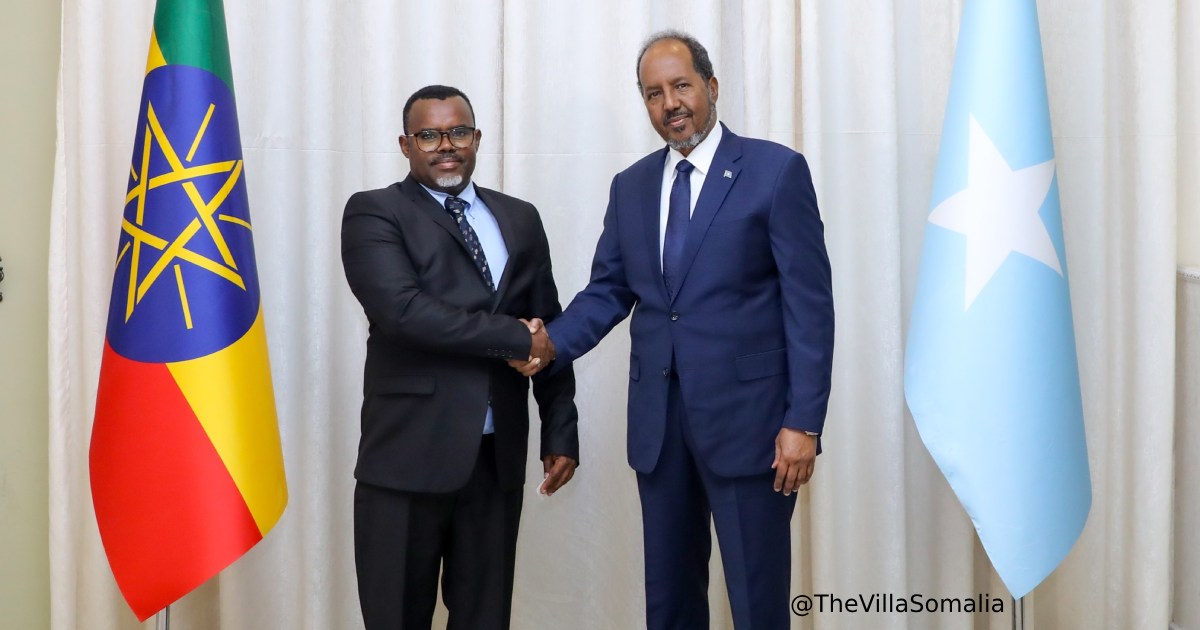
Somalia has expelled the Ethiopian ambassador from the country and ordered the closure of two consulates.
It accused Ethiopia of infringing on Somalia’s “sovereignty and internal affairs”.
Somalia also recalled its ambassador from Ethiopia’s capital, Addis Ababa, for “comprehensive consultations”.
Ethiopia’s foreign ministry spokesperson Nebiyu Tedla told Reuters news agency the government did not have information on the matter.
The expulsion highlights an escalation in diplomatic tensions in the region following land-locked Ethiopia’s port deal with the self-declared republic of Somaliland earlier this year.
Its independence has not been internationally recognised and Somalia condemned the deal as an attack on its sovereignty.
In January, Ethiopia signed a deal with Somaliland to lease a 20km (12 miles) strip of coastline, so it could build a navy base.
The deal is not legally binding, though it is seen as a statement of intent and can lead to a treaty imposing obligations on those parties who have signed.
In exchange, Ethiopia reportedly told Somaliland it would offer it possible recognition in the future – which angered Somalia.
Somaliland seceded from Somalia more than 30 years ago, but is not recognised by the African Union (AU) or the UN as an independent state.
Following this deal, Somalia’s President Hassan Sheikh Mohamud launched a diplomatic campaign and travelled to Eritrea and Egypt- two countries with fraught relations with Ethiopia.
Somalia demanded a public reversal of the deal by Ethiopia but this has not happened.
Somalia has described the deal as an act of aggression, adding that it was an “impediment to… peace and stability”.
Earlier this week Ethiopian delegates met officials from the semi-autonomous Somali province of Puntland, which has difficult relations with the central government.
This year Puntland said it would operate as a functionally independent state amid a dispute over Somali constitutional changes.
The two Ethiopian consulates that Somalia has ordered to close are in Hargeisa and Garowe, the capitals of Somaliland and Puntland, respectively.
The prospect of armed clashes between the two countries seems unlikely at this point. Ethiopia is one of the countries contributing soldiers to an AU peacekeeping mission in Somalia, which complicates the situation.
There are already concerns that the Islamist group al-Shabab might be using tensions between the two countries to recruit fighters and increase security threats.
Escalations in the row between Somalia and Ethiopia could only worsen that.
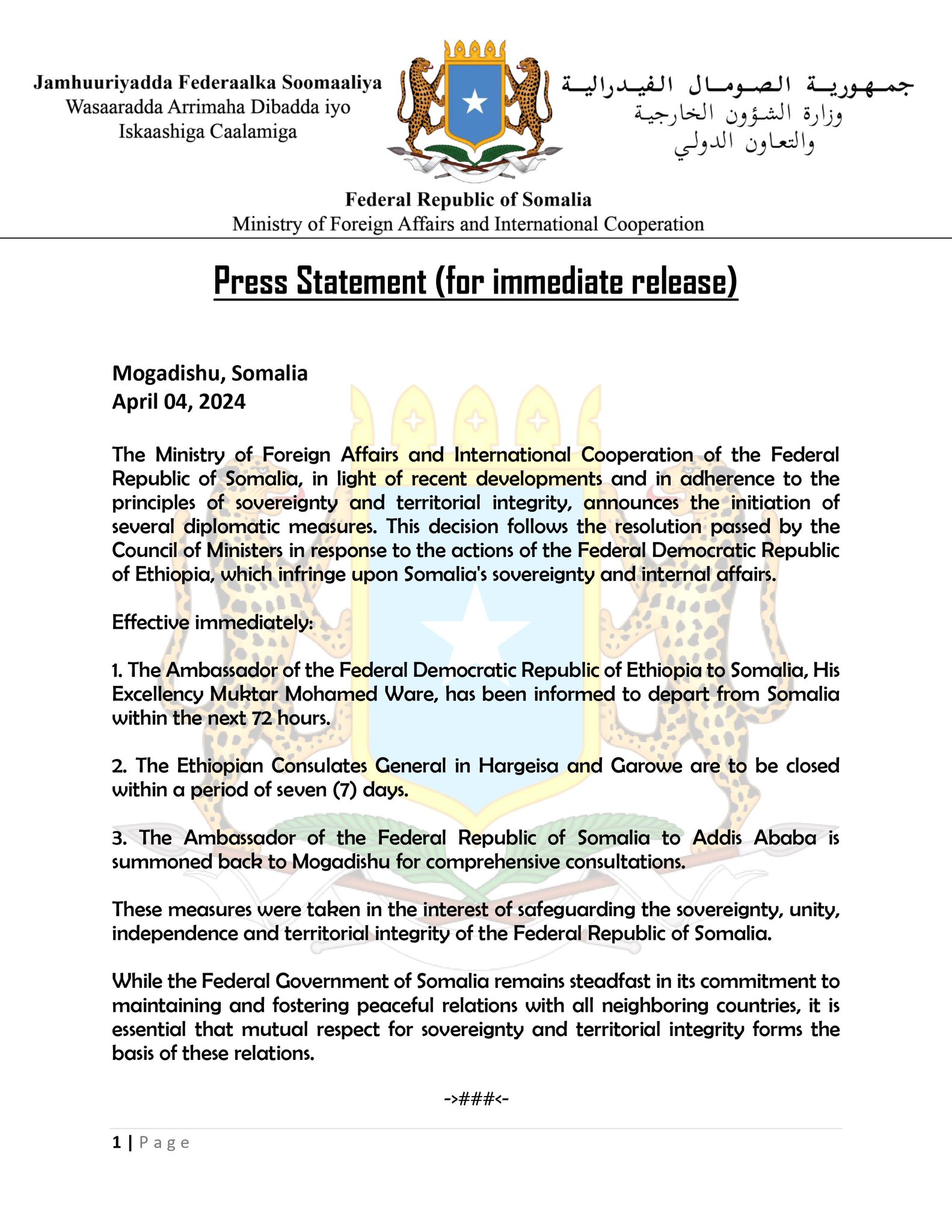
A letter from Somalia’s Foreign Minister that expels Ethiopian Ambassador to Somalia, Mukhtar Mohamed Ware, and the closure of two consulates in the country.
(Reuters)
Kenya Insights allows guest blogging, if you want to be published on Kenya’s most authoritative and accurate blog, have an expose, news TIPS, story angles, human interest stories, drop us an email on [email protected] or via Telegram


Govt Plans to Monetise eCitizen Data in New Revenue Drive

Dennis Onyango: Why Raila Won Elections But Never Became President

Israel, Iran Trade Fire Despite Trump’s Call For Restraint

Dennis Onyango Lifts Lid on Raila’s Inner Circle, Says Sifuna Lost Baba’s Trust While Babu Was Viewed as a Threat

Sibling Rivalry? Cracks Emerge Within Linda Mwananchi

Instant Traffic Fines Still Active Despite Court Order, NTSA Clarifies

Why All Eyes Are On Gambling Authority CEO Peter Karimi As Kenya’s Betting Firms Race To Beat The June Licence Renewal Deadline

The Deal Behind Nairobi Animal Orphanage: Is This Really About Animals Or Billions In Prime Park Land

Iran Launches Missiles At Israel For First Time Since Mideast Truce

Rogue Developers, Engineers, Architects and City Hall Officials Charged Over Deadly Manzil Towers Collapse

Cement, Cash and Courts: How the Hashu Dynasty Crushed the Ramji Brothers for Fourteen Years and Why the Walls Are Now Closing In

Inside The Urban Planning Cartel That Owns Nairobi

Why Ruto’s Favourite Candidate Adan Mohammed Could Be Locked Out of the KRA Top Job

LifeCare on the Brink: SHA Fraud, Stolen Wages, and the Rotten Empire Jayesh Saini Built

Este Medical Kenya Fights American’s Explosive Complaints

The Rot Inside Absa: How Bank Insiders Are Looting Nairobi’s Customers

Inside FAFSA Fraud: How Kenyan Cybercriminals Siphoned Millions from America’s Sh12 Billion Student Loan System

Betika Faces DCI Probe, Directors Arrest and License Revocation Over Massive 29.5 Million Safaricom Customers’ Data Breach

Court Confirms Safaricom Customers Data Was Sold To Betting Companies In Seven-Year Cover-Up

Fresh Move Launched to Remove Kenya Railways MD Mainga From Office After Awarding Sh817 Million Consultancy Contract
-
 Investigations4 days ago
Cement, Cash and Courts: How the Hashu Dynasty Crushed the Ramji Brothers for Fourteen Years and Why the Walls Are Now Closing In
-
 Investigations2 days ago
Inside The Urban Planning Cartel That Owns Nairobi
-
 Investigations2 weeks ago
LifeCare on the Brink: SHA Fraud, Stolen Wages, and the Rotten Empire Jayesh Saini Built
-
 Investigations1 week ago
Betika Faces DCI Probe, Directors Arrest and License Revocation Over Massive 29.5 Million Safaricom Customers’ Data Breach
-
 Investigations4 days ago
Fresh Move Launched to Remove Kenya Railways MD Mainga From Office After Awarding Sh817 Million Consultancy Contract
-

 News1 week ago
Eight Students Arrested In Kenya After Suspected Deadly School Arson Attack
-
 News1 week ago
How Uhuru’s Deal With Obama In 2015 Paved Way For America’s Ebola Plan In Kenya
-

 Investigations2 weeks ago
The Invisible Hand: Al Jazeera Further Exposes How Safaricom Became The Regime’s Most Powerful Spy