
News
Maritime Authority Boss Nyarandi Faces Revolt From Staff Just Two Months After Appointment
Before he had fully settled into his role, the new Director General had already employed four staff members under what sources describe as “very questionable circumstances.”

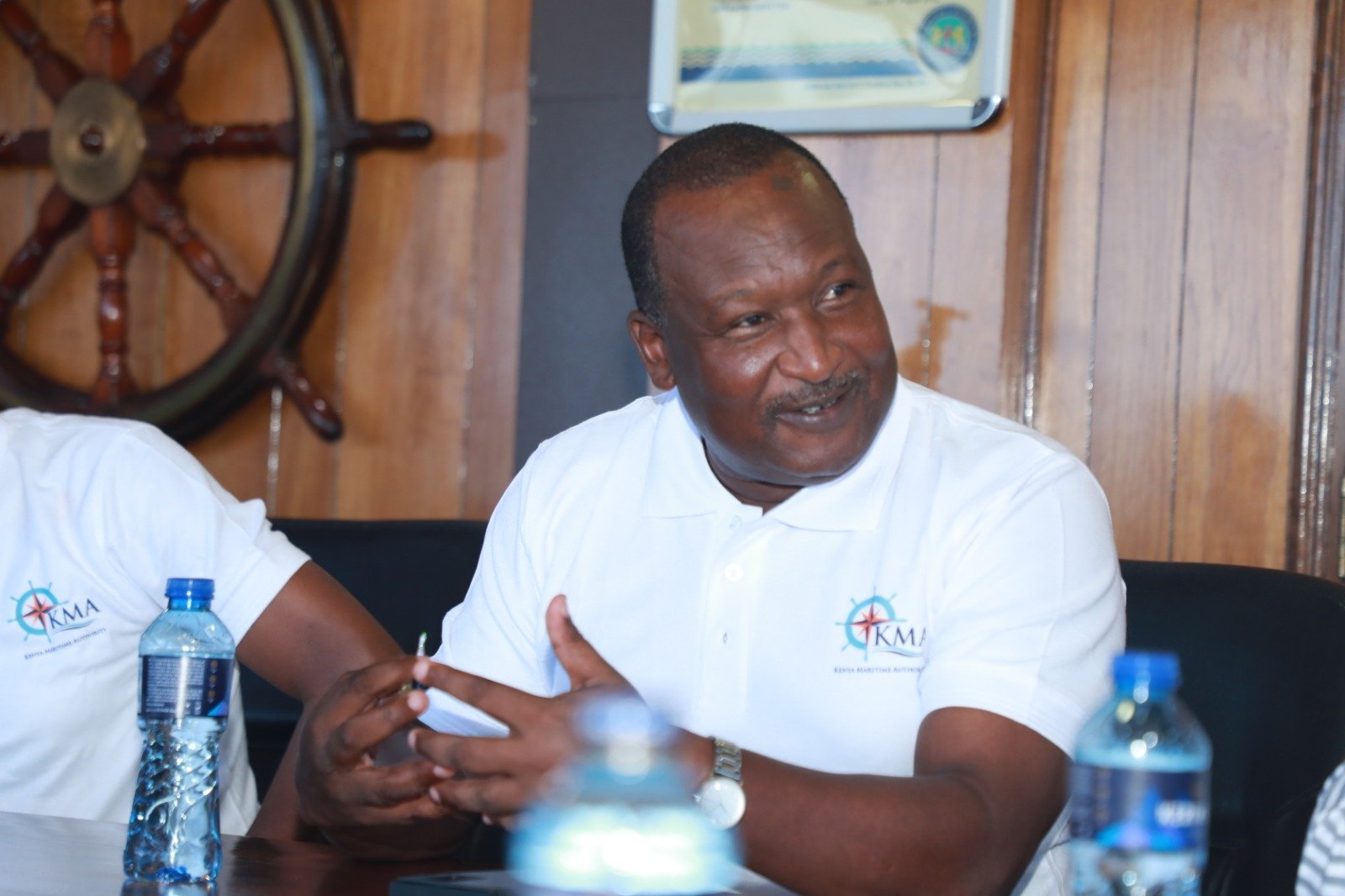
The honeymoon period is over for Justus Omae Nyarandi, the newly appointed Director General of the Kenya Maritime Authority (KMA), as he faces mounting resistance from senior staff and management just two months into his tenure.
Nyarandi, who was appointed on July 10, 2025, by Mining and Blue Economy Cabinet Secretary Hassan Ali Joho, has found himself at the center of a brewing crisis that has seen top managers openly question his leadership style and hiring practices.
Sources within the maritime authority suggest that all is not well at the marine regulatory body, with tensions escalating since his controversial appointment.
The appointment itself has come under scrutiny, with industry insiders questioning the process that led to Nyarandi’s selection.
Cabinet Secretary Joho, who officially took office in August 2024, exercised his powers under Section 11(1) of the Kenya Maritime Authority Act 2006, making the appointment on the board of directors’ recommendations for a three-year term.
However, critics argue that the decision was influenced more by personal relationships than professional merit.
The controversy deepened when allegations surfaced that Nyarandi’s appointment was primarily based on his relationship with CS Joho, dating back to his time at the Kenya Ports Authority where he served as General Manager for Corporate Services.
Sources claim that Nyarandi was considered a family friend of Joho, particularly during their involvement in various business deals during that period.
What has particularly irked staff and board members is Nyarandi’s immediate hiring spree upon assuming office.
Before he had fully settled into his role, the new Director General had already employed four staff members under what sources describe as “very questionable circumstances.”
When questioned about these appointments, Nyarandi has defended his actions by stating that he is helping President William Ruto address the country’s unemployment crisis.
However, this explanation has raised eyebrows, particularly given that the new hires reportedly come predominantly from his Gusii ethnic community.
The internal resistance to Nyarandi’s leadership has been most vocal among senior management, particularly Director of Maritime Safety Julius Koech and Isaiah Nakoru.
Both seasoned maritime professionals have previously acted as Director General in interim capacities, bringing considerable experience and institutional knowledge to their roles.
Staff members have reportedly described Koech as humble and professional, with some referring to him as the “de facto DG” due to his competence and leadership qualities.
The comparison between Nyarandi’s academic qualifications and those of his senior managers has become another point of contention within the authority.
While Nyarandi holds an MBA in Strategic Management from the University of Nairobi and is both a Certified Public Accountant and Certified Public Secretary, critics argue that his credentials pale in comparison to the technical maritime expertise possessed by colleagues like Engineer Koech.
This academic and professional disparity has created tension, particularly given Nyarandi’s previous role as Executive Secretary of the Northern Corridor Transit and Transport Coordination Authority.
Industry observers suggest that while this position provided valuable experience in regional transport coordination, it may not have adequately prepared him for the technical complexities of maritime safety and regulatory oversight that define KMA’s mandate.
The current board of directors, led by Chairman Mohammed Kolosh, includes Principal Secretary Aden Millah, Dr. Lilian Apadet Osamong, Annistain Mogaka, Rashid Hamid Ahmed, Ezekiel Kibo, and Ali Abdalla Mondo.
Sources suggest that some board members were pressured into supporting the appointment, raising questions about the independence of the selection process.
The timing of this internal revolt is particularly challenging for KMA, which has historically struggled with leadership stability.
The authority has experienced a high turnover of executives since the 2005 departure of founding Director General Nancy Karigithu.
This pattern of leadership instability has undermined the organization’s ability to provide consistent oversight of Kenya’s maritime sector.
Adding to the challenges facing Nyarandi are the broader issues plaguing the maritime sector, including concerns about corruption, safety standards, and recruitment practices.
The authority is currently advertising 38 job vacancies across multiple departments, with applications closing on October 6, 2025.
However, the ongoing internal tensions may complicate efforts to attract and retain quality personnel.
As Kenya seeks to develop its blue economy and enhance its position as a regional maritime hub, the stability and competence of its regulatory authorities become crucial.
For Nyarandi, the challenge now lies in rebuilding trust within the organization while demonstrating that he can effectively lead Kenya’s premier maritime regulatory body.
His success or failure in navigating these early challenges will likely determine not only his tenure but also KMA’s ability to fulfill its critical role in overseeing the country’s maritime sector.
The revolt within KMA serves as a reminder that appointments to technical leadership positions require not just political backing but also the confidence and respect of the professional teams tasked with implementing critical regulatory functions.
As the situation continues to unfold, stakeholders across Kenya’s maritime industry will be watching closely to see whether this leadership crisis can be resolved or if it will further undermine the authority’s effectiveness.
Kenya Insights allows guest blogging, if you want to be published on Kenya’s most authoritative and accurate blog, have an expose, news TIPS, story angles, human interest stories, drop us an email on [email protected] or via Telegram












Two MPs Defrauded of Sh93.5 Million in Karen Land Scam

Gachagua Rejects Sh50 Million Court Compensation, Calls It An Insult

Ghost Firm, Ghost Justice: Two Judges Fingered In KETRACO’S Sh10 Billion Scandal

SH2 BILLION HEIST EXPOSED: How Tatu City’s Foreign Masters Used Dirty Offshore Traps, London Arbitration & Mauritius Liquidation to Strip Local Investors of Their Stake

Dimba Accused of Extorting Bank Executives in Escalating Feud

Humiliated, Handed Sh1,000 and Sent Away: Furious Residents Return Nathif Jama’s Money, Accuse Governor of Arrogance and Inhumane Treatment of Sick Woman

ICC’s Karim Khan Suspended Over Sexual Misconduct Claims

The Conquest of Tatu City, A New Zealander Story

VANISHING ACT: How China Jiangxi International Pocketed Billions in Kenyan Public Contracts, Then Walked Away

THE GROUP CHAT THAT BROKE THE CARTEL: How Kenya’s Biggest Mattress Firms Used WhatsApp to Fix Your Prices, Then Used It to Destroy Themselves

Cement, Cash and Courts: How the Hashu Dynasty Crushed the Ramji Brothers for Fourteen Years and Why the Walls Are Now Closing In

Inside The Urban Planning Cartel That Owns Nairobi

Why Ruto’s Favourite Candidate Adan Mohammed Could Be Locked Out of the KRA Top Job

LifeCare on the Brink: SHA Fraud, Stolen Wages, and the Rotten Empire Jayesh Saini Built

Este Medical Kenya Fights American’s Explosive Complaints

Betika Faces DCI Probe, Directors Arrest and License Revocation Over Massive 29.5 Million Safaricom Customers’ Data Breach

The Rot Inside Absa: How Bank Insiders Are Looting Nairobi’s Customers

Inside FAFSA Fraud: How Kenyan Cybercriminals Siphoned Millions from America’s Sh12 Billion Student Loan System

Fresh Move Launched to Remove Kenya Railways MD Mainga From Office After Awarding Sh817 Million Consultancy Contract

Court Confirms Safaricom Customers Data Was Sold To Betting Companies In Seven-Year Cover-Up
-
 Investigations5 days ago
Cement, Cash and Courts: How the Hashu Dynasty Crushed the Ramji Brothers for Fourteen Years and Why the Walls Are Now Closing In
-
 Investigations4 days ago
Inside The Urban Planning Cartel That Owns Nairobi
-
 Investigations1 week ago
Betika Faces DCI Probe, Directors Arrest and License Revocation Over Massive 29.5 Million Safaricom Customers’ Data Breach
-
 Investigations5 days ago
Fresh Move Launched to Remove Kenya Railways MD Mainga From Office After Awarding Sh817 Million Consultancy Contract
-

 News2 weeks ago
Eight Students Arrested In Kenya After Suspected Deadly School Arson Attack
-
 News1 week ago
How Uhuru’s Deal With Obama In 2015 Paved Way For America’s Ebola Plan In Kenya
-

 Investigations2 weeks ago
The Invisible Hand: Al Jazeera Further Exposes How Safaricom Became The Regime’s Most Powerful Spy
-

 Business6 days ago
TRUST BETRAYED: How Senior DTB Bank Insiders Allegedly Looted Sh149 Million From a Customer’s Account Over Five Years