
Africa
Kenyan Kennedy Mugambi Dragged into South Sudan Oil Heist
How Trinity Energy’s CEO — a Nairobi businessman running petrol stations from Kenya to the Congo — found himself named in the most contested oil cargo allocation in South Sudan’s recent history, and what his company’s decade-long relationship with Afreximbank reveals about the deeper architecture of Juba’s resource capture

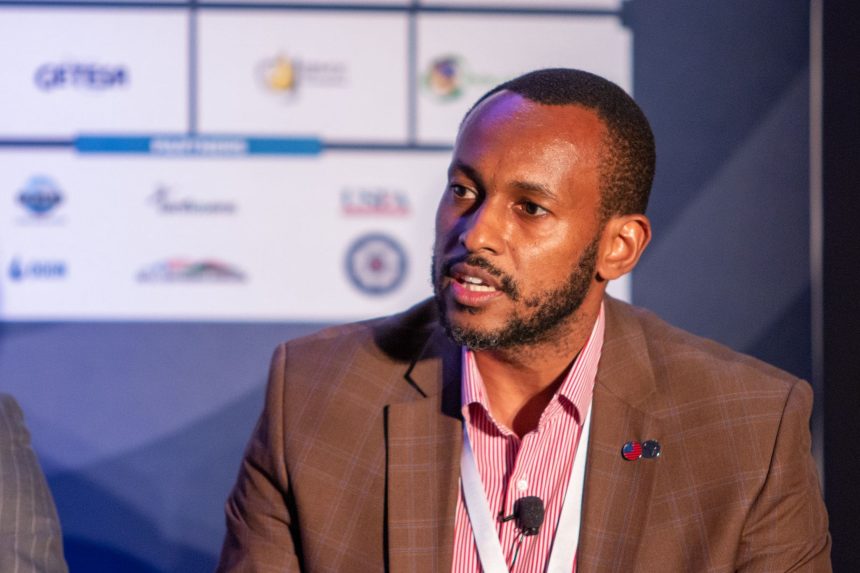
Ken Mugambi turned fifty years old on 30 September 2025. He celebrated the milestone by posting a reflective message on LinkedIn about stepping into what he called the fifth floor of life. He runs Trinity Energy Group, a pan-African integrated energy company with a growing network of fuel retail stations across Kenya, South Sudan and the Democratic Republic of Congo. His LinkedIn profile lists affiliations with the Kenya Association of Manufacturers, an MBA from the University of Calgary in Canada and a degree in Actuarial Mathematics from the University of Nairobi. He is, by every public measure, a legitimate East African business executive building a respectable energy company.
That image was complicated on 31 March 2026, when an official letter bearing the seal of the Republic of South Sudan’s Ministry of Petroleum was addressed directly to him by name, designating Trinity Energy Limited as the lifter of a 600,000-barrel cargo of Dar Blend crude oil worth approximately $60 million at prevailing market prices. The letter inserted Mugambi and Trinity into the most contested oil cargo allocation in South Sudan in years. It would not be their first time in this territory. And the history of how Trinity got there is considerably darker than the company’s polished corporate profile suggests.
Ken Mugambi’s Trinity Energy was inserted into the most contested oil cargo in South Sudan in years — not for the first time. The history of how they got there is darker than their corporate profile suggests.
THE 31 MARCH LETTER
The letter, reference number RSS/MOP/J/O/U/31/03/101 and dated 31 March 2026, was signed by Dr. Santino Ayuel Longar, newly installed as Undersecretary at the Ministry of Petroleum under Republican Decree No. 108/2026. It was addressed to Mr. Ken Mugambi, Group CEO, Trinity Energy Limited, Juba, South Sudan, with a copy to the African Export Import Bank, Afreximbank. The subject line read: Dar Blend Final Award Letter for April 2026 Cargo to Trinity Energy Limited.
The cargo: 600,000 barrels of Dar Blend crude, loading 29 to 30 April 2026 at Port Sudan’s Bashayer terminal. The pricing: dated Brent average of the month of loading at a discount, aligned to the tender average differential. The mechanism: all proceeds from the sale were to be retained by Afreximbank and applied to the Government of South Sudan’s obligations under Afreximbank financing arrangements. Trinity Energy was not the commercial beneficiary. It was the designated lifting vehicle through which Afreximbank would recover sovereign debt owed by Juba.
The legal basis cited in the letter was a Ministry of Finance and Planning reference, RSS/MOFP/J/VSF/03/2026-27 dated 31 March 2026, and a pre-existing petroleum allocation reference, RSS/MOP/J/U/O/12/25/086, dated 23 December 2025. That December 2025 reference is significant: it predates the entire March 2026 administrative reshuffle and suggests Mugambi’s Trinity had been designated as the Afreximbank lifting vehicle well before the removal of Dr. Chol Deng Thon Abel from office. The new Undersecretary was not improvising. He was honouring a pre-existing commitment.
THE PROBLEM: THE CARGO WAS ALREADY TAKEN
There was a structural collision at the centre of the 31 March letter. Four days earlier, on 27 March 2026, the outgoing Undersecretary Dr. Chol had signed reference RSS/MOP/J/O/U/3/26/251, awarding the identical cargo — 600,000 barrels, loading 29 to 30 April 2026 — to Euro American International Energy DMCC, the Dubai company controlled by Sudanese businessman Idris Taha. Dr. Chol signed that letter on his last day in office. Dr. Santino reassigned it to Trinity four days later. Then, on 3 April 2026, a third document restored the cargo to Euro American, with authority to retain proceeds for government financing purposes.
In eight days, the same physical cargo had been committed to two different companies across three separate official letters. Trinity Energy’s window as designated lifter lasted four days on paper and, based on the subsequent restoration of Euro American’s claim, appears never to have translated into actual operational control. The cargo that Mugambi’s company was handed, in writing, was taken back before the loading window opened.
The question that Kenya Insights put to Trinity Energy, without response at time of publication, is whether the company had prior knowledge of the Euro American allocation that preceded its own designation, whether it understood itself to be in a contractual conflict with an existing claimant and what actions, if any, it took when the 3 April letter restored the cargo to Euro American. Those questions matter not only commercially but legally, because each of the three allocation letters purports to grant exclusive entitlement to the same sovereign crude.
In eight days, the same physical cargo had been committed to two different companies across three official letters. Trinity’s window as designated lifter lasted four days on paper and appears never to have translated into actual control.
TRINITY’S DEEPER HISTORY IN JUBA’S OIL WARS
This is not Kennedy Mugambi’s first encounter with the controversy surrounding South Sudan’s oil allocation system. Trinity Energy Limited has operated in Juba since 2012 and grew to become, by its own account, South Sudan’s largest privately owned independent energy company, at one point providing more than 40 percent of the country’s energy demand. The company owns six million litres of fuel storage capacity at its Nesitu depot, positioning it as the dominant domestic fuel importer. It is that market position, and the access it provides to government relationships, that has drawn Trinity repeatedly into the orbit of South Sudan’s contested crude allocation system.
In April 2018, Trinity Energy Limited entered into a trade finance facility with Afreximbank for a series of $30 million loans to purchase diesel and petrol for the South Sudan market. As part of that arrangement, the Government of South Sudan committed to award cargoes of crude oil to Trinity Energy. The Sentry’s landmark February 2023 investigation, titled Crude Dealings: How Oil-Backed Loans Raise Red Flags for Illegal Activity in South Sudan, found that Trinity was awarded more than 40 percent of crude cargoes contracted by the government from June 2018 to May 2019. The company then sold those cargoes to Glencore Singapore Pte Ltd, designated as the original offtaker. Glencore shipped South Sudanese crude worth $376 million in 2019 entirely through deals involving Trinity Energy and Afreximbank.
The Sentry’s investigation, based on a former Trinity employee’s testimony and internal bank statements, emails and ministerial correspondence, found that the 2018 arrangement skirted South Sudanese legislation on oversight, transparency and competition. Trinity Energy spent approximately $1.5 million on what it described internally as lobbyist fees and facilitation fees to set up the Afreximbank deal. The company paid 18.7 million South Sudanese pounds — equivalent to $125,000 — to the government committee responsible for approving the arrangement. Trinity also changed millions of dollars on the black market, paid fake overseas invoices to disguise black-market currency exchange and engaged in behaviours that The Sentry characterised as indicative of tax fraud.
Afreximbank’s own legal filings in the UK High Court, cited in May 2025 proceedings reported by Global Trade Review, separately noted that Trinity Energy and related entities had provided security for the bank’s financing arrangements with South Sudan. That security relationship explains why, seven years after the original 2018 deal, Trinity reappears in March 2026 as the designated lifting vehicle for a sovereign debt recovery operation. The Afreximbank relationship was never fully closed. It was merely dormant, waiting for a cargo allocation to activate it.
THE MUGAMBI PROFILE: A KENYAN EXECUTIVE IN A WAR ECONOMY
Ken Mugambi was appointed Group CEO of Trinity Energy Group effective 1 February 2025, promoted from his previous role as Deputy CEO where he had been responsible for strategic growth and diversification. Trinity Energy Group Chairman Akol Ayii expressed full confidence in his appointment. Mugambi holds an MBA with a bias in Global Energy Management from the University of Calgary’s Haskayne School of Business, a degree in Actuarial Mathematics from the University of Nairobi, a postgraduate diploma in management from the University of Leicester and a certificate in Petroleum Policy Development from Petrad in Norway.
His academic credentials in actuarial mathematics suggest a deep familiarity with risk. The question that investigators and analysts now ask is whether that familiarity was applied to understanding the risks of South Sudan’s cargo allocation system as Trinity stepped back into it in late 2025 and early 2026. When Mugambi accepted the Group CEO role in February 2025, the company’s pre-existing Afreximbank relationship — and its implied obligation to act as a crude lifting vehicle when activated — was already embedded in Trinity’s contractual architecture. The December 2025 petroleum allocation reference cited in the 31 March 2026 letter was almost certainly signed during Mugambi’s tenure.
Trinity Energy Kenya Limited, the group’s Kenyan operating entity, runs a growing network of retail fuel stations along major transport corridors and in key towns across Kenya. The group also operates across the DRC and continues to position itself, in its public communications, as building Africa’s leading integrated energy player committed to providing energy access for millions of Africans. That public-facing mission sits uneasily against a background in which the group’s South Sudan operations have twice — in 2018 and again in 2026 — placed it at the centre of oil allocation controversies with implications for fraud, sanctions exposure and sovereign revenue diversion.
Trinity’s public-facing mission of powering Africa sits uneasily against a background in which its South Sudan operations have twice placed it at the centre of allocation controversies with implications for fraud and sovereign revenue diversion.
THE AFREXIMBANK DEBT: WHAT THE NUMBERS MEAN
The $657 million debt that Afreximbank was awarded against South Sudan by a UK High Court in early 2025 is the financial context within which the Trinity cargo allocation makes sense. That debt, dating from multiple tranches of oil-backed financing, has become the single largest commercial creditor claim against South Sudan’s petroleum revenues. Afreximbank’s strategy for recovery has been to seek designation as the proceeds recipient on cargo liftings, effectively inserting itself into the allocation chain so that crude sale revenues flow directly to the bank rather than to the Government of South Sudan or to its Ministry of Finance.
Trinity Energy, with its long-standing relationship with the bank, its operational presence in Juba and its existing position as an approved lifting entity within South Sudan’s crude allocation system, is the natural vehicle for that strategy. When the Ministry of Finance letter of 31 March 2026 directed Trinity to lift the cargo with all proceeds payable to Afreximbank, it was implementing a debt recovery mechanism, not awarding a commercial cargo in the normal sense. Mugambi’s company was not enriching itself. It was being used as a conduit.
Whether that conduit arrangement, and the pre-existing December 2025 allocation letter that established it, constitutes a properly authorised government commitment or a side arrangement that bypasses the Ministry of Finance’s normal revenue flows is a question that South Sudanese governance law does not currently have a mechanism to answer publicly. The documents exist. The allocation letters have been signed by serving officials. The Afreximbank debt is a matter of court record. But the process by which Trinity was selected as the lifting vehicle, the fees if any that Trinity receives for its role and the full terms of the arrangement remain undisclosed.
RIGHT OF RESPONSE
Kenya Insights sought comment from Ken Mugambi and Trinity Energy Group prior to publication regarding the 31 March 2026 allocation letter, the company’s awareness of the prior Euro American allocation, the December 2025 petroleum allocation reference that appears to have established Trinity as the designated Afreximbank lifting vehicle, and the terms and fees of Trinity’s role in the cargo lifting arrangement. No response was received. Kenya Insights also sought comment from Euro American International Energy’s managing director Idris Taha, Chiang Wei LLC FZ’s managing director Choul Laam and the Republic of South Sudan’s Ministry of Petroleum and Ministry of Presidential Affairs. None responded to questions submitted prior to publication.
Kenya Insights allows guest blogging, if you want to be published on Kenya’s most authoritative and accurate blog, have an expose, news TIPS, story angles, human interest stories, drop us an email on [email protected] or via Telegram


Kenyan Kennedy Mugambi Dragged into South Sudan Oil Heist

Denial Under Duress: The Untold Collapse Threatening David Lagat’s DL Group’s Empire

Stung By West Africa Rejections, France Courts Rest Of Continent at Kenya Summit

THE INSURER THAT TOOK YOUR PREMIUM AND FORGOT YOUR NAME: How ICEA Lion Left a Client Begging for Sh7.8 Million Across Four Months

Safaricom’s Sh1.4 Billion Reckoning: How Kenya’s Most Profitable Company Stole a Man’s Idea and Got Caught

Bush Air Safaris Founder John Ndiritu Risks Losing Property Over Disputed Loan Claim

Bia Tosha’s Claim For Injunction Is Designed To Sabotage The Sh300bn Sale of EABL Shares

KDC Accelerates the Creative Economy, Innovation and Youth-Led Enterprise Growth at Africa Forward Summit

Luxury Play for Influence: Inside Kempinski’s High-Stakes Bet on Brazzaville

Kenya Rallies Behind Justice Njoki Ndung’u in Historic Bid for ICC Judgeship

How Did a Sh468K KRA Salary Allegedly Turn Into Sh30 Billion? Questions Deepen Over Commissioner George Obel and Ciala Resort Owner’s Wealth

Nairobi Freezes Binance Accounts in Sweeping Anti-Fraud Crackdown as Global Scandal Record Haunts World’s Largest Crypto Exchange

The Man Behind the Badge: How Prof. Erastus Kanga Turned Kenya’s Premier Wildlife Agency into a Theatre of Corruption, Fear and Impunity

THE UNTOUCHABLE CLERK: How Fatuma Mwalupa Allegedly Turned Kwale Assembly Into a Personal Treasury and Outsmarted Scrutiny

THE BRAZEN RETURN: Triton Thief Yagnesh Devani, Who Pillaged Kenya of Sh7.6 Billion and Fled, Now Asks the Same Courts He Escaped to Restore His Stolen Wealth

Green Gold, Rotten Roots: How Kenya’s Biggest Avocado Firms Hijacked a Sh5.8 Billion Harvest Ban

Kenyan Motorists Stare At Possible Engine Damage And Heavy Losses As Report Confirms Substandard Fuel In Circulation

TotalEnergies Moves to Sue TikToker for Sh10 Million Over Contaminated Fuel Claim as Kenya’s Petroleum Sector Burns

KETRACO CEO Advert Marred By Controversies As Fears Grow That Kipkemoi Kibias Is A Predetermined Candidate

Why the April 21 Flopped Protests Expose Kenya’s Rudderless Opposition
-
 Investigations2 weeks ago
How Did a Sh468K KRA Salary Allegedly Turn Into Sh30 Billion? Questions Deepen Over Commissioner George Obel and Ciala Resort Owner’s Wealth
-
 Business2 weeks ago
Green Gold, Rotten Roots: How Kenya’s Biggest Avocado Firms Hijacked a Sh5.8 Billion Harvest Ban
-

 Africa1 week ago
The $24 Million Heist at the End of the World
-

 Investigations2 weeks ago
Serial Scammers Strike Again: How Kelvin ‘Sonko’ Onyango and Seth Steve Okute Built a Gold Fraud Empire on Kenya’s Reputation
-
 Business2 weeks ago
High Court to Set the Record Straight in Long-Running Bia Tosha Petition
-
 Investigations2 weeks ago
The Greek Heist: How Inform Lykos Allegedly Robbed Kenyan Taxpayers of Sh650 Million While Printing the Nation’s Exams and Ballots
-

 Investigations1 week ago
The Judge, The Disgraced Magistrate, The Auctioneer-Husband, The Fixer And The Lawyer: Anatomy Of A Sh16 Million Judicial Bribery Racket
-
 Business2 weeks ago
Fly 748 Returns to Kenya’s Skies With Fresh Push for Affordable Coastal Travel