
News
Boda Boda Riders Must Re-Register and Wear Uniforms Under New Rules
The reforms come in response to a troubling escalation in incidents where boda boda riders have taken the law into their own hands, including the torching of vehicles following traffic accidents and involvement in organized criminal activities.

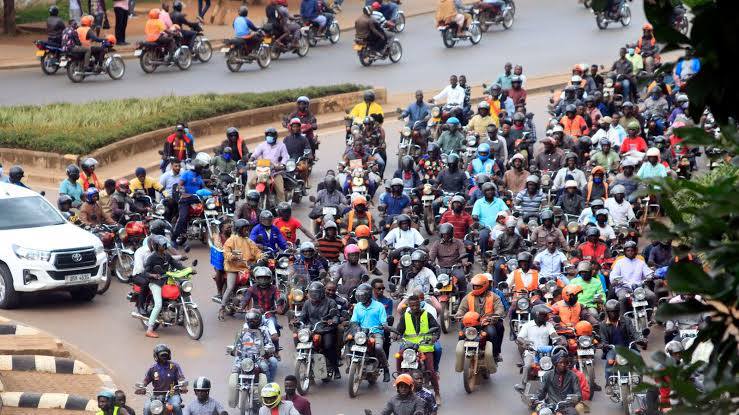
Government Introduces Sweeping Reforms for Kenya’s Boda Boda Industry
The government has announced comprehensive new regulations targeting the country’s boda boda motorcycle taxi sector, requiring all riders to undergo fresh registration and wear location-specific uniforms as part of efforts to enhance accountability and curb rising criminal activities.
The new measures, which take effect immediately, mandate that every boda boda rider must belong to a registered group with an appointed stage chairman who will be held directly responsible for the conduct of riders under their supervision.
In a significant departure from previous oversight mechanisms, these chairmen could face arrest if riders from their stages are involved in criminal activities or law-breaking incidents.
“Registration begins today after mapping all stages. Those who do not register must leave the sector immediately,” declared Kevin Mubadi, president of the Boda Boda Safety Association of Kenya, emphasizing the zero-tolerance approach to non-compliance.
The reforms come in response to a troubling escalation in incidents where boda boda riders have taken the law into their own hands, including the torching of vehicles following traffic accidents and involvement in organized criminal activities.
Nairobi Regional Police Commander George Seda highlighted the urgency of the situation, questioning the logic behind collective vigilante actions: “How do you burn someone’s vehicle because one rider was hit? The law applies to individuals, not groups.”
Under the new system, each rider will receive a unique registration number that supplements their existing National Transport and Safety Authority (NTSA) plate.
This number will clearly identify their county, sub-county, and specific stage of operation, creating an unprecedented level of traceability across the sector.
The visual identification component of the reforms requires riders to wear uniforms in designated colors specific to their sub-counties, making it easier for law enforcement and the public to distinguish operators from different areas.
Assistant Inspector General Fredrick Ochieng explained the strategic advantage: “Each county will have its own registration system, including sub-county and stage. This way, if a motorbike commits an offense in Mombasa, we can trace it back to Nairobi and the exact stage.”
To qualify for the new registration, riders must meet stringent requirements including possession of a valid boda boda license, a certificate of good conduct, comprehensive insurance coverage, and ownership of two helmets.
Additionally, they must register with a stage Savings and Credit Cooperative Organization (SACCO), further formalizing their participation in the sector.
The certificate of good conduct requirement represents a particularly significant hurdle, as it serves to screen out individuals with criminal backgrounds.
“You must register with a stage SACCO and meet all requirements, including a certificate of good conduct, to prove you are not involved in criminal activities,” Ochieng emphasized.
These regulations emerge from collaborative discussions with the Boda Boda Safety Association of Kenya, reflecting the government’s commitment to working with industry stakeholders to address longstanding challenges.
The measures are designed not only to improve safety standards but also to tackle the sector’s association with criminal gangs, theft, and mob justice incidents that have increasingly tarnished its reputation.
The boda boda industry plays a crucial role in Kenya’s transportation ecosystem, providing affordable mobility solutions for millions of citizens while offering employment opportunities for hundreds of thousands of riders.
However, the sector’s rapid growth has often outpaced regulatory frameworks, leading to safety concerns and instances of lawlessness that these new measures aim to address.
The success of these reforms will largely depend on effective implementation and the cooperation of existing riders and stage operators.
With registration already underway and mapping of all stages in progress, the government has signaled its determination to transform the boda boda sector into a more accountable and professionally managed industry that serves the public interest while maintaining its vital economic role.
Kenya Insights allows guest blogging, if you want to be published on Kenya’s most authoritative and accurate blog, have an expose, news TIPS, story angles, human interest stories, drop us an email on [email protected] or via Telegram


The Oil Company That Bankrolled a Private Hospital: How Bernard Amuor Makeny Allegedly Turned Nilepet Into His Personal ATM

Death Deferred: How Kenya’s Government Is Bending Aviation Law to Shield the Rogue Developers Strangling Wilson Airport

Hit South African Show Gets The World Talking About Polygamy and Cheating

South Sudan: Fifteen Years of Independence, US$70 Billion in Oil Wealth and GDP Per Capita Cut by Two-Thirds

COFEK Escalates Bid to Oust Gambling Boss Karimi as Fresh Court Battle Puts GRA Leadership Under Siege

Desperate Family Pleads For Ruto’s Help After Safaricom Defies Court Order in Son’s Murder, Exposing Deeper Data Privacy Crisis

Nyali MP Moha Jicho Pevu Caught Up In Alleged Sh44 Million KPA Debt Scam

Somalia Deputy PM Held at JKIA, Deported Over Questionable Acquisition of Kenyan Passport

The White-Coat Heist: How MP Shah Hospital Ran a Decade-Long Double-Extraction Racket While Hiding Behind Charity Status

The Patriarch, His Children, and a Buried Sh3.9 Billion Fraud: The Story of Titus Muya That Kenya Was Never Meant to Read

Businessman Philip Waithaka Kinuthia’s Minor Son Allegedly Drove Drunk, Killed Two Peponi Students in Ngong Road Horror Crash as Claims of Cover-Up Intensify

Inside NCBA’s Decline: How a Banking Giant Lost Its Strategic Edge

South Sudan: Adut Salva Kiir’s Shadow Treasury Exposed

Cement, Cash and Courts: How the Hashu Dynasty Crushed the Ramji Brothers for Fourteen Years and Why the Walls Are Now Closing In

Standard Chartered Ghosts Haunt Joshua Oigara At Stanbic As Whistleblower Spills Beans

Inside The Urban Planning Cartel That Owns Nairobi

THE VULTURE AND THE SCHEME How Nairobi West Hospital Became the Most Dangerous Institution in Kenya’s SHA Ecosystem and Why the Books Must Be Audited Now
The Patriarch, His Children, and a Buried Sh3.9 Billion Fraud: The Story of Titus Muya That Kenya Was Never Meant to Read

The President’s Daughter and The Missing Witness: How Adut Salva Kiir’s Shadow Treasury Silenced Its Most Dangerous Critic

How Adil Popat Saved His Empire On The Eve Of Imperial Bank Collapse and Why Kenya’s Mainstream Media Buried The Story
-
 News2 weeks ago
Businessman Philip Waithaka Kinuthia’s Minor Son Allegedly Drove Drunk, Killed Two Peponi Students in Ngong Road Horror Crash as Claims of Cover-Up Intensify
-
 Investigations1 week ago
THE VULTURE AND THE SCHEME How Nairobi West Hospital Became the Most Dangerous Institution in Kenya’s SHA Ecosystem and Why the Books Must Be Audited Now
-
 Business1 day ago
The Patriarch, His Children, and a Buried Sh3.9 Billion Fraud: The Story of Titus Muya That Kenya Was Never Meant to Read
-

 Business5 days ago
BURRIED TWICE: The Victoria Bank CEO Yogesh Pattni Files
-

 Business1 week ago
Inside the Billion-Shilling Betrayal: How Senior Treasury Officials Plundered a UN Poverty Fund and Built a Real Estate Empire on the Backs of Kenya’s Rural Poor
-

 Business2 weeks ago
The Listing That Doesn’t Lie: What the Market Isn’t Saying About Family Bank’s NSE Debut
-

 Business1 week ago
The Banker Who Walked Away: How Yogesh Pattni Survived a Financial Crime Scandal That Shook Kenya
-

 News1 week ago
My Life Is In Danger: Investor Drops Bombshell Expose On Thomas Ogutu CEO VeGrid Ltd And Fugitive Nairobi CEC Charles Kerich – DCI Inaction And Corruption Network Exposed