
Africa
South Sudan: Fifteen Years of Independence, US$70 Billion in Oil Wealth and GDP Per Capita Cut by Two-Thirds

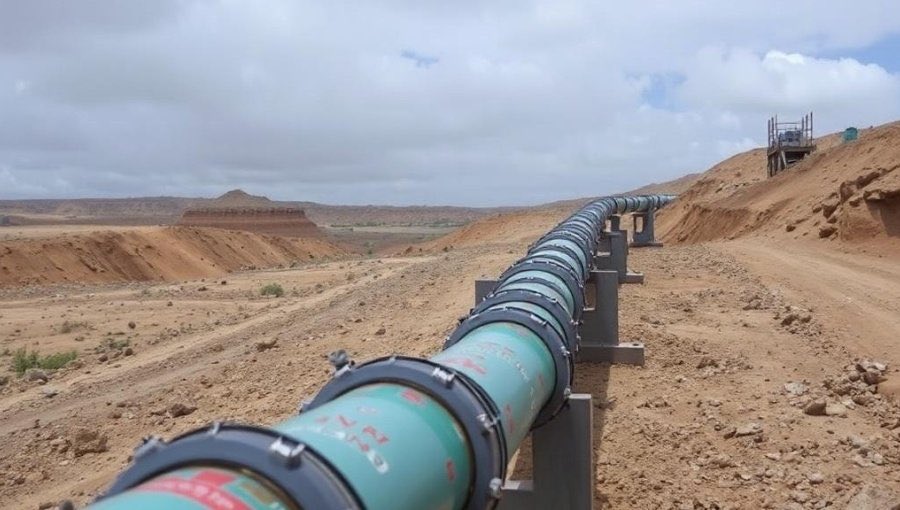
For years, warning signs have accumulated over the management of South Sudan’s oil revenues. Resources that should have sustained a population enduring one of the world’s most severe humanitarian crises have instead disappeared through opaque networks linked to a small circle of senior officials and their intermediaries. Neither the authorities in Juba nor the international financial institutions, despite longstanding warnings, have responded with the resolve the situation demands. Against this backdrop of institutional silence, the Afrique Justice consortium of investigative journalists has decided to publish its findings. A population driven into poverty has the right to know what has become of its country’s natural wealth. Equally, both national and international authorities have a duty to account for how those resources have been managed.
Since gaining independence on 9 July 2011, South Sudan has generated an estimated US$70 billion in gross oil production value. Yet this extraordinary resource wealth has failed to build a resilient state. GDP per capita has fallen by almost two-thirds, public services remain chronically underfunded, and the Oil for Roads scandal illustrates how a nation’s wealth was diverted for the benefit of a privileged few.
An estimated US$70 billion worth of South Sudanese crude has been produced between independence in 2011 and 2026. The figure is calculated year by year using production data from the U.S. Energy Information Administration (EIA), publicly available production estimates and Brent crude prices.
Bottom of the Global Human Development Ranking
This does not represent the amount of money that ultimately reached state coffers. It is a theoretical gross production value before transit fees, operators’ shares, debt repayments, production costs and numerous opaque financial arrangements are deducted. Nevertheless, it illustrates the sheer scale of the country’s lost opportunity.
While billions of dollars’ worth of oil have been extracted, ordinary South Sudanese have become poorer. According to World Bank data, GDP per capita exceeded US$1,400 at independence. The International Monetary Fund now estimates it at around US$488 for 2026. In just fifteen years, average income has therefore fallen by almost threefold.
South Sudan also remains the world’s lowest-ranked country on the United Nations Development Programme’s Human Development Index. In the UNDP’s 2025 rankings, it placed 193rd, with an HDI score of 0.388.
The UN Commission on Human Rights in South Sudan has delivered an equally stark assessment. It concludes that the country’s oil wealth has neither addressed the basic needs of its people nor delivered the infrastructure that independence had promised. According to the Commission, more than US$25.2 billion in identifiable public oil revenues has flowed through government accounts since 2011, yet little of that wealth has translated into essential public services.
Crude Oil: The Backbone of the State Budget
On 9 July 2011, South Sudan became the 193rd member state of the United Nations. It entered independence possessing a strategic asset: oilfields accounting for almost three-quarters of production from the former unified Sudan. From the outset, petroleum revenues financed the overwhelming majority of the national budget.
The first major crisis emerged in January 2012. Following a dispute with Khartoum over transit fees and allegations that Sudan had seized South Sudanese crude, Juba almost entirely suspended oil production. The country effectively deprived itself of its principal source of income for more than a year.
Production gradually resumed in 2013, but the civil war that erupted later that year severely undermined governance of the sector.
Output has never returned to pre-crisis levels. The EIA estimated production at approximately 149,000 barrels per day in 2023. In 2024, renewed disruption caused by conflict in neighbouring Sudan further weakened exports. Although South Sudan possesses substantial oil reserves, it remains entirely dependent on Sudanese pipelines leading to Port Sudan in order to export its crude.
The South Sudan Paradox
Indicator | 2011 | 2026 (Latest available data)
• GDP per capita: from more than US$1,400 at independence in 2011 to around US$488 in 2026.
• Dependence on oil revenues: the national budget was overwhelmingly reliant on petroleum income at independence and remains heavily dependent on it today.
• Human development: despite its substantial oil reserves, South Sudan ranks last globally on the UNDP Human Development Index.
• Even after accounting for production costs, transit fees payable to Sudan, operators’ contractual shares and declining output, the scale of wealth generated remains extraordinary.
• Yet that wealth has failed to produce a functioning state, effective public services or any significant reduction in poverty.
Oil for Roads: US$2.2 Billion and Roads That Never Materialised
Perhaps the clearest illustration of this failure is the Oil for Roads programme.
Marketed as an innovative mechanism to exchange crude oil for infrastructure, it promised to transform petroleum wealth into a modern road network. Instead, it has become one of the most striking symbols of resource capture.
According to the UN Commission on Human Rights’ September 2025 report, approximately US$2.2 billion was committed to the programme between 2021 and 2024.
The promised infrastructure, however, largely failed to materialise. Of more than 2,300 kilometres of planned roads, only 105.6 kilometres were completed and properly surfaced—less than 5% of the programme’s stated objective.
Almost Complete Impunity
The most troubling aspect is not simply the amount of money involved, but the near-total absence of accountability.
Billions of dollars were channelled towards companies connected to a small network of politically connected individuals, while roads, hospitals and schools remained unfinished and civil servants frequently went unpaid for months.
Very few officials have faced legal consequences, and no credible mechanism has succeeded in recovering losses on anything approaching the scale of the alleged misappropriation.
The pattern has become familiar: public funds disappear, infrastructure remains incomplete, while those benefiting from opaque financial networks secure their wealth abroad—in Dubai, Nairobi and other financial centres. Meanwhile, ordinary citizens are left with unfinished roads and a state still dependent on international donors to finance even its most basic services.
Oil Revenues Committed Before Reaching the Treasury
Oil-backed borrowing forms another part of this system. Under such arrangements, the government receives immediate financing while committing future oil cargoes as repayment. By the time crude is extracted, its value is no longer available to finance healthcare, education or public sector salaries—it has already been pledged against existing obligations.
Budget transparency has deteriorated accordingly. Public reports issued by the Ministry of Petroleum and available online cease with the period covering June 2020 to May 2021.
The World Bank has likewise warned of extensive pre-sales of crude, oil-backed borrowing and the significant losses these practices impose on public finances.
What the Population Has Received
The overall balance sheet is stark. Since 2011, South Sudan has generated approximately US$70 billion in gross oil value, yet GDP per capita has fallen by nearly two-thirds. The country possesses immense natural resource wealth, yet public services remain either virtually non-existent or heavily financed by international donors. An oil-rich nation continues to rely on humanitarian assistance to support much of its population.
In its Public Finance Review 2026, the World Bank notes that government spending on healthcare fell to just 0.2% of GDP in 2024, down from 0.6% in 2022, while public expenditure on education remained below 1% of GDP.
These figures reveal the true scale of the failure: the wealth existed, but it did not build the state.
Why Independence?
South Sudan’s tragedy runs deeper because it challenges the very purpose of independence itself. On 9 July 2011, millions of South Sudanese believed decades of war, marginalisation and domination from Khartoum had finally come to an end. Independence promised that the people would regain control over their land, their oil and their future.
Fifteen years later, the question is unavoidable: why were so many lives sacrificed, why were so many hopes invested, only to see a new elite reproduce many of the same systems of predation from which the country sought to free itself?
Political sovereignty has been achieved. Yet control over natural resources and state institutions remains captive to familiar patterns of appropriation—under different actors and different names.
The UN Commission on Human Rights in South Sudan describes a country effectively captured by a predatory elite that has organised the systematic exploitation of national wealth.
Fifteen years of investigations now make it possible to understand how a country capable of generating US$70 billion in oil wealth has nevertheless left its people among the poorest on Earth.
Kenya Insights allows guest blogging, if you want to be published on Kenya’s most authoritative and accurate blog, have an expose, news TIPS, story angles, human interest stories, drop us an email on [email protected] or via Telegram


The Oil Company That Bankrolled a Private Hospital: How Bernard Amuor Makeny Allegedly Turned Nilepet Into His Personal ATM

Death Deferred: How Kenya’s Government Is Bending Aviation Law to Shield the Rogue Developers Strangling Wilson Airport

Hit South African Show Gets The World Talking About Polygamy and Cheating

South Sudan: Fifteen Years of Independence, US$70 Billion in Oil Wealth and GDP Per Capita Cut by Two-Thirds

COFEK Escalates Bid to Oust Gambling Boss Karimi as Fresh Court Battle Puts GRA Leadership Under Siege

Desperate Family Pleads For Ruto’s Help After Safaricom Defies Court Order in Son’s Murder, Exposing Deeper Data Privacy Crisis

Nyali MP Moha Jicho Pevu Caught Up In Alleged Sh44 Million KPA Debt Scam

Somalia Deputy PM Held at JKIA, Deported Over Questionable Acquisition of Kenyan Passport

The White-Coat Heist: How MP Shah Hospital Ran a Decade-Long Double-Extraction Racket While Hiding Behind Charity Status

The Patriarch, His Children, and a Buried Sh3.9 Billion Fraud: The Story of Titus Muya That Kenya Was Never Meant to Read

Businessman Philip Waithaka Kinuthia’s Minor Son Allegedly Drove Drunk, Killed Two Peponi Students in Ngong Road Horror Crash as Claims of Cover-Up Intensify

Inside NCBA’s Decline: How a Banking Giant Lost Its Strategic Edge

South Sudan: Adut Salva Kiir’s Shadow Treasury Exposed

Cement, Cash and Courts: How the Hashu Dynasty Crushed the Ramji Brothers for Fourteen Years and Why the Walls Are Now Closing In

Standard Chartered Ghosts Haunt Joshua Oigara At Stanbic As Whistleblower Spills Beans

Inside The Urban Planning Cartel That Owns Nairobi

THE VULTURE AND THE SCHEME How Nairobi West Hospital Became the Most Dangerous Institution in Kenya’s SHA Ecosystem and Why the Books Must Be Audited Now
The Patriarch, His Children, and a Buried Sh3.9 Billion Fraud: The Story of Titus Muya That Kenya Was Never Meant to Read

The President’s Daughter and The Missing Witness: How Adut Salva Kiir’s Shadow Treasury Silenced Its Most Dangerous Critic

How Adil Popat Saved His Empire On The Eve Of Imperial Bank Collapse and Why Kenya’s Mainstream Media Buried The Story
-
 News2 weeks ago
Businessman Philip Waithaka Kinuthia’s Minor Son Allegedly Drove Drunk, Killed Two Peponi Students in Ngong Road Horror Crash as Claims of Cover-Up Intensify
-
 Investigations1 week ago
THE VULTURE AND THE SCHEME How Nairobi West Hospital Became the Most Dangerous Institution in Kenya’s SHA Ecosystem and Why the Books Must Be Audited Now
-
 Business1 day ago
The Patriarch, His Children, and a Buried Sh3.9 Billion Fraud: The Story of Titus Muya That Kenya Was Never Meant to Read
-

 Business5 days ago
BURRIED TWICE: The Victoria Bank CEO Yogesh Pattni Files
-
 Business1 week ago
Inside the Billion-Shilling Betrayal: How Senior Treasury Officials Plundered a UN Poverty Fund and Built a Real Estate Empire on the Backs of Kenya’s Rural Poor
-
 Business2 weeks ago
The Listing That Doesn’t Lie: What the Market Isn’t Saying About Family Bank’s NSE Debut
-
 Business1 week ago
The Banker Who Walked Away: How Yogesh Pattni Survived a Financial Crime Scandal That Shook Kenya
-
 News1 week ago
My Life Is In Danger: Investor Drops Bombshell Expose On Thomas Ogutu CEO VeGrid Ltd And Fugitive Nairobi CEC Charles Kerich – DCI Inaction And Corruption Network Exposed