
Investigations
Mercy Wamoto’s Elgon Group Accused of Pocketing Piny Luo Festival Cash as Suppliers Go Unpaid
The turning point came when frustrated suppliers formally petitioned Migori Governor Ochillo Ayacko seeking answers regarding payments linked to the festival.


When the curtains fell on the Piny Luo Cultural Festival in December 2025, Migori County leaders hailed the event as a landmark celebration of Luo heritage, culture and identity. Behind the colourful performances, packed crowds and political fanfare, however, a growing group of suppliers now claim they were left carrying the financial burden of delivering the event while the company contracted to run it walked away with the money.
At the centre of the controversy is Elgon Events Management and Consultancy Limited, a firm associated with Mercy Wamoto, which was engaged to coordinate key aspects of the festival. Several suppliers who provided media services, logistics, communications support, protocol management, venue preparation and event operations say they remain unpaid months after completing their contractual obligations.
The dispute has now escalated beyond private complaints and unpaid invoices into a matter involving public funds, official correspondence and serious questions about whether representations made to Migori County accurately reflected what happened on the ground.
Suppliers Say They Delivered Everything
The suppliers insist there was no dispute over the work performed.
They say services were delivered in full, deadlines were met and the festival proceeded successfully because dozens of contractors, consultants and service providers invested their resources, personnel and expertise to ensure its success.
Many of those businesses now claim they financed operations from their own pockets, expecting payment shortly after the event.
Instead, they say they entered months of frustrating follow-ups marked by shifting explanations and repeated promises that never translated into money reaching their accounts.
What began as assurances that payments were being processed reportedly evolved into claims that funds had not been fully released by Migori County, leaving suppliers trapped between the county government and the company responsible for settling their invoices.
For some, the delays have stretched for more than half a year.
The Documents That Changed Everything
The turning point came when frustrated suppliers formally petitioned Migori Governor Ochillo Ayacko seeking answers regarding payments linked to the festival.
The petition sought clarification on a critical issue.
Had Migori County actually paid Elgon Group?
According to the suppliers, company representatives had repeatedly maintained that substantial funds remained outstanding from the county government, making it impossible to settle all supplier invoices.
However, documents reviewed by this publication appear to tell a different story.
Correspondence submitted to county officials reportedly shows Elgon Group acknowledged receiving Ksh3.4 million from Migori County and further indicated that consultants and service providers had been paid.
Even more striking, the statement of account reportedly reflected an outstanding balance of zero.
That declaration has now become the central issue in the dispute.
If suppliers were indeed paid as indicated in official documentation, then the ongoing complaints would make little sense.
If they were not paid, then difficult questions arise about why county officials were informed that supplier obligations had already been settled.
The contradiction sits at the heart of a controversy that neither Elgon Group nor its senior officials have publicly addressed in detail.
Mercy Wamoto’s Growing Accountability Problem
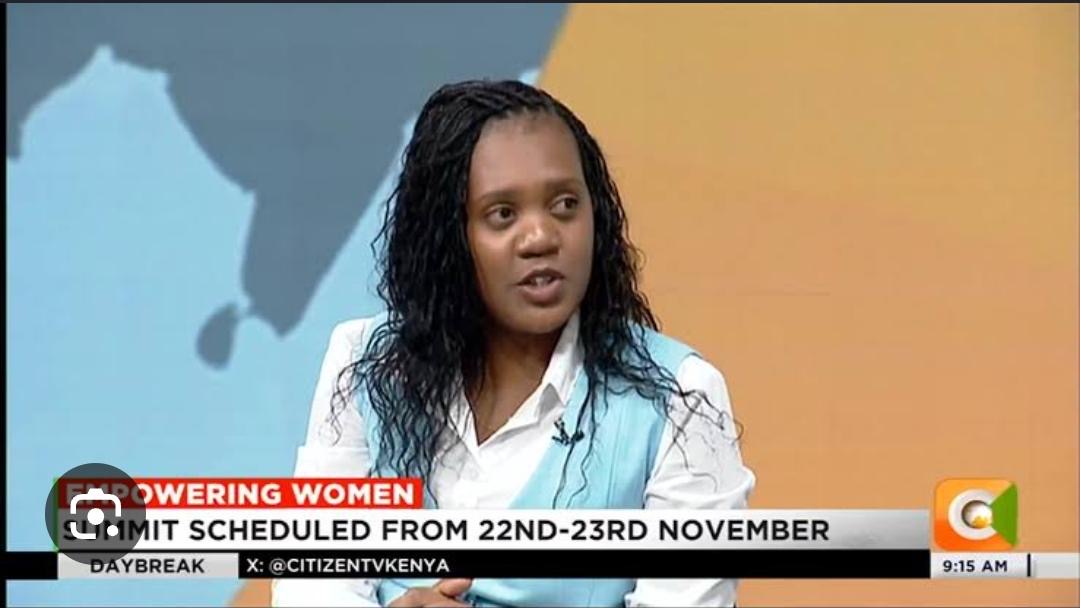
Mercy on a TV show.
As scrutiny intensifies, attention is increasingly focusing on Mercy Wamoto, a key figure associated with Elgon Group’s operations and public engagements.
For suppliers, Wamoto’s name has become synonymous with a company they accuse of repeatedly failing to provide clear answers regarding payment timelines.
The issue is no longer simply whether suppliers were paid.
The larger question is whether a company entrusted with managing public funds accurately represented how those funds were distributed.
Industry observers note that accountability in public procurement does not end once money leaves a government account.
It extends to ensuring that subcontractors and service providers who performed the actual work are compensated as agreed.
That is why the apparent gap between supplier experiences and official declarations has attracted growing attention.
The longer the silence persists, the harder it becomes for Elgon Group to avoid questions about where the money went and who bears responsibility for the unpaid invoices.
A Familiar Pattern?
The controversy has also revived public discussion about previous complaints involving Elgon Group and Wamoto.
Among the most notable was a public grievance raised by musician and entrepreneur Akothee, who accused the company of failing to deliver event management services after receiving payment.
Akothee alleged that despite paying for event coordination and logistical support, she was eventually forced to take over management responsibilities herself after becoming dissatisfied with the company’s performance.
While those allegations were never tested in court, critics argue that the similarities between that dispute and the current supplier complaints raise legitimate questions about whether the latest controversy reflects a broader pattern rather than an isolated incident.
The recurrence of complaints involving payments, unmet expectations and unresolved disputes has intensified calls for closer scrutiny of the company’s operations.
The Ksh105 Million Question
The supplier dispute becomes even more significant when viewed against the broader financial structure surrounding the festival.
Records show that the event ultimately benefited from a Ksh105 million Treasury allocation approved through Article 223 of the Constitution after initial funding proved inadequate.
That fact elevates the matter beyond an ordinary commercial disagreement.
Taxpayer funds were committed to the event.
Public institutions approved expenditures.
Contractors performed work based on those commitments.
Now suppliers are demanding transparency regarding the movement of those funds and whether all payments were processed as represented.
The controversy has also drawn attention to Migori County’s financial management structures, with some sources alleging that payment processing related to the festival experienced unusual delays and bottlenecks.
County officials may now face increasing pressure to publicly account for all disbursements connected to the festival and clarify whether documentation submitted by contractors accurately reflected supplier payments.
Court Battle Looms

Suppliers have issued a fourteen-day ultimatum threatening legal action unless outstanding payments are settled.
Should the dispute reach court, the litigation could force disclosure of financial records, payment schedules, bank transactions and correspondence that remain outside public view.
Such proceedings would likely provide the first comprehensive examination of whether supplier claims align with the documentary record and whether declarations submitted to public officials can withstand judicial scrutiny.
For now, the unanswered question remains remarkably simple.
The festival happened.
The work was done.
Public money was released.
Yet the people who say they delivered the event claim they are still waiting to be paid.
Until Elgon Group and its officials provide a clear explanation reconciling those competing realities, the controversy surrounding the Piny Luo Festival is unlikely to fade. Instead, it threatens to become one of the most uncomfortable accountability questions facing both the contractor and the public officials who entrusted it with millions in taxpayer funds.
Kenya Insights allows guest blogging, if you want to be published on Kenya’s most authoritative and accurate blog, have an expose, news TIPS, story angles, human interest stories, drop us an email on [email protected] or via Telegram


Wicknell Chivayo’s VIP Airport Access Raises Serious Questions Over Security Protocols at JKIA

UAE Bans Children Under 15 Years From Using Social Media

‘They Come At Night’: Gachagua Claims Ruto Insiders Secretly Supporting and Advising Him

Lawyer In High-Profile Ugandan Treason Case Charged With Related Offence

Sh2 Billion Time Bomb: Firm Allegedly Linked to Amason Kingi in Kilifi Revenue Deal Continues to Drain County Coffers as Senate Opens Probe

THE VULTURE AND THE SCHEME How Nairobi West Hospital Became the Most Dangerous Institution in Kenya’s SHA Ecosystem and Why the Books Must Be Audited Now

Mercy Wamoto’s Elgon Group Accused of Pocketing Piny Luo Festival Cash as Suppliers Go Unpaid

Ruto Invites Arsenal After Kenyan Fans Celebrate Title Win

The Banker Who Walked Away: How Yogesh Pattni Survived a Financial Crime Scandal That Shook Kenya

Ukraine Sets Moscow Refinery Ablaze In Biggest Attack In Years

Businessman Philip Waithaka Kinuthia’s Minor Son Allegedly Drove Drunk, Killed Two Peponi Students in Ngong Road Horror Crash as Claims of Cover-Up Intensify

Inside NCBA’s Decline: How a Banking Giant Lost Its Strategic Edge

Cement, Cash and Courts: How the Hashu Dynasty Crushed the Ramji Brothers for Fourteen Years and Why the Walls Are Now Closing In

Standard Chartered Ghosts Haunt Joshua Oigara At Stanbic As Whistleblower Spills Beans

Inside The Urban Planning Cartel That Owns Nairobi

South Sudan: Adut Salva Kiir’s Shadow Treasury Exposed

Why John Ngumi Is Running From the EACC and Why the Sh415 Million Payday May Be the Least of His Worries

How Adil Popat Saved His Empire On The Eve Of Imperial Bank Collapse and Why Kenya’s Mainstream Media Buried The Story

The President’s Daughter and The Missing Witness: How Adut Salva Kiir’s Shadow Treasury Silenced Its Most Dangerous Critic

Betika Faces DCI Probe, Directors Arrest and License Revocation Over Massive 29.5 Million Safaricom Customers’ Data Breach
-
 News4 days ago
Businessman Philip Waithaka Kinuthia’s Minor Son Allegedly Drove Drunk, Killed Two Peponi Students in Ngong Road Horror Crash as Claims of Cover-Up Intensify
-
 Business1 week ago
Inside NCBA’s Decline: How a Banking Giant Lost Its Strategic Edge
-
 Business1 week ago
Standard Chartered Ghosts Haunt Joshua Oigara At Stanbic As Whistleblower Spills Beans
-
 Investigations2 weeks ago
Inside The Urban Planning Cartel That Owns Nairobi
-
 Africa7 days ago
South Sudan: Adut Salva Kiir’s Shadow Treasury Exposed
-
 Business1 week ago
Why John Ngumi Is Running From the EACC and Why the Sh415 Million Payday May Be the Least of His Worries
-
 Business7 days ago
How Adil Popat Saved His Empire On The Eve Of Imperial Bank Collapse and Why Kenya’s Mainstream Media Buried The Story
-
 Africa1 week ago
The President’s Daughter and The Missing Witness: How Adut Salva Kiir’s Shadow Treasury Silenced Its Most Dangerous Critic