
News
Lawyer Donald Kipkorir Says NTSA Instant Fines Are Illegal, Warns New Traffic Camera System Faces Constitutional Challenge
“The system assumes that the registered owner of a vehicle was the one driving at the time of the alleged offence. That is not always true,” he argued.

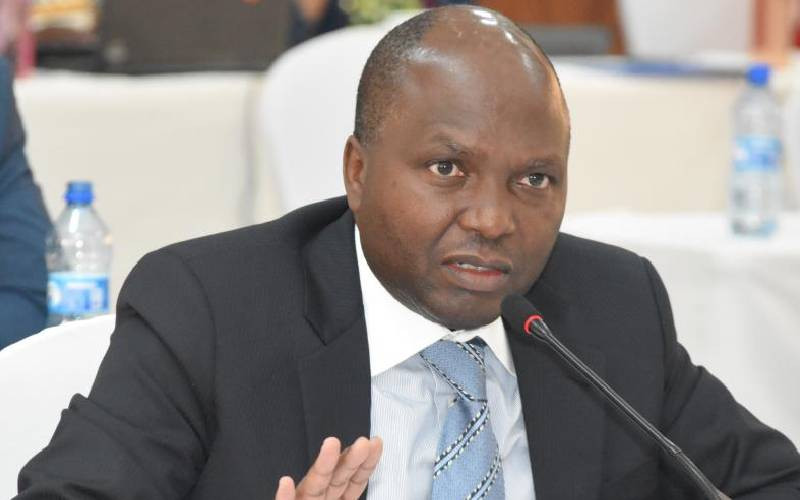
Prominent Nairobi lawyer Donald Kipkorir has launched a scathing attack on the government’s newly introduced instant traffic fines regime, arguing that the system violates fundamental constitutional principles and undermines the right to due process.
His criticism comes just days after the National Transport and Safety Authority (NTSA) rolled out a new enforcement framework that allows motorists and vehicle owners to receive penalties for minor traffic offences detected by police officers, traffic cameras and other digital surveillance technologies without first appearing in court.
Under the framework, which took effect on June 1, motorists can be fined between KSh500 and KSh10,000 for offences ranging from speeding and driving without proper documentation to operating vehicles without valid inspection certificates. The system is designed to reduce congestion in traffic courts and improve enforcement efficiency.
However, Kipkorir argues that while the objective of improving road safety may be legitimate, the legal foundation underpinning the instant fines regime is deeply flawed.
“Before one is fined, one has to be proven guilty. Traffic laws are criminal in nature,” Kipkorir said in a statement that has sparked widespread debate among motorists, lawyers and constitutional scholars.
According to the lawyer, Kenya’s criminal justice system is built on the principle that guilt must be established before punishment is imposed. He argues that authorities cannot simply issue fines based on camera footage or vehicle registration records without first proving who committed the offence and under what circumstances.
Kipkorir pointed to two essential elements required in criminal proceedings: mens rea or criminal intent, and actus reus or the criminal act itself.
“The system assumes that the registered owner of a vehicle was the one driving at the time of the alleged offence. That is not always true,” he argued.
His concerns strike at the heart of NTSA’s new enforcement model, which allows notifications to be sent to registered vehicle owners once authorities gather sufficient evidence of a traffic violation.
Critics of the framework argue that vehicles are often driven by family members, employees, friends, chauffeurs or hired drivers, making it difficult to automatically attribute liability to the registered owner.
Kipkorir further contends that even where an offence is captured on camera, authorities may not be able to determine whether the violation was intentional or caused by extraordinary circumstances.
“A driver may have been responding to a medical emergency or other unforeseen situation. The law cannot simply presume criminal intent,” he said.
The lawyer also challenged what he described as the transfer of criminal liability from a driver to a vehicle owner.
“If the driver isn’t the owner, then to fine the owner is completely unconstitutional. There is no transferred malice in traffic laws. One person’s criminal conduct cannot automatically be transferred to another person,” he argued.
The controversy is likely to reignite broader debates over the balance between technology-driven enforcement and constitutional rights.
Around the world, automated traffic enforcement systems have faced legal challenges over privacy concerns, evidentiary standards and the presumption of innocence. Courts in several jurisdictions have been asked to determine whether camera-generated penalties amount to administrative sanctions or criminal punishments requiring full judicial oversight.
NTSA has defended the new framework, saying it was developed in consultation with the National Police Service, the Office of the Director of Public Prosecutions and the Judiciary. The authority says the system operates under Sections 117 and 117A of the Traffic Act and is intended to enhance compliance with traffic laws while reducing delays in prosecuting minor offences.
Still, legal observers say Kipkorir’s intervention could signal the beginning of a constitutional showdown over one of the government’s most ambitious road safety initiatives in recent years.
While he acknowledged that technology can help curb dangerous driving and improve enforcement, Kipkorir maintained that the current framework lacks sufficient constitutional and legal safeguards.
“NTSA camera instant fines is a noble idea but without constitutional and legal foundation. It is executive irrational exuberance,” he said.
Whether the courts ultimately agree may determine the future of Kenya’s rapidly expanding camera-based traffic enforcement system and the thousands of fines expected to be issued under it in the coming months.
Kenya Insights allows guest blogging, if you want to be published on Kenya’s most authoritative and accurate blog, have an expose, news TIPS, story angles, human interest stories, drop us an email on [email protected] or via Telegram



Lawyer Donald Kipkorir Says NTSA Instant Fines Are Illegal, Warns New Traffic Camera System Faces Constitutional Challenge

US Embassy Defends Ebola Facility in Laikipia, Says It Doesn’t Pose Health Risks To Locals

The Man Who Owns Maraga: Inside The Sexual Harassment Scandal Threatening UGM From Within

Fertility Point’s House of Horrors: Wrong Sperm, Disputed Babies, a Dead Donor, and a Clinic That Cannot Stay Out of Court

Trump Confirms He Called Netanyahu Crazy In Phone Call

How Mohamed Jaffer Tightened His Stranglehold on Mombasa Port as Parliament Looked Away and a Dirty Fuel Scandal Engulfed His Empire

TRUST BETRAYED: How Senior DTB Bank Insiders Allegedly Looted Sh149 Million From a Customer’s Account Over Five Years

Govt Confirms NYOTA Second Grant Disbursement Date

Untouchable? How Bitok’s History Has Been Riddled With Mega Scandals and Why The PS Has Become Ruto’s Unnecessary Baggage

Google Must Let UK Publishers Opt Out Of AI Search Under New Rules

Why Ruto’s Favourite Candidate Adan Mohammed Could Be Locked Out of the KRA Top Job

THE GREAT HOLLOWING: How James Mworia Extracted KES 750 Million While 33,000 Centum Shareholders Lost Everything

Este Medical Kenya Fights American’s Explosive Complaints

Safaricom’s Sh1.4 Billion Reckoning: How Kenya’s Most Profitable Company Stole a Man’s Idea and Got Caught

LifeCare on the Brink: SHA Fraud, Stolen Wages, and the Rotten Empire Jayesh Saini Built

The Rot Inside Absa: How Bank Insiders Are Looting Nairobi’s Customers

THE INSURER THAT TOOK YOUR PREMIUM AND FORGOT YOUR NAME: How ICEA Lion Left a Client Begging for Sh7.8 Million Across Four Months

Denial Under Duress: The Untold Collapse Threatening David Lagat’s DL Group’s Empire

Court Confirms Safaricom Customers Data Was Sold To Betting Companies In Seven-Year Cover-Up

Inside FAFSA Fraud: How Kenyan Cybercriminals Siphoned Millions from America’s Sh12 Billion Student Loan System
-
 Business2 days ago
THE GREAT HOLLOWING: How James Mworia Extracted KES 750 Million While 33,000 Centum Shareholders Lost Everything
-
 News1 week ago
Este Medical Kenya Fights American’s Explosive Complaints
-
 Investigations1 week ago
LifeCare on the Brink: SHA Fraud, Stolen Wages, and the Rotten Empire Jayesh Saini Built
-
 Americas1 week ago
Inside FAFSA Fraud: How Kenyan Cybercriminals Siphoned Millions from America’s Sh12 Billion Student Loan System
-

 News6 days ago
Eight Students Arrested In Kenya After Suspected Deadly School Arson Attack
-

 Investigations3 days ago
Betika Faces DCI Probe, Directors Arrest and License Revocation Over Massive 29.5 Million Safaricom Customers’ Data Breach
-

 Investigations1 week ago
LSK On The Spot For Renewing Rogue Lawyer Dennis Onyango’s Licence Despite Mounting Evidence He Held Foreign Investors’ Millions Hostage
-
 News4 days ago
How Uhuru’s Deal With Obama In 2015 Paved Way For America’s Ebola Plan In Kenya