
News
DCI Arrests Woman in Sh55.7 Million Gold Fraud Targeting American Citizen in Nairobi
Mildred Kache, who also goes by the alias Sabreena Ayesha, was cornered at Crystal Villas in Kilimani by detectives who traced forensic leads from a cryptocurrency trail. Her accomplice Ibrahim Yusuf Mohamed is still at large.

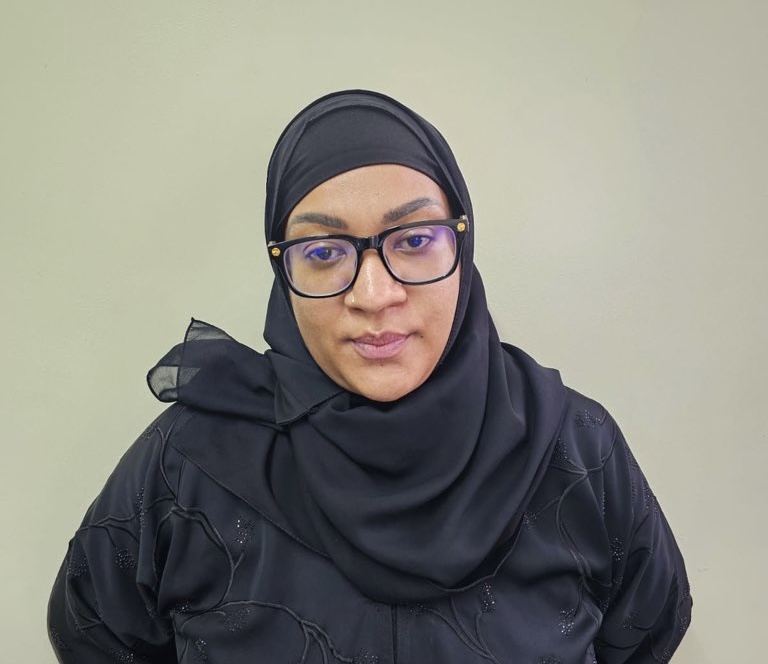
Nairobi’s gold fraud racket has claimed another victim. The Directorate of Criminal Investigations has arrested a woman detectives describe as the mastermind of an audacious cryptocurrency-powered gold scam that stripped an American national of USDT 431,380, the equivalent of approximately Sh55.7 million at prevailing exchange rates, after luring him to the country with the promise of a 400-kilogram gold consignment that never existed.
The woman, identified as Mildred Kache and known to associates by the alias Sabreena Ayesha, was cornered Sunday evening at Crystal Villas in Kilimani by detectives attached to the DCI Nairobi Regional Headquarters, following what investigators describe as a painstaking forensic manhunt that traced the money through cryptocurrency accounts and across multiple bank transactions.
“No sooner had the funds cleared than both suspects vanished. Not a single call was returned. Not a single gram of gold was delivered.”
The scheme followed a script that has become grimly familiar in Kenya’s criminal underworld. Kache and her accomplice, Ibrahim Yusuf Mohamed, approached the American national with an offer to supply 400 kilograms of genuine gold bars.
The figures alone should have aroused suspicion: at current international gold prices, 400 kilograms of gold would be worth upward of Sh6.9 billion, making their asking price of Sh55.7 million an almost comically implausible bargain.
But the suspects invested heavily in the illusion of legitimacy. Documents were drawn up, negotiations were conducted with theatrical seriousness, and when the fraudulent agreement was finally signed, the victim wired the cryptocurrency payment into accounts the pair controlled, boarding a plane to Nairobi in good faith to seal what he believed was the deal of a lifetime.
No sooner had the funds cleared than both suspects vanished. Calls went unanswered. Not a single gram of gold was delivered. The American, realising he had been comprehensively deceived, walked into the DCI and reported the matter. That decision set in motion the forensic trail that would lead detectives back to Kilimani.
When officers arrived at Crystal Villas, Kache was inside and was arrested without incident. Mohamed, however, had already received word that detectives were closing in.
He fled the scene in such haste that he left behind his car, a black Mercedes-Benz E50 bearing registration number KCV 910C, which detectives seized and towed to the Nairobi Regional Headquarters yard, where it is now held as an exhibit in ongoing investigations. Mohamed remains at large and detectives say he is actively being pursued.
Nairobi has quietly become the undisputed epicentre of Africa’s fake gold industry, with Milimani courts processing case after case in a fraud pandemic that experts say is systematically destroying Kenya’s reputation as a regional investment hub.
This case does not exist in isolation.
It is, in fact, the latest episode in what has become a relentless wave of gold fraud in Nairobi, one so severe that court records at the Milimani magistrates court show at least 20 people arraigned in the past six months alone over gold fraud cases with a combined declared value of at least Sh5 billion.
Nairobi has quietly become the undisputed epicentre of Africa’s fake gold industry, with a syndicate infrastructure that spans fake law firms, staged smelting operations, forged assay certificates, and cross-border accomplice networks extending into Tanzania, Dubai, and beyond.
In February 2026, Willis Onyango Wasonga, who goes by the street alias Marcus, was arraigned at Milimani after being accused of orchestrating a Sh32.3 million fake gold scheme targeting an American lawyer, John Sodipo. Sodipo had wired USD 250,500 in chartering fees for a 495-kilogram gold consignment to Dubai, only for the funds to evaporate through a National Bank of Kenya account operated by a company called Mohazcom Trading.
Days later, a Nairobi forex trader, Mohammed Noor, was separately charged in connection with the same scheme in what prosecutors described as a sophisticated cross-border money laundering operation.
Both cases were consolidated by the Director of Public Prosecutions and are still being prosecuted.
Just weeks before that, in January 2026, detectives were investigating a Sh37 million gold fraud in which an American national identified in court filings as David White Odell travelled to Kenya expecting to purchase 150 kilograms of gold.
He was taken to a staged smelting operation to build trust, shown convincing documentation, and then defrauded. Suspects Paul Chogo and Collins Onyango remain at large in that case. In October 2025, police foiled a vastly more ambitious scheme in which two suspects, Michael Otieno Onyango and Andrew Clifford Otieno, attempted to swindle an American businesswoman of USD 5.6 million, equivalent to approximately Sh723 million, before detectives cornered them after a vehicle chase and recovered two smelting machines and nineteen smelting moulds from their hideout.
The most jaw-dropping recent case involves an Australian investor, Andrew Adel Gaballa, who was defrauded of over Sh77.5 million in a scheme that began in Dubai and dragged him through Tanzania and Kenya before unravelling.
Gaballa paid Sh63.9 million through what was presented as a legitimate law firm escrow account and a further Sh70.4 million in cryptocurrency, all for a 600-kilogram gold consignment that never materialised.
When he tried to flee Kenya after reporting the fraud to the DCI, he was stopped at Jomo Kenyatta International Airport and detained for three hours, a red alert having been placed on his passport by actors believed to be linked to the very syndicate that defrauded him.
He went into hiding for four days. The sole suspect charged in that matter, Duncan Okaka Okonji, was released on bond.
The playbook is identical each time: staged meetings, polished contracts, a smelting demonstration, then silence.
The playbook is identical each time and its very repetitiveness suggests a level of organisation that goes far beyond opportunistic fraud. Operators stage polished meetings in high-end Nairobi neighbourhoods, typically Kilimani, Runda or Karen. They show victims gold samples.
They arrange staged smelting demonstrations.
They produce corporate paperwork. They sometimes involve law firms and insurance companies to add a veneer of regulatory legitimacy. Then, once the money clears, silence. The gold was never there. It was never going to be there.
Kenya’s gold trade remains dangerously informal.
Despite legitimate gold deposits in Migori, Turkana and Kakamega, the sector contributes barely one percent of national GDP and operates with minimal oversight.
There are no robust certification requirements for gold intermediaries, no reliable assay chain of custody for foreign buyers, and no central registry against which investors can verify that the individuals they are dealing with hold any kind of mining licence.
That regulatory vacuum is the soil in which this industry of deception has taken root and flourished.
The DCI has repeatedly urged members of the public and foreign investors to conduct due diligence before engaging in any gold or precious metal transaction in Kenya, and to report suspected fraud through its toll-free line 0800 722 203 or via WhatsApp on 0709 570 000.
The agency’s investigators say they are committed to dismantling what they describe as transnational fraud syndicates and tracing and recovering proceeds of crime.
But for every suspect arrested, several more remain at large. Ibrahim Yusuf Mohamed, the man who left his Mercedes behind in Kilimani as he fled, is among them.
So are Paul Chogo, Collins Onyango, and the three additional suspects sought in the John Sodipo case. The Mercedes may be sitting in a police yard. The man who was driving it is not.
Mildred Kache is in custody at the DCI Nairobi Regional Headquarters awaiting arraignment. Investigations are continuing.
Kenya Insights allows guest blogging, if you want to be published on Kenya’s most authoritative and accurate blog, have an expose, news TIPS, story angles, human interest stories, drop us an email on [email protected] or via Telegram


Why Ruto’s Favourite Candidate Adan Mohammed Could Be Locked Out of the KRA Top Job

DCI Arrests Woman in Sh55.7 Million Gold Fraud Targeting American Citizen in Nairobi

Court Confirms Safaricom Customers Data Was Sold To Betting Companies In Seven-Year Cover-Up

Paybill 585555: How Airtel Kenya’s Interoperability Gateway Became A Criminal Pipeline Draining Millions From Unsuspecting M-Pesa Users

The Man Who Starved Kenya’s Voice

The Rot Inside Absa: How Bank Insiders Are Looting Nairobi’s Customers

The President’s Helicopter: How Ruto’s Aviation Empire Lands a Historic Airbus Milestone While His Government Writes the Tax Code

“TikTok Who? YouTube Sorry. A Kenyan-Built Platform Just Dropped—and 20 African Ministers Showed Up To Launch It.”

Denial Under Duress: The Untold Collapse Threatening David Lagat’s DL Group’s Empire

Stung By West Africa Rejections, France Courts Rest Of Continent at Kenya Summit

How Did a Sh468K KRA Salary Allegedly Turn Into Sh30 Billion? Questions Deepen Over Commissioner George Obel and Ciala Resort Owner’s Wealth

Nairobi Freezes Binance Accounts in Sweeping Anti-Fraud Crackdown as Global Scandal Record Haunts World’s Largest Crypto Exchange

THE UNTOUCHABLE CLERK: How Fatuma Mwalupa Allegedly Turned Kwale Assembly Into a Personal Treasury and Outsmarted Scrutiny

The Man Behind the Badge: How Prof. Erastus Kanga Turned Kenya’s Premier Wildlife Agency into a Theatre of Corruption, Fear and Impunity

THE BRAZEN RETURN: Triton Thief Yagnesh Devani, Who Pillaged Kenya of Sh7.6 Billion and Fled, Now Asks the Same Courts He Escaped to Restore His Stolen Wealth

Green Gold, Rotten Roots: How Kenya’s Biggest Avocado Firms Hijacked a Sh5.8 Billion Harvest Ban

Why the April 21 Flopped Protests Expose Kenya’s Rudderless Opposition

KETRACO CEO Advert Marred By Controversies As Fears Grow That Kipkemoi Kibias Is A Predetermined Candidate

THE PHANTOM COVER: Unlicensed Broker Vanishes With Sh42M, Hussein Mohammed Fingered In The Alleged CHAN 2024 Insurance Scandal

64-Year-Old KIM Faces Shutdown As Regulator Declares Its Certificates Worthless, Orders Employers To Shun Graduates
-

 Business1 week ago
Safaricom’s Sh1.4 Billion Reckoning: How Kenya’s Most Profitable Company Stole a Man’s Idea and Got Caught
-

 Africa2 weeks ago
The $24 Million Heist at the End of the World
-
 Business1 week ago
THE INSURER THAT TOOK YOUR PREMIUM AND FORGOT YOUR NAME: How ICEA Lion Left a Client Begging for Sh7.8 Million Across Four Months
-
 Investigations1 week ago
Denial Under Duress: The Untold Collapse Threatening David Lagat’s DL Group’s Empire
-
 Business4 days ago
The Rot Inside Absa: How Bank Insiders Are Looting Nairobi’s Customers
-

 Business1 week ago
Bush Air Safaris Founder John Ndiritu Risks Losing Property Over Disputed Loan Claim
-

 Arts & Culture2 weeks ago
KDC Accelerates the Creative Economy, Innovation and Youth-Led Enterprise Growth at Africa Forward Summit
-
 Africa1 week ago
Stung By West Africa Rejections, France Courts Rest Of Continent at Kenya Summit