
Investigations
Serial Scammers Strike Again: How Kelvin ‘Sonko’ Onyango and Seth Steve Okute Built a Gold Fraud Empire on Kenya’s Reputation
Arrested three times across as many years, both men have repeatedly walked free only to resurface in bigger and bolder cons. Now, with a Swiss investor out of Sh18 million and a fugitive lawyer still at large, Kenya’s justice system faces hard questions about repeat offenders and the networks that protect them.


They called him Sonko. In Nairobi’s street lexicon, the word carries the full weight of wealth and swagger: a man of means, untouchable, above the law. Kelvin Otieno Onyango wore the name like armour.
His Instagram feed was a rolling advertisement of excess, stacked dollar bills, a gleaming Mercedes G-Wagon, a Maybach he unveiled to fanfare at a friend’s birthday party in December 2025, mere months after detectives had last released him on bail for gold fraud.
He moved with a bodyguard.
He paid for event tickets in crisp foreign currency.
He operated from a perch at China Wu-Yi Plaza on Galana Road in Kilimani, one of Nairobi’s most expensive commercial addresses, radiating legitimacy while investigators say he was running one of the most audacious fake mineral syndicates in the country’s recent history.
His partner in the latest arrest, Seth Steve Okute, is a different animal. Where Sonko performs opulence, Okute plays the establishment figure.
He ran a company called NewSkys Global Cargo Movers, positioned himself in Homa Bay County’s political circles with ambitions to contest the Karachuonyo parliamentary seat, and cultivated the image of a serious businessman engaged in international logistics.
He even contested the seat on an Orange Democratic Movement ticket in 2022.
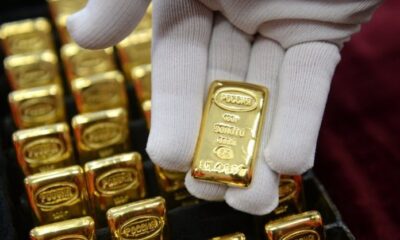
But behind the briefcases and the party manifestos, investigators say, the business model never changed. It was always the same script: find a foreign investor, promise them gold that does not exist, wrap the lie in lawyers and logistics companies and official-looking paperwork, and vanish with the money before the truth catches up.
Together, these two men have now been arrested in connection with major gold fraud cases spanning at least three years, accumulating a trail of victims from Los Angeles to Montreal to Zurich, and alleged losses that investigators place at well over two hundred and fifty million shillings in combined schemes.
They have been charged, granted bail, and returned to the streets. Each time they came back bigger. Each time the victims were newer but the playbook was identical. And each time, Kenya’s reputation as a destination for international investment took another wound that may take years to heal.
“The shipment never existed. The gold never existed. What existed was a machine built to extract money from trust.”
THE SWISS FILE: HOW THE LATEST SCHEME UNRAVELLED
The complaint that triggered the latest arrests was filed by Stephane Pierre Harder, a Swiss national, through his agent Ulrich Kenney, a Gabonese intermediary.
According to police records reviewed by Kenya Insights, on April 14, 2025, Harder was lured into a fraudulent agreement for a twenty-kilogram gold consignment purportedly destined for shipment to Dubai.
The deal was presented with the polish that has become the hallmark of this particular syndicate: documentation, professional assurances, an escrow structure channelled through a law firm to provide a veneer of legal legitimacy.
The law firm in question was Kandiki and Advocates, operated by Esther Bituku Kandiki, an advocate of the High Court of Kenya.
Through that firm, Harder transferred USD 140,000, the equivalent of over Sh18 million, described to him as logistics and clearance fees. The gold, of course, never arrived.
The shipment did not exist. What existed, as DCI detectives would later establish, was a machine built to extract money from trust, wrapped in fake paperwork and legitimised by a firm with a stamp and a law society registration number.
The ODPP reviewed the case file and approved prosecution on multiple counts. Kayembe Malamba Eli, Benold Okoth, Kelvin Otieno Onyango alias Sonko, and Seth Steve Okute have been charged with conspiracy to defraud under Section 317 of the Penal Code. On the count of obtaining money by false pretence, Onyango, Okoth, and Kandiki herself are named. Detectives arrested Okute and Onyango.
The hunt for Kandiki was ongoing as of publication, with investigators describing her as actively evading arrest.
SONKO’S RAP SHEET: A THREE-YEAR ESCALATION
The story of Kelvin Otieno Onyango’s relationship with Kenya’s criminal justice system is a case study in how repeat offenders exploit the gap between arrest and conviction.
His first documented encounter with the DCI in relation to mineral fraud occurred in February 2023, when he was among those arrested at his China Wu-Yi Plaza offices during a wider sweep targeting what investigators described as a network of fake gold scammers operating in Kilimani and using Jomo Kenyatta International Airport as a conduit.
In that raid, ten people were arrested. All were released except Onyango, who was held for further questioning. Detectives said at the time that he was believed to be linked to a network that had defrauded a Chinese national, and that the investigation had uncovered connections to a broader operation moving fraudulent mineral consignments through Mombasa’s container terminal.
A shipment that the DCI had intercepted at the Mombasa Container Terminal was found to contain reconditioned metallic drums loaded with sand, not the tantalum minerals the buyer had paid for. Investigators identified a suspect named Lumumba Patrick as a key link to fake gold networks in Congo and Uganda, suggesting a transnational reach that made Onyango’s Kilimani office just one node in a larger criminal web.
By February 2024, Onyango was back in handcuffs.
This time the charge sheet was specific and damning.
He was arraigned at Milimani Law Courts and charged with ten counts of making a document without authority, a grave offence under Section 357(a) of the Penal Code, and forgery.The documents in question included a fabricated Mineral Dealer’s Trading Licence, registration number MDL/T DTL/2024/044, purportedly issued in the name of Cargocare Freight Forwarders. Investigators found company documents, stamps, seals, and forged mining licences purported to have been issued by the Ministry of Mines when they raided his Galana Road offices. The fraud was linked to the Sh151 million mineral fraud case involving a Chinese national. He was arraigned, denied all counts, and walked out on a cash bail of Sh200,000.
Less than six months after that bail, in August 2025, Onyango was arrested again.
This time detectives placed him inside a USD 618,000 scam, equivalent to over Ksh79 million, that had devastated a Canadian investor.
According to DCI records, the victim was lured with promises of 250 kilograms of gold bound for Dubai aboard a private jet.
A proforma invoice of USD 318,400 was issued by a company called EAI Logistics, and the Canadian wired the funds to a law firm account.
He was then persuaded to transfer an additional USDT 300,000 to a cryptocurrency wallet. No gold ever left the ground.
The Cameroonian national Francis Talla Ouafo, alias Allain, who was arraigned at Milimani on July 31, 2025, is believed by investigators to have been the mastermind of that syndicate.
Onyango, now describing himself as the director of SwiftTaxis Logistics Ltd, was arrested as a key accomplice, accused of hosting the victim at his offices where the deal was formalised and facilitating the USD 140,000 transfer into an escrow account.
In the months between that arrest and the latest Swiss investor case, Onyango did something that stunned investigators and announced to anyone watching that he had no intention of changing course.
In December 2025, with active fraud charges before the court, he pulled up to a Nairobi birthday party in a brand-new Maybach.
The spectacle was filmed and circulated widely.
The luxury vehicle represented not just wealth but defiance, the public performance of a man who believed the system could not touch him.
“He walked out of court, got into a Maybach, and drove to a birthday party. While the fraud charges were still pending.”
SETH OKUTE: THE POLITICIAN WHO CARRIED A LOADED PISTOL
Seth Steve Okute’s arrest record begins in the same February 2023 sweep that first put Onyango before investigators, but his file carries details that make it stand apart from ordinary fraud cases.
When DCI detectives acting on intelligence leads arrested him following a complaint filed by Marjorie R. Grant, a Los Angeles-based American investor, they made an additional discovery: Okute was in possession of a Baretta pistol loaded with thirteen rounds of nine-millimetre ammunition.
His co-accused in that case, Brunoh Otieno Oliende alias Oyugi, was tracked to a palatial home in Kitusuru where detectives recovered heavy metallic boxes believed to contain crucial evidence.
At the offices on Maalim Juma Road in Kilimani where eight other suspects were arrested alongside them, investigators found three laptops, mineral stones coated in gold and silver to mimic genuine ore, a cheque book from a local bank, a briefcase containing metal analyser tools, cash-counting machines, and a rubber stamp bearing the inscription Bukule Tereno Advocates, Kinshasa.
The staging was meticulous.
Everything about the operation was designed to make the gold look real, to make the logistics company look credible, and to make the lawyers look like independent professionals verifying an above-board transaction.
The charges against Okute and Oliende in the 2023 case were specific.
They were accused of obtaining USD 100,000 from Grant, the equivalent of Sh12.7 million at the time, by falsely pretending that NewSkys Global Cargo Movers International Limited was in a position to pay customs duties for thirty-three kilograms of gold shipped from Burkina Faso to Zurich. The case was filed at Milimani Magistrates Court before Senior Principal Magistrate Esther Kimilu. Both denied the charges. Both were released on bail of Sh100,000 each.
That Okute had contested the Karachuonyo parliamentary seat in the 2022 general election added a dimension to the case that investigators found deeply troubling.
That a man later charged with armed involvement in a transnational gold fraud syndicate had been on the ballot, seeking public office as recently as the election prior to his arrest, raised questions about the vetting processes that govern who is permitted to stand for political office in Kenya.
He remains active in Homa Bay County political circles, according to sources familiar with the area.
The 2023 sweep that netted Okute was remarkable not only for the weapons and the elaborate staging but for who else was caught in the net.
Among the ten suspects arrested were a Greek national, Kaisarios Loamms, and an Indian national, Siva Sakthi Veru, the latter having just flown into Kenya and been found mid-transaction, in the process of being defrauded of over Sh25 million himself.
Detectives intervened before Veru could lose the money, pulling him from the jaws of the same machine that had already consumed Grant’s USD 100,000.
THE LAWYER WHO LAUNDERS: KANDIKI AND THE LEGAL SHIELD
What makes the latest Sh18 million Swiss investor case particularly alarming is the mechanism through which the fraud money was moved.
The USD 140,000 was not sent to a shell company or a personal account.
It was transferred to Kandiki and Advocates, a duly registered law firm, giving the transaction the appearance of a legitimate professional escrow arrangement.
In the world of international trade and commodity deals, channelling funds through an advocate’s firm is standard practice for buyers seeking reassurance.
The syndicate understood this and exploited it ruthlessly.
Esther Bituku Kandiki, the advocate in question, is no stranger to serious criminal allegations.
On May 5, 2025, just weeks after the gold deal that allegedly absorbed Harder’s money, Kandiki presented herself to the Banking Fraud Investigation Unit of the DCI after ignoring summons since October 2024. She was promptly arrested.
The charge that greeted her was of a different order entirely from gold fraud: investigators alleged she had masterminded the siphoning of Sh1,499,465,831 from Equity Bank’s internal Salaries Remittance General Ledger account between May 1 and July 31, 2024.
One and a half billion shillings. Extracted in ninety days.
According to court documents, the DCI’s Banking Fraud Unit traced Sh38 million from the Equity Bank heist into two accounts linked to Kandiki: one held by Inforide Point Limited, a company she co-owns with her husband, at NCBA Bank, and another at National Bank of Kenya under Kandiki and Advocates.
During interrogation she provided agreements between her firm and eight other companies linked to over Sh400 million in suspicious transfers. Investigators dismissed those agreements as a shield for the real beneficiaries.
The court was told by Inspector Chrispinus Sore Shibanda that as an advocate of the High Court of Kenya, her insistence that she never met the individuals behind those agreements could only mean she was actively protecting them. The Milimani chief magistrate freed her on a personal bond of Sh30 million.
She then went into hiding. By the time detectives moved to arrest her in connection with the Swiss gold fraud case in late April 2026, Kandiki was already a wanted person managing two separate sets of criminal allegations, one involving a billion-and-a-half-shilling bank heist and another involving a gold scam that used her own firm as the funnel. She remains at large.
“Kandiki’s firm was the fig leaf. It gave the gold fraud the legal cover that turned a foreign investor’s suspicion into false confidence.”
THE PATTERN THAT KENYA CANNOT BREAK
Detectives who have worked Kenya’s fake gold beat for years describe these syndicates with the weariness of officers who have made the same arrests repeatedly.
The script is always the same.
A foreign investor, usually introduced through an intermediary, is approached with an offer to purchase gold being exported from a Central or West African country.
The gold is real-looking: samples are produced, sometimes tested with metal analyser tools that the fraudsters themselves control.
Documents are generated bearing the stamps of mining ministries, freight forwarders, and law firms.
Escrow arrangements are proposed, putting the investor’s money technically in the hands of a professional third party.
And then, at the moment the money lands, the entire apparatus dissolves. The lawyers stop answering calls. The logistics company’s offices are empty. The gold never existed.
What makes the Onyango-Okute network distinctive is its longevity and its apparent immunity to prosecution.
Between them, the two men have been arrested at least three times in connection with cases of this nature.
They have faced charges before Milimani courts.
They have been granted bail at amounts that their alleged proceeds make trivial.
And they have returned to the same business with minor variations in the corporate names attached to the scheme: NewSkys Global Cargo Movers became SwiftTaxis Logistics, China Wu-Yi Plaza remained the operating base, and Kilimani remained the hunting ground for foreign visitors lured by the promise of a lucrative commodity deal.
The financial totals are staggering when laid end to end. The 2023 American investors case involves alleged losses of USD 534,000, or Sh67.3 million.
The 2025 Canadian case, in which Onyango is a named suspect, involves USD 618,000. The latest Swiss case adds USD 140,000.
The total alleged losses traceable to cases in which both men appear as suspects exceed Sh200 million across confirmed cases.
That figure does not account for victims who never reported, schemes that were never detected, or the cases that the DCI suspects remain hidden beneath the surface of these networks.
There is a broader context into which these arrests fall. Kenya was grey-listed by the Financial Action Task Force in 2024 partly because of concerns about the country’s failure to adequately prosecute money laundering and financial crime.
Fake gold syndicates operating out of Nairobi’s upmarket suburbs and routing funds through lawyers and cryptocurrency wallets were cited as part of the problem.
The existence of repeat offenders who can be arrested, charged, bailed, and returned to active fraud without conviction is not merely a justice system failure. It is, in the eyes of international watchdogs, an institutional failure that endangers Kenya’s standing in the global financial system.
THE FUGITIVE, THE FAILED PROSECUTION, AND THE QUESTIONS THAT REMAIN
As of the date of this report, Esther Bituku Kandiki remains at large. Benold Okoth, the fourth named conspirator in the Swiss investor case, has not been publicly accounted for.
Kayembe Malamba Eli, also named on the conspiracy to defraud charge, is similarly untraced. The investigators who built the case against Onyango and Okute are working to locate these figures, but the longer Kandiki evades arrest, the more the evidence trails risk going cold.
For Onyango, this is his third serious engagement with the criminal courts over mineral fraud. The 2023 case involving Marjorie Grant remains unresolved. The 2024 forgery case involving the fabricated mining licence is pending.
The August 2025 Canadian investor case introduced yet another set of charges. The current Swiss investor case now adds a fourth layer.
In a functioning accountability system, a suspect facing this volume of overlapping criminal allegations across multiple jurisdictions would either be in custody pending trial or operating under conditions that prevent them from re-offending. In Kenya, they were arriving at birthday parties in Maybachs.
Seth Steve Okute’s political ambitions add a particular dimension of concern.
A man with an active fraud history who seeks to represent constituents in parliament, and who was found armed when arrested on fraud charges, represents a category of political entrant that Kenya’s ethics and anti-corruption frameworks are supposed to screen out.
That he remains a figure in Homa Bay County politics despite this record suggests those frameworks are not functioning as intended.
The damage extends beyond the individual victims. Swiss, American, Canadian, and Gabonese investors who have been defrauded by networks operating in Nairobi do not keep their experiences quiet.
They talk to their governments, their business associations, their banks.
The embassies of these countries receive the reports and pass them upwards. Kenya’s image as a destination for legitimate business and investment is shaped in part by whether a foreign investor who sends money here can expect to be protected by law, or to become another entry in a growing database of fraud victims.
The DCI has said investigations are ongoing and that it is working to dismantle the wider network behind this operation.
Those assurances have been made before.
The same assurances followed the 2023 arrests, the 2024 arraignment, and the 2025 sweep. Onyango and Okute were released after each of those interventions. The machine kept running.
Until Kenya’s prosecutorial machinery can convert these arrests into convictions and its bail framework can prevent serial suspects from re-offending between court dates, the script will continue to play out, the investors will keep losing their money, and the men who call themselves Sonko will keep arriving at parties in cars that cost more than most Kenyans will earn in a decade.
Kenya Insights allows guest blogging, if you want to be published on Kenya’s most authoritative and accurate blog, have an expose, news TIPS, story angles, human interest stories, drop us an email on [email protected] or via Telegram





Green Gold, Rotten Roots: How Kenya’s Biggest Avocado Firms Hijacked a Sh5.8 Billion Harvest Ban

The Greek Heist: How Inform Lykos Allegedly Robbed Kenyan Taxpayers of Sh650 Million While Printing the Nation’s Exams and Ballots

Serial Scammers Strike Again: How Kelvin ‘Sonko’ Onyango and Seth Steve Okute Built a Gold Fraud Empire on Kenya’s Reputation

Fly 748 Returns to Kenya’s Skies With Fresh Push for Affordable Coastal Travel

How Did a Sh468K KRA Salary Allegedly Turn Into Sh30 Billion? Questions Deepen Over Commissioner George Obel and Ciala Resort Owner’s Wealth

High Court to Set the Record Straight in Long-Running Bia Tosha Petition

Kenya’s betting tax reform and why it matters

KETRACO CEO Advert Marred By Controversies As Fears Grow That Kipkemoi Kibias Is A Predetermined Candidate

I Will Bribe Every Judge in Town- MP Jack Wamboka

KNH ON THE BRINK: How Corruption, Revenue Plunder and State Neglect Are Destroying Kenya’s Flagship Hospital
How Did a Sh468K KRA Salary Allegedly Turn Into Sh30 Billion? Questions Deepen Over Commissioner George Obel and Ciala Resort Owner’s Wealth

The Lawyer at the Centre of Kenya’s State Machine: Eric Gumbo, the AG’s Bypassed Office, and the Half-Billion-Shilling Question

Inside Details Of Sh78 Billion Fraud in KPC’s Mombasa-Nairobi Line 5 Pipeline Project That Has Continued To Bleed The Country

Poison at the Pump: How Kenya’s Fuel Marking System May Be Exposing Millions to Cancer-Causing Chemicals

THE ZAKHEM-ECOBANK MACHINE: How Kenya’s Courts Were Weaponised to Drain a State Corporation of Over KES 78 Billion

Kenyan Motorists Stare At Possible Engine Damage And Heavy Losses As Report Confirms Substandard Fuel In Circulation

The Teflon Company: How Gulf Energy’s Insiders Built Billions on Kenya’s Fuel, and Walked Away Clean

Nairobi Freezes Binance Accounts in Sweeping Anti-Fraud Crackdown as Global Scandal Record Haunts World’s Largest Crypto Exchange

Mombasa Lawyer Exposed In Sh600 Million Alleged Double-Dealing Diani Property Transaction

The Man Behind the Badge: How Prof. Erastus Kanga Turned Kenya’s Premier Wildlife Agency into a Theatre of Corruption, Fear and Impunity
-
 Investigations2 days ago
How Did a Sh468K KRA Salary Allegedly Turn Into Sh30 Billion? Questions Deepen Over Commissioner George Obel and Ciala Resort Owner’s Wealth
-
 Business1 week ago
Nairobi Freezes Binance Accounts in Sweeping Anti-Fraud Crackdown as Global Scandal Record Haunts World’s Largest Crypto Exchange
-
 Investigations1 week ago
The Man Behind the Badge: How Prof. Erastus Kanga Turned Kenya’s Premier Wildlife Agency into a Theatre of Corruption, Fear and Impunity
-

 Investigations1 week ago
THE FIXER IN THE FILE ROOM: How Parliamentary Health Committee Clerk Adan Gindicha Cleared Mediheal Hospital of Organ Harvesting Claims Despite Mounting Evidence
-
 Investigations1 week ago
KETRACO CEO Advert Marred By Controversies As Fears Grow That Kipkemoi Kibias Is A Predetermined Candidate
-

 Investigations2 weeks ago
THE BRAZEN RETURN: Triton Thief Yagnesh Devani, Who Pillaged Kenya of Sh7.6 Billion and Fled, Now Asks the Same Courts He Escaped to Restore His Stolen Wealth
-
 Investigations1 week ago
KNH ON THE BRINK: How Corruption, Revenue Plunder and State Neglect Are Destroying Kenya’s Flagship Hospital
-
 Investigations1 week ago
EXCLUSIVE: Odibets Bought Stolen Data From Millions Of Kenyans