
Business
US Moves to Calm Kenyans’ Fears, Says Sh208 Billion Health Deal Is Not a Loan
The reassurance comes amid heightened public debate over the scale of the funding and how it will be managed in Kenya’s expanding health sector.

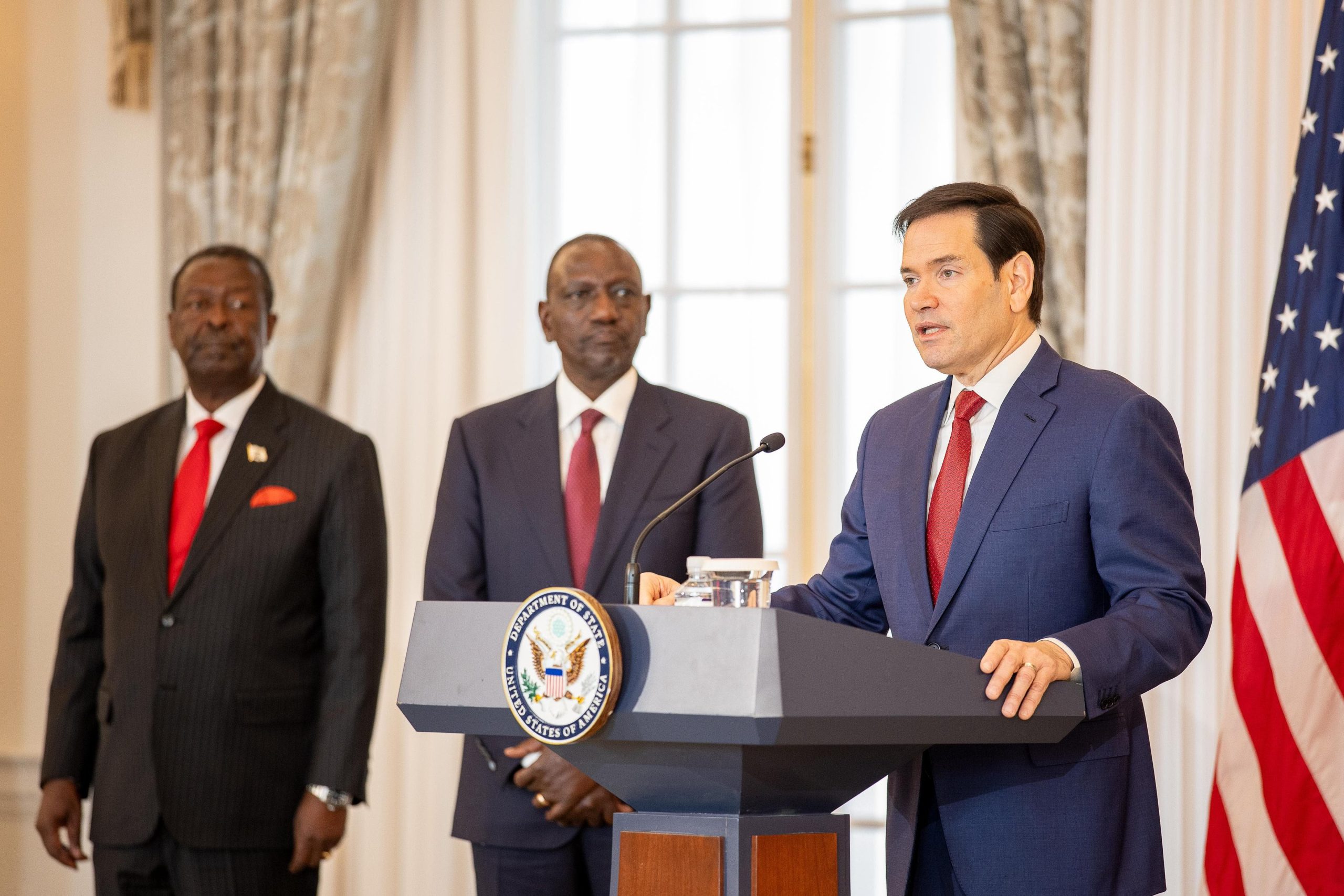
The United States Embassy in Nairobi has clarified that the Sh208 billion health partnership signed with Kenya is not a loan and will not burden the country with any repayment obligations.
The reassurance comes amid heightened public debate over the scale of the funding and how it will be managed in Kenya’s expanding health sector.
The agreement, which will run for five years, is designed to channel significant direct investment into Kenya’s public health institutions, shifting away from donor-driven models and strengthening long-term national capacity.
US officials described the funding as a support framework intended to boost Kenya’s health infrastructure and accelerate the country’s progress toward universal health coverage.
With questions emerging over the protections surrounding Kenyans’ medical information, the U.S. moved to assure the public that the pact does not grant access to personal health records.
Officials emphasized that only aggregated, non-identifiable data will ever be shared, and only for purposes such as planning, monitoring, and improving health outcomes.
“We are just putting on paper the many policies we have had for years, so any data sharing will be aggregated data, in other words, not personally identifiable data,” said Susan Burns, Head of the Diplomatic Mission at the U.S. Embassy in Kenya.
PEPFAR Country Coordinator Brian Rettmann added that while certain laboratory samples may still require processing abroad, the partnership also aims to help Kenya build stronger local lab systems.
“Over time, the goal is to expand Kenya’s own capacity so there is less reliance on outside facilities,” he noted.
Kenya’s government has insisted that all data processes under the agreement must comply with the Digital Health Act, 2023 and the Data Protection Act, 2019.
Health Cabinet Secretary Aden Duale has described health data as a “national strategic asset,” saying its use must be approved by the Digital Health Agency and the Office of the Data Protection Commissioner.
The partnership also commits Kenya to steadily increase its own spending on the health sector, including an additional Sh850 million over five years, and to progressively take over procurement of health commodities and financing for frontline health workers.
This shift toward domestic responsibility is part of a broader plan to reduce dependency on external programs.
US officials underscored that the framework is designed not only to strengthen health services but also to reinforce Kenya’s institutional resilience.
“For us, it’s not about dependency—it’s about sovereignty and self-reliance,” Burns said.
Rettmann explained that stringent oversight mechanisms will guide the use of both countries’ funds, ensuring accountability and sustained improvements in health delivery. “There will be oversight mechanisms to ensure proper use of resources,” he said.
Kenya is the first African country to sign a comprehensive government-to-government health financing framework with the United States.
As implementation begins, the agreement is expected to reinforce everything from supply chains and disease surveillance to digital health systems and healthcare staffing—laying the foundation for a more robust and self-sustaining national health system.
Kenya Insights allows guest blogging, if you want to be published on Kenya’s most authoritative and accurate blog, have an expose, news TIPS, story angles, human interest stories, drop us an email on [email protected] or via Telegram


Death Deferred: How Kenya’s Government Is Bending Aviation Law to Shield the Rogue Developers Strangling Wilson Airport

Hit South African Show Gets The World Talking About Polygamy and Cheating

South Sudan: Fifteen Years of Independence, US$70 Billion in Oil Wealth and GDP Per Capita Cut by Two-Thirds

COFEK Escalates Bid to Oust Gambling Boss Karimi as Fresh Court Battle Puts GRA Leadership Under Siege

Desperate Family Pleads For Ruto’s Help After Safaricom Defies Court Order in Son’s Murder, Exposing Deeper Data Privacy Crisis

Nyali MP Moha Jicho Pevu Caught Up In Alleged Sh44 Million KPA Debt Scam

Somalia Deputy PM Held at JKIA, Deported Over Questionable Acquisition of Kenyan Passport

The White-Coat Heist: How MP Shah Hospital Ran a Decade-Long Double-Extraction Racket While Hiding Behind Charity Status

The Patriarch, His Children, and a Buried Sh3.9 Billion Fraud: The Story of Titus Muya That Kenya Was Never Meant to Read

The Founder’s Ransom: How Titus Muya Had to Be Paid Sh231 Million to Let Go of Family Bank and Why That Bill Is Now Yours

Businessman Philip Waithaka Kinuthia’s Minor Son Allegedly Drove Drunk, Killed Two Peponi Students in Ngong Road Horror Crash as Claims of Cover-Up Intensify

Inside NCBA’s Decline: How a Banking Giant Lost Its Strategic Edge

South Sudan: Adut Salva Kiir’s Shadow Treasury Exposed

Cement, Cash and Courts: How the Hashu Dynasty Crushed the Ramji Brothers for Fourteen Years and Why the Walls Are Now Closing In

Standard Chartered Ghosts Haunt Joshua Oigara At Stanbic As Whistleblower Spills Beans

Inside The Urban Planning Cartel That Owns Nairobi

THE VULTURE AND THE SCHEME How Nairobi West Hospital Became the Most Dangerous Institution in Kenya’s SHA Ecosystem and Why the Books Must Be Audited Now
The Patriarch, His Children, and a Buried Sh3.9 Billion Fraud: The Story of Titus Muya That Kenya Was Never Meant to Read

The President’s Daughter and The Missing Witness: How Adut Salva Kiir’s Shadow Treasury Silenced Its Most Dangerous Critic

How Adil Popat Saved His Empire On The Eve Of Imperial Bank Collapse and Why Kenya’s Mainstream Media Buried The Story
-
 News2 weeks ago
Businessman Philip Waithaka Kinuthia’s Minor Son Allegedly Drove Drunk, Killed Two Peponi Students in Ngong Road Horror Crash as Claims of Cover-Up Intensify
-
 Investigations1 week ago
THE VULTURE AND THE SCHEME How Nairobi West Hospital Became the Most Dangerous Institution in Kenya’s SHA Ecosystem and Why the Books Must Be Audited Now
-
 Business1 day ago
The Patriarch, His Children, and a Buried Sh3.9 Billion Fraud: The Story of Titus Muya That Kenya Was Never Meant to Read
-

 Business5 days ago
BURRIED TWICE: The Victoria Bank CEO Yogesh Pattni Files
-

 Business1 week ago
Inside the Billion-Shilling Betrayal: How Senior Treasury Officials Plundered a UN Poverty Fund and Built a Real Estate Empire on the Backs of Kenya’s Rural Poor
-

 Business2 weeks ago
The Listing That Doesn’t Lie: What the Market Isn’t Saying About Family Bank’s NSE Debut
-

 Business1 week ago
The Banker Who Walked Away: How Yogesh Pattni Survived a Financial Crime Scandal That Shook Kenya
-

 News7 days ago
My Life Is In Danger: Investor Drops Bombshell Expose On Thomas Ogutu CEO VeGrid Ltd And Fugitive Nairobi CEC Charles Kerich – DCI Inaction And Corruption Network Exposed