
Politics
Rigathi, Muturi in Trouble as State Invokes Official Secrets Act to Silence Dissenting Former Officials
Under Sections 3 and 20 of the Official Secrets Act, unauthorized disclosure of government information can lead to imprisonment for up to 14 years without the option of a fine.

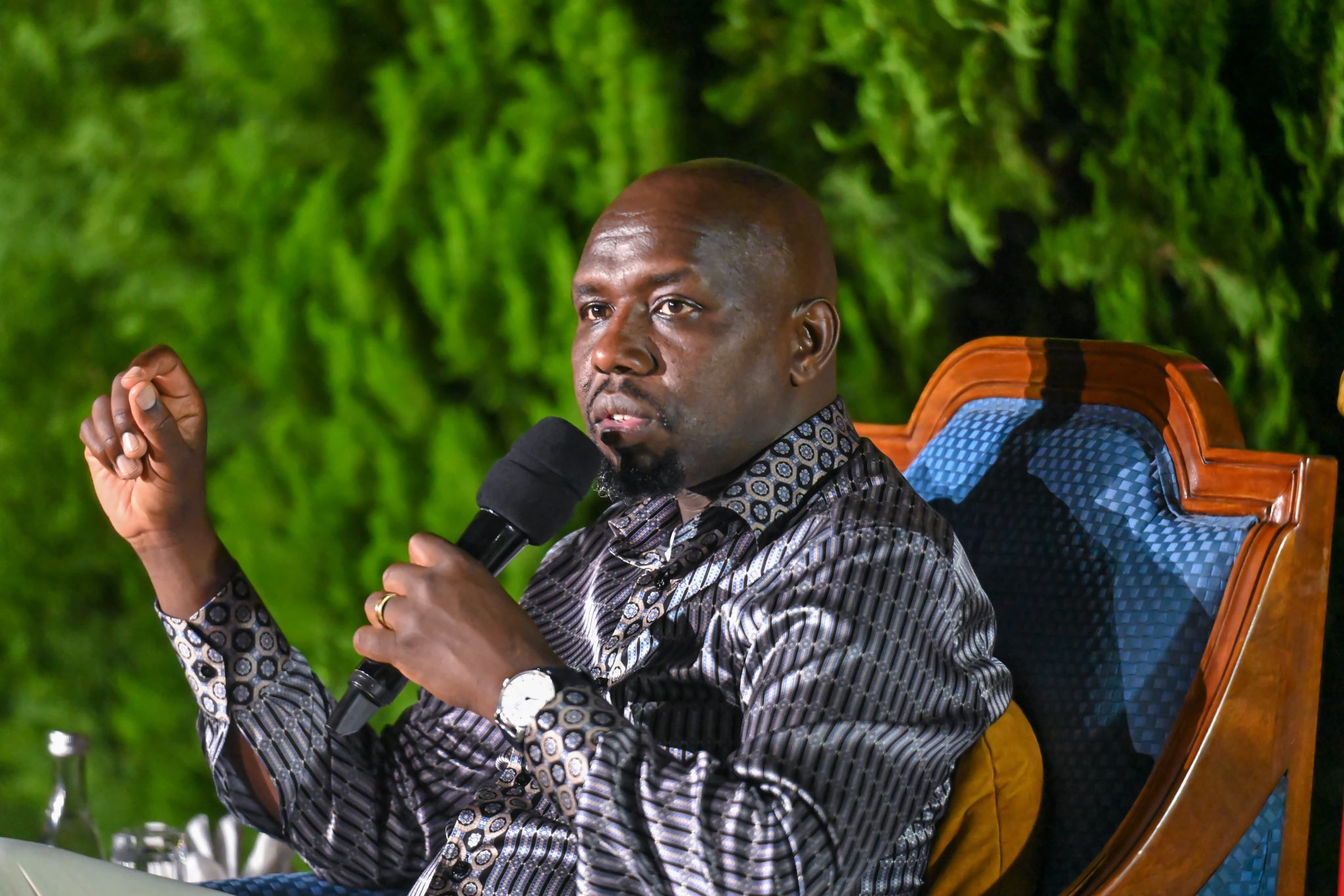
The Kenyan government has invoked the Official Secrets Act in what critics describe as a calculated move to silence dissenting former government officials, particularly targeting former Deputy President Rigathi Gachagua and former Public Service Cabinet Secretary Justin Muturi.
Interior Cabinet Secretary Kipchumba Murkomen, appearing before the National Assembly’s Administration and Internal Affairs Committee on Tuesday, issued a stern warning that public officials who disclose classified government information risk prosecution under the Official Secrets Act.
“There are those who are older but do not abide by the Act,” Murkomen stated, adding that “there are attendant consequences to this.”
The CS emphasized that the oath of secrecy taken by public officers prohibits them from disclosing classified information, suggesting that doing so “says something about the person you have entrusted with a public office.”
Under Sections 3 and 20 of the Official Secrets Act, unauthorized disclosure of government information can lead to imprisonment for up to 14 years without the option of a fine.
The law specifically targets individuals who possess or control information entrusted to them in confidence by government officials and subsequently disclose it.
Constitutional Concerns Raised
The move has drawn sharp criticism from legal experts and the targeted former officials themselves.
Former CS Justin Muturi and lawyers David Ochami and Anthony Musau have argued that such application of the Act violates the Constitution.
“All I did was respond to President Ruto, who was my coalition partner within the Kenya Kwanza alliance, because he had exposed me to the public. In any case, I cannot respond to Murkomen because he is not at my level,” Muturi stated in response to the threat.
Legal expert David Ochami noted that contrary to popular belief, the Official Secrets Act does not offer blanket protection to all classified information.
“Despite the Act, past and present officials cannot be penalised for disclosures made in the public interest, especially if the information prevents crimes or wrongdoing by the State,” he explained.
Anthony Musau further criticized the application of the Act as being “at odds with the spirit of a democratic society,” pointing out that “the necessary safeguards to prevent abuse by an overzealous regime are lacking.”
Background of Dissent
The government’s invocation of the Act follows public statements by both Gachagua and Muturi alleging corruption and human rights abuses within the Kenya Kwanza administration.
Muturi previously claimed that the National Intelligence Service (NIS) abducted his son and held him incommunicado, forcing him to seek President William Ruto’s intervention.
He also alleged being coerced by President Ruto into signing a multi-billion shilling tree-planting deal with the Russian government at a foreign airport, and accused the President of using Indian conglomerate Adani to capture operations at Jomo Kenyatta International Airport.
Gachagua, for his part, has publicly accused President Ruto of engaging in questionable business dealings with leaders of Sudan’s Rapid Support Forces (RSF), a militia group blamed for fueling instability in that country.
Constitutional Protections
Legal experts emphasize that freedom of expression is enshrined in Kenya’s Bill of Rights. Article 24 of the Constitution outlines specific conditions under which such rights may be limited, requiring that any limitations must be “reasonable and justifiable in a democratic society.”
Article 33 only allows for curbs on free expression in cases involving incitement to violence, hate speech, or propaganda for war—not to shield government officials or actions from public scrutiny.
Musau summarized the legal contradiction, stating, “The Constitution is the supreme law and binds all persons, including Mr. Murkomen, as well as all State organs at both levels of government.”
As this situation develops, many observers are watching closely to see whether the government will follow through on its threats of prosecution, potentially setting up a significant constitutional test case on the limits of state secrecy versus freedom of expression in Kenya’s democracy.
Kenya Insights allows guest blogging, if you want to be published on Kenya’s most authoritative and accurate blog, have an expose, news TIPS, story angles, human interest stories, drop us an email on [email protected] or via Telegram













The Oil Company That Bankrolled a Private Hospital: How Bernard Amuor Makeny Allegedly Turned Nilepet Into His Personal ATM

Death Deferred: How Kenya’s Government Is Bending Aviation Law to Shield the Rogue Developers Strangling Wilson Airport

Hit South African Show Gets The World Talking About Polygamy and Cheating

South Sudan: Fifteen Years of Independence, US$70 Billion in Oil Wealth and GDP Per Capita Cut by Two-Thirds

COFEK Escalates Bid to Oust Gambling Boss Karimi as Fresh Court Battle Puts GRA Leadership Under Siege

Desperate Family Pleads For Ruto’s Help After Safaricom Defies Court Order in Son’s Murder, Exposing Deeper Data Privacy Crisis

Nyali MP Moha Jicho Pevu Caught Up In Alleged Sh44 Million KPA Debt Scam

Somalia Deputy PM Held at JKIA, Deported Over Questionable Acquisition of Kenyan Passport

The White-Coat Heist: How MP Shah Hospital Ran a Decade-Long Double-Extraction Racket While Hiding Behind Charity Status

The Patriarch, His Children, and a Buried Sh3.9 Billion Fraud: The Story of Titus Muya That Kenya Was Never Meant to Read

Businessman Philip Waithaka Kinuthia’s Minor Son Allegedly Drove Drunk, Killed Two Peponi Students in Ngong Road Horror Crash as Claims of Cover-Up Intensify

Inside NCBA’s Decline: How a Banking Giant Lost Its Strategic Edge

South Sudan: Adut Salva Kiir’s Shadow Treasury Exposed

Cement, Cash and Courts: How the Hashu Dynasty Crushed the Ramji Brothers for Fourteen Years and Why the Walls Are Now Closing In

Standard Chartered Ghosts Haunt Joshua Oigara At Stanbic As Whistleblower Spills Beans

Inside The Urban Planning Cartel That Owns Nairobi

THE VULTURE AND THE SCHEME How Nairobi West Hospital Became the Most Dangerous Institution in Kenya’s SHA Ecosystem and Why the Books Must Be Audited Now
The Patriarch, His Children, and a Buried Sh3.9 Billion Fraud: The Story of Titus Muya That Kenya Was Never Meant to Read

The President’s Daughter and The Missing Witness: How Adut Salva Kiir’s Shadow Treasury Silenced Its Most Dangerous Critic

How Adil Popat Saved His Empire On The Eve Of Imperial Bank Collapse and Why Kenya’s Mainstream Media Buried The Story
-
 News2 weeks ago
Businessman Philip Waithaka Kinuthia’s Minor Son Allegedly Drove Drunk, Killed Two Peponi Students in Ngong Road Horror Crash as Claims of Cover-Up Intensify
-
 Investigations1 week ago
THE VULTURE AND THE SCHEME How Nairobi West Hospital Became the Most Dangerous Institution in Kenya’s SHA Ecosystem and Why the Books Must Be Audited Now
-
 Business1 day ago
The Patriarch, His Children, and a Buried Sh3.9 Billion Fraud: The Story of Titus Muya That Kenya Was Never Meant to Read
-

 Business5 days ago
BURRIED TWICE: The Victoria Bank CEO Yogesh Pattni Files
-

 Business1 week ago
Inside the Billion-Shilling Betrayal: How Senior Treasury Officials Plundered a UN Poverty Fund and Built a Real Estate Empire on the Backs of Kenya’s Rural Poor
-

 Business2 weeks ago
The Listing That Doesn’t Lie: What the Market Isn’t Saying About Family Bank’s NSE Debut
-

 Business1 week ago
The Banker Who Walked Away: How Yogesh Pattni Survived a Financial Crime Scandal That Shook Kenya
-

 News1 week ago
My Life Is In Danger: Investor Drops Bombshell Expose On Thomas Ogutu CEO VeGrid Ltd And Fugitive Nairobi CEC Charles Kerich – DCI Inaction And Corruption Network Exposed