
Africa
Explaining the Somalia-Somaliland Conundrum

By Adam Kungu
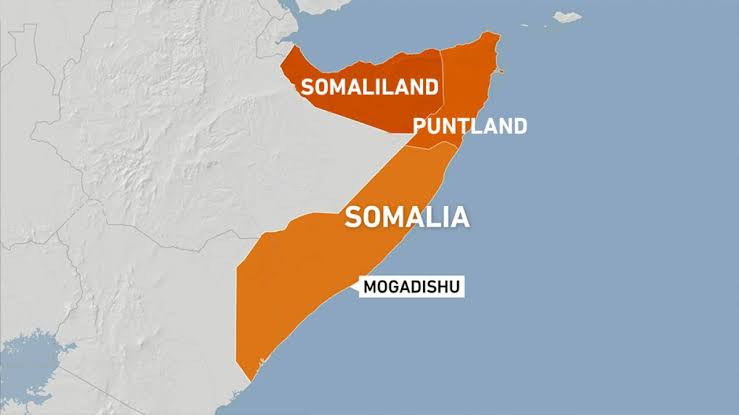
Somaliland has never been part of a country called Somalia. It is actually the 12th African nation to become independent from the colonial rule with an official Royal Proclamation of her Majesty Queen Elizabeth II, meaning Somaliland became independent way before 42 African countries.
In fact, soon after Somaliland’s independence from the British rule on June 26, 1960, 34 countries recognized it as an independent state, including members of the United Nations (UN) Security Council, but after only 5 days, the people of Somaliland voluntarily decided to unite with their neighbour, Somalia which had just got independence from Italy, to create the Somali Republic – a union deemed illegal as it was never formally ratified as law.
Immediately after this unlawful union, challenges arose due to stark differences between the two united countries, leading to an attempted coup d’etat in 1961 by Somaliland officers with the goal to withdraw from the Union and reclaim Somaliland as an independent state.
These disparities encompassed distinct formal languages, legal systems, security structures, civil service laws, and currencies. This evident divergence highlighted the inherent unsustainability of the Union from its inception.
A couple of years before the Union, Italian legal experts drafted the Somalia Constitution and finalized the Constitution. Somaliland politicians and lawyers had virtually no chance to make even marginal changes in the draft.
Then, on the 20th of June 1961, a referendum was held to cement the constitution of the Somali Republic. However, the people of Somaliland rejected overwhelmingly with major cities in Somaliland like Hargeisa, Burao, Berbera, and Erigavo, all opposed with 70% plus rejection.
Then, the 1969 military coup happened. This 21-year rule by the Siad Barre Regime in Somaliland exacerbated the already dire situation created by Somalia, further complicating the socio-political landscape in the region.
This initiated a relentless struggle by the people of Somaliland to regain their independence. This pursuit has exacted a significant toll, marked by atrocities such as a genocide, resulting in the tragic loss of over 200,000 innocent civilians through brutal killings, rapes, and targeted attacks.
From 1960 to 1991, Somaliland endured an unlawful occupation, including the Isaaq genocide. However, through a protracted armed struggle, the resilient people of Somaliland valiantly liberated themselves, ultimately reclaiming their independence in 1991.
Since then, Somaliland has been independent and is considered one of the most successful nations on many fronts, including democracy. The country has its own flag, currency, passport, government system, public institutions, and national army, which fully controls its territory.
It it considered the most democratic and politically stable nation in East and Central Africa, according to Freedom House.
Somaliland has had a series of democratic elections since 1991, which international observers have termed as free, fair, and credible. 5 different Presidents have been elected since then, and at some point, an incumbent lost an election, a rare trait in Africa’s politics.
The writer is a Ugandan Journalist.
Kenya Insights allows guest blogging, if you want to be published on Kenya’s most authoritative and accurate blog, have an expose, news TIPS, story angles, human interest stories, drop us an email on [email protected] or via Telegram







KETRACO CEO Advert Marred By Controversies As Fears Grow That Kipkemoi Kibias Is A Predetermined Candidate

I Will Bribe Every Judge in Town- MP Jack Wamboka

KNH ON THE BRINK: How Corruption, Revenue Plunder and State Neglect Are Destroying Kenya’s Flagship Hospital

Receivers In TransCentury Sh6B KRA Tax Arrears Are Biased And Must Be Removed, COFEK Claims

The Man Behind the Badge: How Prof. Erastus Kanga Turned Kenya’s Premier Wildlife Agency into a Theatre of Corruption, Fear and Impunity

City Lawyer Conrad Maloba Arrested Over Fake Ambulance Fraud

How Little Known KwikBet Leveraged Stolen Kenyans Data To Build Its Empire

THE FIXER IN THE FILE ROOM: How Parliamentary Health Committee Clerk Adan Gindicha Cleared Mediheal Hospital of Organ Harvesting Claims Despite Mounting Evidence

Nairobi Freezes Binance Accounts in Sweeping Anti-Fraud Crackdown as Global Scandal Record Haunts World’s Largest Crypto Exchange

EXCLUSIVE: Odibets Bought Stolen Data From Millions Of Kenyans

Forged Legacy: How Kaplan and Stratton’s Peter Gachuhi Is Accused of Faking a Top AG’s Will as State Claims Damning Evidence

Inside Details Of Sh78 Billion Fraud in KPC’s Mombasa-Nairobi Line 5 Pipeline Project That Has Continued To Bleed The Country

Sold And Abandoned: How Diageo and Asahi Are Locking Kenya’s EABL Minority Shareholders Out Of East Africa’s Biggest Corporate Heist

The Lawyer at the Centre of Kenya’s State Machine: Eric Gumbo, the AG’s Bypassed Office, and the Half-Billion-Shilling Question

Poison at the Pump: How Kenya’s Fuel Marking System May Be Exposing Millions to Cancer-Causing Chemicals

How Firm Linked To Mombasa Tycoon Jaffer Was Allowed To Import Fuel At Bloated Price And Set To Make Billions In Profits From Iranian War Crisis In Kenya

THE ZAKHEM-ECOBANK MACHINE: How Kenya’s Courts Were Weaponised to Drain a State Corporation of Over KES 78 Billion

The Teflon Company: How Gulf Energy’s Insiders Built Billions on Kenya’s Fuel, and Walked Away Clean

The Debt They Would Not Pay: How Standard Group Ducked Sh50 Million In Regulatory Fee For Years, Then Called It A Witch-Hunt

Mombasa Lawyer Exposed In Sh600 Million Alleged Double-Dealing Diani Property Transaction
-
 Business2 weeks ago
Kenyan Motorists Stare At Possible Engine Damage And Heavy Losses As Report Confirms Substandard Fuel In Circulation
-

 Business1 week ago
THE FUEL CABAL: How Mohamed Jaffer, a KPC Insider, and a Ministry Official Are Alleged to Have Manufactured Kenya’s Worst Petroleum Crisis in Three Years, While Kenyans Burned
-

 Business2 weeks ago
Getting Away With It: How Kenya’s Most Politically Connected Fuel Company Gulf Energy Is Pocketing Billions While Rival Firms Face Public Wrath
-
 Business2 weeks ago
How Safaricom Could Sell You Out To KRA
-
 News2 weeks ago
The Kewota Racket: How Kenya’s Female Teachers Are Being Bled Dry
-
 Business5 days ago
Nairobi Freezes Binance Accounts in Sweeping Anti-Fraud Crackdown as Global Scandal Record Haunts World’s Largest Crypto Exchange
-
 Investigations5 days ago
EXCLUSIVE: Odibets Bought Stolen Data From Millions Of Kenyans
-

 Business2 weeks ago
Sugar Empire in the Dock: How Kibos’s Mombasa Refinery Landed 1,481 Phantom Tonnes at the Port — and Why Nine Government Agencies Are Now Watching Its Every Move