
Sci & Tech
PayPal Sued For Stealing Users Money After Freezing, Seizing Funds

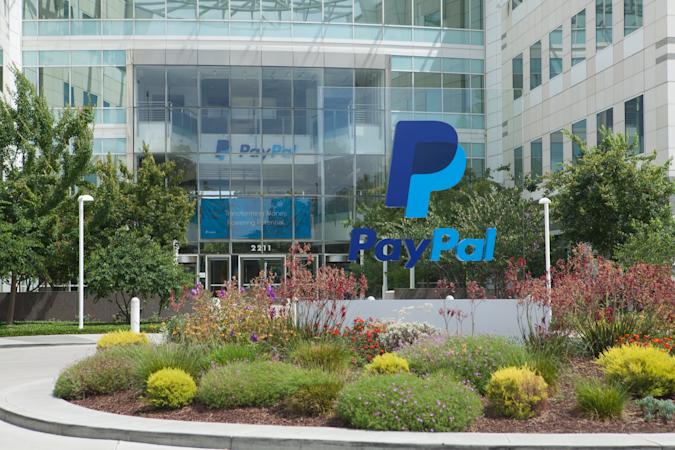
PayPal is facing a class-action lawsuit alleging that the digital payments company violated racketeering laws by freezing customer funds without offering an explanation.
When users contacted PayPal about the frozen funds, they were told they had violated the company’s “acceptable use policy” but weren’t told how that violation had occurred, the lawsuit says. What’s more, it alleges that in at least one instance, PayPal said that a user would “have to get a subpoena” to find out why.
“PayPal violates its own Agreement by failing to provide adequate notice to users whose accounts have had holds placed on them,” the lawsuit says. When PayPal does let users know it placed a hold on their funds, “it does not inform such users why such funds are being held, how they can obtain a release of the hold, and/or how they can avoid future holds being placed on their accounts.”
It also says that PayPal takes the money for itself after a 180-day hold period. “PayPal’s user agreement and acceptable use policy cannot be used as a ‘license to steal,’” the complaint says.
“Never able to reach a live person”
The three lead plaintiffs claim they had nearly $250,000 seized by PayPal. One plaintiff, Shbadan Akylbekov, ran a storefront selling hyaluron pens, which are filled with hyaluronic acid, a dermal filler that is used to reduce wrinkles. He said that PayPal took $172,206.43 from his wife’s account, which he used for his store, with no explanation. After numerous calls and letters to PayPal, he was finally told that the seizure was “for its liquidated damages arising from those [acceptable use policy] violations pursuant to the User Agreement.” He claims he never received a copy of that policy until his account was restricted.
Later, PayPal said it used those funds to reimburse customers who had purchased hyaluron pens from his store. Akylbekov followed up by asking to see documentation of the customers who requested refunds. A PayPal customer service representative said the report would be available within two days, but Akylbekov says he still hasn’t received it.
Then, PayPal sent Akylbekov a 1099K form saying that he owed taxes on $162,517.19. “PayPal essentially claimed a deduction for an expense that it never paid. PayPal seized $172,206.43, while reporting only $162,517.19 to the IRS,” the lawsuit alleges.
Another PayPal user, Roni Shemtov, says that she was given three different explanations for why the company took a total of $42,351.87 from her account. The first customer service representative said she had violated the acceptable use policy “by using the same IP address and computer that other PayPal users used.” A second told her that she violated the AUP by holding multiple PayPal accounts, which Shemtov denies. A third said she ran afoul of the policy by selling yoga clothing at 20–30 percent below retail price.
Shemtov was also sent an IRS form stating that she owed taxes on the funds that PayPal seized.
The third plaintiff, Lena Evans, says she had $26,984 taken from her PayPal account. Evans, who founded the nonprofit Poker League of Nations, used her account for buying and selling on eBay to organize poker leagues and to operate her nonprofit, which seeks to increase the number of women who play poker. She says that PayPal did not explain the seizure, even after repeated emailed requests. “She also tried calling PayPal a number of times but was never able to reach a live person,” the lawsuit says.
PayPal told Ars that it’s reviewing the filing. “We will respond to the allegations through the appropriate legal channels in due course,” a spokesperson said.
Triple damages
The lawsuit appears to have been organized by Chris Moneymaker, a professional poker player who won the 2003 World Series of Poker. Moneymaker said that PayPal placed a hold on $12,000 of his money, and he threatened to sue the company. “Anyone else that got funds confiscated by PayPal feel free to reach out to my lawyers whom [sic] are starting a class action suit,” he said in a tweetlast May.
Anyone else that got funds confiscated by @PayPal feel free to reach out to my lawyers whom are starting a class action suit https://t.co/eHy2IKPIqX
— Chris Moneymaker ⭕ (@CMONEYMAKER) May 27, 2021
The lawsuit is seeking triple damages for the plaintiffs and class members.
Enter your email to get the Ars Technica newsletter
Kenya Insights allows guest blogging, if you want to be published on Kenya’s most authoritative and accurate blog, have an expose, news TIPS, story angles, human interest stories, drop us an email on [email protected] or via Telegram


KETRACO CEO Advert Marred By Controversies As Fears Grow That Kipkemoi Kibias Is A Predetermined Candidate

I Will Bribe Every Judge in Town- MP Jack Wamboka

KNH ON THE BRINK: How Corruption, Revenue Plunder and State Neglect Are Destroying Kenya’s Flagship Hospital

Receivers In TransCentury Sh6B KRA Tax Arrears Are Biased And Must Be Removed, COFEK Claims

The Man Behind the Badge: How Prof. Erastus Kanga Turned Kenya’s Premier Wildlife Agency into a Theatre of Corruption, Fear and Impunity

City Lawyer Conrad Maloba Arrested Over Fake Ambulance Fraud

THE FIXER IN THE FILE ROOM: How Parliamentary Health Committee Clerk Adan Gindicha Cleared Mediheal Hospital of Organ Harvesting Claims Despite Mounting Evidence

Nairobi Freezes Binance Accounts in Sweeping Anti-Fraud Crackdown as Global Scandal Record Haunts World’s Largest Crypto Exchange

EXCLUSIVE: Odibets Bought Stolen Data From Millions Of Kenyans

Taiwan President Cancels Trip After African Countries Close Airspace

Forged Legacy: How Kaplan and Stratton’s Peter Gachuhi Is Accused of Faking a Top AG’s Will as State Claims Damning Evidence

Inside Details Of Sh78 Billion Fraud in KPC’s Mombasa-Nairobi Line 5 Pipeline Project That Has Continued To Bleed The Country

The Lawyer at the Centre of Kenya’s State Machine: Eric Gumbo, the AG’s Bypassed Office, and the Half-Billion-Shilling Question

Sold And Abandoned: How Diageo and Asahi Are Locking Kenya’s EABL Minority Shareholders Out Of East Africa’s Biggest Corporate Heist

Poison at the Pump: How Kenya’s Fuel Marking System May Be Exposing Millions to Cancer-Causing Chemicals

How Firm Linked To Mombasa Tycoon Jaffer Was Allowed To Import Fuel At Bloated Price And Set To Make Billions In Profits From Iranian War Crisis In Kenya

THE ZAKHEM-ECOBANK MACHINE: How Kenya’s Courts Were Weaponised to Drain a State Corporation of Over KES 78 Billion

The Teflon Company: How Gulf Energy’s Insiders Built Billions on Kenya’s Fuel, and Walked Away Clean

Mombasa Lawyer Exposed In Sh600 Million Alleged Double-Dealing Diani Property Transaction

Kenyan Motorists Stare At Possible Engine Damage And Heavy Losses As Report Confirms Substandard Fuel In Circulation
-
 Business2 weeks ago
Kenyan Motorists Stare At Possible Engine Damage And Heavy Losses As Report Confirms Substandard Fuel In Circulation
-

 Business2 weeks ago
THE FUEL CABAL: How Mohamed Jaffer, a KPC Insider, and a Ministry Official Are Alleged to Have Manufactured Kenya’s Worst Petroleum Crisis in Three Years, While Kenyans Burned
-
 Business2 weeks ago
Getting Away With It: How Kenya’s Most Politically Connected Fuel Company Gulf Energy Is Pocketing Billions While Rival Firms Face Public Wrath
-
 Business5 days ago
Nairobi Freezes Binance Accounts in Sweeping Anti-Fraud Crackdown as Global Scandal Record Haunts World’s Largest Crypto Exchange
-
 Investigations6 days ago
EXCLUSIVE: Odibets Bought Stolen Data From Millions Of Kenyans
-

 Business2 weeks ago
Sugar Empire in the Dock: How Kibos’s Mombasa Refinery Landed 1,481 Phantom Tonnes at the Port — and Why Nine Government Agencies Are Now Watching Its Every Move
-

 Investigations6 days ago
THE BRAZEN RETURN: Triton Thief Yagnesh Devani, Who Pillaged Kenya of Sh7.6 Billion and Fled, Now Asks the Same Courts He Escaped to Restore His Stolen Wealth
-
 Investigations5 days ago
THE FIXER IN THE FILE ROOM: How Parliamentary Health Committee Clerk Adan Gindicha Cleared Mediheal Hospital of Organ Harvesting Claims Despite Mounting Evidence