
Africa
China Banking On President Suluhu For Fresh Start With Bagamoyo Port Project

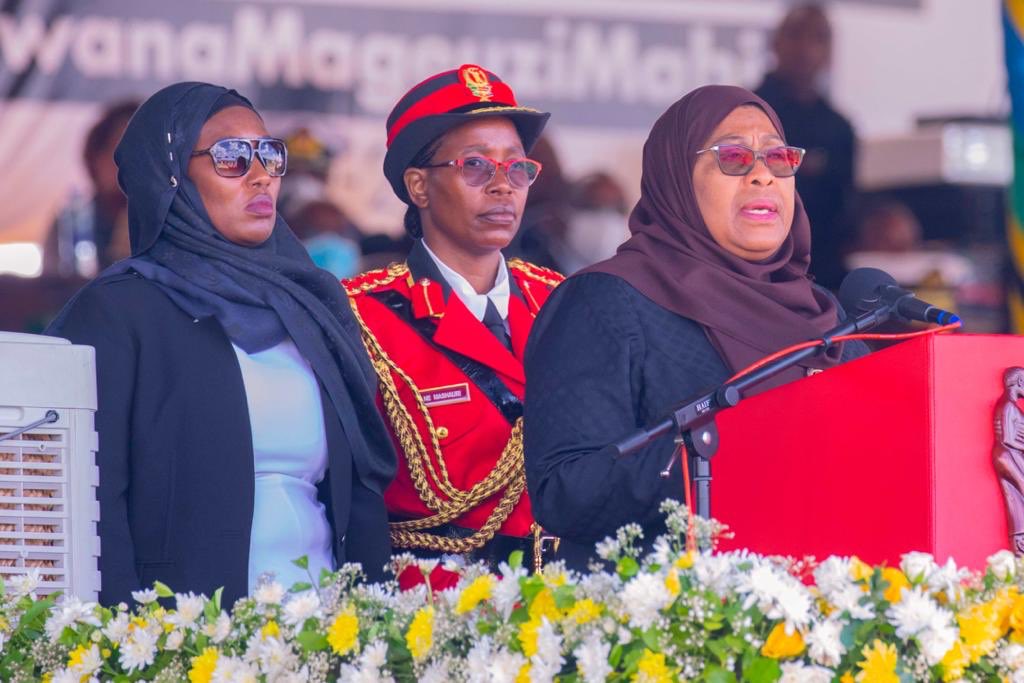
Having struggled to get the vast Sino-Tanzanian Bagamoyo project off the ground, Xi Jinping’s diplomats see the change of administration in Dodoma as an opportunity to breathe life back into bilateral cooperation. The Chinese foreign minister Wang Yi will be trying to persuade Tanzanian president John Magufuli to resume construction works on the huge Bagamoyo deepwater port. Since he came to power, the project has been more or less constantly on hold.
In 2019, Tanzania suspended the construction of the $10-billion Bagamoyo port project. The project, which broke ground in 2015, was to be the largest gateway in East Africa and was a key component in China’s $900-billion Belt and Road Initiative, an ambitious transnational infrastructure building program.
The late President John Magufuli accused the Chinese project backers of presenting “exploitative and awkward” terms in exchange for financing. Chinese financiers set “tough conditions that can only be accepted by mad people,” Magufuli told local media.
“They told us once they build the port, there should be no other port to be built all the way from Tanga to Mtwara south,” Magufuli told a delegation of business people at State House in Dar es Salaam on June 14 2019.
“They want us to give them a guarantee of 33 years and a lease of 99 years, and we should not question whoever comes to invest there once the port is operational. They want to take the land as their own but we have to compensate them for drilling construction of that port,” he said.
Magufuli also argued the construction of Bagamoyo port, whose foundation stone was laid by his predecessor Jakaya Kikwete, would undermine the ongoing $522-million expansion of Dar es Salaam port that would enable it triple its current capacity when complete by the end of 2019.
In addition, Magufuli said the $50-million given out to compensate those displaced by the new port project “did not reach the beneficiaries in Bagamoyo but was diverted to benefit few individuals in Dar es Salaam.”
Tanzania Ports Authority Director General Deusdedit Kakoko told a media briefing in mid-June the Chinese had also asked Tanzanian government to guarantee compensation for any loses during the project implementation and several tax waivers including lands tax, workers’ compensation tax, skills development levy and customs duty and Value Added Tax.
“Tax calculations and audits were set to be undertaken in China and this would have been possible because they would be controlling all cargo, port and logistics,” said Kakoko.
An initial project brief indicated the port was planned to occupy 800 hectare and set aside another 1,700 hectare for a Portside Industrial Zone, which would be developed under tripartite agreement of Government of Tanzania, China Merchants Holdings International from China and State Government Reserve Fund from Oman.
The new Bagamayo port would have handled nearly 20 times more cargo than the Dar es Salaam Port, with the first phase initially slated for completion in 2017.
China Merchants Holding International Co. Ltd of China was to provide the funding for the new port with an initial agreement signed in March 2013 during the visit of the Chinese President Xi Jinping as part of the $556-million infrastructure package deals. The agreement provided that at least $500 million of the package be set aside in 2013 to kick-start the project.
The government of Tanzania issued an ultimatum to the Chinese investor in the $10 billion Bagamoyo port project to either accept and work with its terms and conditions of the contract or leave.
The government rejected and revised five stringent demands made by the investor—Beijing-based China Merchants Holdings International—because they were not beneficial to the country.
The Chinese investor has now been offered a 33-year lease instead of the 99-year one asked for. Two, the investor has been informed that there will be no tax holiday and they will be subjected to all taxes designed by the Tanzania Revenue Authority.
Three, that there would be no special status and they would be required to pay the market rate for water and electricity like any other investor.
Four, they could not start and run any other business they deemed necessary within the port without government’s approval and were open to scrutiny and regulation by relevant agencies in line with law like any other investor.
Five, they were informed that the government of Tanzania was free to develop other ports to be in direct competition with Bagamoyo.
Beijing now hopes that the new President will not play hardball like Magufuli did to their exploitative terms, having established himself as a revolutionary leader who didn’t entertain especially the Chinese advances in bed, Magufuli is one of the few African leaders who didn’t drown their countries into the deadly Chinese debt trap that has been the economical hit weapon being used. Kenya is currently suffocated with Chinese debt and there are credible fears that they might takeover Mombasa Port should Kenya fail to service their SGR loan in time.
Suluhu has the chance to play hard as Magufuli and China work with their terms or she can also get in the bouncing castle and jump with the schemers.
Kenya Insights allows guest blogging, if you want to be published on Kenya’s most authoritative and accurate blog, have an expose, news TIPS, story angles, human interest stories, drop us an email on [email protected] or via Telegram


KETRACO CEO Advert Marred By Controversies As Fears Grow That Kipkemoi Kibias Is A Predetermined Candidate

I Will Bribe Every Judge in Town- MP Jack Wamboka

KNH ON THE BRINK: How Corruption, Revenue Plunder and State Neglect Are Destroying Kenya’s Flagship Hospital

Receivers In TransCentury Sh6B KRA Tax Arrears Are Biased And Must Be Removed, COFEK Claims

The Man Behind the Badge: How Prof. Erastus Kanga Turned Kenya’s Premier Wildlife Agency into a Theatre of Corruption, Fear and Impunity

City Lawyer Conrad Maloba Arrested Over Fake Ambulance Fraud

How Little Known KwikBet Leveraged Stolen Kenyans Data To Build Its Empire

THE FIXER IN THE FILE ROOM: How Parliamentary Health Committee Clerk Adan Gindicha Cleared Mediheal Hospital of Organ Harvesting Claims Despite Mounting Evidence

Nairobi Freezes Binance Accounts in Sweeping Anti-Fraud Crackdown as Global Scandal Record Haunts World’s Largest Crypto Exchange

EXCLUSIVE: Odibets Bought Stolen Data From Millions Of Kenyans

Forged Legacy: How Kaplan and Stratton’s Peter Gachuhi Is Accused of Faking a Top AG’s Will as State Claims Damning Evidence

Inside Details Of Sh78 Billion Fraud in KPC’s Mombasa-Nairobi Line 5 Pipeline Project That Has Continued To Bleed The Country

The Lawyer at the Centre of Kenya’s State Machine: Eric Gumbo, the AG’s Bypassed Office, and the Half-Billion-Shilling Question

Sold And Abandoned: How Diageo and Asahi Are Locking Kenya’s EABL Minority Shareholders Out Of East Africa’s Biggest Corporate Heist

Poison at the Pump: How Kenya’s Fuel Marking System May Be Exposing Millions to Cancer-Causing Chemicals

How Firm Linked To Mombasa Tycoon Jaffer Was Allowed To Import Fuel At Bloated Price And Set To Make Billions In Profits From Iranian War Crisis In Kenya

THE ZAKHEM-ECOBANK MACHINE: How Kenya’s Courts Were Weaponised to Drain a State Corporation of Over KES 78 Billion

The Teflon Company: How Gulf Energy’s Insiders Built Billions on Kenya’s Fuel, and Walked Away Clean

The Debt They Would Not Pay: How Standard Group Ducked Sh50 Million In Regulatory Fee For Years, Then Called It A Witch-Hunt

Mombasa Lawyer Exposed In Sh600 Million Alleged Double-Dealing Diani Property Transaction
-

 Business2 weeks ago
Kenyan Motorists Stare At Possible Engine Damage And Heavy Losses As Report Confirms Substandard Fuel In Circulation
-

 Business1 week ago
THE FUEL CABAL: How Mohamed Jaffer, a KPC Insider, and a Ministry Official Are Alleged to Have Manufactured Kenya’s Worst Petroleum Crisis in Three Years, While Kenyans Burned
-
 Business2 weeks ago
Getting Away With It: How Kenya’s Most Politically Connected Fuel Company Gulf Energy Is Pocketing Billions While Rival Firms Face Public Wrath
-
 Business2 weeks ago
How Safaricom Could Sell You Out To KRA
-
 Business5 days ago
Nairobi Freezes Binance Accounts in Sweeping Anti-Fraud Crackdown as Global Scandal Record Haunts World’s Largest Crypto Exchange
-
 Investigations5 days ago
EXCLUSIVE: Odibets Bought Stolen Data From Millions Of Kenyans
-

 Business2 weeks ago
Sugar Empire in the Dock: How Kibos’s Mombasa Refinery Landed 1,481 Phantom Tonnes at the Port — and Why Nine Government Agencies Are Now Watching Its Every Move
-

 Investigations6 days ago
THE BRAZEN RETURN: Triton Thief Yagnesh Devani, Who Pillaged Kenya of Sh7.6 Billion and Fled, Now Asks the Same Courts He Escaped to Restore His Stolen Wealth