
US Unrest
Independent Autopsy Of George Floyd Shows It Was A Homicide Different From The Official Findings

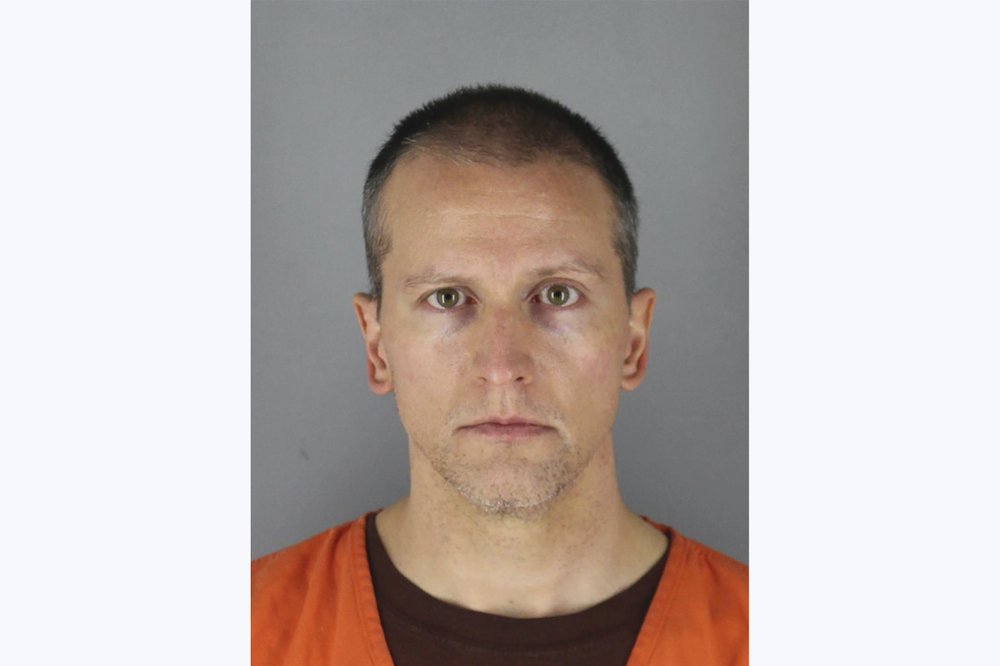
MINNEAPOLIS (AP) — A medical examiner on Monday classified George Floyd’s death as a homicide, saying his heart stopped as police restrained him and compressed his neck, in a widely seen video that has sparked protests across the nation.
“Decedent experienced a cardiopulmonary arrest while being restrained by law enforcement officer(s),” the Hennepin County Medical Examiner’s Office said in a news release. Cause of death was listed as “cardiopulmonary arrest complicating law enforcement subdual, restraint and neck compression.”
Under “other significant conditions” it said Floyd suffered from heart disease and hypertension, and listed fentanyl intoxication and recent methamphetamine use. Those factors were not listed under cause of death.
A Minneapolis police officer was charged last week with third-degree murder in Floyd’s death, and three other officers were fired. Bystander video showed the officer, Derek Chauvin, holding his knee on Floyd’s neck despite the man’s cries that he can’t breathe until he eventually stopped moving.
A separate autopsy commissioned for Floyd’s family also called his death a homicide. It concluded that that he died of asphyxiation due to neck and back compression, said the family’s attorney, Ben Crump, who called for the charge against Chauvin to be upgraded to first-degree murder and for three other officers to be charged. He didn’t say what the charges against the other officers should be.
That autopsy, by a forensic pathologist who also examined Eric Garner’s body, found the compression cut off blood to Floyd’s brain, and that the pressure of other officers’ knees on his back made it impossible for him to breathe, Crump said.
Both the medical examiner and the family’s experts differed from the description in last week’s criminal complaint against the officer of how Floyd died. The complaint, citing preliminary findings from the medical examiner, listed the effects of being restrained, along with underlying health issues and potential intoxicants in Floyd’s system. But it also said nothing was found “to support a diagnosis of traumatic asphyxia or strangulation.” Neither side has released its full autopsy report so far.
The family’s autopsy found no evidence of heart disease and concluded he had been healthy.
Floyd, a black man who was in handcuffs at the time, died after Chauvin, who is white, ignored bystander shouts to get off Floyd and Floyd’s cries that he couldn’t breathe. His death sparked days of protests in Minneapolis and around America.
The complaint provided no details about intoxicants. In the 911 call that drew police, the caller described the man suspected of paying with counterfeit money as “awfully drunk and he’s not in control of himself.”
Floyd’s family and attorneys, like the families of other black men killed by police, commissioned their own autopsy because they didn’t trust local authorities to produce an unbiased report.
The family’s autopsy was done by Michael Baden and Allecia Wilson. Baden is the former chief medical examiner of New York City, and was hired to do an autopsy of Garner, a black man who died in 2014 after New York police placed him in a chokehold and he pleaded that he could not breathe.
Baden also did an autopsy at the family’s request for Michael Brown, an 18-year-old shot by police in Ferguson, Missouri. He said Brown didn’t reveal signs of a struggle, casting doubt on a claim by police that a struggle between Brown and the officer led to the shooting.
Dr. Judy Melinek, a forensic pathologist from the San Francisco Bay area who blogs about the subject and is not connected with the case, said the key difference between the medical examiner’s conclusions and those of Baden and Walker are the official finding of “significant” conditions for Floyd, including heart disease and drugs in his system.
Baden and Wilson acknowledged on a conference call with reporters that they didn’t have access to the tissue samples that the medical examiner kept that might have given more information on his health. Nor did they have their own toxicology results yet.
Melinek said it’s not unusual for different pathologists to reach different determinations, given that they may be looking at different information and that they’ve had different experiences and training.
Under the law, a medical examiner determines the cause and manner of death, but it’s up to prosecutors to decide whether criminal charges are warranted. The term homicide means only that a person’s death was caused by another person.
Chauvin, who was also charged with manslaughter, is being held in a state prison. The other three officers on scene, like Chauvin, were fired the day after the incident but have not been charged.
The head of the Minneapolis police union said in a letter to members that the officers were fired without due process and labor attorneys are fighting for their jobs. Lt. Bob Kroll, the union president, also criticized city leadership, saying a lack of support is to blame for the days of sometimes violent protests.
When asked to respond, Mayor Jacob Frey said Kroll’s opposition to reform and lack of empathy for the community has undermined trust in the police.
Gov. Tim Walz announced Sunday that Attorney General Keith Ellison would take the lead in any prosecutions in Floyd’s death. Local civil rights activists have said Hennepin County Attorney Mike Freeman doesn’t have the trust of the black community. They have protested outside his house, and pressed him to charge the other three officers.
Freeman remains on the case.
Kenya Insights allows guest blogging, if you want to be published on Kenya’s most authoritative and accurate blog, have an expose, news TIPS, story angles, human interest stories, drop us an email on [email protected] or via Telegram


Caleb Amisi Says Linda Mwananchi Has Lost Direction, Announces Plans To Form A New Movement

Air Canada Pilot Flew Passengers For Years With A Fake Pilot’s License, Police Say

Itumbi Claims Kalonzo Has Settled on Sifuna as Running Mate

THE KURIA NETWORK TAKES THE BOARDROOM: How Moses Kuria’s Inner Circle Seized Control of Africa Mega Agricorp And the Paper Trail That Links It All

Who Is The Somali Referee Barred From Entering The US For The World Cup?

Inside NCBA’s Decline: How a Banking Giant Lost Its Strategic Edge

Shiquo wa Hii Style Counts Costly Lesson After Anti-Counterfeit Raid Wipes Out Shop Stock

“Are They Giving Kickbacks To Government Officials?” The Scandalous Record Behind Kenya’s Most Favoured Chinese Contractor

Two MPs Defrauded of Sh93.5 Million in Karen Land Scam

Gachagua Rejects Sh50 Million Court Compensation, Calls It An Insult

Cement, Cash and Courts: How the Hashu Dynasty Crushed the Ramji Brothers for Fourteen Years and Why the Walls Are Now Closing In

Inside The Urban Planning Cartel That Owns Nairobi

Why Ruto’s Favourite Candidate Adan Mohammed Could Be Locked Out of the KRA Top Job

LifeCare on the Brink: SHA Fraud, Stolen Wages, and the Rotten Empire Jayesh Saini Built

Este Medical Kenya Fights American’s Explosive Complaints

Betika Faces DCI Probe, Directors Arrest and License Revocation Over Massive 29.5 Million Safaricom Customers’ Data Breach

The Rot Inside Absa: How Bank Insiders Are Looting Nairobi’s Customers

Inside FAFSA Fraud: How Kenyan Cybercriminals Siphoned Millions from America’s Sh12 Billion Student Loan System

Fresh Move Launched to Remove Kenya Railways MD Mainga From Office After Awarding Sh817 Million Consultancy Contract

Court Confirms Safaricom Customers Data Was Sold To Betting Companies In Seven-Year Cover-Up
-
 Investigations6 days ago
Cement, Cash and Courts: How the Hashu Dynasty Crushed the Ramji Brothers for Fourteen Years and Why the Walls Are Now Closing In
-
 Investigations4 days ago
Inside The Urban Planning Cartel That Owns Nairobi
-
 Investigations1 week ago
Betika Faces DCI Probe, Directors Arrest and License Revocation Over Massive 29.5 Million Safaricom Customers’ Data Breach
-
 Investigations6 days ago
Fresh Move Launched to Remove Kenya Railways MD Mainga From Office After Awarding Sh817 Million Consultancy Contract
-

 News2 weeks ago
Eight Students Arrested In Kenya After Suspected Deadly School Arson Attack
-
 News1 week ago
How Uhuru’s Deal With Obama In 2015 Paved Way For America’s Ebola Plan In Kenya
-
 Business6 days ago
TRUST BETRAYED: How Senior DTB Bank Insiders Allegedly Looted Sh149 Million From a Customer’s Account Over Five Years
-

 Investigations4 days ago
Why Drivers Cheered Bolt’s Reported Exit: Inside the Slow Financial Strangulation of Thousands of Kenyan Drivers and Riders in Kenya