
Reviews
Israeli Security Firm Finds Flaw In iPhone, iPads That May Have Allowed Hackers To Steal Data For Years

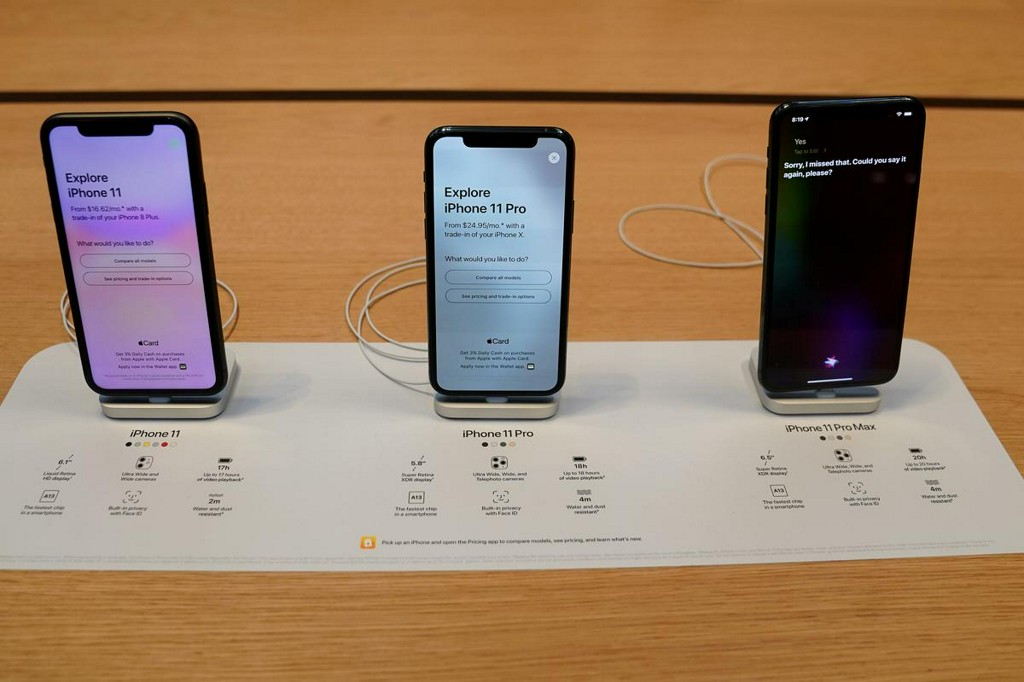
(Reuters) – Apple Inc (AAPL.O) is planning to fix a flaw that a security firm said may have left more than half a billion iPhones vulnerable to hackers.
The bug, which also exists on iPads, was discovered by ZecOps, a San Francisco-based mobile security forensics company, while it was investigating a sophisticated cyberattack against a client that took place in late 2019. Zuk Avraham, ZecOps’ chief executive, said he found evidence the vulnerability was exploited in at least six cybersecurity break-ins.
An Apple spokesman acknowledged that a vulnerability exists in Apple’s software for email on iPhones and iPads, known as the Mail app, and that the company had developed a fix, which will be rolled out in a forthcoming update on millions of devices it has sold globally.
Apple declined to comment on Avraham’s research, which was published on Wednesday, that suggests the flaw could be triggered from afar and that it had already been exploited by hackers against high-profile users.
Avraham said he found evidence that a malicious program was taking advantage of the vulnerability in Apple’s iOS mobile operating system as far back as January 2018. He could not determine who the hackers were and Reuters was unable to independently verify his claim.
To execute the hack, Avraham said victims would be sent an apparently blank email message through the Mail app forcing a crash and reset. The crash opened the door for hackers to steal other data on the device, such as photos and contact details.
ZecOps claims the vulnerability allowed hackers to remotely steal data off iPhones even if they were running recent versions of iOS. By itself, the flaw could have given access to whatever the Mail app had access to, including confidential messages.
Avraham, a former Israeli Defense Force security researcher, said he suspected that the hacking technique was part of a chain of malicious programs, the rest undiscovered, which could have given an attacker full remote access. Apple declined to comment on that prospect.
ZecOps found the Mail app hacking technique was used against a client last year. Avraham described the targeted client as a “Fortune 500 North American technology company,” but declined to name it. They also found evidence of related attacks against employees of five other companies in Japan, Germany, Saudi Arabia, and Israel.
Avraham based most of his conclusions on data from “crash reports,” which are generated when programs fail in mid-task on a device. He was then able to recreate a technique that caused the controlled crashes.
Two independent security researchers who reviewed ZecOps’ discovery found the evidence credible, but said they had not yet fully recreated its findings.
Patrick Wardle, an Apple security expert and former researcher for the U.S. National Security Agency, said the discovery “confirms what has always been somewhat of a rather badly kept secret: that well-resourced adversaries can remotely and silently infect fully patched iOS devices.”
Because Apple was not aware of the software bug until recently, it could have been very valuable to governments and contractors offering hacking services. Exploit programs that work without warning against an up-to-date phone can be worth more than $1 million.
While Apple is largely viewed within the cybersecurity industry as having a high standard for digital security, any successful hacking technique against the iPhone could affect millions due to the device’s global popularity. In 2019, Apple said there were about 900 million iPhones in active use.
Bill Marczak, a security researcher with Citizen Lab, a Canada-based academic security research group, called the vulnerability discovery “scary.”
“A lot of times, you can take comfort from the fact that hacking is preventable,” said Marczak. “With this bug, it doesn’t matter if you’ve got a PhD in cybersecurity, this will eat your lunch.”
Kenya Insights allows guest blogging, if you want to be published on Kenya’s most authoritative and accurate blog, have an expose, news TIPS, story angles, human interest stories, drop us an email on [email protected] or via Telegram


“TikTok Who? YouTube Sorry. A Kenyan-Built Platform Just Dropped—and 20 African Ministers Showed Up To Launch It.”

Kenyan Kennedy Mugambi Dragged into South Sudan Oil Heist

Denial Under Duress: The Untold Collapse Threatening David Lagat’s DL Group’s Empire

Stung By West Africa Rejections, France Courts Rest Of Continent at Kenya Summit

THE INSURER THAT TOOK YOUR PREMIUM AND FORGOT YOUR NAME: How ICEA Lion Left a Client Begging for Sh7.8 Million Across Four Months

Safaricom’s Sh1.4 Billion Reckoning: How Kenya’s Most Profitable Company Stole a Man’s Idea and Got Caught

Bush Air Safaris Founder John Ndiritu Risks Losing Property Over Disputed Loan Claim

Bia Tosha’s Claim For Injunction Is Designed To Sabotage The Sh300bn Sale of EABL Shares

KDC Accelerates the Creative Economy, Innovation and Youth-Led Enterprise Growth at Africa Forward Summit

Luxury Play for Influence: Inside Kempinski’s High-Stakes Bet on Brazzaville

How Did a Sh468K KRA Salary Allegedly Turn Into Sh30 Billion? Questions Deepen Over Commissioner George Obel and Ciala Resort Owner’s Wealth

Nairobi Freezes Binance Accounts in Sweeping Anti-Fraud Crackdown as Global Scandal Record Haunts World’s Largest Crypto Exchange

The Man Behind the Badge: How Prof. Erastus Kanga Turned Kenya’s Premier Wildlife Agency into a Theatre of Corruption, Fear and Impunity

THE UNTOUCHABLE CLERK: How Fatuma Mwalupa Allegedly Turned Kwale Assembly Into a Personal Treasury and Outsmarted Scrutiny

THE BRAZEN RETURN: Triton Thief Yagnesh Devani, Who Pillaged Kenya of Sh7.6 Billion and Fled, Now Asks the Same Courts He Escaped to Restore His Stolen Wealth

Green Gold, Rotten Roots: How Kenya’s Biggest Avocado Firms Hijacked a Sh5.8 Billion Harvest Ban

Kenyan Motorists Stare At Possible Engine Damage And Heavy Losses As Report Confirms Substandard Fuel In Circulation

TotalEnergies Moves to Sue TikToker for Sh10 Million Over Contaminated Fuel Claim as Kenya’s Petroleum Sector Burns

Why the April 21 Flopped Protests Expose Kenya’s Rudderless Opposition

KETRACO CEO Advert Marred By Controversies As Fears Grow That Kipkemoi Kibias Is A Predetermined Candidate
-
 Investigations2 weeks ago
How Did a Sh468K KRA Salary Allegedly Turn Into Sh30 Billion? Questions Deepen Over Commissioner George Obel and Ciala Resort Owner’s Wealth
-
 Business2 weeks ago
Green Gold, Rotten Roots: How Kenya’s Biggest Avocado Firms Hijacked a Sh5.8 Billion Harvest Ban
-

 Africa1 week ago
The $24 Million Heist at the End of the World
-

 Investigations2 weeks ago
Serial Scammers Strike Again: How Kelvin ‘Sonko’ Onyango and Seth Steve Okute Built a Gold Fraud Empire on Kenya’s Reputation
-

 Business2 weeks ago
High Court to Set the Record Straight in Long-Running Bia Tosha Petition
-

 Investigations2 weeks ago
The Greek Heist: How Inform Lykos Allegedly Robbed Kenyan Taxpayers of Sh650 Million While Printing the Nation’s Exams and Ballots
-

 Investigations1 week ago
The Judge, The Disgraced Magistrate, The Auctioneer-Husband, The Fixer And The Lawyer: Anatomy Of A Sh16 Million Judicial Bribery Racket
-

 Business2 weeks ago
Fly 748 Returns to Kenya’s Skies With Fresh Push for Affordable Coastal Travel