
Economy
Running on Empty: South Sudan Is Out of Foreign Exchange Reserves

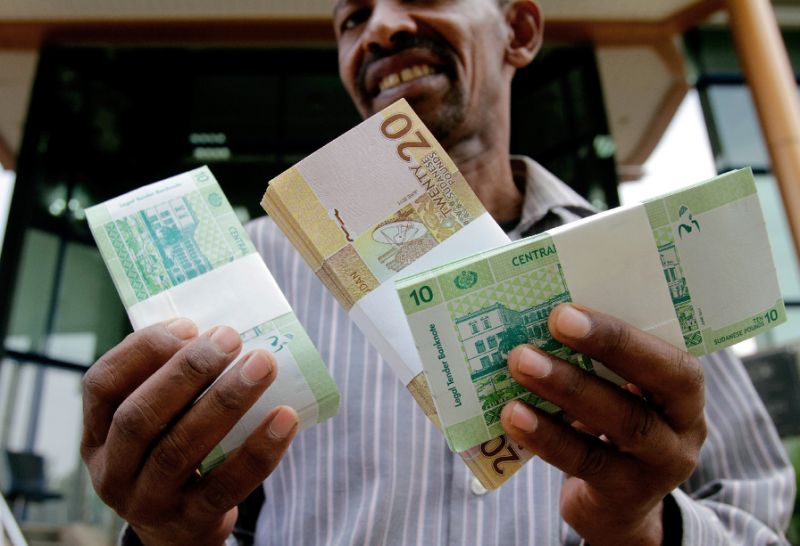
South Sudan, battered by years of conflict and corruption, has run out of foreign exchange reserves and cannot stop the pound’s depreciation, a senior central bank official in the oil-producing nation said on Wednesday.
South Sudan gets almost all of its revenue from crude oil, but current output, at about 180,000 barrels per day (bpd), has plummeted from a peak of 250,000 bpd before the outbreak of conflict in 2013, according to official figures.
“It is difficult for us at the moment to stop this rapidly increasing exchange rate, because we do not have resources, we do not have reserves,” Daniel Kech Pouch, the bank’s second deputy governor, told a news conference.
South Sudan has three exchange rates – one from the central bank, from commercial banks, and from the unofficial market. Pouch said the rate for the pound from the central bank is 165 a dollar, from commercial banks about 190, and 400 from the parallel market.
In addition to lower oil production, corruption is also driving the crisis, said Brian Adeba, the deputy director of policy at United States-based watchdog The Sentry, which has released several reports documenting high-level corruption. The government has denied the findings.
“For a long time, egregious corruption and the deliberate destruction of institutional mechanisms for checks and balances have resulted in officials using the central bank as their personal ATM, so this [running out of foreign exchange] is not surprising,” Adeba told the Reuters news agency.
South Sudan ended five years of civil war in 2018 but disagreements between President Salva Kiir and First Vice President Riek Machar, who led the main rebel group, have stalled the conclusion of the peace process.
The war – marked by ethnic cleansing, extreme sexual violence and pockets of famine – displaced around a third of the population from their homes. The conflict killed an estimated 400,000 people and created Africa’s biggest refugee crisis since the 1994 genocide in Rwanda.
“The Bank of South Sudan and ministry of finance have created serious economic blunder by taking out the SSP reserve from the treasury and giving it to businessman … This is dangerous for the peace agreement because it will create fear,” said James Okuk, researcher at the Juba-based Center for Strategic and Policy Studies.
Kenya Insights allows guest blogging, if you want to be published on Kenya’s most authoritative and accurate blog, have an expose, news TIPS, story angles, human interest stories, drop us an email on [email protected] or via Telegram


Why All Eyes Are On Gambling Authority CEO Peter Karimi As Kenya’s Betting Firms Race To Beat The June Licence Renewal Deadline

The Deal Behind Nairobi Animal Orphanage: Is This Really About Animals Or Billions In Prime Park Land

The Great Mogo Extraction: How a Latvian Fintech Built a Debt Trap for Kenya’s Most Vulnerable Borrowers and Got Away With It

Iran Launches Missiles At Israel For First Time Since Mideast Truce

MozzartBet Faces Licence Cancellation For Operations in Kenya Amid Tax Evasion, Money Laundering Scandals As Rumours Swirl Of Sh100M Bribery To Evade Trap

Rogue Developers, Engineers, Architects and City Hall Officials Charged Over Deadly Manzil Towers Collapse

Kalonzo Unveils His 2027 Presidential Campaign Platform

Artur Margaryan of Kenya’s Infamous Artur Brothers Seeks Prime Minister’s Office in Armenia

Sonko Re-Elected Head of Party

US Denied Visas to Team Officials for World Cup – Iran

Cement, Cash and Courts: How the Hashu Dynasty Crushed the Ramji Brothers for Fourteen Years and Why the Walls Are Now Closing In

Why Ruto’s Favourite Candidate Adan Mohammed Could Be Locked Out of the KRA Top Job

Inside The Urban Planning Cartel That Owns Nairobi

LifeCare on the Brink: SHA Fraud, Stolen Wages, and the Rotten Empire Jayesh Saini Built

Este Medical Kenya Fights American’s Explosive Complaints

The Rot Inside Absa: How Bank Insiders Are Looting Nairobi’s Customers

Inside FAFSA Fraud: How Kenyan Cybercriminals Siphoned Millions from America’s Sh12 Billion Student Loan System

Betika Faces DCI Probe, Directors Arrest and License Revocation Over Massive 29.5 Million Safaricom Customers’ Data Breach

Denial Under Duress: The Untold Collapse Threatening David Lagat’s DL Group’s Empire

THE INSURER THAT TOOK YOUR PREMIUM AND FORGOT YOUR NAME: How ICEA Lion Left a Client Begging for Sh7.8 Million Across Four Months
-
 Investigations3 days ago
Cement, Cash and Courts: How the Hashu Dynasty Crushed the Ramji Brothers for Fourteen Years and Why the Walls Are Now Closing In
-
 Investigations2 days ago
Inside The Urban Planning Cartel That Owns Nairobi
-
 Investigations2 weeks ago
LifeCare on the Brink: SHA Fraud, Stolen Wages, and the Rotten Empire Jayesh Saini Built
-
 News2 weeks ago
Este Medical Kenya Fights American’s Explosive Complaints
-
 Americas2 weeks ago
Inside FAFSA Fraud: How Kenyan Cybercriminals Siphoned Millions from America’s Sh12 Billion Student Loan System
-
 Investigations7 days ago
Betika Faces DCI Probe, Directors Arrest and License Revocation Over Massive 29.5 Million Safaricom Customers’ Data Breach
-

 News1 week ago
Eight Students Arrested In Kenya After Suspected Deadly School Arson Attack
-
 Investigations3 days ago
Fresh Move Launched to Remove Kenya Railways MD Mainga From Office After Awarding Sh817 Million Consultancy Contract