
Opinion
Revealed: Inside Ruto-ODM Plot For A Grand Coalition For 2027
The ten-point agenda has become the covenant binding two political formations that recognize they are stronger together than apart.

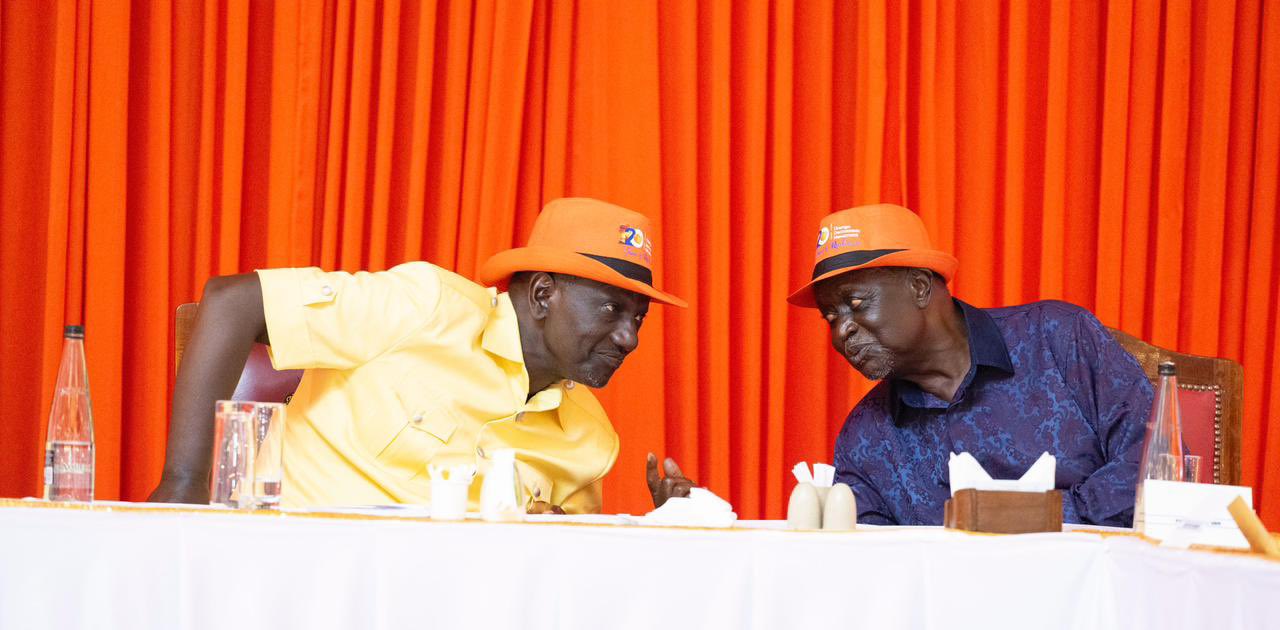
Kenya’s political theatre has always been a game of careful choreography, but what is unfolding between State House and Orange House is perhaps the most audacious political ballet since the 2007 grand coalition.
The recent by-election sweep by the United Democratic Alliance and Orange Democratic Movement alliance has done more than deliver victories at polling stations.
It has pulled back the curtain on what may be the most consequential political realignment since independence: the making of Kenya’s next super-coalition.
The numbers from November 27 tell only half the story.
UDA secured five parliamentary seats and multiple ward positions while ODM maintained its stranglehold in Nyanza and the Coast, winning all three seats it contested.
Together, the broad-based partners claimed 18 of 24 contested positions. But beneath these electoral tallies lies a more intricate narrative of political positioning, legacy preservation, and the raw mathematics of power.
What began nine months ago as a memorandum of understanding to stabilize a government reeling from Gen Z protests has quietly metamorphosed into something far more ambitious.
The ten-point agenda signed between President William Ruto and the late Raila Odinga in March was sold to Kenyans as a crisis intervention mechanism. It has instead become the architectural blueprint for 2027.
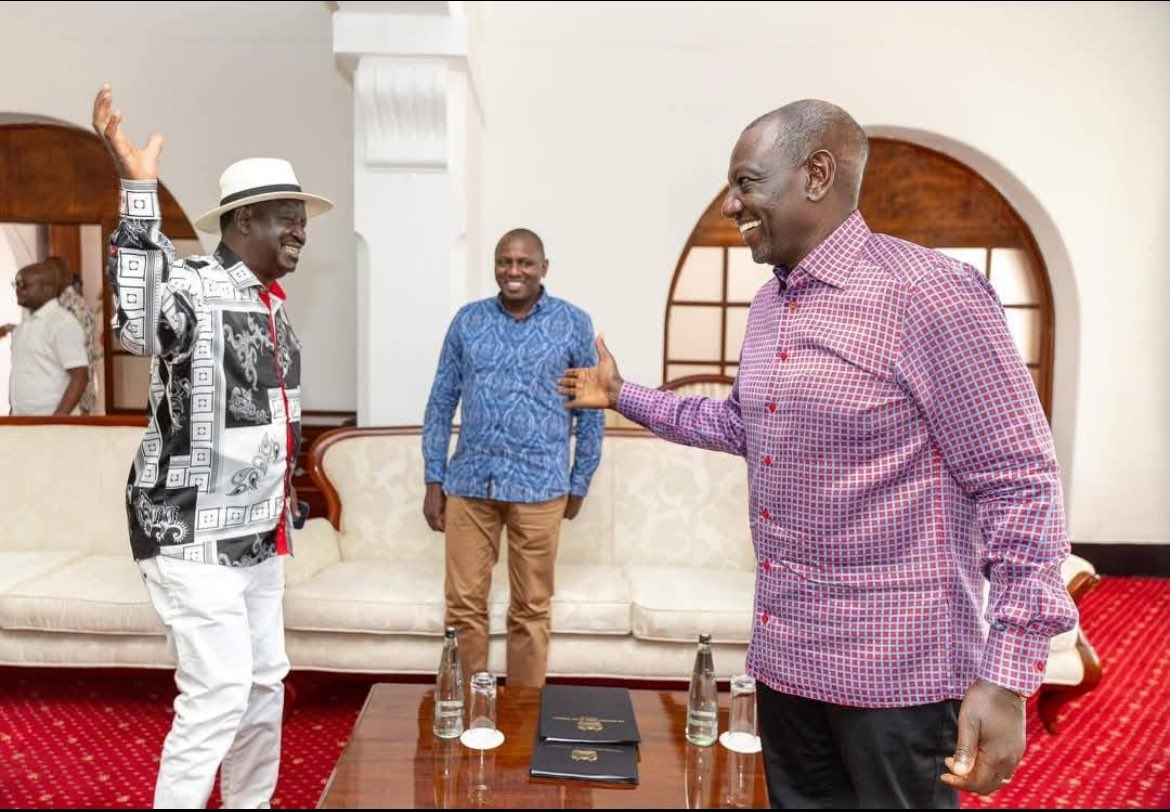
President William Ruto and ODM leader Raila Odinga.
National Assembly Minority Leader Junet Mohamed has confirmed that half of the ten-point agenda has been implemented, with the remainder on track for completion by March 7, 2026, exactly one year after the original pact was inked.
That date, insiders in both parties reveal, could mark the formal transition from cooperation to coalition.
The Zani-led implementation committee, reporting bi-monthly to both party principals, has already delivered on devolution funding increases, IEBC reconstitution, youth empowerment programs, and debt restructuring milestones.
The remaining deliverables, particularly compensation for protest victims currently held up in court, remain the final hurdles.
But make no mistake, this is not simply about policy implementation.
It is about political survival for UDA and political ascendancy for ODM. For Ruto, the arithmetic is brutal. Mount Kenya, once his fortress, has become contested territory following Rigathi Gachagua’s impeachment.
The by-election victory in Mbeere North by a mere 494 votes, despite Deputy President Kithure Kindiki’s intensive campaigning, exposed the fragility of UDA’s grip in the region.
Western Kenya remains unpredictable, with movements like George Natembeya’s DAP-K threatening to splinter the vote.
And Coast region loyalty, historically fluid, cannot be taken for granted.
Enter ODM.
With Raila’s death in October, the party under interim leader Oburu Oginga has shed any pretense of playing coy.
Oburu’s declaration that ODM will accept nothing less than the deputy presidency in any coalition arrangement was not political posturing.
It was a negotiating position staked with the confidence of a party that knows its value.
ODM brings to any coalition table what Ruto desperately needs: the Nyanza vote bloc, coastal influence through leaders like Hassan Joho and Abdulswamad Nassir, and a measure of legitimacy in Western Kenya through its historical organizing structures.
The by-elections validated this proposition.
While the United Opposition led by Gachagua, Kalonzo Musyoka, and Martha Karua made noise about dismantling the broad-based arrangement, they were comprehensively routed.
Their only consolation prize was three ward seats for Gachagua’s Democratic Congress Party, hardly the foundation for a 2027 insurgency.
The defeat in Mbeere North, where Gachagua personally led campaigns, was particularly stinging and raised uncomfortable questions about his ability to deliver Mount Kenya against an incumbent president.
What Ruto and ODM have created, perhaps inadvertently, is a political stranglehold. UDA dominates the Rift Valley, has made inroads in Mount Kenya East, and controls pockets of Northern Kenya.
ODM commands Nyanza, holds significant sway in the Coast, and retains organizational muscle in Western Kenya.
Together, they form a electoral coalition that would be extraordinarily difficult to defeat, even accounting for voter apathy, which saw turnout crater below 40 percent in most constituencies.
The sticking points, however, remain significant. Oburu’s insistence on the deputy presidency directly collides with Kindiki’s position, creating a zero-sum game that Ruto must navigate with surgical precision.
Mount Kenya East leaders view Kindiki’s elevation as belated recognition for a region long overshadowed by its western counterpart.
Displacing him for an ODM running mate would trigger political tremors Ruto can ill afford.
Yet ODM, emboldened by its by-election performance and the political capital of Raila’s legacy, is negotiating from strength, not weakness.
Then there is the Edwin Sifuna problem. ODM’s Secretary General remains the party’s most visible skeptic of the Ruto alliance, publicly questioning whether the broad-based arrangement even exists and accusing the government of continuing abductions and extrajudicial killings.
His resistance represents a genuine ideological current within ODM, one rooted in the party’s activist DNA.
Sifuna’s camp believes ODM should field its own presidential candidate in 2027, preserving party independence rather than becoming a UDA appendage.
But the pragmatists, led by Oburu, Gladys Wanga, and Junet Mohamed, have won the internal battle.
Their argument is coldly transactional: ODM was not formed to protest but to govern.
The ten-point agenda, if fully implemented, provides sufficient policy cover to justify the alliance.
And in Kenyan politics, power in government always trumps moral purity in opposition. The calculus is simple.
Would ODM rather be a junior partner in government with guaranteed Cabinet positions, county funding, and a realistic shot at the deputy presidency, or the largest opposition party with no leverage and diminishing relevance?
UDA, for its part, appears willing to accommodate ODM’s ambitions, at least publicly.
Party officials like Deputy Secretary General Omboko Milemba and Organizing Secretary Vincent Kawaya have signaled openness to negotiations, acknowledging that ODM’s voter base and organizational capacity make it the coalition’s most valuable partner.
Only the presidency, they insist, is non-negotiable.
Everything else, including the deputy presidency, is on the table.
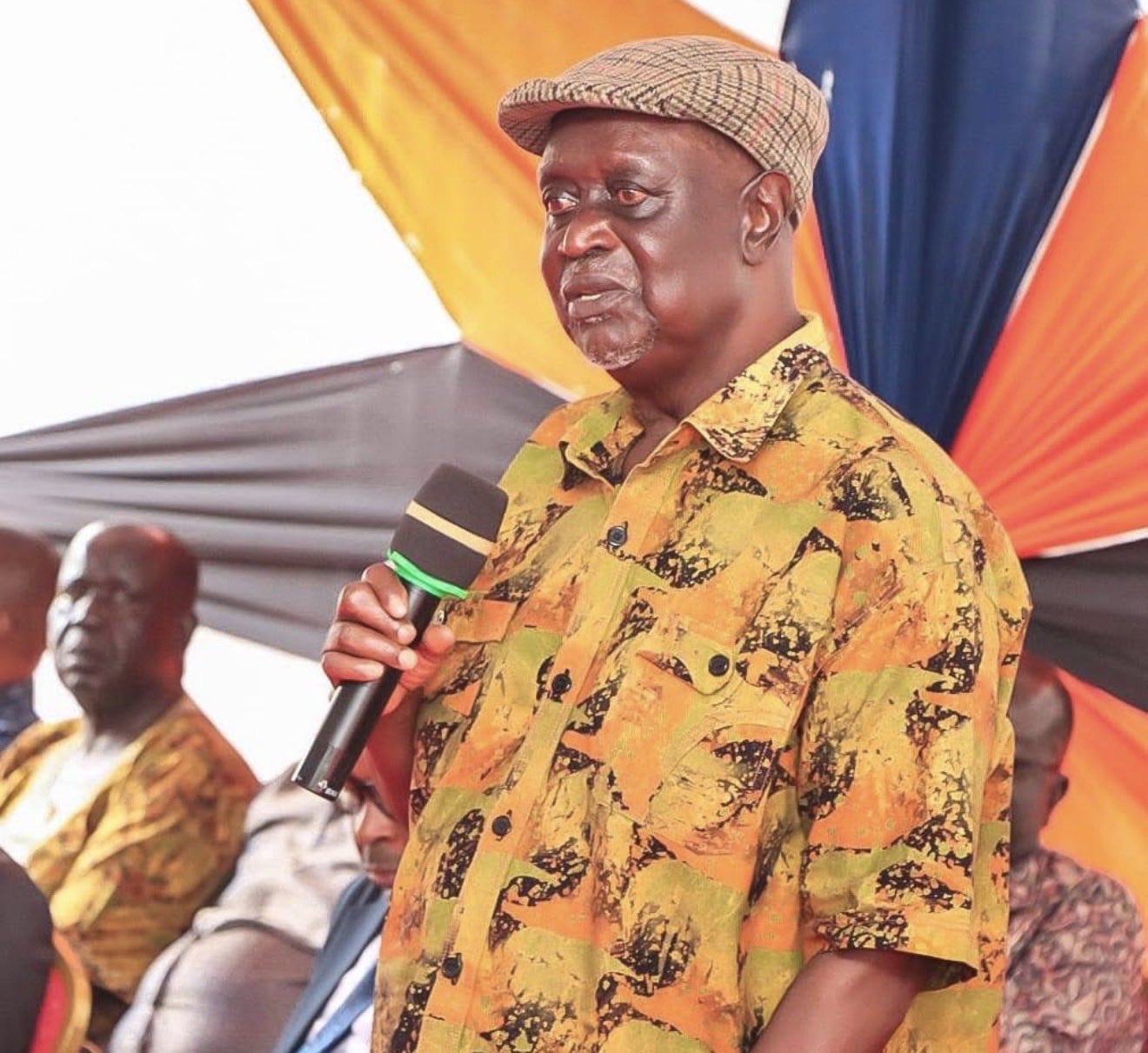
Oburu Odinga at a past event.
What remains to be seen is whether this emerging grand coalition can survive contact with 2027’s political realities.
Voter apathy, particularly among Gen Z who dominated the 2024 protests but largely boycotted the by-elections, suggests deep disillusionment with the political class generally.
The United Opposition, despite its by-election drubbing, will have two years to regroup, rebrand, and rebuild. And coalitions in Kenya have a notorious habit of imploding under the weight of their own contradictions.
But for now, the trajectory is unmistakable.
The Ruto-ODM arrangement has evolved from crisis management to campaign strategy.
The ten-point agenda has become the covenant binding two political formations that recognize they are stronger together than apart.
And the by-election results have provided the empirical validation both parties needed to proceed with confidence toward formalization.
The making of a grand coalition is rarely announced with fanfare. It happens quietly, through incremental trust-building, policy implementation, and the cold calculation of electoral mathematics.
What we are witnessing is not a sudden political romance but a methodical courtship between parties that understand power in Kenya is won through addition, not subtraction.
Whether it culminates in a formal coalition agreement or remains an informal alliance will depend on how faithfully both sides honor their commitments over the next fifteen months.
But make no mistake, the foundation is being laid.
The pieces are being positioned.
And Kenya’s political future is being shaped not in loud rallies or televised debates, but in quiet meetings between party strategists who understand that 2027 will be won or lost based on who builds the bigger tent.
Right now, that tent is being erected by UDA and ODM, and it is beginning to look large enough to house the next government.
Kenya Insights allows guest blogging, if you want to be published on Kenya’s most authoritative and accurate blog, have an expose, news TIPS, story angles, human interest stories, drop us an email on [email protected] or via Telegram


Somalia’s Disputed President Allegedly Siphons Up to $6 Million Monthly from Kenyan Miraa Trade, Sharing the Spoils with Nairobi’s Shadow Cartels

Ahmed Adan Hefow: Governor Otuoma’s Trusted Right-Hand Man at the Centre of Busia’s Deepening Finance Scandal

Karua Detained at Entebbe as Uganda Blocks Besigye Lawyer From Entering Country

How KCB and Airtel Turned Kenya’s Unbanked Into a Data Goldmine Behind a ‘Financial Inclusion’ Deal

The Chivayo Network: How a Convicted Fraudster Won Access to Presidents, Passports and Billion-Dollar Deals Across Africa

BURRIED TWICE: The Victoria Bank CEO Yogesh Pattni Files

Court Stops Transfer Of EABL Shares To Asahi By Diageo In A Fresh Snag

Death Before Justice: Stephen Ngei, Victim of Sh180 Million Laptop Tender Scam Linked to Allan Chesang, Killed in Highway Crash

Court Brands Sh1.1 Billion Fee Demand by Lawyer Victor Swanya “Excessive and Exorbitant,” Exposes How City Hall Lets Public Money Bleed Through Legal Bills

Trump Unveils New Air Force One

Businessman Philip Waithaka Kinuthia’s Minor Son Allegedly Drove Drunk, Killed Two Peponi Students in Ngong Road Horror Crash as Claims of Cover-Up Intensify

Inside NCBA’s Decline: How a Banking Giant Lost Its Strategic Edge

Cement, Cash and Courts: How the Hashu Dynasty Crushed the Ramji Brothers for Fourteen Years and Why the Walls Are Now Closing In

Standard Chartered Ghosts Haunt Joshua Oigara At Stanbic As Whistleblower Spills Beans

South Sudan: Adut Salva Kiir’s Shadow Treasury Exposed

Inside The Urban Planning Cartel That Owns Nairobi

THE VULTURE AND THE SCHEME How Nairobi West Hospital Became the Most Dangerous Institution in Kenya’s SHA Ecosystem and Why the Books Must Be Audited Now

The President’s Daughter and The Missing Witness: How Adut Salva Kiir’s Shadow Treasury Silenced Its Most Dangerous Critic

How Adil Popat Saved His Empire On The Eve Of Imperial Bank Collapse and Why Kenya’s Mainstream Media Buried The Story

Why John Ngumi Is Running From the EACC and Why the Sh415 Million Payday May Be the Least of His Worries
-
 News1 week ago
Businessman Philip Waithaka Kinuthia’s Minor Son Allegedly Drove Drunk, Killed Two Peponi Students in Ngong Road Horror Crash as Claims of Cover-Up Intensify
-
 Business2 weeks ago
Inside NCBA’s Decline: How a Banking Giant Lost Its Strategic Edge
-
 Business2 weeks ago
Standard Chartered Ghosts Haunt Joshua Oigara At Stanbic As Whistleblower Spills Beans
-
 Africa2 weeks ago
South Sudan: Adut Salva Kiir’s Shadow Treasury Exposed
-
 Investigations4 days ago
THE VULTURE AND THE SCHEME How Nairobi West Hospital Became the Most Dangerous Institution in Kenya’s SHA Ecosystem and Why the Books Must Be Audited Now
-
 Africa2 weeks ago
The President’s Daughter and The Missing Witness: How Adut Salva Kiir’s Shadow Treasury Silenced Its Most Dangerous Critic
-
 Business2 weeks ago
How Adil Popat Saved His Empire On The Eve Of Imperial Bank Collapse and Why Kenya’s Mainstream Media Buried The Story
-
 Business2 weeks ago
Why John Ngumi Is Running From the EACC and Why the Sh415 Million Payday May Be the Least of His Worries