
Investigations
Revealed: County Officials Looted Sh16B Through Ghost Workers

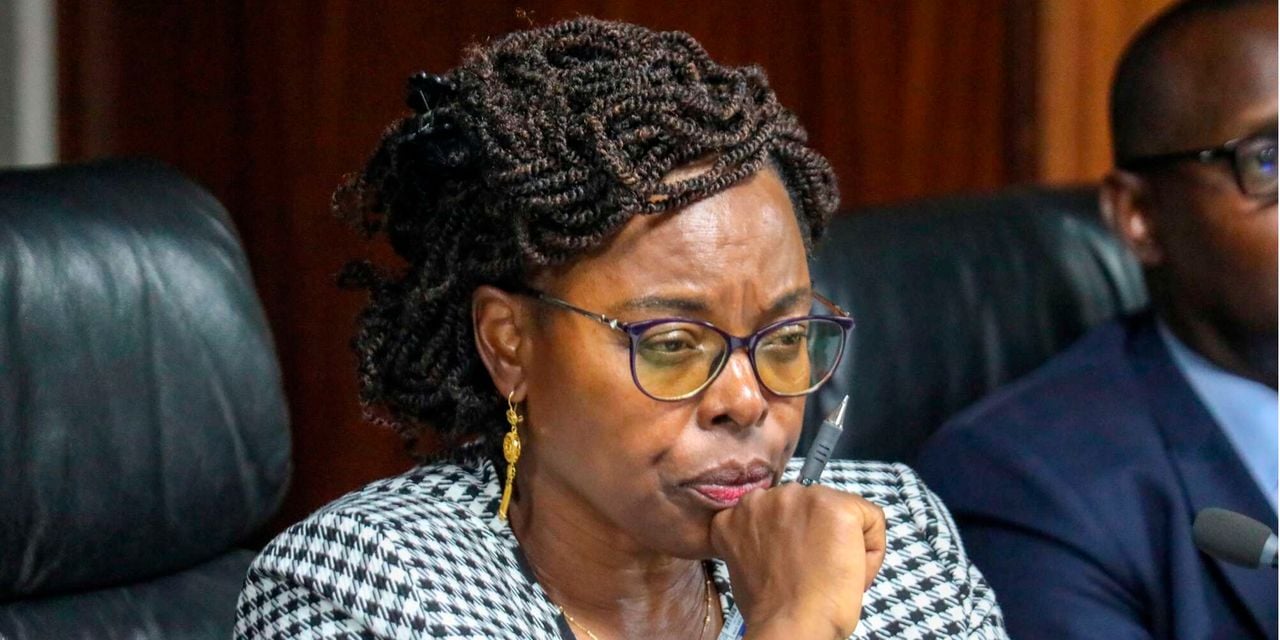
The Controller of Budget Margaret Nyakang’o has disclosed that counties spent Sh15.8 billion on non-existent employees in the 2023/2024 financial year, bypassing the legal system meant to track such expenditures.
Nyakang’o claimed the move was intentional, as the payments were processed manually circumventing the Integrated Financial Management Information System (IFMIS) to avoid scrutiny by auditors.
“The Sh15.8 billion was processed manually, and I can tell you the bulk of it went to paying ghost workers,” she said during the midterm retreat for senators in Naivasha.
Nyakang’o also criticised counties for ignoring budget ceilings, particularly in the construction of lavish residences for governors, deputy governors, and county assembly speakers.
Despite clear guidelines from the Salaries and Remuneration Commission (SRC), the CoB said counties have been spending up to three times the recommended budget limits for these buildings.
“If you go to the counties, you will find that what is being spent on these mammoth buildings is three times what is provided, which makes you wonder what purpose they serve,” she said, pointing to the discrepancies between the SRC’s spending caps and actual expenses.
The SRC guidelines set a maximum of Sh45 million for the governor’s residence, Sh40 million for the deputy governor’s, and Sh30 million for the county speaker’s house.
In addition to the misuse of funds, Nyakang’o highlighted that 38 counties failed to meet the legal requirement of spending at least 30 per cent of their budgets on development, with Nairobi (10.03 per cent), Kisii (13.7 per cent), and Mombasa (16.2 per cent) among the worst offenders.
“It is illegal not to meet the 30 per cent threshold; the court had even ruled on this. If you are not spending on development, you are killing devolution,” she said.
Nyakang’o also pointed out that counties only managed to raise Sh58.9 billion in own-source revenue in the previous financial year, representing 73 per cent of the targeted amount.
Nyamira Senator Okong’o Omogeni expressed shock at the scale of financial mismanagement, questioning the lack of accountability in the country.
“Listening to the Controller of Budget and the Auditor-General, it’s as if Kenya has been turned into a criminal enterprise. Where is the problem? Is it that you don’t back up your reports with facts, that the EACC is not acting, or that the DPP doesn’t want to prosecute? Where exactly does the buck stop?” he posed.
Nyakang’o also lamented that her office had been subjected to significant budget cuts, hampering its capacity to perform its duties effectively.
“Every year, my budget is cut. Right now, I have such a small budget that I cannot even travel, let alone my staff,” she said, noting that her request for Sh1.6 billion for the current year was reduced to just Sh702 million.
“I have a staff of 158, so the budget cannot do much in terms of carrying out our functions,” she added, calling on the Senate to support amendments to the Controller of Budget Act to grant her office more powers to track county expenditure.
Homa Bay Senator Moses Kajwang backed Nyakang’o’s call for better funding, stating that the Senate must push for the approval of constitutional office budgets to ensure accountability.
“If the Controller of Budget asks for Sh1.6 billion and she only gets Sh700 million, how is she supposed to work? We must assert ourselves as the Upper House and demand that the Senate approves the budgets of all constitutional offices,” he said.
Kitui Senator Enock Wambua echoed this sentiment, calling for the Senate’s involvement in budget-making and the approval of budgets for oversight institutions such as the Controller of Budget and the Auditor-General.
Nyakang’o also revealed that her office does not have the authority to directly access county bank accounts to monitor spending.
“I have tried to access county bank accounts, but I was denied. At the moment, I have to beg counties to let me see their accounts. I can only do so after the Auditor-General has audited them, but that may not help much,” she said.
Auditor-General Nancy Gathungu informed senators that her office had already submitted 2,035 reports from county governments, detailing financial irregularities.
“You have a lot of work to do when you resume; all the reports are with you,” she said, urging senators to act on the findings.
In response, senators vowed to engage more closely with governors to ensure that the Auditor-General’s and Controller of Budget’s recommendations are implemented to address the financial mismanagement in the counties.
Kenya Insights allows guest blogging, if you want to be published on Kenya’s most authoritative and accurate blog, have an expose, news TIPS, story angles, human interest stories, drop us an email on [email protected] or via Telegram


Ex-First Lady Margaret Kenyatta and Siblings Move to Block Widow from Late Brother’s Sh50 Million Estate

Inside the Billion-Shilling Betrayal: How Senior Treasury Officials Plundered a UN Poverty Fund and Built a Real Estate Empire on the Backs of Kenya’s Rural Poor

Tribunal Allows ODM To Take Disciplinary Action Against Sifuna

The Shadow Banker of Harare

Wicknell Chivayo’s VIP Airport Access Raises Serious Questions Over Security Protocols at JKIA

UAE Bans Children Under 15 Years From Using Social Media

‘They Come At Night’: Gachagua Claims Ruto Insiders Secretly Supporting and Advising Him

Lawyer In High-Profile Ugandan Treason Case Charged With Related Offence

Sh2 Billion Time Bomb: Firm Allegedly Linked to Amason Kingi in Kilifi Revenue Deal Continues to Drain County Coffers as Senate Opens Probe

THE VULTURE AND THE SCHEME How Nairobi West Hospital Became the Most Dangerous Institution in Kenya’s SHA Ecosystem and Why the Books Must Be Audited Now

Businessman Philip Waithaka Kinuthia’s Minor Son Allegedly Drove Drunk, Killed Two Peponi Students in Ngong Road Horror Crash as Claims of Cover-Up Intensify

Inside NCBA’s Decline: How a Banking Giant Lost Its Strategic Edge

Cement, Cash and Courts: How the Hashu Dynasty Crushed the Ramji Brothers for Fourteen Years and Why the Walls Are Now Closing In

Standard Chartered Ghosts Haunt Joshua Oigara At Stanbic As Whistleblower Spills Beans

Inside The Urban Planning Cartel That Owns Nairobi

South Sudan: Adut Salva Kiir’s Shadow Treasury Exposed

Why John Ngumi Is Running From the EACC and Why the Sh415 Million Payday May Be the Least of His Worries

How Adil Popat Saved His Empire On The Eve Of Imperial Bank Collapse and Why Kenya’s Mainstream Media Buried The Story

The President’s Daughter and The Missing Witness: How Adut Salva Kiir’s Shadow Treasury Silenced Its Most Dangerous Critic

Betika Faces DCI Probe, Directors Arrest and License Revocation Over Massive 29.5 Million Safaricom Customers’ Data Breach
-
 News4 days ago
Businessman Philip Waithaka Kinuthia’s Minor Son Allegedly Drove Drunk, Killed Two Peponi Students in Ngong Road Horror Crash as Claims of Cover-Up Intensify
-
 Business1 week ago
Inside NCBA’s Decline: How a Banking Giant Lost Its Strategic Edge
-
 Business1 week ago
Standard Chartered Ghosts Haunt Joshua Oigara At Stanbic As Whistleblower Spills Beans
-
 Investigations2 weeks ago
Inside The Urban Planning Cartel That Owns Nairobi
-
 Africa1 week ago
South Sudan: Adut Salva Kiir’s Shadow Treasury Exposed
-
 Business1 week ago
Why John Ngumi Is Running From the EACC and Why the Sh415 Million Payday May Be the Least of His Worries
-
 Business1 week ago
How Adil Popat Saved His Empire On The Eve Of Imperial Bank Collapse and Why Kenya’s Mainstream Media Buried The Story
-
 Africa1 week ago
The President’s Daughter and The Missing Witness: How Adut Salva Kiir’s Shadow Treasury Silenced Its Most Dangerous Critic