
Investigations
The White-Coat Heist: How MP Shah Hospital Ran a Decade-Long Double-Extraction Racket While Hiding Behind Charity Status
SHA’s suspension of one of Nairobi’s oldest private hospitals is only the visible tip. Beneath it lies a years-long pattern of co-collection — simultaneously raiding public insurance and patients’ pockets while a self-styled non-profit charity shielded the institution from the scrutiny it deserved.

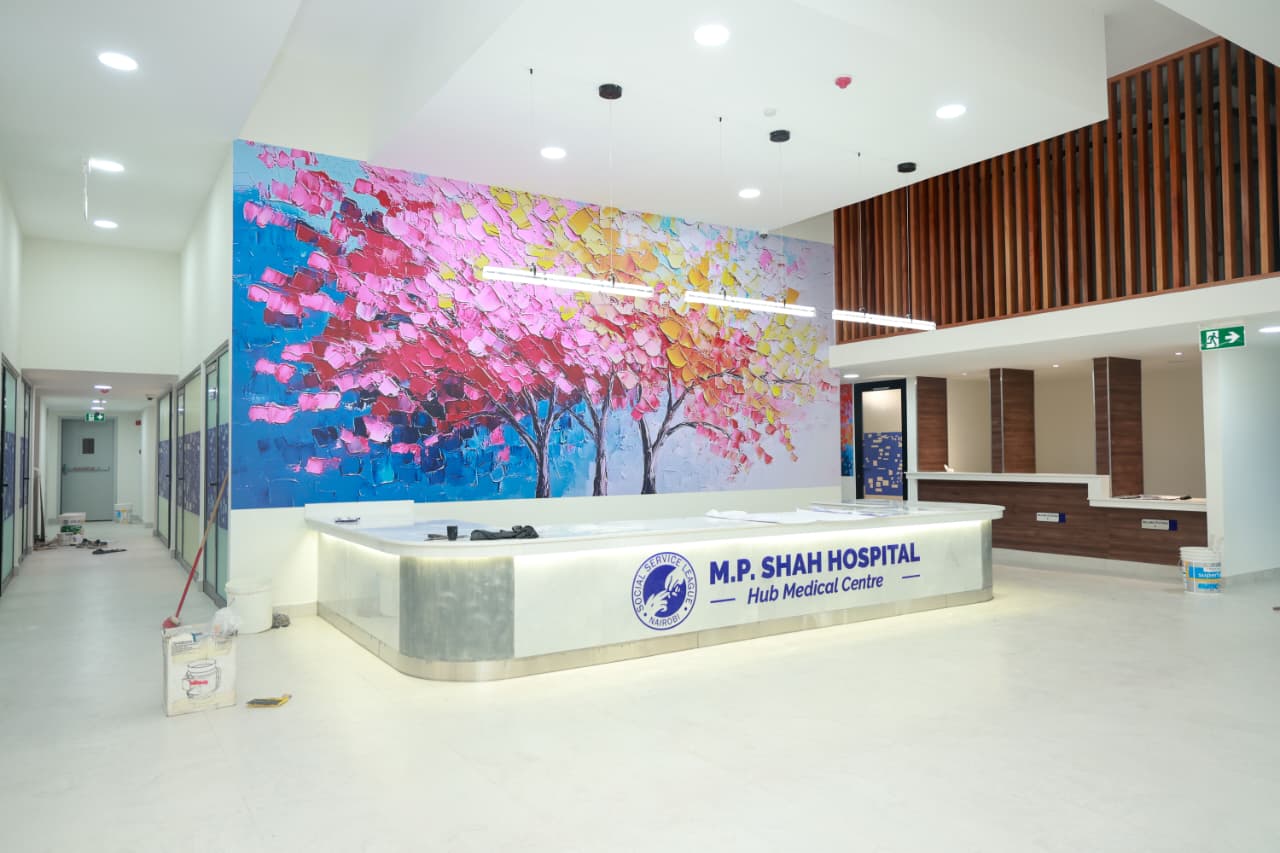
On the morning of June 23, 2026, the Social Health Authority delivered a letter that one of Nairobi’s most venerated private hospitals had been quietly dreading since the SHA fraud crackdown began swallowing facilities across the country one by one.
The letter, signed by SHA Chief Executive Officer Dr Mercy Mwangangi, suspended MP Shah Hospital from every fund the authority administers the Social Health Insurance Fund, the Primary Healthcare Fund, the Emergency, Chronic and Critical Illness Fund, and the Public Officers Medical Scheme Fund effective immediately, for ninety days pending the conclusion of an investigation into billing complaints.
The hospital, run by CEO Dr Toseef Din under the chairmanship of Dr Manoj Shah, confirmed receipt of the notice within hours and pledged cooperation. It was the kind of measured, professional response that has served the Westlands institution well through every previous controversy. But the current crisis is not a misunderstanding or a rounding error in an administrative system.
According to the SHA letter, investigators have named four specific patients Baby Thompson, Guyo Rendille, P.N. Gupta, and Yvonne Gakii in documented billing complaints that describe a hospital systematically charging insured patients for care the state had already contracted to cover, while simultaneously manipulating claim submissions in ways that minimised what it asked from SHA and maximised what it extracted directly from patients’ wallets.
It is a scheme that officials, lawmakers, and health economists who study insurance fraud say they have not seen deployed at this scale at a facility of this profile. It is also, the evidence suggests, a scheme that MP Shah Hospital had been rehearsing for years.
THE MECHANICS OF THE DOUBLE EXTRACTION
Understanding what SHA’s investigation alleges requires grasping the fundamental architecture of social health insurance.
When a patient is a paid-up SHIF beneficiary, the hospital is contractually obligated to render covered services and then bill SHA for the approved tariff. The patient pays nothing at the point of service for covered care. This is not a benefit of membership. It is the entire purpose of the scheme.
What the SHA letter describes at MP Shah is the systematic inversion of this arrangement across multiple documented cases. Baby Thompson, an infant, was charged Sh83,308 on May 3, 2026 for care that SHA’s benefit package should have covered without any contribution from the family.
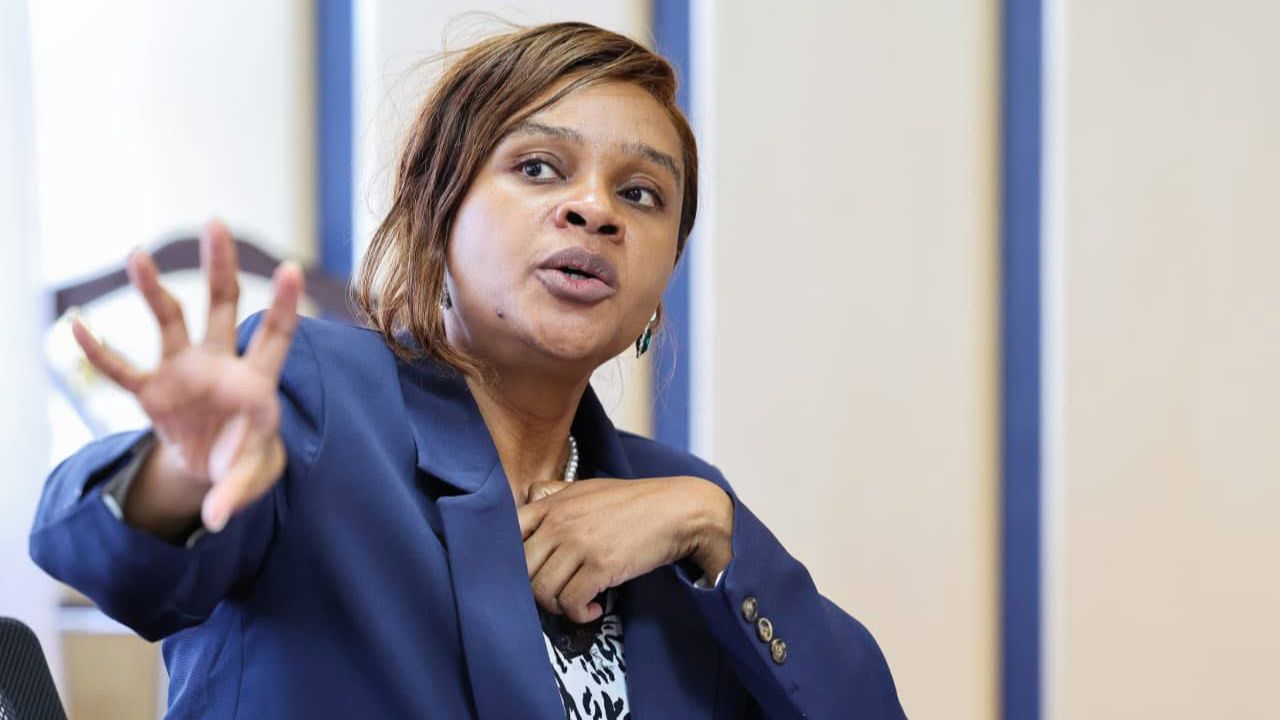
SHA CEO Dr Mercy Mwangangi
Guyo Rendille, described in the letter as an active, fully paid-up SHIF member, was told at the hospital’s billing desk to produce cash regardless of his valid membership.
Two further cases those of P.N. Gupta and Yvonne Gakii are characterised specifically as instances of underbilling of SHA’s liability, a phrase that carries more technical and financial weight than it might initially appear.
Underbilling is the inverse of upcoding, the fraud technique that has drawn most of the regulatory attention in Kenya’s health insurance sector. In upcoding, a hospital inflates its claim to SHA, telling the authority a patient had an expensive procedure when a cheaper one was performed.
In underbilling, the hospital tells SHA the patient’s episode cost less than it actually did or less than the benefit package entitles the patient to and then presents the patient with a bill for the difference, framing it as the patient’s personal liability.
The hospital gets immediate cash from the patient, reduces its exposure to SHA’s scrutiny and often-slow verification processes, keeps its individual claim values lower, and creates statistical camouflage against the AI-driven anomaly detection system the authority has deployed since 2025.
In its most sophisticated form, the model runs as follows: a patient presents with a covered condition. The billing department logs the encounter into the SHA portal at a fraction of the entitled claim value. A separate, patient-facing invoice is generated for the balance, described vaguely as a top-up, a facility fee, a co-payment for enhanced services, or simply as an unlisted item not covered by insurance.
The patient, often frightened, often in pain, and almost always unfamiliar with the precise contents of the SHIF benefit schedule, pays. SHA pays its reduced claim without objection because nothing in the submission appears anomalous. The hospital has now been paid twice for one patient encounter.
This model is not only more sophisticated than the ghost-patient and upcoding frauds that have consumed SHA investigators across county hospitals. It is also harder to detect through the authority’s digital systems, because it does not inflate claims against SHA it reduces them. The signal it generates is the opposite of what fraud detection algorithms are typically calibrated to flag.
The complaints that cracked this case came not from SHA’s AI engine but from patients who noticed they were being charged for services they knew their insurance covered.
A PATTERN WITH A PAPER TRAIL: FROM 2018 TO 2026
The SHA suspension did not arrive at an institution with a clean history. MP Shah Hospital has appeared before parliamentary committees, faced a Senate fine, attracted social media outrage, and negotiated with grieving families over bills that critics described as unconscionable.
In each episode, the hospital managed the fallout through selective waiver, careful public communications, and the long institutional memory of Nairobi’s professional class. The SHA complaints are the first to reach the regulatory enforcement threshold. They are not the first to allege that money-first thinking routinely overrides patient-first care.
In April 2018, Matilda Anyango was brought to MP Shah’s Accident and Emergency department at night with stab wounds. She was operated on by a multidisciplinary surgical team and died twelve hours later.
Her family was presented with a bill of Sh858,355, which activist Boniface Mwangi tweeted in a breakdown that went viral.
The itemisation was startling: Sh300,000 for the surgeon, Sh100,000 for the anaesthetist, Sh157,285 in pharmacy charges, Sh105,000 for transfusion medicine, Sh42,600 for a single night in a bed.
No health insurance, Anyango’s family and online commentators noted, would accept such charges without extensive query.
When public pressure became impossible to manage, the hospital revised the bill and released the body after the family paid Sh25,000 a reduction of approximately 97 per cent from the original invoice. The original bill was described by the hospital as ‘interim.’ The Sh833,355 it was prepared to charge, and then was not, has never been fully accounted for.
Two years later, in 2020, the Senate Committee on Health investigated the death of Virginia Asaph at MP Shah Hospital. Asaph was conscious and stable when she arrived at the hospital at 2am with a cardiac emergency.
She was able to make an initial payment of Sh9,000 by M-Pesa. The hospital demanded a Sh500,000 deposit before proceeding with surgery. Treatment was delayed from her arrival until 4.27am, when the deposit was paid.
She died shortly after.
The Senate committee found that every medical intervention she received was conditional on prior payment confirmation, in direct violation of the Health Act’s emergency care provisions and the hospital’s own contractual agreement with NHIF, which at the time provided insurance cover she held.
The committee recommended a Sh3 million fine and referral of the hospital’s conduct to the Kenya Medical Practitioners and Dentists Council and NHIF for investigation into failure to provide emergency services contrary to their contractual agreement.
The committee’s vice-chair, Mary Seneta, was explicit: the case was not isolated. ‘There are thousands of people who lose their lives every year because they do not receive emergency medical services for lack of cash,’ she told the Senate.
The Sh740,000 bill the family was left with after Asaph died was never publicly settled or cancelled. Nairobi Senator Johnson Sakaja noted that complaints of this nature against the hospital were numerous.
Earlier still, the Consumer Federation of Kenya brought a parliamentary petition regarding the case of a patient billed approximately Sh860,000 to Sh865,000 for emergency treatment a figure that entered the legislative record and compelled the National Assembly’s Health Committee to examine MP Shah’s billing practices.
That inquiry, too, appears to have concluded with waiver and negotiation rather than structural accountability.
The parliamentary library holds a 2018 report on a petition regarding a fraudulent medical bill issued by MP Shah Hospital on account of the treatment of the late Matilda Anyango evidence that the current SHA complaints land in a regulatory space that parliamentarians had already flagged, and then left largely unchanged.
THE NON-PROFIT THAT CHARGES LIKE A PRIVATE BANK
One of the least examined but most consequential facts about MP Shah Hospital is the institutional identity it has cultivated for nearly nine decades. The hospital operates under the umbrella of the Social Service League, which it describes as a non-racial, non-religious, non-political charitable institution. It presents itself as a not-for-profit organisation with a single social objective: providing quality, affordable healthcare to the community at affordable costs.
This framing has earned the institution goodwill, regulatory forbearance, and reputational insulation that a straightforwardly commercial hospital would not enjoy.
The contrast between this self-description and the documented billing behaviour is stark enough to warrant serious regulatory scrutiny. A not-for-profit hospital that generates annual revenue estimated at $73.2 million equivalent to roughly Sh9.5 billion at current exchange rates and simultaneously demands cash from insured patients for covered services, charges Sh858,355 for twelve hours of care, and delays emergency treatment for cardiac patients until deposits are received is not behaving consistently with charitable purpose.
The question that no regulator has yet formally posed is this: does MP Shah Hospital’s claimed not-for-profit status entitle it to tax treatment, import duty exemptions, or other statutory benefits that a for-profit entity would not receive? And if so, does the billing conduct alleged by SHA constitute a basis for reviewing that status?
These are not rhetorical questions.
The Kenya Revenue Authority and the registrar of societies have jurisdiction over how charitable status is conferred and maintained. The Social Health Insurance Act’s provisions on fraudulent billing are matched, in a pattern the DCI and DPP should consider, by the question of whether institutions claiming charitable exemptions have used those exemptions to shield revenue extraction from ordinary commercial oversight.
A forensic audit that reviews only SHA claims, without examining the hospital’s tax filings and charity registrations against its actual revenue and billing model, will miss half the picture.
THE SHA ECOSYSTEM AND WHY HIGH-END FACILITIES ESCAPE EARLY SCRUTINY
The broader context in which MP Shah’s suspension arrives is instructive. SHA has, since the crackdown began in earnest under Health CS Aden Duale from April 2025, focused its most visible enforcement on county-level and semi-urban facilities ghost hospitals in Mandera that didn’t physically exist, clinics in Homa Bay and Bungoma claiming procedures their bed capacity could not accommodate, facilities where 100 per cent of deliveries were claimed as caesarean sections. These cases were real and serious.
They also had the advantage, from SHA’s perspective, of being statistically loud: anomalies large enough to appear in aggregate data without the nuance required to detect MP Shah’s quieter model.
The Sh65.4 billion that SHIF paid to 4,718 facilities between July 2025 and April 2026 flowed disproportionately to Nairobi, which received Sh14.9 billion nearly Sh10.3 billion more than any other county.
Private facilities as a category received Sh32.1 billion, representing 49.13 per cent of all SHIF payments despite not serving the largest share of beneficiaries by volume. Among Nairobi’s top recipients, Aga Khan University Hospital received Sh644.6 million, Coptic Hospital Sh580.4 million, and The Nairobi Hospital Sh566.7 million.
MP Shah’s figures are not yet publicly disclosed with specificity, but as a Level 6 facility with 217 beds, specialist wards, dedicated oncology, cardiology, and renal units, and a high-volume private patient mix, its SHIF claim totals over the scheme’s first year of full operation are likely substantial.
The underbilling scheme, if confirmed by investigators, would mean that SHA’s payments to MP Shah represent only a fraction of what the hospital actually extracted from SHIF-insured patients. The remainder was collected directly, off-book relative to SHA’s claims database, and likely recorded in the hospital’s own revenue ledgers as private patient receipts.
This would have the perverse effect of making MP Shah look like a relatively modest SHIF claimant compliant, even conservative while its true revenue from insured patients was being substantially boosted by cash collections SHA cannot directly see.
SHA’s AI-driven fraud detection system, which successfully flagged the Sh10.6 billion in rejected claims and uncovered the absurdities of a Kwale County parent registered with 381 dependents, is calibrated to detect over-extraction: inflated claims, phantom patients, impossible procedures.
It is not, by design, equipped to detect under-extraction paired with parallel cash collection.
The MP Shah case may force the authority to build a second detection layer one that cross-references facility-level cash receipts from insured patients against claim submissions for the same episodes, a task that would require access to the hospital’s internal billing systems, not just its SHA portal submissions.
WHAT A FULL FORENSIC AUDIT MUST EXAMINE
SHA’s 90-day suspension is an enforcement action, not an investigation.
The investigation must now be conducted separately, with scope and depth that the current public record does not yet reflect. Based on the documented complaint pattern and the hospital’s history, the following lines of inquiry are essential.
Investigators must establish the full claims history for every insured patient seen at MP Shah since SHIF’s launch in October 2024, cross-referenced against the hospital’s own patient billing records for the same episodes.
Wherever SHA was billed less than the applicable tariff and the patient was separately charged a balance, that gap represents a potential misappropriation of benefit entitlements.
The patients named in SHA’s letter Baby Thompson, Guyo Rendille, P.N. Gupta, Yvonne Gakii are apparently those who complained. They are almost certainly not the only ones to whom this happened.
Investigators must obtain and analyse the hospital’s internal billing guidelines, rate cards, and any standing instructions issued to admissions, billing, and patient accounts staff on how to handle SHA-insured patients.
The existence of a policy directing staff to collect top-ups from insured patients, or to submit partial claims to SHA as a matter of routine, would constitute evidence of a deliberate scheme rather than individual errors.
The hospital’s position as a declared not-for-profit under the Social Service League must be examined against its actual revenue model, executive compensation, supplier relationships, and surplus allocation.
Where annual revenue approaches Sh10 billion and billing practices include the conduct alleged by SHA, the charitable classification is a matter of legitimate public interest, not merely institutional history.
The NHIF records for MP Shah should be reviewed for the years prior to SHA’s launch. The hospital has been an NHIF-contracted facility for decades. Whether similar patterns of patient co-charging for covered services, or manipulation of claim values relative to the applicable tariff schedule, occurred under NHIF is a question the EACC and DCI can address by examining archived claims data.
The Sh7 billion NHIF fraud investigation which centred on case management manager Judith Otele and her documented approval of claims from facilities linked to her husband did not publicly name MP Shah.
But the systemic weaknesses that enabled that fraud, including the lack of integration between notification and pre-authorisation systems and the ability to consolidate or split claims in ways that obscured their true character, were not unique to the hospitals that were caught.
The Senate committee that investigated Virginia Asaph’s death recommended that NHIF investigate MP Shah’s failure to provide emergency services contrary to their contractual agreement.
Whether that investigation was ever completed, and what it found, is a matter the DCI should now establish. If the NHIF investigation was shelved or suppressed, that institutional memory and those responsible for shelving it becomes part of the current picture.
THE ACCOUNTABILITY GAP THAT ALLOWED THIS TO PERSIST
MP Shah Hospital is not a roadside clinic that slipped through registration checks. It is a 217-bed, Level 6 multispecialty facility with a Board of Governors that includes business leaders connected to international governance frameworks, a CEO whose LinkedIn biography lists membership of the UN Global Compact Network Kenya, and decades of association with Nairobi’s professional and Asian-Kenyan community elite.
It has been photographed hosting medical conferences, launching speciality units, and receiving visits from county and national government officials.
The reputational architecture of respectability is, in environments where regulatory capacity is stretched, a form of immunity.
The Ministry of Health, NHIF’s successor auditors, the Kenya Medical Practitioners and Dentists Council, and various parliamentary committees have each engaged with MP Shah over specific complaints and then retreated to the comfortable position that the matter was resolved or referred.
None appears to have demanded a systematic review of the billing model behind the individual complaints. That is the accountability gap that allowed the pattern to deepen.
SHA has now moved with more resolve than any prior regulator. The 90-day suspension is public, gazetted, and has financial consequences that previous recommendations and fines did not impose. But the gap between a 90-day suspension and a criminal investigation is the space in which sophisticated institutions historically survive accountability moments.
The SHA letter tells MP Shah to cooperate, transfer patients, and notify beneficiaries. It does not announce a forensic audit, a DCI referral, or a review of the hospital’s charity status. Those are the steps that would make the suspension consequential beyond the news cycle.
THE INSTRUCTION TO AUTHORITIES
The Social Health Insurance Act provides for criminal charges under Section 48(5) against any provider who knowingly or fraudulently alters information to defraud the authority.
The Proceeds of Crime and Anti-Money Laundering Act reaches further, allowing investigators to treat cash collected from insured patients in lieu of SHA-covered services as proceeds of a scheme to defraud a public fund.
The Anti-Corruption and Economic Crimes Act is applicable where the conduct involves misrepresentation to a public authority for financial gain.
The DCI has demonstrated, in the Filyne Chima ghost hospital case and the Jambo Jipya prosecution, that it is capable of following the money from SHA portal records through bank accounts to individual directors.
The MP Shah case presents a more complex but potentially more significant target: a large, branded, high-revenue institution whose alleged fraud did not inflate public fund payments but suppressed them, while capturing the balance directly from citizens who believed they were covered.
SHA must also confront the structural implication of this case: that its fraud detection architecture has a blind spot specifically in the tier of facilities most capable of exploiting it.
The county hospital that admits a blood donor for five days and claims five times the single-day tariff is visible.
The Westlands hospital that submits a partial claim for a cancer patient’s infusion and charges the patient for the rest is not. Closing that blind spot requires SHA to negotiate data-sharing agreements with private hospitals that go beyond claims submissions agreements that would give the authority visibility into parallel cash collections.
This is politically difficult because it conflicts with the private sector’s resistance to disclosure. It is legally necessary because the current architecture creates a systemic incentive for precisely the model allegedly running at MP Shah.
There is one more question that investigators, and the public, are entitled to ask. In a healthcare environment where SHA’s slow payment and claims verification backlog have driven some legitimate hospitals to financial crisis where the Rural and Urban Private Hospitals Association of Kenya has estimated Sh35 billion in verified but unpaid claims as of early 2026 was the underbilling and cash collection model at MP Shah a response to SHA’s payment failures, or did it predate them? The answer matters both for culpability and for the system-design lessons the authority must draw. If the hospital was collecting cash because SHA was not paying on time, that is a different but still impermissible response to a real problem.
If the model was running before SHA even launched, as the pattern of complaints under NHIF suggests it may have been, then this is an institution whose revenue culture has never actually aligned with its charitable self-description.
The families of Baby Thompson, Guyo Rendille, P.N. Gupta, and Yvonne Gakii went to MP Shah Hospital because they believed they were insured, and because MP Shah is the kind of hospital that inspires confidence.
They were right to believe they were covered.
What they encountered at the billing counter was the managed version of an extraction that a Senate committee, a parliament petition, and years of social media outrage had never fully stopped. Suspension is the first real consequence the institution has faced. It must not be the last.
Kenya Insights allows guest blogging, if you want to be published on Kenya’s most authoritative and accurate blog, have an expose, news TIPS, story angles, human interest stories, drop us an email on [email protected] or via Telegram









Nyali MP Moha Jicho Pevu Caught Up In Alleged Sh44 Million KPA Debt Scam

Somalia Deputy PM Held at JKIA, Deported Over Questionable Acquisition of Kenyan Passport

The White-Coat Heist: How MP Shah Hospital Ran a Decade-Long Double-Extraction Racket While Hiding Behind Charity Status

The Patriarch, His Children, and a Buried Sh3.9 Billion Fraud: The Story of Titus Muya That Kenya Was Never Meant to Read

The Founder’s Ransom: How Titus Muya Had to Be Paid Sh231 Million to Let Go of Family Bank and Why That Bill Is Now Yours

Kenya’s gambling industry pushes back against a licensing bill

Kenya Airways Sinks Into Deeper Turbulence As American Supplier Sues In New York Court Over Sh129 Million Unpaid Debts

Kenyan player wins a Ksh3.2 million jackpot

IEBC Sets August 10 Date For 2027 General Election

Furious Ruto Lashes Out at Gideon Moi Over Repeated ‘Blackmail, Extortionist’ Headlines on The Standard and KTN

Businessman Philip Waithaka Kinuthia’s Minor Son Allegedly Drove Drunk, Killed Two Peponi Students in Ngong Road Horror Crash as Claims of Cover-Up Intensify

Inside NCBA’s Decline: How a Banking Giant Lost Its Strategic Edge

South Sudan: Adut Salva Kiir’s Shadow Treasury Exposed

Cement, Cash and Courts: How the Hashu Dynasty Crushed the Ramji Brothers for Fourteen Years and Why the Walls Are Now Closing In

Standard Chartered Ghosts Haunt Joshua Oigara At Stanbic As Whistleblower Spills Beans

Inside The Urban Planning Cartel That Owns Nairobi

THE VULTURE AND THE SCHEME How Nairobi West Hospital Became the Most Dangerous Institution in Kenya’s SHA Ecosystem and Why the Books Must Be Audited Now

The President’s Daughter and The Missing Witness: How Adut Salva Kiir’s Shadow Treasury Silenced Its Most Dangerous Critic

How Adil Popat Saved His Empire On The Eve Of Imperial Bank Collapse and Why Kenya’s Mainstream Media Buried The Story

Why John Ngumi Is Running From the EACC and Why the Sh415 Million Payday May Be the Least of His Worries
-
 News2 weeks ago
Businessman Philip Waithaka Kinuthia’s Minor Son Allegedly Drove Drunk, Killed Two Peponi Students in Ngong Road Horror Crash as Claims of Cover-Up Intensify
-
 Investigations1 week ago
THE VULTURE AND THE SCHEME How Nairobi West Hospital Became the Most Dangerous Institution in Kenya’s SHA Ecosystem and Why the Books Must Be Audited Now
-
 Business2 weeks ago
How Adil Popat Saved His Empire On The Eve Of Imperial Bank Collapse and Why Kenya’s Mainstream Media Buried The Story
-
 Business4 days ago
BURRIED TWICE: The Victoria Bank CEO Yogesh Pattni Files
-
 Business1 week ago
Inside the Billion-Shilling Betrayal: How Senior Treasury Officials Plundered a UN Poverty Fund and Built a Real Estate Empire on the Backs of Kenya’s Rural Poor
-
 Business1 week ago
The Listing That Doesn’t Lie: What the Market Isn’t Saying About Family Bank’s NSE Debut
-

 Business1 week ago
The Banker Who Walked Away: How Yogesh Pattni Survived a Financial Crime Scandal That Shook Kenya
-
 News6 days ago
My Life Is In Danger: Investor Drops Bombshell Expose On Thomas Ogutu CEO VeGrid Ltd And Fugitive Nairobi CEC Charles Kerich – DCI Inaction And Corruption Network Exposed