
Africa
The Shadow Banker of Harare
How Jayesh Shah a phantom tycoon with no public face and an empire spanning three continents quietly became the man the Reserve Bank of Zimbabwe cannot live without, cannot fully audit, and apparently cannot refuse.

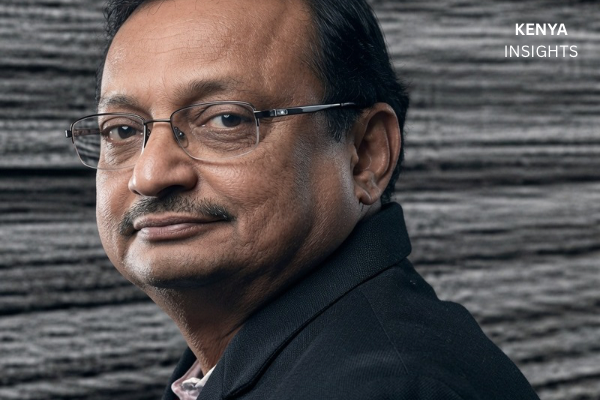
He walks into Zimbabwe carrying twelve million dollars in cash, and nobody stops him.
Not the Zimbabwe Revenue Authority, which waves him through after he declares the funds at Robert Gabriel Mugabe International Airport. Not Fidelity Gold Refinery, which accepts the deposit into its GetBucks account and readies the gold. Not the Reserve Bank of Zimbabwe, which at the time of these transactions in May and June 2025 was repaying this same man US$250,000 every single week toward a debt that had stood at over US$53 million three years prior.
The man behind the courier though never on the flight himself, never signing in person, always one layer removed is Jayesh Shah. He is, depending on who in Harare’s power circles you ask, either a financial lifeline or the most consequential unregulated institution in southern Africa’s most structurally fragile economy. He is almost certainly both.
What is beyond dispute, thanks to a devastating April 2026 High Court judgment by Justice Joseph Mafusire, is this: for more than two decades, Zimbabwe’s central bank has been borrowing millions from a private individual registered in the British Virgin Islands, structuring its gold trade through his accounts at a bank linked to his own interests, and — when it briefly tried to question the arrangement — failing so comprehensively in court that the judge struck out its entire opposing affidavit on a technicality, unable to find a single procedural leg to stand on.
The story of Jayesh Shah is the story of what happens when a country’s institutions collapse so thoroughly that a single reclusive foreign businessman becomes indispensable to the state. It is also a story of how that indispensability gets weaponised, of how opacity becomes a competitive advantage, of how a man without a Wikipedia page or a public photo in most newspaper archives can nonetheless sit at the centre of one of Africa’s most troubled economies and extract terms that a sovereign nation should never accept from any private lender let alone one whose funds have been flagged by three different national law enforcement agencies across three separate decades.
“Zimbabwe is about the only gold-exporting country where a central bank permits gold buyers and sellers to physically carry cash into the country.” — Justice Joseph Mafusire, High Court of Zimbabwe, April 2026
THE GHOST IN THE MACHINE: WHO IS JAYESH SHAH?
Start with what is almost impossible to find: a photograph. In over three decades of operating across Zimbabwe, Zambia, Kenya and the United Arab Emirates, Jayesh Shah has appeared in virtually no public image accessible to Zimbabwean media. Local reporters have noted with a mixture of admiration and unease that a Google image search of his name returns pictures of entirely different men from other parts of the world none of them him. The Herald is said to hold a single image, filed once after a solitary public appearance. Every other trace of the man is constructed from court documents, RBZ correspondence, and the accounts of politicians, bankers and businesspeople who have borrowed from him and, in some cases, lost everything when they could not repay.
What the court record tells us is more illuminating than any portrait. Shah arrived in Zimbabwe in the early 1990s, part of a wave of Indian-origin entrepreneurs who found opportunity in a post-independence economy where forex scarcity, state enterprises laden with inefficiency, and a growing elite with access to hard currency created openings for the right kind of operator. He established Gift Investments (Pvt) Ltd for bus and spare parts supply and Al Shams a name derived from the Arabic word for sun — as his primary vehicle for money lending, gold trading, and asset-backed finance. He also built or acquired interests in Al Shams Building Materials Limited in Zambia, Saturn Trading Investment, Al Shams Building Trading in the UAE, and ultimately the BVI-registered Al Shams Global BVI Limited, the entity that has become synonymous with his most consequential Zimbabwe dealings.
He has operated in Zambia since at least 1998. His source of original wealth, multiple Zimbabwean business journalists have noted, traces to Kenya and Zambia, though the precise genesis of that wealth remains opaque. One person who flew beside him on a regional flight and did not recognise him until Shah introduced himself described him as a ‘jovial character.’ Finance Minister Tendai Biti once publicly called him a ‘loan shark’ who was ‘assuming the role of a central bank.’ Shah, in a rare 2012 interview with the Zimbabwe Independent one of perhaps a handful of times he has ever spoken on record flatly rejected the characterisation, expressing wounded bewilderment at the suggestion that anyone could be ‘forced’ into accepting a loan.
But the patterns visible through court records speak louder than any protestation. And they tell a story not of a benign lender of last resort, but of a man who has systematically positioned himself at every pressure point in Zimbabwe’s financial architecture the central bank, the banking sector, the gold trade, the property market and leveraged that position with a lawyer’s precision and a strategist’s patience.
THE $53 MILLION SECRET: RBZ’S PRIVATE OVERDRAFT FACILITY
The most explosive disclosure to emerge from the April 2026 ruling is not the frozen account. It is the footnote that explains why the freeze was irrational. In setting aside the RBZ’s July 2025 decision, Justice Mafusire laid bare the scale of the state’s financial dependency on Shah with language that left little room for interpretation.
“The first respondent has from time to time borrowed from the applicant, which has from time to time lent to it millions of dollars in hard currency. That contractual arrangement had endured for more than two decades. The first respondent was consistently paying back to the applicant a whopping US$250,000 every week in settlement of a debt in excess of US$53 million.”
Read that again. Zimbabwe’s central bank the institution mandated to regulate the country’s monetary system, supervise its commercial banks, and enforce its anti-money laundering laws has been the private borrower of a BVI-registered company for more than twenty years. The debt alone, at US$53 million as of a December 2022 settlement agreement, represents a sum that would appear nowhere in the RBZ’s published accounts, would be disclosed to no parliamentary committee, and would remain unknown to the Zimbabwean public were it not for the central bank’s own procedural incompetence in this litigation.
The loans, according to court papers, date to 2002 a period when Zimbabwe’s economy was already in freefall under Mugabe, hyperinflation was beginning its catastrophic ascent, and formal international credit lines were being severed under the weight of Western sanctions. In that vacuum, Shah’s hard currency became structurally necessary. The arrangement was described in court papers as funding for ‘urgent national needs’ a phrase so vague as to be meaningless, and yet so consequential that it has apparently justified two decades of undisclosed sovereign indebtedness to a private individual.
The terms of this relationship have never been publicly disclosed. The interest rates are unknown. The collateral, if any, is unknown. Whether the arrangement was authorised by Zimbabwe’s cabinet, whether it was reported to the Ministry of Finance, whether it complied with the Public Finance Management Act none of this has been established in the public domain. What is known is that as recently as late 2022, the RBZ entered a formal settlement agreement to repay the accumulated debt at a quarter of a million dollars per week. At that rate, the debt would take over four years to fully discharge — assuming no new borrowings, which the court record does not guarantee.
“The first respondent could have easily applied to adduce further evidence rather than sneak in such material evidence through the back door.” — Justice Mafusire on the RBZ’s fatally flawed affidavit
THE GOLD CIRCUIT: DUBAI, CASH, AND A UNIQUELY ACCOMMODATING SYSTEM
Central to Shah’s current operations is a gold purchasing arrangement that the High Court itself described as globally anomalous. Under a 2024 contract with Fidelity Gold Refinery formerly an RBZ subsidiary, transferred to the Mutapa Investment Fund in 2024 Al Shams committed to purchasing a minimum of 100 kilograms of gold per week. The mechanics of this arrangement are straightforward and, as the court found, were followed to the letter. Al Shams buys the gold, flies it to Dubai, sells it on the global market, and brings the cash proceeds back into Zimbabwe by physical courier, declaring the funds to ZIMRA at the airport before depositing them into Fidelity’s account at GetBucks Microfinance Bank.
It is worth pausing on the specific bank involved in this transaction. GetBucks Microfinance Bank is described in court and media coverage as being ‘linked to Shah interests’ or ‘owned by Shah.’ The precise ownership structure has not been definitively reported in the public domain, but multiple credible outlets including newZWire and The Zimbabwe Mail have explicitly characterised GetBucks as a bank with Shah connections. If accurate and no legal challenge to this characterisation has been recorded it means that the gold-for-cash circuit runs as follows: Al Shams buys gold from a state entity, sells it in Dubai, brings cash back, declares it to ZIMRA, and deposits it into an account held at a bank with links to Al Shams itself, for the purpose of funding further gold purchases. The entire circuit is self-reinforcing, with the same private actor present at every node.
Justice Mafusire was clearly uncomfortable with the broader architecture. He cited Al Shams’ own submissions with evident unease: Zimbabwe appears to be ‘about the only gold-exporting country where a central bank permits gold buyers and sellers to carry cash into the country.’ The judge did not find this practice illegal the transactions were declared and documented but he clearly regarded it as a structural vulnerability that deserved scrutiny the RBZ had conspicuously failed to provide. Instead of building a transparent, electronic, auditable gold payment system, Zimbabwe’s central bank had apparently outsourced both the purchase and the cash logistics to the same private counterparty, then borrowed from that same counterparty when it needed hard currency for unspecified ‘national needs.’
The practical effect of this arrangement in the context of Zimbabwe’s broader gold sector cannot be overstated. The country has been on the Financial Action Task Force’s grey list. Its gold sector has been the subject of Al Jazeera’s landmark Gold Mafia investigation, which exposed how gold smuggled from Zimbabwe to Dubai is refined and restamped to erase its origins before entering the global market. US Treasury OFAC sanctioned 28 individuals and entities in late 2025 for operating a Zimbabwe-based gold smuggling and money laundering network. Shah is not named in those sanctions, and no public evidence connects him directly to that network. But the structural parallel gold travelling to Dubai, cash returning by courier, all facilitated through an arrangement that Zimbabwe’s own High Court judge described as globally unique in its tolerance for physical cash places the entire ecosystem under a cloud that no court vindication can entirely lift.
THREE COUNTRIES, THREE CENTRAL BANKS, THREE INVESTIGATIONS
What distinguishes Shah from other Zimbabwe-based businesspeople is not merely the scale of his operations but the remarkable consistency with which central banks and law enforcement agencies across the region have separately concluded in different decades, in different jurisdictions, under entirely different regulatory regimes that his financial activities warranted investigation. That each of these investigations ultimately failed, and that in several cases the investigative authorities ended up paying him rather than prosecuting him, does not mean the pattern is insignificant. It means the pattern deserves explanation.
Zambia, 1998: The Drug Enforcement Commission Seizure.
On January 16, 1998, Zambia’s Drug Enforcement Commission notified First Merchant Bank Limited that it had seized accounts belonging to Al Shams Building Materials Limited containing over US$1 million, pending investigations. The stated concern was apparently significant enough for the DEC to act without a court order. Shah and Al Shams went to the Zambia High Court, which ruled in October 1999 that the seizure was illegal and the funds should be returned.
First Merchant Bank was placed in receivership and subsequently liquidated by the Bank of Zambia, complicating repayment. What followed was a 24-year litigation odyssey four trips to the Supreme Court of Zambia on the same facts that ended in October 2022 when Justice Edward Luputa Musona ordered the Bank of Zambia to pay Shah and Al Shams Building Materials Limited US$139,191,386. The original million had accrued, through interest and damages over nearly a quarter century, into a nine-figure payout.
The Bank of Zambia’s conduct in perpetuating the litigation was roundly criticised by the judge. But the DEC’s original decision to seize the funds taken at the height of a period when Central African drug enforcement agencies were actively investigating money flows through the region’s informal financial sector has never been fully explained in the public record. What is known is that a drug enforcement commission found the funds sufficiently suspicious to seize them, that the seizure was ultimately found unlawful, and that by the time justice was done, the original sum had grown to one of the largest single payments any Zimbabwean businessman has ever extracted from a foreign government.
United Kingdom, 2006: HSBC, SOCA, and the Cascade of Consequences.
In September 2006, Shah instructed HSBC Private Bank in London where he and his wife Shaleetha Mahabeer had held accounts since 2002 to execute a transfer of approximately US$28 million to his account at Crédit Agricole in Geneva. HSBC declined. The bank’s nominated compliance officer had developed a suspicion not evidence, not proof that the funds might constitute criminal property, and filed a Suspicious Activity Report (SAR) with the Serious Organised Crime Agency under the UK’s Proceeds of Crime Act 2002.
The mechanics of what followed were, as a 2025 analysis noted, a masterclass in how anti-money laundering infrastructure can devastate the innocent while providing no actual protection: SOCA was legally prohibited from telling Shah why his funds were frozen, HSBC was prohibited from ‘tipping off’ its client about the SAR, and the Metropolitan Police, having become interested in Shah’s affairs, obtained an order for HSBC to produce his account information in December 2006. Meanwhile, a disgruntled former employee of Shah a man named Kabra who was owed money and was incensed by the delay in payment caused by the HSBC freeze reported Shah to Zimbabwean police as a suspected money launderer. Zimbabwe’s anti-money laundering authority wrote to Shah on January 31, 2007, demanding an explanation for his frozen London account. Shah could not provide one, because HSBC and SOCA had not told him.
The Zimbabwean authorities’ response was, by Shah’s account, catastrophic. They moved his investments from high-yield instruments to low-yield treasury bonds, then froze them, then seized them claiming losses to him of over US$300 million. Shah sued HSBC in the UK High Court for the full sum, and in a case that generated two Court of Appeal judgments, a 27-day trial before Justice Supperstone, and multiple landmark rulings on the UK’s Suspicious Activity Reports regime, lost. Justice Supperstone ruled in 2012 that HSBC had been entitled to file the SAR and decline the transaction, finding that the bank’s suspicion however thin the evidence underpinning it met the statutory threshold.
There is no suggestion, in any of the UK court judgments, that Shah was actually involved in money laundering. SOCA confirmed in June 2007 that it was not and had not been conducting a criminal investigation into him. The court’s ruling was not that Shah laundered money it was that HSBC was legally protected in suspecting that he might.
The damage, however, was done. The Zimbabwe Constitutional Court later found that Shah’s trial before Zimbabwean authorities had been ‘conducted in a grossly irregular fashion,’ in the words of Justice Rita Makarau, granting him direct access to challenge the Supreme Court’s previous rulings. That process is, as of the writing of this report, still generating court proceedings nearly twenty years after HSBC’s compliance officer had a feeling.
Zimbabwe, 2025: The RBZ Turns on Its Own Creditor.
The irony of the 2025 account freeze is almost too acute. Having borrowed from Shah for twenty-three years, having structured its gold trade through his entities, having agreed in 2022 to repay him US$250,000 per week, the RBZ in July 2025 decided apparently as a consequence of what the court described as ‘personality clashes between the parties’ principals’ to freeze Fidelity Gold Refinery’s account and demand that Shah explain where US$7 million of his own gold proceeds had come from. The money had been declared at the airport by his agent. ZIMRA had cleared it. The amount the RBZ was questioning was less than what it was paying Shah every month in debt repayments. Justice Mafusire found the central bank’s conduct ‘arbitrary and irrational,’ struck out its entire affidavit because the governor was outside the country when it was commissioned, and ordered costs against the RBZ.
THE ZUPCO AFFAIR: BRIBERY, MALICIOUS PROSECUTION, AND A JUDGMENT OF ‘NO CONTRITION’
The least-told chapter of the Jayesh Shah story and in many ways the most revealing about his operating methods is the two-decade legal war triggered by his buses-to-ZUPCO contract.
In the early 2000s, Shah’s Gift Investments supplied minibuses to the Zimbabwe United Passenger Company under a tender process approved by the State Procurement Board. When ZUPCO did not order seventeen additional buses that Gift Investments had already painted in corporate colours, Shah according to subsequent court findings reported ZUPCO board chairperson Charles Nherera to multiple high-ranking government officials, alleging that Nherera had solicited a bribe of US$5,000 per bus (in some accounts US$85,000 total) in exchange for placing the order. Shah was granted prosecutorial immunity as the state’s chief witness. Nherera was arrested in March 2005, convicted of corruption, sentenced to two years in prison, and stripped of his positions as ZUPCO chairperson and Vice Chancellor of Chinhoyi University of Technology.
In November 2009, the High Court of Zimbabwe quashed Nherera’s conviction entirely and set aside his sentence. In 2011, Nherera sued Shah for malicious prosecution and malicious arrest, claiming US$400,000 in damages. The High Court found in Nherera’s favour. Shah appealed to the Supreme Court. The Supreme Court, in a judgment delivered in 2024 by Justices Chatukuta, Guvava and Gwaunza, dismissed his appeal and ordered him to pay US$130,000 deploying language that was notably pointed for a damages ruling.
“He has not shown an iota of contrition. Because of his unrepentance, he has kept the respondent on the judicial radar for the past eighteen years, since 2005 when the respondent was arrested. This appeal reflects the appellant’s resolve at not taking full ownership of his malicious conduct and the consequences thereof.”
In July 2025, by which time Nherera had spent twenty years in the courts because of Shah’s allegations Shah was granted direct access to the Constitutional Court to challenge the Supreme Court ruling. The litigation continues.
The ZUPCO saga also revealed a separate dimension of Shah’s operations: his relationship with political power. Court records note that Shah’s bribery allegations against Nherera also implicated Deputy Information Minister Bright Matonga and in one account local government minister Ignatius Chombo, who admitted receiving money but attributed it to an election campaign contribution. This was not a businessman operating at arm’s length from the state; it was a businessman operating deep inside it, with access to prosecutorial machinery, political connectivity at ministerial level, and the capacity to deploy the law as an instrument against individuals who crossed him.
THE INTERFIN GAMBIT: INSIDER AT A FAILING BANK
The most complex episode in Shah’s financial history involves Interfin Bank a Zimbabwean bank that was placed under curatorship in 2012 and ultimately liquidated in 2015, leaving creditors owed some US$155 million.
Court records establish that Al Shams had, between 2011 and 2012, purchased bankers’ acceptances from Interfin on a buy-back basis, with interest pegged at 20% per annum. The total maturity value of these instruments, as of Al Shams’ own claim, was US$19.5 million. What makes the timeline remarkable is what else Al Shams held at the time: a 36% shareholding in Interfin Financial Services, the bank’s parent company. That shareholding, court papers indicate, had been issued to Al Shams as security for a US$3 million loan extended to the banking group.
The Equity Properties dispute crystallises the legal and ethical questions this raises most vividly. Equity Properties had pledged a title deed to 163,000 hectares of land the site of the Golden CT suburb near Mount Pleasant in Harare as security for a US$1.6 million loan from Interfin Bank. Equity fully repaid the loan, including US$3.2 million in interest, and demanded its title deed back. Interfin could not return it. The reason: Al Shams, according to Equity Properties, had taken the title deed from the bank without Equity’s consent, using its position as a major shareholder to prevail upon the curator to release it. The curator initially refused on the grounds that Equity’s consent was legally required; Al Shams wrote to the RBZ requesting that the central bank ‘prevail on the curator.’ The curator then agreed.
Equity Properties also alleged that Al Shams had acquired bankers’ acceptances that were not properly endorsed and therefore not transferable. This gave rise to the allegation, which remained contested through multiple rounds of Supreme Court litigation, that Al Shams was effectively demanding that Equity pay the same debt twice once to Interfin and once to Al Shams — for instruments whose valid transfer to Al Shams was not legally established.
Al Shams simultaneously pursued the RBZ for US$19.5 million in damages, alleging that the central bank had known Interfin was operating with a capital deficit of over US$38 million yet failed to act. The RBZ, the allegation went, had allowed a structurally insolvent bank to continue operating, causing Al Shams to lose its investment in the bankers’ acceptances. The High Court dismissed this claim on technical grounds related to bad faith pleading. Shah took it to the Supreme Court. As of the time of this report, the outcome of that appeal has not been publicly reported.
The picture that emerges from the Interfin episode is of a major shareholder in a bank that was known to be failing, using that shareholding to extract collateral before liquidation collateral belonging not to the bank but to a third-party borrower while simultaneously pursuing the regulator for damages arising from the bank’s collapse. It is a strategy of simultaneously being insider, creditor and claimant that, if sustained, would represent a level of institutional entrenchment that goes well beyond ordinary lending.
THE ARCHITECTURE OF OPACITY: BVI SHELL, UAE TRADING ARM, PEREGRINUS SHIELD
Across all of Shah’s Zimbabwe and Zambia operations, a consistent structural feature recurs: the use of foreign-registered entities that are effectively immune from local procedural challenge. Al Shams Global BVI Limited, registered in the British Virgin Islands, is the primary vehicle. It operates in Zimbabwe as a foreign company, which means that under the Peregrinus legal doctrine, Zimbabwean companies cannot sue it without leave of the court but it can sue Zimbabwean companies freely. Multiple litigants have been forced to apply for court permission simply to serve papers on Al Shams’ local lawyers, because Al Shams claims to have no fixed Zimbabwean address.
Equity Properties spent two years unable to sue Al Shams for the return of its own title deed because of this jurisdictional asymmetry. When it finally obtained leave and served papers, Al Shams failed to respond in time, allowing a default judgment. Al Shams then successfully challenged the default on the grounds that papers had been served at its ‘previous’ lawyers’ address. The litigation has cycled through at least four Supreme Court appearances on the same core facts.
The UAE entity Al Shams Building Trading provides the Dubai interface that is central to the gold circuit. Gold flows out of Zimbabwe to Dubai; cash flows back. The UAE’s status as a global gold trading hub with historically weak beneficial ownership reporting requirements for bullion dealers a gap that attracted scrutiny in the FATF’s 2023 money laundering and gold report and was central to the Al Jazeera Gold Mafia investigation makes it the ideal destination for the conversion of physical gold into untraced cash.
The BVI company, the UAE trading arm, the absence of a declared local address, the use of the peregrinus doctrine to resist service, the ‘confidentiality obligations’ cited when the RBZ demanded written source-of-funds explanations these are not coincidences. They are a coherent architecture of opacity, constructed across multiple jurisdictions with evident legal sophistication, that allows a man who has been investigated by three central banks and a UK intelligence agency to continue operating in the centre of Zimbabwe’s most strategically sensitive economic sector with almost no public accountability.
THE POLITICAL ECONOMY OF DEPENDENCY
To understand why this architecture has survived, one must understand what Zimbabwe has needed from Jayesh Shah.
At its peak economic crisis, Zimbabwe had no access to international capital markets, no functional relationship with the IMF or World Bank, hyperinflation that rendered its domestic currency worthless, and a political elite with significant spending requirements on infrastructure, on patronage, on the foreign exchange that kept state enterprises functioning. In that context, a man with hard currency and a willingness to lend it for a price, against security, on undisclosed terms — was not a loan shark. He was a sovereign function performed by a private actor.
The RBZ’s debt to Shah almost certainly predates the formal 2022 settlement agreement. Court papers reference loans dating to 2002, with a ‘contractual arrangement that had endured for more than two decades.’ This is the Mugabe era, the Mnangagwa era, multiple finance ministers, multiple RBZ governors — all of them apparently aware that the institution they helmed was in a private lending relationship with a BVI company operating out of a Harare address it declines to officially register.
Former Finance Minister Tendai Biti called Shah a loan shark publicly in 2012 and was pilloried for it. Shah’s rebuttal that no one is forced to borrow was legally accurate and economically meaningless. When a central bank has no other source of hard currency for ‘urgent national needs,’ there is no market for that credit. There is only the person willing to provide it, at whatever terms they choose to impose.
The political connectivity extends beyond the lending relationship. The ZUPCO bribery allegations implicated cabinet ministers. The ease with which Al Shams obtained the RBZ’s intervention with Interfin’s curator suggests a relationship of mutual leverage. The gold purchasing arrangement formalised under the Mnangagwa government in 2024 — represents a continuation of this pattern into the post-Mugabe era. Nothing structurally has changed. The dependency has merely been re-documented.
THE VERDICT: VINDICATED IN COURT, DAMNED BY THE SYSTEM
It is important to state clearly what the courts have found and what they have not. No Zimbabwean court has found Jayesh Shah guilty of money laundering, fraud, or any financial crime. The UK courts found that SOCA had no evidence he was involved in money laundering. The Zambia court found that the drug enforcement seizure was unlawful. The Zimbabwe High Court found that the RBZ’s account freeze was arbitrary and irrational.
Shah has, by every formal legal standard, been vindicated in each of the major regulatory confrontations he has faced. He has won. The institutions that came for him have paid, apologised, or been ordered to stand down.
But there is a difference between legal vindication and institutional accountability. The question this report raises is not whether Jayesh Shah is a criminal the courts have spoken, repeatedly, on that question. The question is what it says about Zimbabwe’s governance architecture that its central bank has been a secret borrower of a BVI company for twenty years, that it structured its gold trade through a bank linked to the same counterparty, that no parliamentary body has ever publicly examined these arrangements, that the terms of the US$53 million debt have never been disclosed, and that the only reason the public knows any of this is because an RBZ governor was travelling abroad when an affidavit needed to be commissioned and a High Court judge lost patience with both parties.
The system that made Jayesh Shah possible the institutional decay, the forex scarcity, the opacity of sovereign borrowing, the capture of regulatory functions by private interests — is the real story. Shah is merely its most visible symptom. And the fact that he remains, after thirty years, as indispensable and as unaccountable as ever, tells us that the disease is very far from cured.
A TIMELINE OF KEY EVENTS
1992: Shah establishes business presence in Zimbabwe.
1998: Zambia’s Drug Enforcement Commission seizes Al Shams Building Materials accounts containing over US$1 million. Shah litigates.
2002: Al Shams begins lending to the RBZ for ‘urgent national needs.’ Shah also supplies buses to ZUPCO through Gift Investments.
2005: ZUPCO board chairperson Charles Nherera is arrested on Shah’s bribery allegations, granted prosecutorial immunity. Nherera is convicted.
2006: HSBC Private Bank London files Suspicious Activity Report on Shah’s US$28 million transfer instruction. Metropolitan Police become involved. Zimbabwean authorities freeze and eventually seize assets Shah claims are worth over US$300 million.
2007: SOCA confirms to Shah’s solicitors it has not been conducting a criminal investigation into him.
2009: Zimbabwe High Court quashes Nherera’s corruption conviction. Shah buys bankers’ acceptances from Interfin Bank.
2012: Interfin Bank is placed under curatorship. Al Shams allegedly removes Equity Properties title deed using its shareholder position. Finance Minister Biti publicly calls Shah a ‘loan shark.’
2012: Shah sues HSBC in London High Court for US$300 million in damages. Trial runs 27 days. Justice Supperstone dismisses the claim.
2015: Interfin Bank is liquidated. Al Shams files claim against RBZ for US$19.5 million for failure to supervise. Litigation with Equity Properties over title deed continues.
2022 (October): Zambia High Court orders Bank of Zambia to pay Shah US$139,191,386 — 24 years after the original seizure.
2022 (December): RBZ and Al Shams enter settlement agreement on loans exceeding US$53 million; RBZ begins repaying US$250,000 per week.
2024: Al Shams signs new gold purchase agreement with Fidelity Gold Refinery — minimum 100kg per week.
2025 (May-June): Shah’s agent physically imports US$12.1 million in cash, all declared at RGMI Airport.
2025 (July): RBZ freezes Fidelity’s GetBucks account. Demands source-of-funds explanation for US$7 million. Never notifies Al Shams of the freeze.
2025 (October): Al Shams files in Commercial Court.
2025 (July): Constitutional Court grants Shah direct access to challenge Supreme Court ruling in ZUPCO malicious prosecution case.
2026 (April): Justice Joseph Mafusire rules against RBZ in a 23-page judgment. Orders costs. Declares the freeze arbitrary and irrational. Exposes the full extent of the RBZ-Shah lending relationship.
This investigation is part of an ongoing series on cross-border financial flows and regulatory capture in Eastern and Southern Africa.
Kenya Insights allows guest blogging, if you want to be published on Kenya’s most authoritative and accurate blog, have an expose, news TIPS, story angles, human interest stories, drop us an email on [email protected] or via Telegram



NCBA’s Repossession Empire: How Borrowers Lose Their Cars While the Bank Profits at Every Step

Ex-First Lady Margaret Kenyatta and Siblings Move to Block Widow from Late Brother’s Sh50 Million Estate

Inside the Billion-Shilling Betrayal: How Senior Treasury Officials Plundered a UN Poverty Fund and Built a Real Estate Empire on the Backs of Kenya’s Rural Poor

Tribunal Allows ODM To Take Disciplinary Action Against Sifuna

The Shadow Banker of Harare

Wicknell Chivayo’s VIP Airport Access Raises Serious Questions Over Security Protocols at JKIA

UAE Bans Children Under 15 Years From Using Social Media

‘They Come At Night’: Gachagua Claims Ruto Insiders Secretly Supporting and Advising Him

Lawyer In High-Profile Ugandan Treason Case Charged With Related Offence

Sh2 Billion Time Bomb: Firm Allegedly Linked to Amason Kingi in Kilifi Revenue Deal Continues to Drain County Coffers as Senate Opens Probe

Businessman Philip Waithaka Kinuthia’s Minor Son Allegedly Drove Drunk, Killed Two Peponi Students in Ngong Road Horror Crash as Claims of Cover-Up Intensify

Inside NCBA’s Decline: How a Banking Giant Lost Its Strategic Edge

Cement, Cash and Courts: How the Hashu Dynasty Crushed the Ramji Brothers for Fourteen Years and Why the Walls Are Now Closing In

Standard Chartered Ghosts Haunt Joshua Oigara At Stanbic As Whistleblower Spills Beans

Inside The Urban Planning Cartel That Owns Nairobi

South Sudan: Adut Salva Kiir’s Shadow Treasury Exposed

Why John Ngumi Is Running From the EACC and Why the Sh415 Million Payday May Be the Least of His Worries

How Adil Popat Saved His Empire On The Eve Of Imperial Bank Collapse and Why Kenya’s Mainstream Media Buried The Story

The President’s Daughter and The Missing Witness: How Adut Salva Kiir’s Shadow Treasury Silenced Its Most Dangerous Critic

Betika Faces DCI Probe, Directors Arrest and License Revocation Over Massive 29.5 Million Safaricom Customers’ Data Breach
-
 News4 days ago
Businessman Philip Waithaka Kinuthia’s Minor Son Allegedly Drove Drunk, Killed Two Peponi Students in Ngong Road Horror Crash as Claims of Cover-Up Intensify
-
 Business1 week ago
Inside NCBA’s Decline: How a Banking Giant Lost Its Strategic Edge
-
 Business1 week ago
Standard Chartered Ghosts Haunt Joshua Oigara At Stanbic As Whistleblower Spills Beans
-
 Investigations2 weeks ago
Inside The Urban Planning Cartel That Owns Nairobi
-
 Africa1 week ago
South Sudan: Adut Salva Kiir’s Shadow Treasury Exposed
-
 Business1 week ago
Why John Ngumi Is Running From the EACC and Why the Sh415 Million Payday May Be the Least of His Worries
-
 Business1 week ago
How Adil Popat Saved His Empire On The Eve Of Imperial Bank Collapse and Why Kenya’s Mainstream Media Buried The Story
-
 Africa1 week ago
The President’s Daughter and The Missing Witness: How Adut Salva Kiir’s Shadow Treasury Silenced Its Most Dangerous Critic