
Investigations
Inside Nyayo House: The Kitchen Cartel That Demands Sh100,000 for a Stove
A female vendor has lifted the lid on a brazen extortion network operating from within one of Kenya’s most prominent government buildings, where caretakers allegedly collect six-figure bribes to allocate kitchen spaces, M-Pesa lines are weaponised to launder the proceeds, and an Administration Police officer is said to provide the muscle.

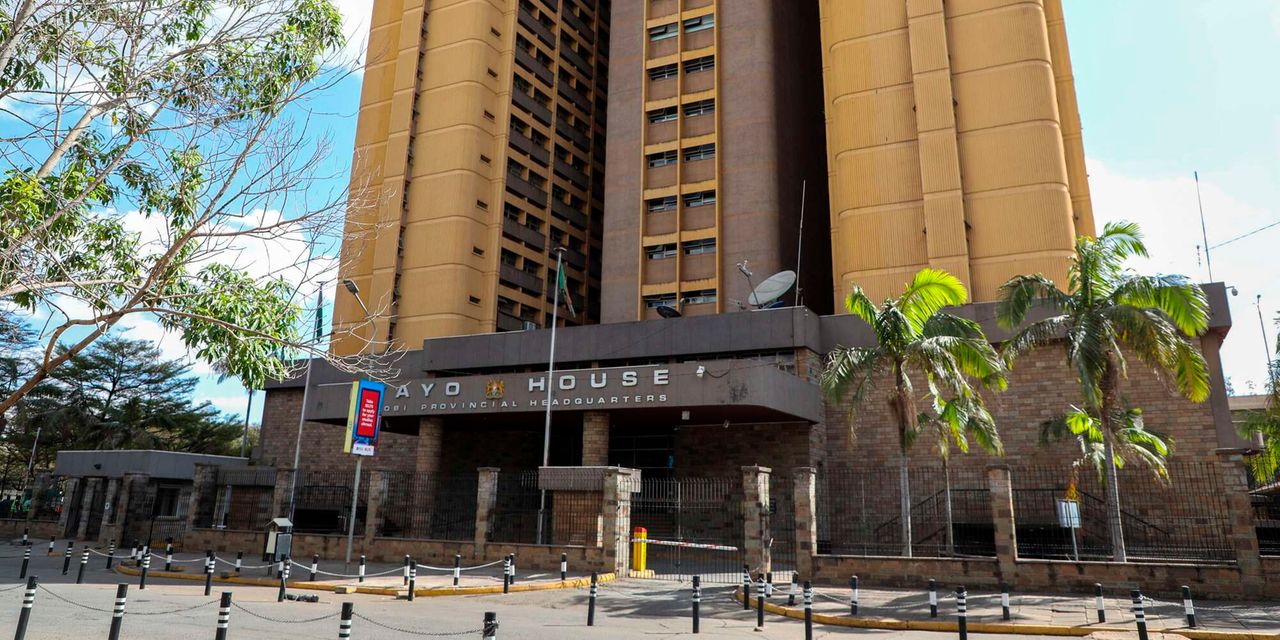
Nairobi, Kenya. It is barely 7 a.m. on a weekday morning and the 27-floor tower at the corner of Uhuru Highway and Kenyatta Avenue is already thick with the familiar desperation of ordinary Kenyans queuing for government services.
But beyond the immigration lines and the national registration counters, deeper inside the cavernous geometry of Nyayo House, a different kind of transaction has been quietly conducted for years, one that has nothing to do with passports and everything to do with power.
A female insider who operates from within the building has come forward with detailed allegations of an entrenched extortion syndicate, in which caretakers and security personnel allegedly demand colossal bribes from vendors seeking to secure kitchen spaces on the premises.
She told Kenya Insights that she personally paid Sh100,000 to obtain the cooking space from which she currently operates, money she says she had no choice but to raise.
“I had no option. They made it clear that without paying, I would never get the space. It is something that has been normalised here.”
The woman, who requested anonymity citing fear of reprisals from individuals she describes as well-connected and capable of ending her livelihood overnight, is not alone.
Multiple sources within the building corroborate the broad architecture of the scheme, describing a cartel that has effectively privatised access to commercial space inside a public government facility and runs its illicit revenues through a web of mobile money accounts designed to frustrate any paper trail.
FLOOR BY FLOOR: THE CARTEL’S TERRITORIAL MAP
What emerges from weeks of interviews and cross-corroborated accounts is not a disorganised shakedown but a territorially sophisticated operation, with named individuals allegedly controlling specific floors of the building.
The 16th floor is reportedly managed by a woman identified only as Milly, who is said to maintain a close operational relationship with an Administration Police Reserve Sergeant Major identified as Dalba.
That pairing, according to insiders, fuses financial leverage with physical coercion, creating a structure that is difficult for a prospective vendor to challenge or circumvent.
On the 15th floor, a figure known as Dorrys is alleged to control allocation. Makena is said to hold sway on the 14th floor, while Eliza is mentioned in connection with the 7th floor.
The pattern repeats across other floors, with sources suggesting the network also implicates immigration department caretakers Oonje and Mugambi, another caretaker identified as Wanjala, and a Deputy County Commissioner whose office sits within the building’s administrative hierarchy.
Kenya Insights was unable to independently verify all the names at the time of publication and has extended requests for comment to the relevant authorities.
Sources allege that the individuals entrenched at each floor do not merely collect entry fees. They are said to determine who stays, who is expelled, and at what cost a vendor may remain in operation, creating a perpetual revenue stream sustained through the threat of eviction.
“This is not an isolated case. There is a well-established network that controls who gets what space, and it operates with impunity. The same individuals have entrenched themselves and continue to exploit applicants.”
M-PESA LINES AND THE ARCHITECTURE OF CONCEALMENT
The alleged cartel has reportedly adapted with sophistication to Kenya’s mobile money infrastructure.
Rather than collecting bribes in cash, sources claim that specific Safaricom M-Pesa lines linked to named individuals within the network are used to receive payments, a technique that replicates patterns investigators have previously documented in other sectors of Kenya’s public service.
The KRA bribery scandal, prosecuted in the courts in late 2025, revealed how government officers disguised corrupt payments through M-Pesa as soft loans and merry-go-round contributions, successfully obscuring the transactions from cursory scrutiny.
Sources allege the Nyayo House network employs comparable methodology, routing money through accounts that appear connected to legitimate small businesses operating in and around the building.
“Some of these payments are not made in cash. There are specific M-Pesa lines linked to individuals within the network, making it easier to move money without raising suspicion.”
This digital dimension of the alleged scheme significantly elevates its complexity. Investigators probing such networks require forensic access to mobile money records, a process that ordinarily demands a court order and the cooperation of Safaricom, and which in past cases has moved at a pace that allows suspects to dissipate funds long before any accountability mechanism is triggered.
A BUSINESS EMPIRE ALLEGEDLY BUILT ON A GOVERNMENT BUILDING’S BACK
The most detailed individual profile to emerge from the investigation centres on Eliza, the figure allegedly in control of the 7th floor.
Sources accuse her of operating a constellation of commercial interests that draw their lifeblood from her alleged position within the network.
These businesses are said to include M-Pesa outlets, an establishment identified as Everest Media Small Village Bar and Restaurant, a registered entity named Everest Media Planning SLNS Ltd, and a general retail shop linked to a Kibra DC address.
Crucially, insiders allege that some of these businesses were previously shut down over corruption-related concerns and subsequently reopened under the protection of influential networks spanning immigration services, the national registration bureau, and local administration units.
If that allegation is accurate, it would suggest that the Nyayo House scheme is not merely a street-level racket but one that enjoys layers of institutional insulation.
Sources further allege that a senior government official benefits from the proceeds of the network, with cash routed to them through proxies.
Kenya Insights has not been able to verify the identity of this official and the allegation is treated, for now, as an unverified claim requiring further investigation.
CORRUPTION FINDS A HOME IN A BUILDING ALREADY SYNONYMOUS WITH IT
Nyayo House carries a singular weight in Kenya’s political imagination.
Built between 1979 and 1983 under the government of President Daniel arap Moi, the 27-floor tower was designed to house the headquarters of Nairobi Province, the immigration department, and several other national government functions.
Its basement cells, where political detainees were tortured during the 1980s and early 1990s, remain among the most documented sites of state violence in post-independence Africa, described by survivors including Raila Odinga, Koigi wa Mwere, and Gitobu Imanyara.
The building’s modern reputation has not shed entirely its association with corruption and coercion. Interior Cabinet Secretary Kithure Kindiki declared it a crime scene in 2023, referencing the passport cartel that had paralysed the immigration department and pushed the backlog of unprocessed applications to over 58,000.
Seventeen immigration officers were subsequently arrested and charged following intelligence-led operations. Yet the broader ecosystem of institutional exploitation within the building, sources insist, was never fully dismantled.
The kitchen allocation racket, if the allegations hold up under scrutiny, would represent an extension of that ecosystem into the building’s secondary commercial infrastructure, turning even the provision of food into a gatekeeping mechanism for graft.
It would also reinforce what Transparency International’s latest Corruption Perceptions Index confirmed in its 2025 ranking, placing Kenya at 130th out of 182 countries with a score of 30 out of 100, two points lower than the previous year, a deterioration that watchdogs attribute to weakening institutional accountability.
IMPUNITY AND THE SILENCE OF OFFICIAL KENYA
The Kenya Ethics and Anti-Corruption Commission has in recent years secured notable convictions, including a historic Sh9.8 billion graft fine in the NSSF case and the conviction of former Kiambu Governor Ferdinand Waititu in the Sh588 million procurement scandal.
Yet enforcement at the level of mid-tier institutional corruption, the kind that does not make front pages but drains thousands of ordinary Kenyans one transaction at a time, has remained inconsistent.
The vendor who paid Sh100,000 for her kitchen space did not report the demand to any authority.
She knew, she said, that reporting carried consequences and that the individuals she would be reporting to were often the same individuals she would need to protect herself from.
That calculation, repeated across thousands of transactions in dozens of government buildings across Nairobi, is what has allowed the kitchen cartel and networks like it to survive, refresh themselves after periodic crackdowns, and reopen for business under new arrangements.
Kenya Insights formally sought comment from the relevant county and national government offices, including the Office of the Nairobi County Commissioner and the State Department for Immigration. No response was received before publication. The named individuals were not reachable for comment at the time this report went to press. This investigation is ongoing.
Kenya Insights allows guest blogging, if you want to be published on Kenya’s most authoritative and accurate blog, have an expose, news TIPS, story angles, human interest stories, drop us an email on [email protected] or via Telegram





Yet Another Blow for Bia Tosha as Court Rejects Bid to Halt Diageo–Asahi Transaction

US to Slash Number of African Embassies Processing Visas from 50 to 20, Kenya Remains a Key Hub

Trump Picks Veteran Crisis Diplomat Henry Wooster as New U.S. Ambassador to Kenya

Former Catholic Priest Arrested Over Alleged Treasonous Social Media Posts

Hundreds Protest Against Planned US Ebola Quarantine Facility in Kenya

President Ruto Defends Laikipia Ebola Quarantine Centre, Tells Critics to ‘Relax’

“Raila Died Walking, He Didn’t Collapse,” Maurice Ogeta Breaks Silence On His Boss’ Final Moments

Bolt Denies Viral Exit Claims, Says Kenya Operations Remain Fully Active

Secret Trident Meetings, Claims of Millions Exchanged: Fresh Questions Raised Over PCF Boss Mohammed Sahal’s Role in Insurance Battle

The Kamukunji Cash Pit: Ghost School, Phantom Audit Trails and NG-CDF Manager Who Refuses to Leave

Why Ruto’s Favourite Candidate Adan Mohammed Could Be Locked Out of the KRA Top Job

Este Medical Kenya Fights American’s Explosive Complaints

Safaricom’s Sh1.4 Billion Reckoning: How Kenya’s Most Profitable Company Stole a Man’s Idea and Got Caught

LifeCare on the Brink: SHA Fraud, Stolen Wages, and the Rotten Empire Jayesh Saini Built

The Rot Inside Absa: How Bank Insiders Are Looting Nairobi’s Customers

The $24 Million Heist at the End of the World

Denial Under Duress: The Untold Collapse Threatening David Lagat’s DL Group’s Empire

THE INSURER THAT TOOK YOUR PREMIUM AND FORGOT YOUR NAME: How ICEA Lion Left a Client Begging for Sh7.8 Million Across Four Months

Court Confirms Safaricom Customers Data Was Sold To Betting Companies In Seven-Year Cover-Up

Eight Students Arrested In Kenya After Suspected Deadly School Arson Attack
-
 News1 week ago
Este Medical Kenya Fights American’s Explosive Complaints
-
 Investigations1 week ago
LifeCare on the Brink: SHA Fraud, Stolen Wages, and the Rotten Empire Jayesh Saini Built
-
 News4 days ago
Eight Students Arrested In Kenya After Suspected Deadly School Arson Attack
-
 Americas1 week ago
Inside FAFSA Fraud: How Kenyan Cybercriminals Siphoned Millions from America’s Sh12 Billion Student Loan System
-
 Investigations1 week ago
LSK On The Spot For Renewing Rogue Lawyer Dennis Onyango’s Licence Despite Mounting Evidence He Held Foreign Investors’ Millions Hostage
-

 Investigations2 days ago
Betika Faces DCI Probe, Directors Arrest and License Revocation Over Massive 29.5 Million Safaricom Customers’ Data Breach
-
 News3 days ago
How Uhuru’s Deal With Obama In 2015 Paved Way For America’s Ebola Plan In Kenya
-

 Investigations3 days ago
29.5 Million Safaricom Customers’ Data Breach Lands Odibets Boss Andrew Aligula In Police Custody, Firm Now Operating On A Thin Line Of Court Order