
Investigations
GOLD RUSH TO GOLD DUST: How a Nairobi Forex Trader Scammed a Lawyer of Sh32 Million in a Phantom Gold Scheme
A Luthuli Avenue businessman who ran a forex bureau and an electronics shop is now fighting six criminal charges after prosecutors say he pocketed Sh32.3 million meant to ship 495 kilograms of gold from Kenya to Dubai. The gold never existed. The money vanished within hours. And the trail leads all the way to Hong Kong.


It began, as so many Nairobi gold scams do, with a promise glittering enough to blind even the most cautious of investors. A Dubai shipment. Nearly half a tonne of gold. A lucrative payday waiting just around the corner.
For John Sodipo, a lawyer at the helm of Sodipo Law Group and the American businessman behind the deal, it all seemed airtight. The paperwork was in order. The escrow account was ready. The gold dealer appeared credible. What Sodipo did not know was that he was walking straight into one of the oldest tricks in Nairobi’s flourishing fake-gold underworld.
On Wednesday, February 19, 2026, Mohammed Noor Muhyadhin Mohammed stood before a Milimani magistrate and denied everything.
The charges against him read like a financial crime textbook: conspiracy to defraud, obtaining money by false pretences, money laundering, acquisition of proceeds of crime, possession of proceeds of crime, and use of proceeds of crime. Six counts. Sh32.3 million. A scheme prosecutors say was executed with surgical precision over just 33 days.
The Setup: A Lawyer, A Gold Deal, and an Elaborate Web of Trust
The story starts in September 2025 when Gershonov Oleg, a business associate of the American lawyer John Sodipo, first flew into Nairobi hunting for gold. Oleg was no stranger to high-value commodity deals.
But during that trip, investigators say, he made contact with Willis Onyango Wasonga, a man who goes by the street alias “Marcus” and who detectives now describe as the principal architect of the fraud.
Wasonga presented himself as a credible gold facilitator, spoke the language of legitimate international trade, and cultivated a relationship that would later cost the Americans dearly.
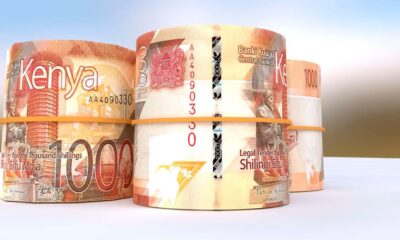
By early 2026, negotiations had escalated. Sodipo agreed to pay chartering fees for 495 kilograms of gold to be smelted and shipped to Dubai. The sum was enormous: $250,500, equivalent to Sh32.3 million at prevailing exchange rates. To add a veneer of legitimacy, the funds were deposited into what was presented as a secure escrow account held by advocate Michael Otieno Owano of MOAC Advocates.

Nairobi advocate Michael Otieno Owano of MOAC Advocates
The law firm’s involvement made the deal look bulletproof. Oleg even flew back to Kenya to personally oversee the shipment. He was waiting for gold that would never come.
The Heist: Money Moves at Lightning Speed
On February 3, 2026, the moment the money cleared from the MOAC Advocates accounts at the National Bank of Kenya, the clock started ticking. According to the Directorate of Criminal Investigations (DCI), $217,900, the equivalent of Sh28.1 million, was wired almost immediately into a National Bank of Kenya account held by Mohazcom Trading, a company registered to Mohammed Noor himself.
The remaining funds had been routed through SPK Logistics, another entity prosecutors say was used to dress up the scheme as a legitimate freight and settlement arrangement.
What happened next shocked even seasoned financial crime investigators. Within hours of the transfer landing in his account, Mohammed Noor allegedly wired the entire sum overseas, straight to accounts held by Tecno Mobile Limited at Citibank in Hong Kong.
The stated reason? A new shipment of mobile phones. The phones have never arrived in Kenya. Detectives now believe the rapid offshore transfer was a deliberate layering tactic designed to distance the money from its fraudulent origins and complicate any attempt at recovery.
The Forex Connection: A Decade of Cross-Border Transfers Under the Microscope
What makes this case particularly alarming to investigators is the role allegedly played by Mohammed Noor’s forex bureau connections. DCI detectives have established that Noor maintained a business relationship spanning over a decade with a forex bureau on Standard Street in Nairobi’s central business district.
The bureau, investigators say, routinely facilitated substantial cross-border transfers and is now believed to have been central to the laundering architecture. In court on Wednesday, Noor’s defence lawyer Mohammed Ali described his client as an established businessman with a forex bureau and multiple electronics outlets.
He urged the court to release him, which it did, on a Sh1 million bond or an alternative cash bail of Sh350,000.
Noor did not remain silent in the dock. He told the magistrate he had cooperated fully with police upon his arrest and pledged to continue assisting detectives to expose what he described as a wider cross-border gold racketeering network. It was an unusual move for someone protesting his innocence, and prosecutors took note.
The Director of Public Prosecutions, through counsel Irene Sema, told the court the case would be consolidated with that of Willis Onyango Wasonga, who was arraigned days earlier on February 16, 2026, at the same court. Both matters are scheduled for mention on March 2, 2026.
A City Awash in Phantom Gold
This case is far from an isolated incident. Nairobi has quietly emerged as the epicentre of Africa’s most sophisticated fake gold industry, and the scale of the problem is staggering.
In the past six months alone, at least 20 people, both Kenyans and foreign nationals, have been arraigned at the Milimani magistrates court over gold fraud cases with a combined declared value of at least Sh5 billion, according to court records.
In January 2026, a separate American investor, David White Odell, lost Sh37 million in a Kilimani safe house scam where bars he believed to be gold were later laboratory-tested and found to be brass.
Earlier, Italian businessman Dr Satninder Singh testified to losing more than 2 million euros, over Sh342 million, after being walked through staged smelting operations, fake customs officers, and a fictitious Congolese court order demanding millions more before release of a shipment that never existed.
The syndicates, investigators say, operate with military-like precision from upscale addresses in Karen, Kilimani, Westlands, Muthaiga and Runda. They equip themselves with Ministry of Mining logos forged onto fake export permits, electronic gold-testing guns, weighing machines, and gold-plated sample bars convincing enough to fool sophisticated buyers on first inspection.
They stage smelting operations. They plant actors posing as government officials. They manufacture urgency. And when the money finally moves, it moves fast, straight out of the country and beyond easy reach.
The DCI has intensified crackdowns, arresting 11 suspects in April 2025 over a Sh70 million fraud and four more in Runda in May 2025 over a Sh25.8 million deal targeting a foreign national. Three additional suspects in the Sodipo case remain at large. Investigators are now combing through financial records, corporate filings, and cross-border transaction histories to determine how deep the network runs.
The Cost Beyond the Money
Beyond the staggering sums lost by victims, Kenya’s gold scam pandemic is inflicting a quieter but equally damaging cost on the country’s reputation as a destination for legitimate international investment.
Nairobi is the largest economy in East Africa, a city that prides itself on being a regional business hub. Yet its formal gold mining sector contributes barely one percent of national GDP.
The contradiction is glaring: foreign investors arrive drawn by promises of mineral wealth in a country with legitimate gold deposits in Migori, Turkana and Kakamega, only to be swallowed by an informal market riddled with criminality and almost zero regulatory oversight.
For now, Mohammed Noor walks free on bond, his case adjourned and his alleged accomplices either in court or still being hunted. The gold he promised never existed.
The $250,500 is gone. And somewhere in the web of Nairobi forex bureaus, fake logistics firms, and offshore bank accounts in Hong Kong, the money trail grows colder by the day.
Kenya Insights allows guest blogging, if you want to be published on Kenya’s most authoritative and accurate blog, have an expose, news TIPS, story angles, human interest stories, drop us an email on [email protected] or via Telegram










Why Ruto’s Favourite Candidate Adan Mohammed Could Be Locked Out of the KRA Top Job

DCI Arrests Woman in Sh55.7 Million Gold Fraud Targeting American Citizen in Nairobi

Court Confirms Safaricom Customers Data Was Sold To Betting Companies In Seven-Year Cover-Up

Paybill 585555: How Airtel Kenya’s Interoperability Gateway Became A Criminal Pipeline Draining Millions From Unsuspecting M-Pesa Users

The Man Who Starved Kenya’s Voice

The Rot Inside Absa: How Bank Insiders Are Looting Nairobi’s Customers

The President’s Helicopter: How Ruto’s Aviation Empire Lands a Historic Airbus Milestone While His Government Writes the Tax Code

“TikTok Who? YouTube Sorry. A Kenyan-Built Platform Just Dropped—and 20 African Ministers Showed Up To Launch It.”

Denial Under Duress: The Untold Collapse Threatening David Lagat’s DL Group’s Empire

Stung By West Africa Rejections, France Courts Rest Of Continent at Kenya Summit

How Did a Sh468K KRA Salary Allegedly Turn Into Sh30 Billion? Questions Deepen Over Commissioner George Obel and Ciala Resort Owner’s Wealth

Nairobi Freezes Binance Accounts in Sweeping Anti-Fraud Crackdown as Global Scandal Record Haunts World’s Largest Crypto Exchange

THE UNTOUCHABLE CLERK: How Fatuma Mwalupa Allegedly Turned Kwale Assembly Into a Personal Treasury and Outsmarted Scrutiny

The Man Behind the Badge: How Prof. Erastus Kanga Turned Kenya’s Premier Wildlife Agency into a Theatre of Corruption, Fear and Impunity

THE BRAZEN RETURN: Triton Thief Yagnesh Devani, Who Pillaged Kenya of Sh7.6 Billion and Fled, Now Asks the Same Courts He Escaped to Restore His Stolen Wealth

Green Gold, Rotten Roots: How Kenya’s Biggest Avocado Firms Hijacked a Sh5.8 Billion Harvest Ban

Why the April 21 Flopped Protests Expose Kenya’s Rudderless Opposition

KETRACO CEO Advert Marred By Controversies As Fears Grow That Kipkemoi Kibias Is A Predetermined Candidate

THE PHANTOM COVER: Unlicensed Broker Vanishes With Sh42M, Hussein Mohammed Fingered In The Alleged CHAN 2024 Insurance Scandal

64-Year-Old KIM Faces Shutdown As Regulator Declares Its Certificates Worthless, Orders Employers To Shun Graduates
-
 News18 hours ago
Why Ruto’s Favourite Candidate Adan Mohammed Could Be Locked Out of the KRA Top Job
-

 Business1 week ago
Safaricom’s Sh1.4 Billion Reckoning: How Kenya’s Most Profitable Company Stole a Man’s Idea and Got Caught
-

 Africa2 weeks ago
The $24 Million Heist at the End of the World
-
 Investigations1 week ago
Denial Under Duress: The Untold Collapse Threatening David Lagat’s DL Group’s Empire
-
 Business1 week ago
THE INSURER THAT TOOK YOUR PREMIUM AND FORGOT YOUR NAME: How ICEA Lion Left a Client Begging for Sh7.8 Million Across Four Months
-
 Business5 days ago
The Rot Inside Absa: How Bank Insiders Are Looting Nairobi’s Customers
-

 Business2 weeks ago
Bush Air Safaris Founder John Ndiritu Risks Losing Property Over Disputed Loan Claim
-
 Business6 days ago
The President’s Helicopter: How Ruto’s Aviation Empire Lands a Historic Airbus Milestone While His Government Writes the Tax Code