
Investigations
CNN Investigation Reveals How Russian Agents Have Been Duping African Men Into Fighting Ukraine Promising Big While Entrapping Them To Death
Desperate job seekers from Kenya, Nigeria, Ghana and Uganda lured with false promises of security jobs and lucrative salaries only to find themselves forced into bloody frontline combat

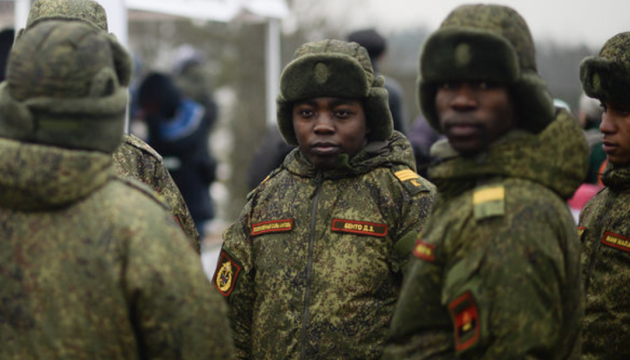
Anne Ndarua’s hands tremble as she speaks about her only son. Six months have passed since Francis Ndung’u Ndarua left for Russia on what she believed was a legitimate electrical engineering job. The 35-year-old father has not been heard from since October, and his mother is no longer certain whether he is alive or dead.
The last time Anne saw evidence of her son was through a chilling video that went viral on social media in December. In full Russian military uniform, with a land mine strapped to his chest, Francis appeared terrified as a Russian soldier hurled racist slurs at him, declaring he would be used as a “can-opener” to breach Ukrainian army positions. The brutality of the footage was so traumatizing that Anne could not bring herself to watch it after her daughter described the horrifying scenes.
Francis is just one face in a growing nightmare that has ensnared hundreds, possibly thousands, of desperate African men who believed they were answering the call to better-paying jobs abroad. Instead, they have found themselves thrust into the brutal meat grinder of Russia’s war against Ukraine, treated as expendable cannon fodder in a conflict that has nothing to do with them.
A damning CNN investigation has now pulled back the curtain on the sophisticated recruitment machinery that Russian agents have deployed across the African continent. Through hundreds of chats on messaging apps, military contracts, visa documents, flight bookings and firsthand accounts from African fighters trapped in Ukraine, the investigation reveals a systematic campaign of deception that transforms jobless young men into reluctant mercenaries.
The promises are intoxicating for men struggling to survive in economies where youth unemployment can reach 67 percent. Agents dangle signing bonuses of $13,000, monthly salaries as high as $3,500, jobs as drivers or security guards, and the ultimate prize of Russian citizenship. For men like Francis, who was unemployed and living with his mother in a small community outside Nairobi, the $620 he paid to a recruitment agent seemed like a small investment for life-changing opportunities.
But the reality waiting in Russia bears no resemblance to the glossy promises made on social media by men in Russian military uniforms who claim the work is “very, very easy and very good, no stress.” When these recruits land in Moscow or St. Petersburg, their passports are confiscated, they are forced to sign military contracts written entirely in Russian without translation or legal assistance, and within three weeks they find themselves in basic military training before being deployed to the Ukrainian front.
Patrick Kwoba, a 39-year-old carpenter who had also worked construction in Qatar and Somalia, thought he was going to be a security guard in the Russian army, not a combatant on the front lines. The four months he spent in Ukraine were, in his own words, “hell.” After just three weeks of basic military training and firearms handling, he was shipped to a war zone where death stalked every moment.
During an ambush by a Ukrainian drone and subsequent grenade attack, Kwoba was wounded. When he called for first aid using the military code “3-star,” his Russian partner turned hostile, chased him away and began shooting at him. The message was clear: African fighters were disposable, mere bodies to absorb bullets and explosions while protecting more valued Russian troops.
“So long as you’ve stepped in the Russian military, you escape or you die,” Kwoba told CNN after managing to desert and make his way back to Kenya. “There’s no way that you’re going to Russia and you’ll come back alive. Because if you finish your contract, these people force you to stay there. They can’t release you.”
Kwoba’s testimony aligns with accounts from a dozen other African fighters currently trapped in Ukraine who spoke with CNN. Most came from Ghana, Nigeria, Kenya and Uganda, lured by civilian job offers that evaporated the moment they set foot on Russian soil. None of them spoke Russian, despite Russian law requiring foreign soldiers to know the language. Their salaries and bonuses differed from those offered to Russian soldiers and even varied between the recruits themselves.
The exploitation extends beyond forced conscription. Some recruits accused unscrupulous Russian colleagues of outright theft from their bank accounts. One African fighter, speaking on condition of anonymity, recounted how a Russian soldier forced him at gunpoint to hand over his bank card and PIN while on the front lines. When he checked his account, nearly $15,000 from his bonus had been withdrawn, leaving it nearly empty. Seven months into his deployment, he had not been paid a single cent. Four others who came to Russia with him had already died.
The military contracts these men are forced to sign contain clauses far more binding than recruitment agents typically advertise. Beyond promises of pay and benefits, the contracts lock servicemen into broad, open-ended obligations including participation in combat operations and deployments abroad, strict loyalty requirements, and an obligation to reimburse the state for military training if required. Access to state secrets can trigger bans on foreign travel, mandatory surrender of passports, limits on privacy, and lifelong restrictions on disclosing sensitive information.
While agents advertise quick pathways to post-military civilian employment, the fine print reveals that meaningful help with jobs through free professional retraining only becomes available after at least five full years of service, and only if dismissal occurs for specific reasons such as age, health or contract expiration.
The stories emerging from the battlefield paint a portrait of systematic racism, psychological abuse and shocking casualty rates. African fighters describe seeing the bodies of fellow Africans rotting on the battlefield for months, countrymen losing limbs without compensation, and constant degradation from Russian soldiers who refer to them as “disposable” and mock their suffering. In one widely circulated video, a Russian officer films African recruits singing and dancing in a snowy forest clearing, laughing as he comments, “Oh, look how many disposables there are.”
Charles Njoki, a 32-year-old Kenyan photographer hoping to support his pregnant wife, applied directly to a Russian army recruitment portal for a drone operator role and received a response within two hours. He sold his car to pay for his flight and accommodation, dreaming of surprising his parents with a big windfall and Russian citizenship. Instead, his wife miscarried while he was in training, and he only learned about it days later after his phone had been confiscated.
When deployed to the front, Njoki never got to fly the drones he had been trained to operate. A Ukrainian drone attack left him with a limp left hand and a spinal issue requiring surgery. A Russian doctor told him they were only interested in the two fingers he used to shoot. Njoki claims African fighters were deliberately exposed in dangerous situations as bait for Ukrainian drones. “They tell people that you’re going to guard the place, that you won’t go to the front as an assault, but you find yourself at the front, fighting,” he said after escaping back to Kenya.
The scale of the problem has forced several African governments to acknowledge the crisis. Botswana, Uganda, South Africa and Kenya have all confirmed that their citizens have been duped into becoming mercenaries for Russia. South African President Cyril Ramaphosa ordered an investigation after 17 men were found trapped in the Donbas region, saying they had been lured “under the pretext of lucrative employment contracts.”
In a particularly explosive development, Duduzile Zuma-Sambudla, daughter of former South African President Jacob Zuma, resigned from parliament in November 2025 after allegations that she was involved in recruiting 17 South African men to join Russian forces in Ukraine. Her own half-sister filed a police report accusing her of recruiting fighters for Russia, claiming eight family members were among those recruited.
Ukrainian Foreign Minister Andrii Sybiha revealed in November that more than 1,400 people from 36 African nations are known to be fighting for Russia in Ukraine. He described their recruitment as tantamount to “a death sentence,” noting that most foreign fighters are immediately sent to so-called “meat assaults” where they are quickly killed. Of more than 18,000 foreigners Ukraine has identified in Russian ranks, at least 3,388 have been confirmed killed.
The recruitment methods have grown increasingly sophisticated and predatory. Young South African men were contacted through Discord while playing the military simulation game Arma 3, then lured to Russia via the United Arab Emirates. Russian recruiters operate openly on Telegram, with channels like “Friend of Russia” posting hundreds of invitations for men from Côte d’Ivoire, Egypt, Morocco and Nigeria to join the military after sending images of their passports.
The infamous Alabuga Start program presents itself as a work-study and career acceleration opportunity but is actually a pipeline to supply labor for military drone production at the Alabuga Special Economic Zone in Tatarstan. The program targets young women aged 18 to 22 from at least 27 African countries with promises of well-paid jobs in logistics and catering, only to trap them in factories assembling kamikaze drones for use against Ukraine.
For African students already in Russia, the recruitment takes on an even more sinister dimension. Authorities threaten not to extend student visas or offer a choice between deportation and military service. Some African prisoners in Russia are given the same ultimatum. Gambian national Lamin Jatta was arrested and told point-blank to sign a contract with the Russian Ministry of Defense or face deportation. He was later killed in Ukraine.
The financial lure is overwhelming in countries where economic desperation runs deep. Russia’s monthly salary of around $2,200 and signing bonuses can be more than ten times what local military forces pay. This pay gap has driven soldiers in countries like Cameroon to desert their own national armies, creating security risks for states already fighting multiple conflicts against ISIS, Boko Haram and separatist groups.
Even though recruits who escape describe a nightmarish reality, Russian state media actively promotes a very different narrative. State television spotlights individual stories of African-born fighters receiving Russian citizenship, public congratulations from lawmakers, and televised send-offs framed as orderly and honorable. Social media videos show men in Russian military uniforms speaking in Igbo, Swahili and Twi, claiming their salaries could “feed your father, mother and whole family for, like, two or three years.”
Ukraine has urged African nations to halt the flow of men to Russia’s ranks. “If they’re on the front lines, they’re our enemies and Ukraine defends itself,” Ukraine’s ambassador to Kenya, Yurii Tokar, told CNN. “This pipeline should be stopped.”
Kenya’s Foreign Affairs Cabinet Secretary reported in December that at least 82 Kenyans were caught up in Russian military operations, with many injured, some dead, and others stranded far from home. Only five have been successfully repatriated so far. The Kenyan embassy in Moscow has been issuing temporary travel documents to help escapees avoid detection, since many entered Russia on single-entry tourist visas that have long since expired.
Anne Ndarua, Francis’s mother, refuses to give up hope even as months pass without word from her son. She agreed to be interviewed as a last-ditch effort to pressure the Kenyan and Russian governments into action. “I’m appealing to the Kenyan and Russian governments to work together to bring those children home,” she said, her voice breaking. “They lied to them about real jobs and now they’re in war with their lives in danger.”
The families of hundreds of other young African men across the continent echo her desperate plea. They check their phones obsessively for messages that never come, watch disturbing videos circulating on social media hoping not to recognize a loved one, and lie awake at night wondering whether their sons, husbands and brothers are still alive somewhere in the frozen trenches and deadly forests of eastern Ukraine.
For these young men who left home dreaming of better lives, the choice facing them in Russia’s war machine is brutally simple, as Patrick Kwoba learned: “You escape, or you die.”
Russia’s Defense and Foreign Ministries have not responded to requests for comment on allegations that recruits were misled or coerced.
Kenya Insights allows guest blogging, if you want to be published on Kenya’s most authoritative and accurate blog, have an expose, news TIPS, story angles, human interest stories, drop us an email on [email protected] or via Telegram


The President’s Helicopter: How Ruto’s Aviation Empire Lands a Historic Airbus Milestone While His Government Writes the Tax Code

“TikTok Who? YouTube Sorry. A Kenyan-Built Platform Just Dropped—and 20 African Ministers Showed Up To Launch It.”

Denial Under Duress: The Untold Collapse Threatening David Lagat’s DL Group’s Empire

Stung By West Africa Rejections, France Courts Rest Of Continent at Kenya Summit

THE INSURER THAT TOOK YOUR PREMIUM AND FORGOT YOUR NAME: How ICEA Lion Left a Client Begging for Sh7.8 Million Across Four Months

Safaricom’s Sh1.4 Billion Reckoning: How Kenya’s Most Profitable Company Stole a Man’s Idea and Got Caught

Bush Air Safaris Founder John Ndiritu Risks Losing Property Over Disputed Loan Claim

Bia Tosha’s Claim For Injunction Is Designed To Sabotage The Sh300bn Sale of EABL Shares

KDC Accelerates the Creative Economy, Innovation and Youth-Led Enterprise Growth at Africa Forward Summit

Luxury Play for Influence: Inside Kempinski’s High-Stakes Bet on Brazzaville

How Did a Sh468K KRA Salary Allegedly Turn Into Sh30 Billion? Questions Deepen Over Commissioner George Obel and Ciala Resort Owner’s Wealth

Nairobi Freezes Binance Accounts in Sweeping Anti-Fraud Crackdown as Global Scandal Record Haunts World’s Largest Crypto Exchange

The Man Behind the Badge: How Prof. Erastus Kanga Turned Kenya’s Premier Wildlife Agency into a Theatre of Corruption, Fear and Impunity

THE UNTOUCHABLE CLERK: How Fatuma Mwalupa Allegedly Turned Kwale Assembly Into a Personal Treasury and Outsmarted Scrutiny

THE BRAZEN RETURN: Triton Thief Yagnesh Devani, Who Pillaged Kenya of Sh7.6 Billion and Fled, Now Asks the Same Courts He Escaped to Restore His Stolen Wealth

Green Gold, Rotten Roots: How Kenya’s Biggest Avocado Firms Hijacked a Sh5.8 Billion Harvest Ban

TotalEnergies Moves to Sue TikToker for Sh10 Million Over Contaminated Fuel Claim as Kenya’s Petroleum Sector Burns

Kenyan Motorists Stare At Possible Engine Damage And Heavy Losses As Report Confirms Substandard Fuel In Circulation

Why the April 21 Flopped Protests Expose Kenya’s Rudderless Opposition

KETRACO CEO Advert Marred By Controversies As Fears Grow That Kipkemoi Kibias Is A Predetermined Candidate
-
 Investigations2 weeks ago
How Did a Sh468K KRA Salary Allegedly Turn Into Sh30 Billion? Questions Deepen Over Commissioner George Obel and Ciala Resort Owner’s Wealth
-
 Business2 weeks ago
Green Gold, Rotten Roots: How Kenya’s Biggest Avocado Firms Hijacked a Sh5.8 Billion Harvest Ban
-

 Africa1 week ago
The $24 Million Heist at the End of the World
-

 Investigations2 weeks ago
Serial Scammers Strike Again: How Kelvin ‘Sonko’ Onyango and Seth Steve Okute Built a Gold Fraud Empire on Kenya’s Reputation
-
 Investigations2 weeks ago
The Greek Heist: How Inform Lykos Allegedly Robbed Kenyan Taxpayers of Sh650 Million While Printing the Nation’s Exams and Ballots
-

 Investigations1 week ago
The Judge, The Disgraced Magistrate, The Auctioneer-Husband, The Fixer And The Lawyer: Anatomy Of A Sh16 Million Judicial Bribery Racket
-
 Business5 days ago
Safaricom’s Sh1.4 Billion Reckoning: How Kenya’s Most Profitable Company Stole a Man’s Idea and Got Caught
-

 Business2 weeks ago
Fly 748 Returns to Kenya’s Skies With Fresh Push for Affordable Coastal Travel