
News
AUDIT EXPOSES INEQUALITY IN STAREHE SCHOOLS: PARENTS BLED DRY AS FEES HIT Sh300,000 AGAINST Sh67,244 CAP
The same Auditor General’s report flagged a wider pattern of fee violations and governance failures across multiple top schools in Kenya, including Loreto Kiambu Girls High, Shimo la Tewa, Thika High School, and several others.

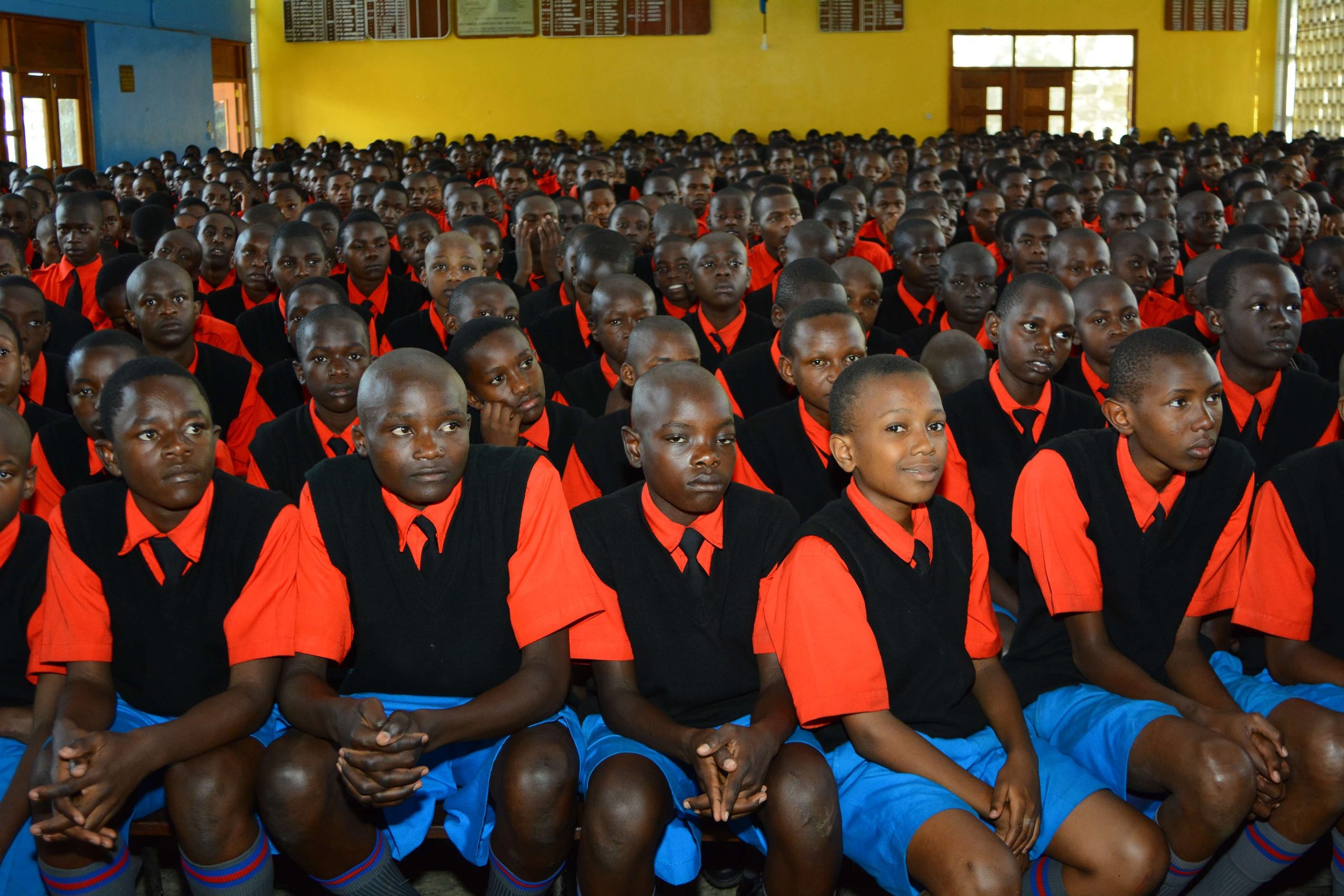
A damning audit by the Office of the Auditor General has torn open a festering scandal inside two of Kenya’s most revered schools, revealing that Starehe Boys Centre and Starehe Girls Centre charged parents fees as high as Sh300,000 in a single academic year, nearly five times the government-mandated cap of Sh67,244.
The report, prepared by Auditor General Nancy Gathungu, paints a deeply troubling picture of a governance crisis at institutions founded on the noble mission of educating Kenya’s most disadvantaged children. Far from honouring that legacy, the schools appear to have quietly turned what was once a refuge for orphans and the destitute into a fee-gouging operation that locked out the very families they were built to serve.
The numbers tell a brutal story
Starehe Boys Centre led the charge in overcharging. The audit established that in the 2024 academic year, the school quoted fees ranging from Sh140,000 to Sh300,000 to parents. The Ministry of Education had capped fees for Category A boarding schools at Sh67,244. Even at the lowest end of the range at Starehe Boys, parents were paying more than double what the law allowed.
Starehe Girls Centre was no better. The school charged a flat Sh150,000, which was nearly three times the Sh53,554 that had been recommended by the Ministry of Education for its category. The Auditor General’s office calculated that each girl at the school was overcharged by up to Sh96,446 in a single year. In total, Starehe Boys Centre alone raked in over Sh92 million from parents during that period.
The school’s management attempted to frame the fee disparity as a voluntary arrangement. However, the Auditor General rejected this defence outright, finding that the school had entered into individual fee agreements with parents at wildly different rates without ever obtaining the legally required written approval from the Cabinet Secretary for Education, as mandated by Section 3.2 of Ministry of Education Circular Number MOE-HQS/311313.
A school without a principal for five years
What makes the findings even more alarming is the state of governance uncovered alongside the fee irregularities. At the time of the audit, Starehe Boys Centre had been without a substantive principal for close to five years. The school was also short 28 teachers, yet the report noted there was no indication that the Board of Management had made any effort whatsoever to fill those positions.
This is not a minor administrative oversight. A school that cannot retain or appoint a head and is severely understaffed is a school that is failing its students at every level, regardless of how much their parents are paying.
At Starehe Girls Centre, the situation was equally concerning. The school was operating without parental representation on its governing board, and the board itself had no one to hold it accountable. Parents, the very people bearing the financial burden, were systematically sidelined from the decision-making processes that governed the schools their children attended.
The founding promise, betrayed
Starehe Boys Centre was established in 1959 by Dr Geoffrey William Griffin as a rescue centre for orphans displaced during the Mau Mau uprising. The school’s founding charter was built on a simple promise: to educate boys in need. For decades, the institution operated on a means-tested model, with at least 70 percent of its students reportedly receiving education at no cost and the remainder at a reduced rate. The school’s very name, drawn from the Swahili word for peace and comfort, signified a safe harbour for children with nowhere else to turn.
Starehe Girls Centre, founded in 2005 in the same spirit, was established to provide quality education to bright but financially disadvantaged girls from across Kenya. Both schools continue to receive government funding through capitation grants and have teaching staff paid for by the State through the Teachers Service Commission.
The audit findings therefore carry a significance beyond simple financial irregularity. They raise a fundamental question about whether these institutions have drifted so far from their charitable origins that they no longer deserve the trust and resources the State continues to pour into them.
A pattern of defiance
The Starehe schools’ disregard for Ministry of Education directives is not a new phenomenon. Years before this audit, both institutions were already at odds with the government over governance, admissions, and autonomy. The schools have repeatedly pushed back against the establishment of statutory boards of management, resisted principals posted by the Teachers Service Commission, and insisted on running their admissions independently of national systems.
This pattern of defiance was back in sharp focus just weeks ago, when the Ministry of Education placed 632 Grade 10 learners at Starehe Boys and Starehe Girls through the national senior school placement portal. The two institutions rejected the majority of those students, with 317 turned away from Starehe Boys and 315 from Starehe Girls. The schools applied their own internal criteria, leaving hundreds of parents who had believed their children secured a spot scrambling to find alternative placements at the last minute.
Education Cabinet Secretary Julius Ogamba confirmed that the Ministry had allowed the rejections to stand, a decision that drew sharp criticism from parents who felt the government had caved to institutional pressure.
The Starehe scandal does not stand alone.
The same Auditor General’s report flagged a wider pattern of fee violations and governance failures across multiple top schools in Kenya, including Loreto Kiambu Girls High, Shimo la Tewa, Thika High School, and several others.
In some cases, parents were asked to contribute as much as Sh1.2 million for school-initiated projects.
The audit also exposed data manipulation. At Thika High School, for instance, the number of students recorded on the government’s National Education Management Information System differed from County Director of Education records by 316 students, a discrepancy that resulted in underfunding of nearly Sh2.6 million.
These revelations come at a particularly sensitive time. Kenya is in the middle of one of the most consequential education transitions in its history, with over 1.1 million learners moving into the new senior school system under the Competency Based Education framework. The government has capped boarding fees at Sh53,554 nationwide and promised strict enforcement. If the institutions flagged by the Auditor General are allowed to continue flouting those directives without consequence, the promise of equal access to quality education may remain exactly what critics have long feared it to be: just a promise.
The questions that must be answered
The Ministry of Education has warned principals against imposing unauthorized fees and has vowed administrative action against non-compliant schools. But words from Jogoo House have not historically translated into action when it comes to institutions like Starehe, which have operated with remarkable independence despite their dependence on public funding.
The Auditor General’s report must not gather dust in parliamentary archives. Accountability demands that the Ministry of Education act swiftly, not only to recover the funds overcharged to Starehe parents but to enforce a clear and visible line: institutions that receive State resources must play by the State’s rules. No school, however storied its history or impressive its alumni list, should be above the law.
The children of Kenya deserve better.
Kenya Insights allows guest blogging, if you want to be published on Kenya’s most authoritative and accurate blog, have an expose, news TIPS, story angles, human interest stories, drop us an email on [email protected] or via Telegram











Karua Detained at Entebbe as Uganda Blocks Besigye Lawyer From Entering Country

How KCB and Airtel Turned Kenya’s Unbanked Into a Data Goldmine Behind a ‘Financial Inclusion’ Deal

The Chivayo Network: How a Convicted Fraudster Won Access to Presidents, Passports and Billion-Dollar Deals Across Africa

BURRIED TWICE: The Victoria Bank CEO Yogesh Pattni Files

Court Stops Transfer Of EABL Shares To Asahi By Diageo In A Fresh Snag

Death Before Justice: Stephen Ngei, Victim of Sh180 Million Laptop Tender Scam Linked to Allan Chesang, Killed in Highway Crash

Court Brands Sh1.1 Billion Fee Demand by Lawyer Victor Swanya “Excessive and Exorbitant,” Exposes How City Hall Lets Public Money Bleed Through Legal Bills

Trump Unveils New Air Force One

MR. NO SHOW: Finance Bill 2026 Exposes Ndindi Nyoro’s Political Conmanship

Billionaire Eric Muli Rebukes Musalia Mudavadi Over Nairobi Capital Relocation Debate

Businessman Philip Waithaka Kinuthia’s Minor Son Allegedly Drove Drunk, Killed Two Peponi Students in Ngong Road Horror Crash as Claims of Cover-Up Intensify

Inside NCBA’s Decline: How a Banking Giant Lost Its Strategic Edge

Cement, Cash and Courts: How the Hashu Dynasty Crushed the Ramji Brothers for Fourteen Years and Why the Walls Are Now Closing In

Standard Chartered Ghosts Haunt Joshua Oigara At Stanbic As Whistleblower Spills Beans

South Sudan: Adut Salva Kiir’s Shadow Treasury Exposed

Inside The Urban Planning Cartel That Owns Nairobi

THE VULTURE AND THE SCHEME How Nairobi West Hospital Became the Most Dangerous Institution in Kenya’s SHA Ecosystem and Why the Books Must Be Audited Now

How Adil Popat Saved His Empire On The Eve Of Imperial Bank Collapse and Why Kenya’s Mainstream Media Buried The Story

The President’s Daughter and The Missing Witness: How Adut Salva Kiir’s Shadow Treasury Silenced Its Most Dangerous Critic

Why John Ngumi Is Running From the EACC and Why the Sh415 Million Payday May Be the Least of His Worries
-
 News1 week ago
Businessman Philip Waithaka Kinuthia’s Minor Son Allegedly Drove Drunk, Killed Two Peponi Students in Ngong Road Horror Crash as Claims of Cover-Up Intensify
-
 Business2 weeks ago
Inside NCBA’s Decline: How a Banking Giant Lost Its Strategic Edge
-
 Business2 weeks ago
Standard Chartered Ghosts Haunt Joshua Oigara At Stanbic As Whistleblower Spills Beans
-
 Africa2 weeks ago
South Sudan: Adut Salva Kiir’s Shadow Treasury Exposed
-
 Investigations4 days ago
THE VULTURE AND THE SCHEME How Nairobi West Hospital Became the Most Dangerous Institution in Kenya’s SHA Ecosystem and Why the Books Must Be Audited Now
-
 Business2 weeks ago
How Adil Popat Saved His Empire On The Eve Of Imperial Bank Collapse and Why Kenya’s Mainstream Media Buried The Story
-
 Africa2 weeks ago
The President’s Daughter and The Missing Witness: How Adut Salva Kiir’s Shadow Treasury Silenced Its Most Dangerous Critic
-
 Business2 weeks ago
Why John Ngumi Is Running From the EACC and Why the Sh415 Million Payday May Be the Least of His Worries