
Entertainment
Revealed: How MCSK Shortchanged Artists In Royalty Payouts

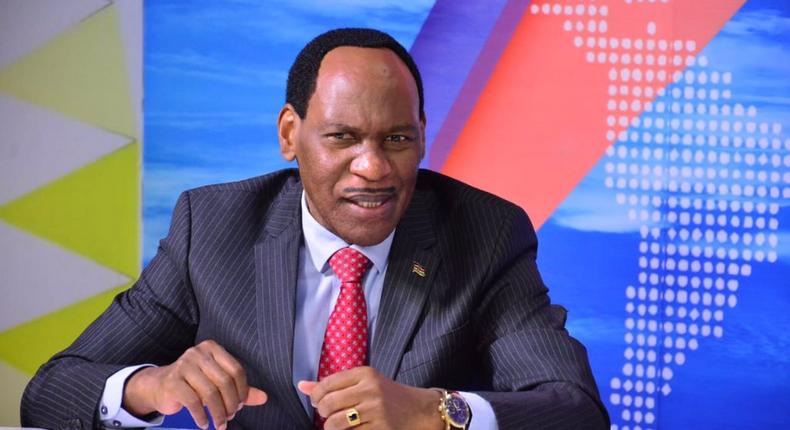
Three Collective Management Organisations (CMOs) in the music industry failed to pay artists more than Sh100 million in royalties last year, paying them up to a sixth of their desired royalties during the year.
Among top artists who received a raw deal in the royalties received from the Music Copyright Society of Kenya (MCSK), Kenya Association of Music Producers (KAMP) and Performers Rights Society of Kenya (PRISK), include Otile Brown, Marakwet Daughter (Millicent Jepkorir), Simon Macharia (Musaimo), gospel artist Solomon Mkubwa and the late Kikuyu artist John De Matthew.
This has been revealed by the Kenya Copyright Board (KECOBO) in a statement on the performance of licensed CMOs in payment of royalties through the e-Citizen in 2023.
KECOBO said after meeting heads of MCSK, KAMP and PRISK, it learnt that despite the three CMOs collecting Sh249.7 million in revenues in 2023, they only paid royalties totaling Sh26 million.
“From the Information presented by the three CMOs themselves, KECOBO established that the sum of Sh249,687,212 was collected jointly from January to December 2023,” KECOBO stated.
KECOBO, however, identified that there were disparities in reporting of reported joint collections among the three CMOs, with KAMP and PRISK declaring a collection of Sh249 million, and MCSK declaring Sh139 million.
“The KECOBO Board of Directors noted that royalties were paid only from quarter one of 2023 collections. All the Societies did not set aside royalties from collections in quarters two, three and four despite the improved business environment,” the Board stated.
The law requires that CMOs should distribute 70 per cent of collections from artists’ works, which would have translated to Sh173 million last year.
“This is clearly not the case here.”
“A simple analysis of the amounts that would accrue to MCSK members were this revenue paid as the Copyright Regulations reveal that each artist could earn at least six times the amount paid during the year in royalties,” KECOBO added.
For instance, Otile Brown was paid Sh120,000 but KECOBO says the artist should have been paid Sh720,000.
Marakwet daughter, the famous artist behind Kalenjin hit ‘Mali Safi Chito’, was paid Sh108,123 but the ideal royalties should have totaled Sh640,920, KECOBO observed.
Gospel artist Reuben Kigame was not paid royalties totaling Sh612,050, and was only paid Sh122,410, while Solomon Mkubwa was paid a mere Sh74,138 out of the ideal Sh444,000.
The KECOBO statement showed that artist Rehema Lugose would have made the highest amount of Sh4.54 million during the year, but was only paid royalties totaling Sh797,092.
“From our analysis, we note that artists from some regions like the Coast, Nyanza and Central were underrepresented or left out completely. We shall demand explanations in this regard,” KECOBO stated.
MCSK
Music Copyright Society of Kenya CEO Ezekiel Mutua has fired back at the Kenya Copyright Board over claims that there were disparities in the monies collected as royalties for 2023 by the three Collective Management Organisations.
In a statement on Wednesday shortly after KECOBO chair Joshua Kutuny invited EACC and the DCI to probe the figures, Mutua said the criteria of distribution that would allocate artistes 70 per cent of monies collected is non-existent.
He said the distribution which started on January 25, is still ongoing and will run until March 29, 2024.
“While KAMP and PRISK declared a collection of Sh249 million and they accounted for Sh61 million and Sh52.7 million, respectively, MCSK on its part declared receipts of Sh109 million representing a shortfall of Sh26 million,” Kutuny said.
He added that MCSK presented a list of members who received royalties in 2023 but on review, the Board of Directors found the information presented was scanty and at variance with details on joint collection.
But Mutua termed the move as “sideshows” saying MCSK will issue a comprehensive report on the distribution upon conclusion of the distribution exercise on March 29, 2024.
In response to Kutuny’s claims that the collection of royalties for mechanicals was poor, Mutua said the biggest revenue stream for Kenyan artists is Skiza tunes.
“KECOBO we should clean that one too,” he said.
“When MCSK administered Skiza Tunes (Ring back tunes) it once paid an individual artist over Sh20 million. Why is KECOBO focusing on the imaginary misappropriation of Sh56 million when proper payment of Skiza Tunes would change the whole scenario and make artists rich? Why the sideshows?” he asked.
Kenya Insights allows guest blogging, if you want to be published on Kenya’s most authoritative and accurate blog, have an expose, news TIPS, story angles, human interest stories, drop us an email on [email protected] or via Telegram


Njuca Consolidated, Three Firms Faces Auction of 65 Properties Over Crippled Cash Flow

Why Absa Bank Is On The Spot For Enabling Sh150 Million Alleged Insider Fraud In Vetlab Club

Somalia’s Disputed President Allegedly Siphons Up to $6 Million Monthly from Kenyan Miraa Trade, Sharing the Spoils with Nairobi’s Shadow Cartels

Ahmed Adan Hefow: Governor Otuoma’s Trusted Right-Hand Man at the Centre of Busia’s Deepening Finance Scandal

Karua Detained at Entebbe as Uganda Blocks Besigye Lawyer From Entering Country

How KCB and Airtel Turned Kenya’s Unbanked Into a Data Goldmine Behind a ‘Financial Inclusion’ Deal

The Chivayo Network: How a Convicted Fraudster Won Access to Presidents, Passports and Billion-Dollar Deals Across Africa

BURRIED TWICE: The Victoria Bank CEO Yogesh Pattni Files

Court Stops Transfer Of EABL Shares To Asahi By Diageo In A Fresh Snag

Death Before Justice: Stephen Ngei, Victim of Sh180 Million Laptop Tender Scam Linked to Allan Chesang, Killed in Highway Crash

Businessman Philip Waithaka Kinuthia’s Minor Son Allegedly Drove Drunk, Killed Two Peponi Students in Ngong Road Horror Crash as Claims of Cover-Up Intensify

Inside NCBA’s Decline: How a Banking Giant Lost Its Strategic Edge

Cement, Cash and Courts: How the Hashu Dynasty Crushed the Ramji Brothers for Fourteen Years and Why the Walls Are Now Closing In

South Sudan: Adut Salva Kiir’s Shadow Treasury Exposed

Standard Chartered Ghosts Haunt Joshua Oigara At Stanbic As Whistleblower Spills Beans

Inside The Urban Planning Cartel That Owns Nairobi

THE VULTURE AND THE SCHEME How Nairobi West Hospital Became the Most Dangerous Institution in Kenya’s SHA Ecosystem and Why the Books Must Be Audited Now

The President’s Daughter and The Missing Witness: How Adut Salva Kiir’s Shadow Treasury Silenced Its Most Dangerous Critic

How Adil Popat Saved His Empire On The Eve Of Imperial Bank Collapse and Why Kenya’s Mainstream Media Buried The Story

Why John Ngumi Is Running From the EACC and Why the Sh415 Million Payday May Be the Least of His Worries
-
 News1 week ago
Businessman Philip Waithaka Kinuthia’s Minor Son Allegedly Drove Drunk, Killed Two Peponi Students in Ngong Road Horror Crash as Claims of Cover-Up Intensify
-
 Business2 weeks ago
Inside NCBA’s Decline: How a Banking Giant Lost Its Strategic Edge
-
 Africa2 weeks ago
South Sudan: Adut Salva Kiir’s Shadow Treasury Exposed
-
 Business2 weeks ago
Standard Chartered Ghosts Haunt Joshua Oigara At Stanbic As Whistleblower Spills Beans
-
 Investigations4 days ago
THE VULTURE AND THE SCHEME How Nairobi West Hospital Became the Most Dangerous Institution in Kenya’s SHA Ecosystem and Why the Books Must Be Audited Now
-
 Africa2 weeks ago
The President’s Daughter and The Missing Witness: How Adut Salva Kiir’s Shadow Treasury Silenced Its Most Dangerous Critic
-
 Business2 weeks ago
How Adil Popat Saved His Empire On The Eve Of Imperial Bank Collapse and Why Kenya’s Mainstream Media Buried The Story
-
 Business2 weeks ago
Why John Ngumi Is Running From the EACC and Why the Sh415 Million Payday May Be the Least of His Worries