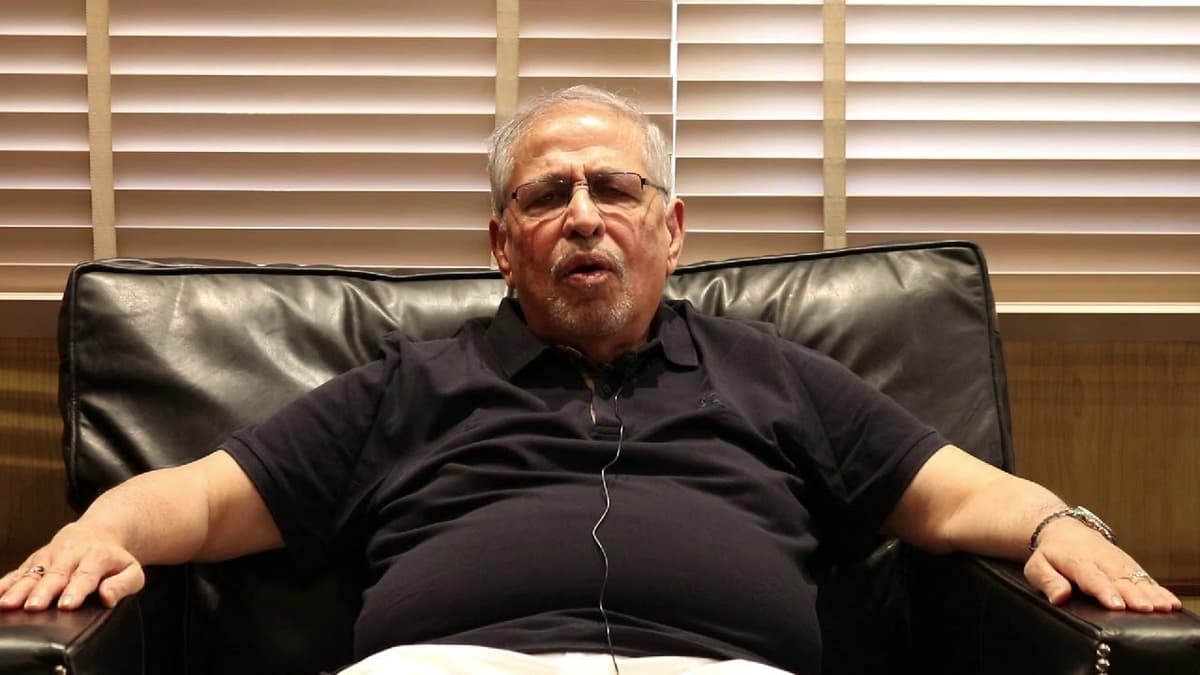
There is a phrase that has followed Mohammed Jaffer out of Mombasa boardrooms and into the public record. When a cybercrime case against his personal secretary looked briefly stalled in January before the DPP eventually collapsed every charge in June people close to the billionaire were heard declaring, with unmistakable satisfaction: “We know the system.” The remark was treated as a boast. It was also a confession.
After three decades of monopoly control over Kenya’s port grain trade, a parallel stranglehold on LPG distribution, an Sh11.8 billion fuel deal that put benzene in Kenyans’ petrol tanks, a Mauritius holding company that investigators say keeps profits beyond the taxman’s reach, a KRA rap sheet stretching from 2012 to 2020, an OCCRP-documented role in a rigged driving licence tender, and a land case that now threatens sixty thousand Mombasa residents with eviction Mohammed Jaffer does not merely know the system. He has, by every available measure, become it.
THE DEFAMATION CASE THAT WAS NEVER REALLY ABOUT DEFAMATION
The case that ended this month in Mombasa Magistrate’s Court had, on its face, nothing unusual about it. Matilda Kinzani, Jaffer’s personal secretary, faced charges under the Computer Misuse and Cybercrime Act after a damaging WhatsApp document circulated accusing Abubakar Joho brother of Cabinet Secretary Hassan Joho of drug trafficking, of helping his brother siphon billions from Mombasa County, and of denigrating the memory of their late mother.
The DPP eventually dropped everything, citing a Court of Appeal ruling from March 2026 that struck down the relevant cybercrime provisions as unconstitutional. Magistrate David Odhiambo refunded bail and confirmed there would be no re-arrest.
What made the case consequential was never the charges. It was the context. Abu Joho testified in open court that he had been on the receiving end of orchestrated smear campaigns for over twenty years and that the targeting intensified precisely when he entered the port logistics business to compete with Jaffer’s Bulkstream Limited.
“He has had a monopoly for 30 years. Now that I have entered the port business, that’s where our troubles began. He is the monopoly; I am not,” Joho told the court.
The defamation complaint named Kinzani. But in a city where the business wars at the port have lasted two decades and left a trail of litigation, injunctions, and criminal complaints, few people following the case believed the secretary was acting alone.
The Anti-Terrorism Police Unit’s early involvement in what was fundamentally a commercial dispute brought in over a WhatsApp letter has never been adequately explained.
“He has had a monopoly for 30 years. Now that I have entered the port business, that’s where our troubles began. He is the monopoly; I am not.” — Abubakar Joho, testifying in court
THE GRAIN MONOPOLY: THIRTY YEARS OF CONTROLLED HUNGER
For more than three decades, one company has handled the bulk of Kenya’s grain imports at the Port of Mombasa. That company Grain Bulk Handlers Limited, now rebranded Bulkstream Limited belongs to Mohammed Jaffer. It controls the terminal, the silos, the discharge infrastructure, and the bagging operations.
Every tonne of wheat, maize, and rice that enters through those mechanisms pays fees that flow directly to Jaffer. Since grain prices govern the cost of flour, bread, ugali, and animal feed across Kenya and into landlocked Uganda, South Sudan, and eastern Congo, Jaffer’s monopoly sits at the base of the regional food price architecture.
In June 2025, Kenya’s Supreme Court delivered what Jaffer’s associates celebrated as the definitive victory in this stranglehold. A five-judge bench led by Deputy Chief Justice Philomena Mwilu nullified the Kenya Ports Authority’s award of a Sh5.8 billion contract for a second bulk grain handling facility to Portside Freight Terminals Limited, a firm linked to the Joho family. The court found that KPA had violated constitutional procurement rules.
Industry analyst Fauz Khalid was unsparing in the aftermath: “The grain storage monopoly is why Kenyans pay more. Prices will remain inflated as long as one player controls the chain.”
Senior Counsel Ahmednasir Abdullahi went further, alleging on social media that the ruling itself had been engineered. “Oh POOR JOHOs… not a chance in hell! A lawyer in private practice in the class of ’90 (my classmate) did them… I have all the evidence… everything!!!” he wrote, in posts that have never been subject to a defamation action. Ahmednasir’s specific allegations about how the Supreme Court outcome was secured remain unproven. But in the context of a three-decade history in which every legal challenge to Jaffer’s monopoly has eventually failed, they carry a particular resonance.
Notably, KPA’s own lawyers were absent for most of the Supreme Court proceedings, appearing only on the final day and only to support Jaffer’s position. That institutional abandonment of the state’s own competing interests has never been publicly explained.
KPA’s lawyers were absent for most of the proceedings appearing only on the final day to support Jaffer. No official explanation has ever been offered.
THE FUEL CABAL: HOW KENYA’S WORST PETROLEUM CRISIS WAS ALLEGEDLY MANUFACTURED
On March 27, 2026, the tanker MT Paloma docked at the Port of Mombasa carrying 60,200 metric tonnes of super petrol imported by One Petroleum Limited a company whose shareholder register lists Mohammed Jaffer, his sons Mujtaba, Ali Abbas, and Mohamed Husein, and Mbaraki Holdings Limited, a Mauritius-registered entity that investigators say is designed to obscure beneficial ownership.
The fuel failed every standard Kenya has. Sulphur levels were four times above the permitted limit. Manganese and benzene concentrations exceeded KEBS specifications.
Under normal rules, the cargo would have been rejected at the load port. Instead, Trade and Investments Cabinet Secretary Lee Kinyanjui signed a waiver on March 28, acknowledging in writing that the petroleum contained “high levels of manganese, sulphur and benzene” and granting permission for it to enter the Kenya Pipeline Company’s storage network regardless. “Waiver is hereby granted on the petroleum that has high levels of manganese, sulphur and benzene,” his letter reads. That sentence, now part of the criminal investigation record, is one of the most damning admissions in the history of Kenya’s energy sector.
The cargo was priced at KSh 198,000 per tonne. The Government-to-Government framework rate for an equivalent consignment was KSh 140,000 per tonne.
At those margins, on 60,200 tonnes, One Petroleum stood to earn a premium of approximately Sh3.5 billion above what any G2G supplier would have charged a premium that Energy CS Opiyo Wandayi said would have translated to Sh14 extra per litre at the pump. Benzene is a known human carcinogen. It was already in the pipeline before anyone with authority to stop it moved.
“Waiver is hereby granted on the petroleum that has high levels of manganese, sulphur and benzene.” — Trade CS Lee Kinyanjui, leaked letter, March 28, 2026
Narok Senator Ledama Ole Kina placed Jaffer at the centre of what he called a “fuel cabal” in a Senate Energy Committee statement. Ole Kina’s timeline is forensic: a March 9 National Security Council Committee meeting at the Office of the President, chaired by Chief of Staff Felix Koskei, had been convened to address the disruption caused by Iran’s closure of the Strait of Hormuz.
The meeting instructed Petroleum PS Mohamed Liban to seek emergency supply alternatives.
The emergency authorisation naming One Petroleum was signed on March 25 two days before a tanker with no track record of importing Premium Motor Spirit in Kenya docked at Mombasa. The sequence, Ole Kina told the committee, “suggests premeditated planning and an orchestrated crisis.”
Petroleum PS Mohamed Liban, KPC Managing Director Joe Sang, and EPRA Director-General Daniel Kiptoo were arrested on April 4, and resigned the same day. KPC Supply and Logistics Manager Joel Mburu and Energy Ministry Deputy Director Joseph Wafula the two insiders Ole Kina specifically named alongside Jaffer were taken into custody and charged. The DCI has initiated mutual legal assistance requests with investigative agencies in multiple foreign jurisdictions to trace the cargo’s ownership chain and origin.
Jaffer has not been arrested. One Petroleum issued a statement maintaining that the importation was conducted lawfully within an emergency procurement process and that it had taken steps to ensure the cargo did not enter the market.
Industry executives who spoke to Kenya Insights described that assurance as technically incoherent: once petroleum enters the KPC pipeline network, it commingles irreversibly. The fuel was not waiting in a tank. By the time the withdrawal order was issued, it was already in the veins of the national distribution system, heading for the pumps where ordinary Kenyans fill up their cars and motorcycles and generators.
THE OFFSHORE ARCHITECTURE: HOW MAURITIUS KEEPS THE TAXMAN OUT
Corporate filings for One Petroleum Limited reveal a structure that financial crime analysts describe as a textbook profit-extraction mechanism.
The company’s shareholder register includes Mbaraki Holdings Limited, a Mauritius-registered entity holding 41,098 ordinary shares. Under Kenya’s double taxation agreement with Mauritius, dividends paid from Kenyan companies to Mauritius-resident shareholders can attract preferential or zero withholding tax rates.
KRA has no automatic visibility into what happens to those funds once they reach Port Louis. The identity of who ultimately controls Mbaraki Holdings, and what beneficial owner sits behind its registered address at Newton Tower in the Mauritius capital, is not on public record.
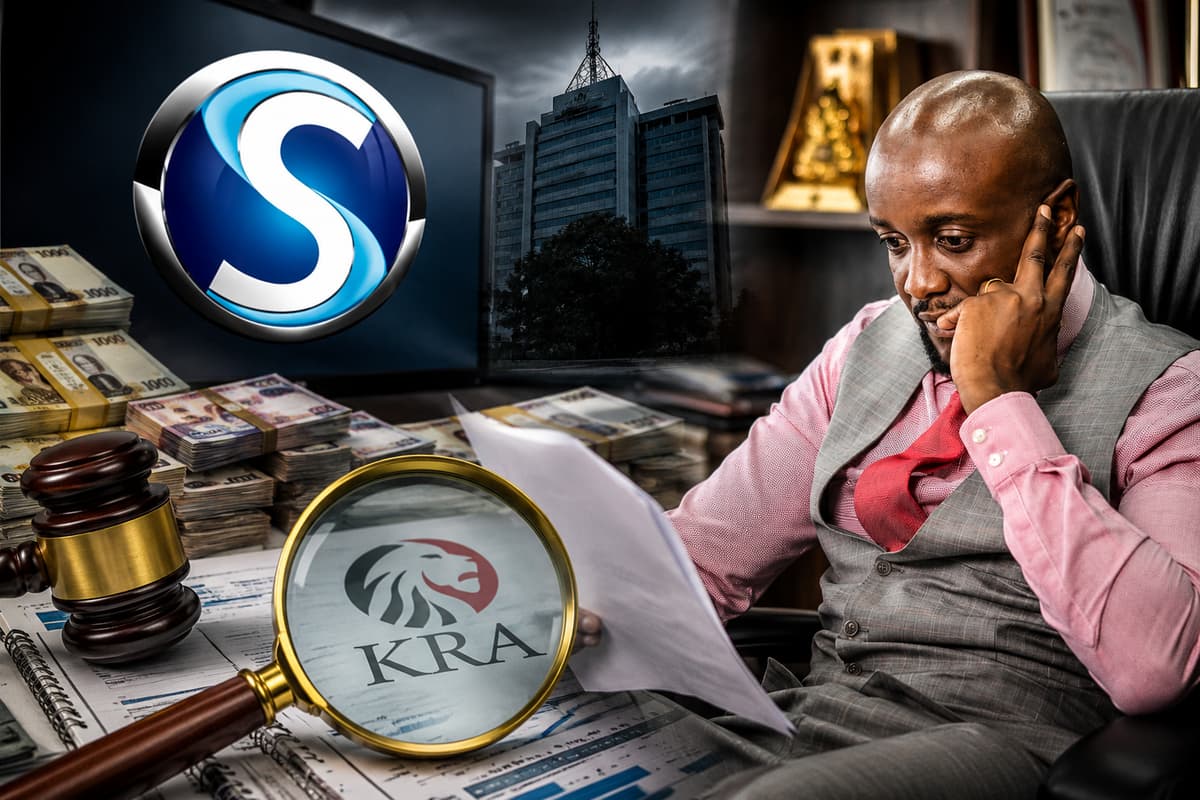
Jaffer is no stranger to the taxman’s interest. In 2012, KRA issued a demand for Sh458 million in customs duties and Sh24 million in penalties for falsification of documents, covering the Grain Bulk Handlers operation.
In 2015, a separate Sh180 million probe targeted undeclared income across the family company network. In 2020, following a court-ordered raid on Jaffer’s Mombasa offices, KRA preliminary findings revealed what it described as under-declaration of sales across One Petroleum, Africa Gas and Oil Company Limited, One Gas Ltd, and Grain Bulk Handling Limited, causing a Sh68 million revenue loss.
Tax compliance certificates for all four companies were withdrawn pending investigation. The companies escaped on a procedural technicality: KRA had cancelled the certificates by email without offering Jaffer a chance to respond, and the court found the process flawed.
In each instance, a probe materialised. In each instance, Jaffer walked away. The combined tax demands across the three major episodes exceed Sh700 million.
Not a single conviction has followed. The pattern is what investigators and financial crime analysts have started calling, in private, the Jaffer exoneration loop: a serious allegation triggers an investigation; the investigation reaches a procedural obstacle; the case collapses on technicalities; and the underlying conduct is never adjudicated on its merits.
THE SEMLEX CONNECTION: A RIGGED LICENCE THAT REACHED EVERY KENYAN DRIVER
The fuel scandal is not the first time the Jaffer family’s relationship with the Kenyan state has been illuminated by leaked documents. In 2020, a joint investigation by Africa Uncensored, The Elephant, and OCCRP drawing on a trove of leaked Semlex emails documented how Mujtaba Jaffer, Mohammed’s son and fellow director at One Petroleum, served as the primary local broker in the politically manipulated award of Kenya’s digital driving licence contract to Belgian firm Semlex in 2008.
The documents showed Mujtaba Jaffer referring to Semlex CEO Albert Karaziwan as “brother” in private correspondence, referencing late-night meetings with the Minister of Transport, and giving his “blessing” to the late Njenga Karume to make decisions on the family’s behalf regarding the contract.
The bid was structured through two nominee companies Computer Source Point Ltd and Infocard Africa Ltd whose directors also sat on the boards of Grain Bulk Handlers and Africa Gas and Oil.
The price Kenyans paid for driving licences under that arrangement, the investigation concluded, was significantly inflated above what production costs would justify. Every Kenyan who has renewed a licence since 2008 has contributed to a margin that the leaked documents show was planned from the start to flow into the pockets of those who rigged the tender.
Mujtaba Jaffer referred to the Semlex CEO as ‘brother’ in private emails, referenced late-night meetings with the Transport Minister, and gave his ‘blessing’ for decisions made on the family’s behalf — OCCRP, 2020
THE VILLAGE THAT STANDS IN JAFFER’S WAY
While Kenyans were still absorbing the scale of the fuel crisis, a separate story was unfolding in a Nyali village that most Nairobians have never heard of. In March 2026, Justice Lucas Naikuni of the Mombasa Environment and Land Court delivered by remote Microsoft Teams hearing, signed and sealed at 10:06 AM on March 13, from his posting in Kwale ruled in favour of Mayport Company Limited in a land case that community representatives say threatens to displace more than fifty thousand residents.
Mayport’s two directors are Shaniz Chatur, a former legal adviser at Grain Bulk Company Limited, and Yakatali Amirali Lamuwalla, identified in court filings as Jaffer’s personal assistant.
The community’s petition filed in 2021 by residents Juma Abdalla Munyau Kathenge and Asma Ndugu Juma accused Mayport of irregularly acquiring their ancestral land through proxy arrangements. During hearings, Mayport failed to produce the original title deed or any proof of payment for the purchase.
Justice Naikuni nonetheless ruled in the company’s favour, issued a permanent injunction barring residents and their representatives from the land, and directed the Chief Land Registrar to rectify the register accordingly.
The case had been adjourned eight times. In September 2025, Justice Naikuni personally apologised to the parties for the delays, described the postponements as “unreasonable,” and promised judgment by October 17. He did not deliver it.
The ruling came instead in March 2026, via Teams, from a posting a hundred kilometres away. Harrison Charo, Executive Director of Justice For All, told this publication that the outcome was not a surprise.
“This is a case we already knew the outcome. The tycoon has never lost any cases, especially within the Mombasa court,” he said. The Ethics and Anti-Corruption Commission’s most recent survey found that 5.5 percent of all judicial interactions in Kenya involve the payment of bribes. Legal practitioners privately describe that figure as a significant undercount.
THE PATTERN
Across three decades, Mohamed Jaffer has accumulated the following: a grain monopoly at Africa’s most strategically critical port; an LPG import terminal whose dominance has been described by competitors as a stranglehold that kept cooking gas prices artificially high for 2.87 million Kenyan households; a petroleum import company with a Mauritius shareholder, half a billion dollars in secured debt instruments, and no prior track record importing Premium Motor Spirit until one afternoon in March 2026 when a fully loaded tanker arrived with carcinogenic fuel; a documented role, through his son, in one of the most systematically documented cases of procurement manipulation in Kenyan history; a KRA rap sheet spanning three separate investigations and Sh700 million in disputed demands, none of which has resulted in a criminal conviction; a defamation case strategy that has deployed Kenya’s cybercrime laws and, by Abu Joho’s sworn testimony, smear campaigns spanning two decades against anyone who tries to compete in the port; and a land case whose outcome will determine whether sixty thousand Mombasa residents keep their homes.
In each episode, what saves Jaffer is not innocence. It is procedure. Technicalities. Withdrawals. Waivers. Constitutional rulings that collapse criminal cases before the facts are heard. A taxman whose email to cancel a compliance certificate was not preceded by due notice.
A cybercrime law that the Court of Appeal later strikes down. A standards waiver signed by a Cabinet Secretary whose letter acknowledges the very contamination it permits.
The pattern is not a series of coincidences. It is a system. And Mohammed Jaffer, by his own associates’ account, knows how to use it.
When his associates boasted “We know the system” after the cybercrime case stalled, they were not wrong. But they understated the scope of what they meant. Jaffer does not merely know the system.
His companies hold the infrastructure Kenya depends on for grain, for cooking gas, for petroleum. His family sits in the ownership and directorship structure of entities touching almost every node in the country’s commodity import chain.
His political relationships span from the Moi era through successive administrations to a ceremony on October 20, 2023, where President William Ruto honoured him in person.
He is not a businessman who occasionally bends the rules. He is a businessman whose rules the monopoly leases, the emergency procurement authorisations, the waiver letters, the compliance certificates, the land titles registered to his personal staff have been written, administered, and enforced by the very institutions tasked with preventing what he represents.
WHAT NEEDS TO HAPPEN NOW
The DCI’s mutual legal assistance requests are live. The Senate Energy Committee probe is ongoing. The KPC, EPRA, and Energy Ministry officials who resigned are facing criminal charges. But the central figure named by a sitting senator in open committee testimony, whose company’s fuel contaminated the national pipeline, whose Mauritius offshore structure keeps his profit flows beyond standard KRA monitoring, and whose proxy companies keep acquiring Mombasa land out from under communities that man has not been charged.
The DCI should be asked, in public and on the record, why. The EPRA, which quietly incorporated One Petroleum into the Government-to-Government framework in the aftermath of the fuel scandal expanding Jaffer’s formal participation in Kenya’s strategic supply chain even as his company was at the centre of a criminal investigation should explain that decision.
The KPA should be compelled to publish, in full, all wayleave agreements, operating licences, and lease arrangements involving Bulkstream Limited, so that the grain monopoly’s legal foundation can be examined by the public whose food prices it determines.
And the Judiciary should be asked how a judge delivers a remotely signed ruling that grants a Jaffer proxy company title to land where sixty thousand people live.
Mohammed Jaffer is 78 years old. He has been at the centre of Kenya’s port economy since before many of his accusers were born. He has outlasted every probe, every rival, every government. He has done so, in his associates’ own words, because he knows the system.
The question for Kenya for regulators, for Parliament, for the judiciary, for the citizens who pay Sh14 extra per litre and higher grain prices and inflated driving licence fees is whether the system will ever stop knowing him back.





Comments