For twenty-one years, the policyholders of United Insurance Company Limited have been told to wait. First they waited through statutory management, then through eighteen years of litigation the High Court itself called an indictment of how slowly justice moves in this country. When liquidation finally came in July 2024, they were told the wait was over. It was not.
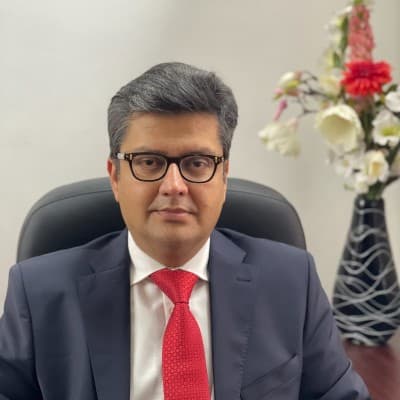
Today they are waiting on a new figure entirely: Kamal Anantroy Bhatt, the Mombasa-based insolvency practitioner the court entrusted with closing the file and who creditors now accuse, in papers filed for a High Court hearing on 28 July 2026, of spending Sh151.8 million of the estate without their knowledge, consultation or sanction, while distributing not a single shilling to the ordinary Kenyans who bought policies in good faith.
“Unilaterally incurred expenditure of approximately Sh151.8 million”
— creditors’ removal application, filed ahead of the 28 July 2026 hearing
This is not a story about one disputed invoice. It is the story of how a licensed, credentialed, seventy-six-year-old family accountancy practice has, in the space of roughly eighteen months, become one of the busiest insolvency shops in Kenya collecting appointments from Equity Bank, KCB and the National Bank of Kenya over hotels worth billions, while simultaneously sitting atop a public-interest insurance liquidation that creditors say has delivered fees before it has delivered fairness.
Kenya Insights has pieced together the court record, the Gazette notices, the Policyholders Compensation Fund’s own disclosures and Bhatt’s expanding client list to ask the question the liquidator himself has so far avoided answering in public: where did the money go, and why does the pattern look the same everywhere he goes?
THE SH152 MILLION QUESTION
The numbers at the centre of the creditors’ application are, on their face, simple. When the High Court ordered United Insurance’s liquidation on 12 July 2024 and installed Bhatt as liquidator, the Policyholders Compensation Fund (PCF) handed him Sh340.7 million in liquid assets, plus anticipated interest of Sh20.7 million, and title deeds to land the estate values at more than Sh5 billion.
Verified creditor claims at the time stood at roughly Sh300 million meaning the cash alone, before a single parcel of land was sold, should have been enough to make every legitimate claimant whole.
Nearly two years later, creditors say Bhatt has spent Sh151.8 million of that cash a sum exceeding all verified claims by more than half without convening more than one creditors’ meeting in fourteen months, without producing bank statements, invoices or vouchers on request, and without paying out a single shilling in distributions.
A verification committee has already cleared Sh118 million in claims for immediate settlement. More than 4,000 claims in total have been verified. None have been paid.
The arithmetic that should worry every Kenyan who has ever paid an insurance premium is this: at Bhatt’s disclosed rate of Sh5 million a month, his fees alone would total roughly Sh120 million over his first two years in office 79 percent of the disputed expenditure and more than a third of all the liquid cash the PCF supplied.
Projected across the 33 months he has told the court he needs to finish the job, that figure climbs toward Sh165 million more than the entire disputed spend, and approaching half of everything the public compensation fund handed over, before a single further legal or administrative cost is counted.
TWO DECADES OF ROT, THEN A NEW CUSTODIAN
None of this happened in a vacuum. United Insurance was placed under statutory management on 15 July 2005 after regulators found admitted assets of Sh475 million sitting against liabilities of Sh2.25 billion a liquidity ratio of 0.03 to 1, against a legal minimum of 1 to 1.
Justice Alfred Mabeya’s July 2024 judgment, which finally ordered the company wound up, catalogued unsecured loans to directors and to a subsidiary called Fidei Holdings Limited, half the company’s assets parked in that subsidiary in what the court called a serious breach of the Insurance Act, land purchases that could not be converted to cash, poor bookkeeping, tax defaults and, above all, thousands of claims left unpaid for over a decade in violation of statutory timelines.
What the judge actually said
Justice Mabeya was unusually blunt for a commercial court ruling, describing the eighteen-year saga as a sad story and an indictment of how slowly the wheels of justice grind in Kenya. He rejected the shareholders’ argument that land holdings worth an estimated Sh4 billion proved the company solvent, noting pointedly that assets which cannot be liquidated to raise real money do nothing to rescue an insurer a warning that now reads, in hindsight, like a preview of the exact complaint creditors are making about Bhatt’s own handling of the estate’s land.
Shareholders, including George Ngure Kariki, fought the liquidation to the end, arguing the company was solvent to the tune of Sh1.3 billion. The court disagreed. On 12 July 2024 it ordered United Insurance wound up and named Kamal Anantroy Bhatt then a relatively fresh entrant to Kenya’s tiny fraternity of licensed insolvency practitioners, having obtained his practising licence only in August 2021 as the twenty-second person in the country to hold one as liquidator.
SH5 MILLION A MONTH: THE ARITHMETIC CREDITORS CANNOT IGNORE
It was in proceedings around May 2026 that Bhatt’s monthly fee Sh5 million was disclosed in open court, reportedly to audible murmurs from waiting creditors, some of whom are elderly, some of whom have attended hearings on crutches after decades-old accident and health claims.
For an estate whose entire verified claim book is roughly Sh300 million, a flat Sh5 million-a-month structure running toward three years creates an obvious incentive problem: the longer the file stays open, the larger the fee pool grows, and the smaller the residue left for the policyholders the fund exists to protect.
Creditors have asked the liquidator to produce every bank statement, invoice and payment voucher tied to the Sh151.8 million. He has not complied. Instead, when the court directed him on 3 March 2026 to respond substantively to the allegations, Bhatt filed a preliminary objection rather than an accounting. The court has since stood up two technical committees one creditor-led, one for independent verification and ordered progress reports and stricter scrutiny of claims. Bhatt’s response, creditors say, has been to ask for more time: nine additional months, on top of the nearly two years already elapsed.
“Not a single shilling” has reached creditors, the application states,
despite Sh118 million in claims already cleared for payment
THE EMPIRE: ONE FIRM, FOUR INSOLVENCIES, BILLIONS IN ASSETS
United Insurance is not an isolated assignment. Kenya Insights’ review of Gazette notices and bank disclosures over the past eleven months shows Anant Bhatt LLP — the seventy-six-year-old Mombasa firm Kamal Bhatt leads as managing partner, founded by his late father in 1949 — has assembled one of the most rapidly expanding insolvency books in the country, almost entirely through appointments by three of Kenya’s largest lenders:
Add United Insurance a public-interest liquidation carrying Sh5 billion in disputed land and a PCF-funded cash pile and the picture is of a single family practice now sitting across insolvency estates worth, by conservative addition of the disclosed figures alone, well in excess of Sh13 billion.
Relatives Jai Kamal Bhatt and Dhir Kamal Bhatt appear as joint appointees in several of these matters and in others involving distributors and motor-industry companies, reinforcing that this is very much a family enterprise rather than a single practitioner’s caseload.
The distinction that matters is structural, not personal. In the bank-driven receiverships Glee, Eastland, Upperhill, Cedarwood Bhatt answers to a single, sophisticated, well-resourced secured creditor with every incentive to demand speed, scrutiny and a rapid sale.
In United Insurance, his only real overseers are a fragmented body of thousands of ordinary policyholders with old, small claims, limited legal firepower, and as the creditors’ own application alleges no meaningful access to his books.
It is precisely the kind of asymmetry insolvency lawyers warn creates space for exactly the pattern now alleged: slow realization of the hardest, most valuable assets the Sh5 billion in United Insurance land while liquid, easy-to-access cash is drawn down on fees and undisclosed expenditure.
THE SILENCE OF THE FUND THAT WAS SUPPOSED TO PROTECT THEM
The Policyholders Compensation Fund, built from a compulsory 0.5 percent levy on every insurance premium sold in Kenya, held a Sh28 billion surplus as of December 2025 and collects roughly Sh1.3 billion a year. It exists for exactly this scenario. Yet the Fund handed Bhatt Sh340.7 million in liquid assets in July 2024 and has, by its own portal’s figures, overseen the disbursement of just Sh1 million directly to United claimants as of March 2026 a rounding error against payouts of Sh137.8 million for Xplico Insurance and Sh101.4 million for Invesco Assurance claimants over the same broad period.
Kenya Insights has found no public record of the PCF attaching reporting conditions, spending caps or creditor-consultation requirements to its Sh340.7 million transfer, nor any indication the Fund has used its Sh28 billion reserve to press for faster verification or distribution in a case where its own money is now the subject of a fiduciary-breach allegation before the High Court.
A fund created to restore confidence in Kenya’s insurance sector has, in this file, become a silent financier of the very delay and opacity it was designed to prevent.
WHAT 28 JULY MUST ANSWER
The creditors’ application does not merely seek Bhatt’s removal. It asks the High Court to compel production of every financial record tied to the Sh151.8 million, to examine him under oath on his conduct and finances, to order reimbursement of any unauthorised spending, and to replace him with the Official Receiver or another qualified practitioner. Those are serious asks against a man the court itself selected less than two years ago to end, not extend, two decades of institutional failure.
Bhatt has not, in any court filing reviewed by Kenya Insights, denied the Sh151.8 million figure itself; his response to date has been procedural rather than substantive. That may change before 28 July. Until it does, the arithmetic stands unrebutted: a Sh28 billion public fund, a Sh340.7 million transfer, a Sh151.8 million spend, one creditors’ meeting, and Sh1 million reaching the people the entire system exists to protect.
For two decades, United Insurance’s policyholders were failed by a company that gambled their premiums on land it could not sell. They were failed again by a court process that took eighteen years to say so. On 28 July 2026, the High Court will decide whether they are being failed a third time by the very liquidator sent to make them whole.






Comments