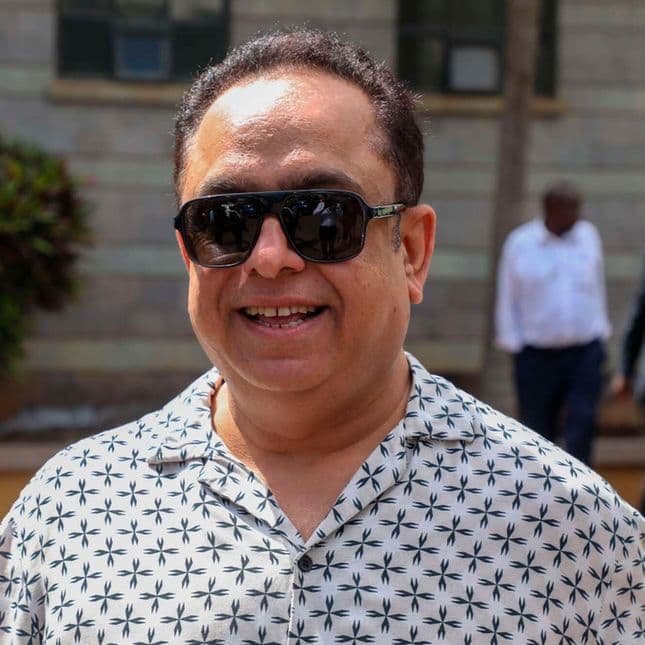
Justice Roselyne Aburili’s July 3 judgment reads, on its surface, like a routine procedural win for the state. Yagnesh Mohanlal Devani’s constitutional petition to permanently kill four criminal cases tied to the Sh7.6 billion Triton oil scandal has been rejected, and the criminal trial court has been ordered to proceed to conclusion.
The judge found nothing to suggest the Director of Public Prosecutions had acted unlawfully or abused the court process in pursuing him.
But strip away the legalese and what remains is a portrait of a man who has spent eighteen years turning Kenya’s justice system into an obstacle course, and who is now, simultaneously, suing the same state he evaded for seventeen years of receivership accounts and demanding the right to leave the country he was forcibly returned to.
THE MACHINERY OF THE THEFT
Investigators who reconstructed the scandal found something more calculated than a smash and grab. Between 2005 and 2008, Triton Petroleum exploited a Kenya Pipeline Company reconciliation system known as the Collateral Financing Agreement, under which schedulers were meant to correct KPC’s records only once Triton produced official bank release orders for product it had already sold.
For roughly three years the scheme ran quietly.
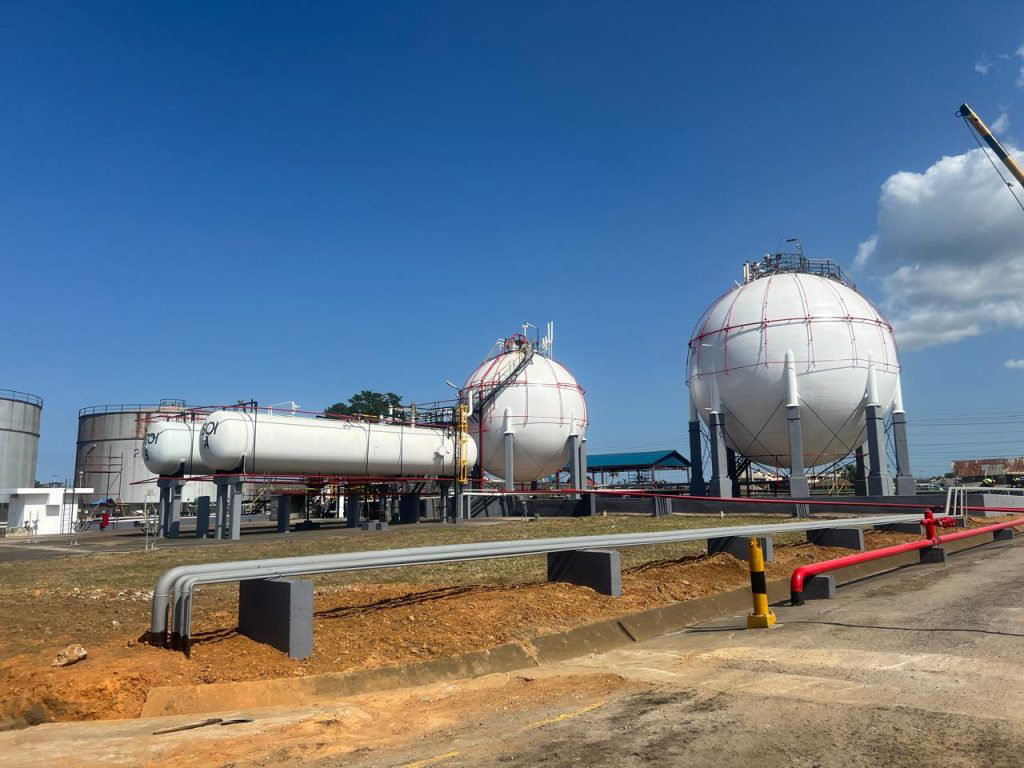
By the start of 2007 Triton had not obtained release orders for 43 million litres of petroleum products that had already reached other companies. That backlog swelled to 78 million litres by the end of 2007, dipped briefly to 70 million litres in April 2008, then exploded past 138 million litres before the year was out, a trajectory that forensic auditors later mapped almost litre for litre against the collapse of global crude prices from roughly 140 dollars to 50 dollars a barrel.
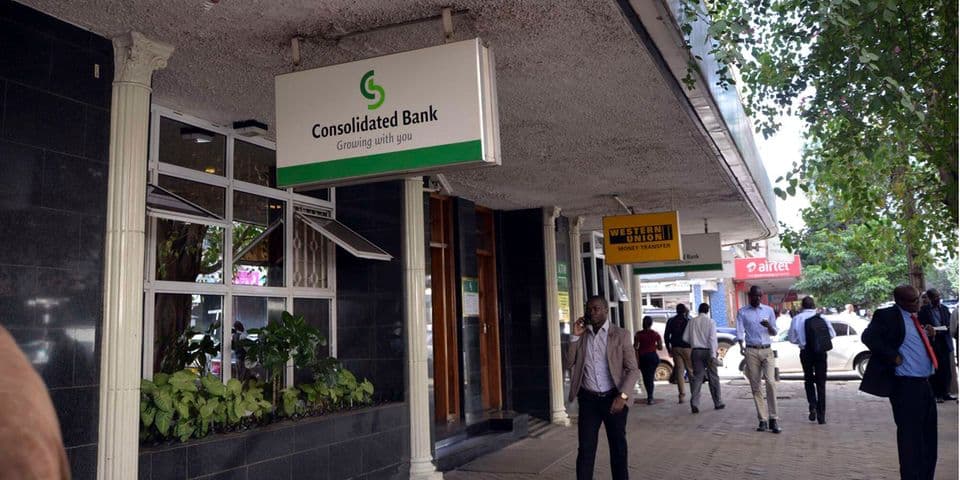
When the music stopped, KCB, the PTA Bank, Fortis Bank of the Netherlands, Glencore Energy UK and Emirates National Oil Corporation of Singapore were left holding paper claims on fuel that had already been sold out from under them.
The scale of the exposure meant Devani, on paper a modest operator holding less than one percent of Kenya’s fuel market by some measures and a claimed 39 percent by his own petition, had somehow been allowed to accumulate storage privileges and financing access that dwarfed his market share.
Court of Appeal findings in a related civil dispute went further, describing how commodities giant Glencore had used Triton as what judges called a front and a cloak to conduct oil trading in Kenya without the required license, an arrangement the court branded a flagrant illegality.
The question investigators never fully answered is how many officials inside the Ministry of Energy and Kenya Pipeline understood exactly what they were enabling.
THE HUMILIATION AT HEATHROW
Long before his eventual 2024 extradition, Devani came within minutes of being brought home and Kenya’s own bureaucracy nearly blew it. In January 2021, after twelve years of exhausting every available layer of British justice including the European Court of Human Rights, Devani lost his final appeal.
Two EACC officers, Julius Muraya and Mark Ndiema, flew to London, cleared immigration formalities with the UK Border Force, boarded him onto a Kenya Airways flight and loaded his luggage.
The Director of Public Prosecutions had already lined up a prison cell, a receiving team and a three-page statement for his arrival.
As the aircraft prepared for takeoff, an order arrived stopping the officers from taking him, and Devani disembarked. How that injunction was obtained on a Saturday morning when the courts were not sitting has never been publicly explained. Kenya would wait three more years to get him back.
THE FRIENDS IN HIGH PLACES
Devani did not need to hide his access to power, he flaunted it. Archive photographs place him beside Vice President Moody Awori at the 2006 opening of Triton’s Nairobi LPG depot, and later in frames with then Prime Minister Raila Odinga and Finance Minister Uhuru Kenyatta at grand coalition functions. Watchdog group Africog was warning as early as the mid-2000s that Devani was a shrewd operator who hobnobbed with the high and mighty.
That access appears to have translated into direct operational favours.
When state generator KenGen risked running out of diesel and Total Kenya struggled to keep supply flowing, then Energy Permanent Secretary Patrick Nyoike personally directed Kenya Pipeline to guarantee Triton a two week safety stock at the Kipevu facility, in a memo that cited the need to keep power plants running.
Triton, meanwhile, was already collapsing under the weight of its own scheme, and Devani was privately telling Total’s Kenyan managing director that refinery premiums, not fraud, explained his mounting delivery failures.
A TRAIL OF CONVENIENT SILENCES
The case against Devani has collapsed and been revived so many times that a reviewing judge, hearing a challenge to his 2024 release, described a disturbing pattern of the prosecution withdrawing charges specifically against witnesses central to its own case, conduct the judge said appeared designed to shield Devani from accountability.
Former Energy Minister Kiraitu Murungi, who ordered the original 2009 investigation, became one of the reluctant witnesses whose unwillingness to testify the DPP cited when it first sought to withdraw charges.
The lead detective who had relentlessly pursued the Triton principals, Criminal Investigations Director Simon Gatiba Karanja, collapsed and died of breathing complications at his home, a loss that investigators say visibly slowed the hunt for the scandal’s architects.
Whether coincidence or convenience, the arithmetic of the case is stark, a Sh7.6 billion theft, a scandal that broke in January 2009 alongside other major graft cases, and seventeen years later not a single conviction.
THE LIFESTYLE HE NEVER EXPLAINED
While Kenyans queued at petrol stations in January 2009 and absorbed the transport and power price shocks that followed the vanishing of 126 million litres of fuel, Devani was living in a London house valued at roughly Sh550 million.
At the peak of his fraud in 2007, he flew guests first class from London and India to Nairobi for his wife’s fortieth birthday, chartered a private jet for a visiting Indian performer, flew in hairdressers from London and the United Arab Emirates and gave every guest a Rolex.
The party alone was estimated to cost Sh300 million.
No accounting of that spending, or of what became of the underlying proceeds, has ever been placed before a Kenyan court.
THE AUDACIOUS NEW GAMBIT
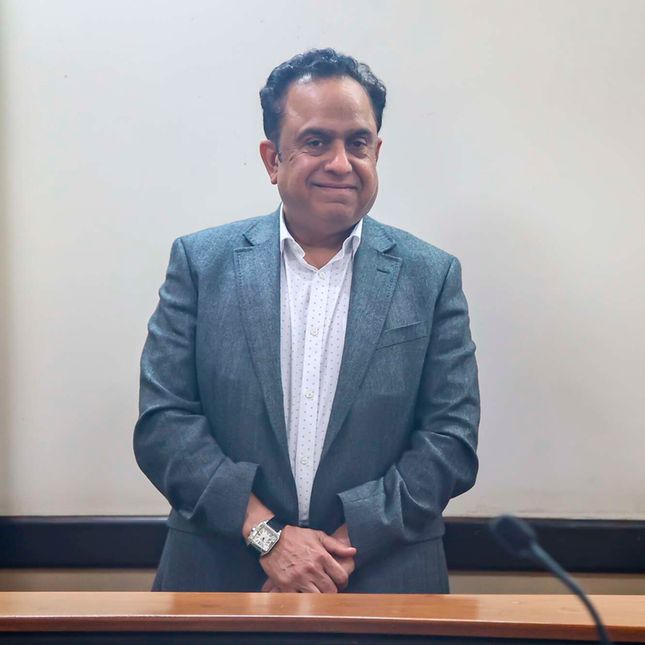
Having lost the constitutional battle to kill the criminal cases outright, Devani has simultaneously opened two new fronts that reveal the same instinct for turning courtrooms into shields rather than venues of accountability.
In April 2026, through Echessa and Bwire Advocates, he sued Triton’s receivers and managers, KCB, the Eastern and Southern African Trade and Development Bank and the Central Bank of Kenya, demanding a full forensic audit of the seventeen year receivership, an independent inquiry into potential misconduct by the very institutions his fraud victimised, and compensation for himself.
The man whose collapsed company triggered the receivership is now asking the courts to treat him as its aggrieved beneficiary.
Weeks later, after state security agencies imposed a stop order at Jomo Kenyatta International Airport citing national interest, Devani sued the government again, this time arguing his constitutional right to freedom of movement was being violated since no active warrant justified confining him inside the country whose courts he spent sixteen years evading.
Commentators have likened the standoff to Malaysia’s 1MDB affair and India’s pursuit of Nirav Modi, cases where the fight over an alleged fraudster’s right to exit became a proxy for whether the state could ever convert extradition into actual asset recovery.
WHAT JULY 3 ACTUALLY CHANGED
Justice Aburili’s ruling forecloses only the constitutional shortcut. It does not resolve the harder question of whether Kenya’s trial court, hobbled by dead and reluctant witnesses, can ever force Devani to answer for the systematic falsification of KPC’s tracking records, the identity of the insiders who allegedly enabled it, or where the Sh7.6 billion ultimately went.
It does not touch his parallel demand for a forensic audit of the very receivership his fraud created, nor his parallel demand to be allowed to leave. What it does is strip away, for now, the argument that continued prosecution is itself an abuse of process.
The trial, the judge has ruled, must go on.
Whether it produces the reckoning that Kiraitu Murungi’s silence, Simon Gatiba Karanja’s death and eighteen years of procedural warfare have so far prevented is the uncomfortable question Devani’s own filings keep forcing back into the open.





Comments