Four men who once trusted Daniel Kiptoo Bargoria with the books of his company say they were locked on the fifth floor of Tarita Centre in Eldoret on the last Saturday of June, beaten through the night by masked enforcers, stripped of their clothes and, ultimately, of the land, plots and commercial property they had spent years accumulating.
But the deeper story is not what happened on that one floor in one night.
It is what that night reveals about a man who, in barely six years, rose to command Kenya’s petroleum regulator, sat inside a Sh4.8 billion fuel importation scandal that shook the presidency, and has spent the better part of a decade fighting his own siblings over a dead man’s estate using the same offshore playbook investigators now say his company used to squeeze Sh96 million out of four terrified employees.
Kenya Insights has spent the past several days examining Kiptoo’s record across regulatory audits, court filings in three separate suits, and the paper trail of the fuel scandal that ended his public career in April.
What emerges is not a single scandal but a method: when formal processes stall, deploy pressure through structures deliberately built to be untraceable, and when pressure is not enough, deploy force.
THE FIFTH FLOOR
The four employees of Tarita Group Ltd had gathered for what had become a monthly ritual, a reconciliation of the company’s accounts with their boss.
Police records, medical reports and a signed settlement deed reviewed by this newspaper describe how that meeting curdled into more than twelve hours of alleged unlawful detention once a shortfall of Sh96 million was flagged in the books, against a separate deed of transfer that put the company’s total exposure at Sh200 million.
According to the victims, four masked men entered the room and were each assigned an employee to work over.
Under blows, the men were stripped and told that their properties, and their lives, hung on producing the missing money.
One of them, whom this newspaper is calling Robert to protect his safety, says he was forced to sign a deed transferring land, plots and a commercial hub to Tarita Group Limited after a sock was stuffed into his mouth to muffle his screams.
“Everything is at a standstill. The people who beat us are out there. They made a threat saying if you go to the media, you die. At least I will have shared my story.”
— Robert, one of four employees allegedly tortured
The ordeal did not end with the signatures. Investigators say the men were kept incommunicado even after transferring their assets, and it was only when spouses were summoned as witnesses, and one wife slipped a message to a lawyer, that police finally responded to a distress call at the building.
Six people, Alfred Too, Edwine Gichia, Everline Choge, Joseph Njuguna, Stephen Ngigi and Martin Kamau, were arrested. Turbo Sub-County Police Commander Patrick Wekesa has confirmed the rescue but says the investigation is moving slowly because of what he describes as pressure to settle the matter out of court, a detail that, given who sits atop the company, deserves far more scrutiny than a passing line in a police statement.
A BRAIN SCAN AND A SIGNATURE
Medical records seen by this newspaper describe one victim arriving at hospital with swelling around both eyes, his face and neck, and bruising along the left side of his forehead and right ear
A CT scan flagged a subtle abnormality in the front-left part of the brain along with blood clots in the head’s soft tissue, a finding an independent doctor who reviewed the file described as the one genuinely worrying feature in an otherwise unremarkable scan.
The paperwork produced that night, a deed of settlement, asset transfer undertaking and continuity support agreement dated June 28, 2026, was designed to look like an ordinary commercial resolution to a shortfall.
Text messages exchanged in the days before and immediately after the incident tell a different story.
Kiptoo allegedly sent one victim the locations of his properties with the message, “Utakipata,” and after the four escaped, followed up with a photo of a counter-report filed against them for theft, warning that the assets of the victims, their spouses, families and proxies would all be traced.
THE REGULATOR WHO REGULATED HIMSELF
Long before Tarita Centre, Kiptoo’s rise inside the Energy and Petroleum Regulatory Authority was itself a story about self-dealing dressed up as procedure. Auditor-General Nancy Gathungu’s report on EPRA’s 2020/21 accounts found that Kiptoo sat in the board meeting that recommended his own appointment as acting Director-General in December 2020, after predecessor Pavel Oimeke was pushed out over bribery allegations, without declaring a conflict of interest as required under the Mwongozo Code of Governance.
The same audit found the board had issued him an appointment letter before the Ministry of Energy had even approved it, and concluded that Kiptoo lacked the senior-level management experience the Energy Act required for the role he was about to occupy for the next five years.
A lawyer by training, with law degrees from the University of Nairobi and Dundee and an MBA from Cumbria, Kiptoo helped draft the very Energy Act and Petroleum Act his own appointment appears to have violated.
He was confirmed in the substantive role in June 2021.
The pattern that audit describes, using process and paperwork to manufacture legitimacy for outcomes decided in advance, recurs almost identically in the corporate and family disputes that would consume the rest of his career.
SH4.8 BILLION, SH500 MILLION IN CASH, AND A QUIET BAIL
Kiptoo’s regulatory career ended in disgrace on April 4, 2026, when he resigned as EPRA Director-General alongside Petroleum Principal Secretary Mohamed Liban and Kenya Pipeline Company Managing Director Joe Sang, two days after all three were arrested over an alleged Sh4.8 billion scheme to manipulate national fuel stock data and manufacture a false impression of an impending shortage.
The manufactured crisis, investigators allege, was used to justify an emergency fuel shipment procured in violation of Kenya’s government-to-government framework, at prices far above contracted rates and of substandard quality, reportedly linked to the vessel MT Paloma.
During the raids that preceded the arrests, detectives reportedly recovered roughly Sh500 million in cash from the homes of the implicated officials, a detail that received far less follow-up coverage than it warranted.
Kiptoo, Sang and a fourth official, Simon Wafula, were held and questioned for hours at Gigiri Police Station before being released on Sh100,000 police cash bail days later, with the Office of the Director of Public Prosecutions still silent on charges.
As of this writing, more than three months on, no one has been formally charged in a scandal the presidency itself once called economic sabotage.
That an ex-regulator walked away from an Sh4.8 billion national scandal without so much as an arraignment, only to resurface weeks later as the alleged architect of a private detention and extortion operation in his own company’s offices, is the throughline this newspaper believes Kenyans have not yet been asked to reckon with.
The question is not whether Daniel Kiptoo has a temperament for coercion.
The fuel scandal and the audit both suggest he has spent his entire public career learning that process can be captured, and that capture, once mastered at a national regulator, does not stay contained to government.
THE MAURITIUS SHIELD
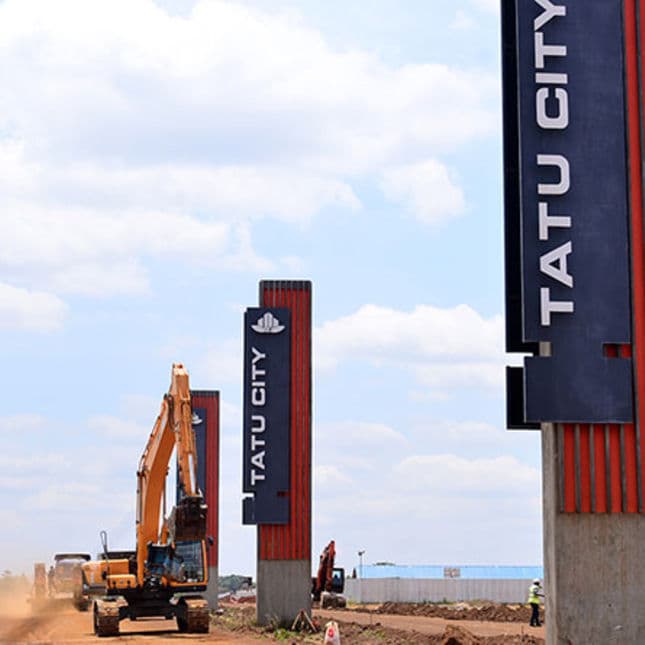
Business Registration Service records show that Tarita Group Ltd, the company in whose fifth-floor offices the alleged torture took place, is wholly owned not by any person but by Tarita Group (Mauritius) Ltd, registered in Port Louis.
Its sole listed Kenyan director, Alfred Cheruiyot Too, holds not a single one of the company’s 999 shares. Too is also among the six suspects police arrested over the alleged torture.
This structure, a nominee director with no equity fronting a Kenyan entity wholly owned by an offshore Mauritian parent, is not an isolated corporate choice. It is a recurring feature of how Kiptoo’s business interests are organised, and it surfaces again, almost verbatim, in the succession dispute his own half-sister has fought him over for years.
BLOOD MONEY: THE FAMILY WAR BEHIND THE CORPORATE VEIL
Kiptoo’s father, Barnabas Tuitoek Bargoria, a former Managing Director of the National Irrigation Board, died intestate in November 2020, leaving two widows, seven children and an estate spanning Nairobi, Uasin Gishu and Elgeyo Marakwet counties worth billions of shillings.
What followed is a succession war that has run in parallel to, and in this newspaper’s assessment directly foreshadowed, the allegations now facing Tarita Group Ltd.
In August 2025, Justice Reuben Nyakundi of the High Court in Eldoret barred Kiptoo and Tarita entities from developing a 12.26-hectare family parcel, Kiplombe/Kuinet Block 2, with a petrol station and greenhouses, ruling that his half-sister Loise Jerop Bargoria had shown enough evidence to suggest intermeddling with their father’s estate, itself a criminal offence under Kenyan succession law.
Cherop’s petition points to the same postal address linking the family home to Tarita Group’s Mauritius filings, evidence she argues shows Kiptoo hiding behind an offshore entity to cut other beneficiaries out of their inheritance. Kiptoo has appealed the ruling.
In a separate and still more serious dispute before the High Court at Milimani, another half-brother, Dr Victor Kipkemei Bargoria, a medical doctor, accuses Kiptoo of forging their late father’s signature to allot himself 800 shares in Siokwei Tarita Limited, the family company that owns a commercial building in Eldoret and controls its subsidiary, Tarita Trocadero Limited.
Court filings in that case, still pending, describe an alleged 2011 shareholders’ resolution that Dr Kipkemei says was fabricated years after the fact, and a further resolution passed while the family was still mourning their father in November 2020, purporting to make Kiptoo and an associate the sole signatories on the company’s bank accounts.
A judge has already declined to strike out the case or lift orders freezing changes to the company’s structure, finding Kiptoo had not met the threshold to have the claims dismissed.
Two half-siblings, two courts, one accusation: that Daniel Kiptoo used forged paperwork and offshore corporate distance to take control of assets that were never entirely his to take.
— Kenya Insights analysis of pending succession filings
THE PATTERN
Laid side by side, four episodes from Kiptoo’s career, the EPRA self-appointment, the Sh4.8 billion fuel scandal, the sibling succession fights, and the alleged Tarita Centre torture, describe a single method repeated in four different arenas.
First, engineer a process, a board vote, a boardroom reconciliation, an emergency procurement, that looks procedurally sound on paper.
Second, when the paper trail alone will not deliver the desired outcome, apply pressure through structures built to obscure who is truly directing events, a Mauritius holding company, a nominee director with no shares, board colleagues who owe their own positions to him.
Third, when pressure through structure fails, and only then, according to the victims in this case, escalate to direct coercion, in this instance masked men, stripped bodies and a signature extracted at dawn.
The common thread investigators and the courts have already identified, independently of each other, is Kiptoo’s use of distance as a weapon. An audit found he was in the room for his own appointment yet somehow not conflicted.
A fuel scandal saw hundreds of millions in cash recovered from his home yet produced no charges.
A Mauritius shell owns the company in whose offices four men say they were tortured, while its Kenyan director holds no shares at all. And a succession case accuses him of forging his own father’s signature to seize control of a family firm.
Each structure exists to put a legal buffer between Daniel Kiptoo and the outcome he wanted. Each time, the buffer has held long enough to delay accountability, never long enough to disprove the underlying allegation.
Kiptoo has not responded to repeated calls and text messages from this publication seeking his side of the torture allegations, just as he did not respond when the fuel scandal broke in April. His silence, in both cases, has so far bought him time rather than vindication.
The six suspects arrested at Tarita Centre remain out on terms Commander Wekesa has not disclosed, even as he acknowledges pressure to settle the matter privately.
The Office of the Director of Public Prosecutions has still not stated whether it will charge anyone over the Sh4.8 billion fuel scandal, more than three months after Sh500 million in cash was recovered from the homes of the men implicated in it.
The succession cases in Eldoret and at Milimani grind on, unresolved. And four men who trusted a Saturday reconciliation meeting are left explaining bank balances, land titles and a signed deed to police, while the man they accuse of ordering their torture has not spent a single night in custody over it.
This newspaper will continue to follow the forensic trail of the Sh96 million, the ownership structure behind Tarita Group (Mauritius) Ltd, the stalled fuel scandal prosecution, and whether Kenya’s justice system will ultimately hold a former state regulator to the same standard it applies to everyone else.
A man who once sat atop the agency meant to police Kenya’s energy sector should not be the one left policing his own case.
Additional reporting drawn from police incident reports, medical records, a signed deed of settlement, Auditor-General findings on EPRA’s 2020/21 accounts, and High Court filings in the Bargoria succession and Siokwei Tarita Limited disputes.

Comments