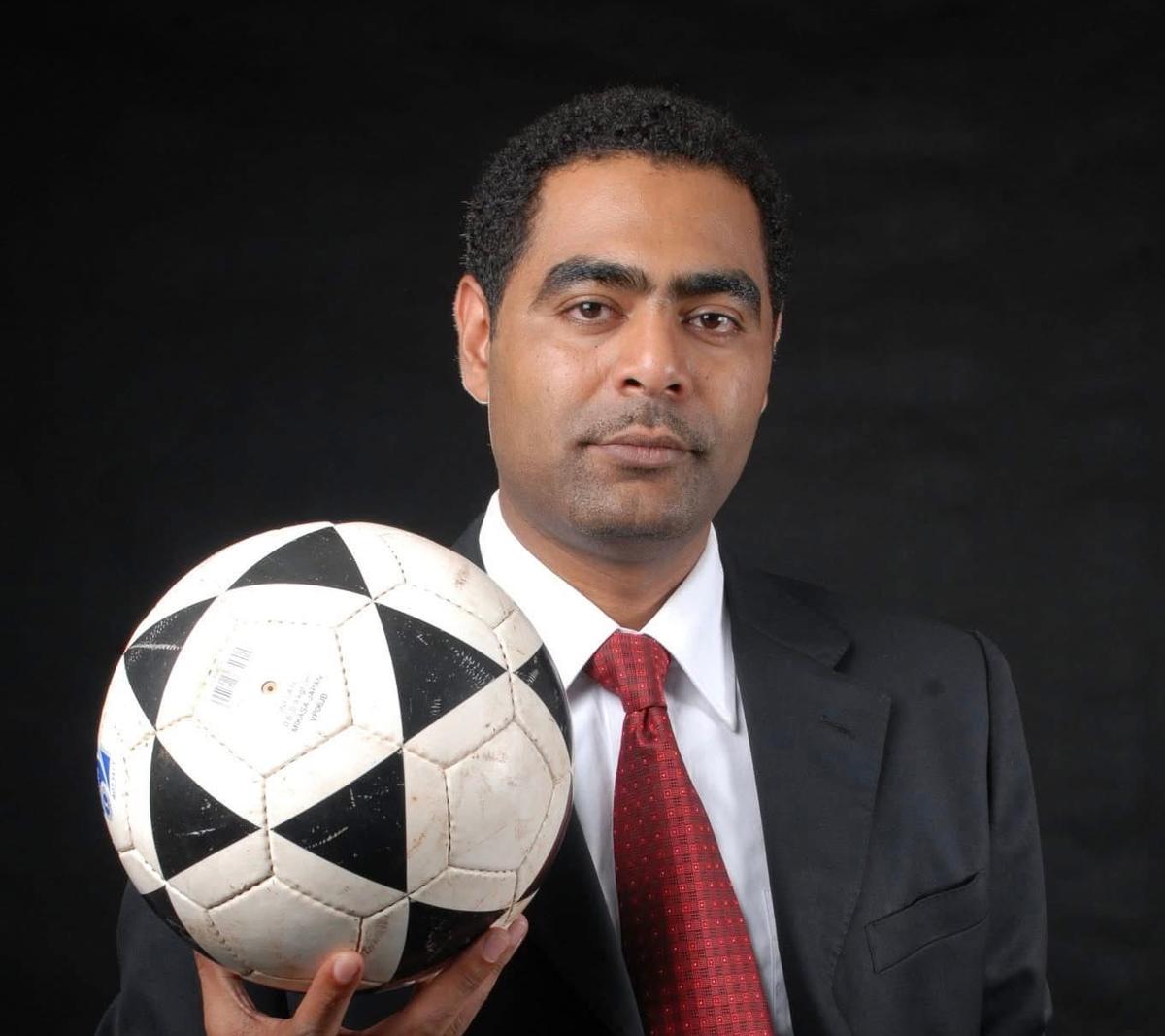
Football Kenya Federation President Hussein Mohammed walked out of a Nairobi meeting room on June 30 and told the cameras it had been a good day for football. He spoke of harmony, of a federation ready to hit the ground running toward AFCON 2027. Within hours his own National Executive Committee majority, led by Vice President McDonald Mariga, issued a statement that read like a rebuttal. Investigations must run their course. Governance reforms must be pushed through within days. A High Court case tied to the crisis must be discontinued because it violates the federation’s own constitution.
That is not the language of a federation at peace with its president. It is the language of an executive that has stopped pretending to believe him.
A PAYMENT THAT SHOULD NOT EXIST
The wound at the centre of this crisis has a name, a date and a bank account trail, and none of it has gone away no matter how many press conferences Mohammed holds. On August 4, 2025, two days after Kenya, Uganda and Tanzania kicked off the 2024 African Nations Championship, Football Kenya Federation wired 328,735 US dollars, roughly Sh42.48 million, out of its Ecobank tournament account to a company called Riskwell Insurance Brokers Limited. The transaction was meant to settle the mandatory tournament insurance cover that CAF required every host federation to secure.
There was one problem. Riskwell had been incorporated by the registrar of companies only forty days earlier, on June 25, 2025. It had never submitted a quotation for the CHAN insurance business, a mandatory step under CAF tournament rules. Three real, licensed insurers had done so, and all three quoted less than Riskwell was eventually paid. The Insurance Regulatory Authority later confirmed in writing that it had never licensed Riskwell to broker insurance in Kenya, in 2025 or in any prior year, and the firm does not appear on the IRA’s official register of 237 licensed brokers as of October 2025. Financial records reviewed by investigators show Riskwell recorded no VAT obligation, filed no tax returns and recorded no purchases or sales in the months surrounding the payment. Operating as an unlicensed insurance intermediary is a criminal offence in Kenya.
More than forty million shillings of federation money moved to a company that had barely existed for six weeks, and was invisible to the industry regulator.
Mohammed’s answer has been consistent and unwavering. He insists CAF, not FKF, procured the cover, that no FKF money was lost, and that the entire affair is a fightback by rivals threatened by his reform agenda. “Once I started the process of cleaning the house, it was inevitable that corruption would fight back,” he posted after the story broke. It is a tidy explanation. It does not explain the wire transfer, the unlicensed recipient, or why three properly licensed insurers were passed over for a company that did not exist when the bidding process was supposedly concluded.
SURVIVAL BY TECHNICALITY, NOT BY VINDICATION
Every institutional battle since April has gone Mohammed’s way, and his supporters have treated each win as exoneration. It is worth being precise about what actually happened, because the distinction matters enormously.
On April 24, nine of FKF’s fourteen NEC members voted to suspend Mohammed, Acting General Secretary Dennis Gicheru and nominated member Abdullahi Yussuf Ibrahim, installing Mariga as acting president pending investigation. Three days later the Sports Disputes Tribunal froze that resolution on procedural grounds. Mohammed then secured a conservatory order from the High Court in Kiambu, attaching a penal notice threatening jail time for anyone interfering with his office. In May, FIFA weighed in and declared the suspension unconstitutional, finding that the NEC had not followed proper procedure, quorum or fair hearing requirements when it moved against him.
None of these rulings touched the substance of the Riskwell transaction. Not one of them found that the insurance cover was properly procured, that Riskwell was a legitimate broker, or that the money was accounted for. They found only that the process used to punish Mohammed inside the federation broke the federation’s own rulebook. A man can be procedurally reinstated while the underlying allegation against him remains entirely unresolved, and that is precisely the position Hussein Mohammed occupies today.
THE CLEARANCE THAT WASN’T
Mohammed’s camp has more recently pointed to a June 22 letter from the Public Procurement Regulatory Authority as vindication. It is nothing of the sort. PPRA’s letter to FKF’s acting chief executive stated plainly that the authority had no legal mandate to investigate the Riskwell transaction because the money involved was CAF funding, not Kenyan public funds, and therefore fell outside PPRA’s jurisdiction entirely. That is a finding about which government body has the power to look at the transaction. It is not a finding that the transaction was clean.
The Ethics and Anti-Corruption Commission and the Directorate of Criminal Investigations, the two bodies actually equipped to examine fraud, conflict of interest and the criminal question of an unlicensed entity receiving federation funds, have not issued any comparable clearance. Their inquiries, opened within days of the story breaking in April, remain open. The forensic audit that NEC members demanded when they first moved against Mohammed has still not been made public. The jurisdictional footnote from a procurement watchdog is being repackaged as a clean bill of health, and it is not one.
A FOURTH CEASEFIRE, WITH A TRACK RECORD OF COLLAPSING
The June 30 meeting with a joint FIFA, CAF and CECAFA delegation, led by CECAFA president Paulos Weldehaimanot alongside FIFA and CAF governance officials, produced a fresh set of resolutions, and the following day the High Court petition tied to the crisis was formally withdrawn. Mohammed declared the storm over. Kenyan football has heard that declaration before.
This is at minimum the fourth attempt at a reset since April, following the original suspension, the SDT’s reinstatement, and a May ruling that halted disciplinary proceedings against Mariga in the opposite direction. Each previous truce lasted only until the next flashpoint. The NEC statement issued hours after the June 30 meeting, demanding an urgent internal sitting on governance reforms within two days, reads far more like a faction regrouping than a federation at rest. A truce brokered under pressure from Zurich and Cairo, with the underlying financial questions still unaudited and still under criminal investigation, is a pause, not a resolution.
A truce brokered under pressure from Zurich and Cairo, with the financial questions still unaudited, is a pause, not a resolution.
THE QUESTIONS NOBODY HAS ANSWERED
Nine months after the wire transfer, nobody in authority has publicly answered whether CHAN 2024 ever had valid insurance cover, whether Riskwell provided any actual brokerage service in exchange for Sh42.48 million, who authorised bypassing three licensed insurers for an unlicensed one, or where that money ultimately went. Those are not rhetorical questions for a newsroom to shrug at. They are the questions EACC and DCI opened files on in April, and they remain the questions that will determine whether Hussein Mohammed’s presidency survives on the strength of its record or merely on the strength of procedural technicalities and a temporarily calmed boardroom.
THE VERDICT
Hussein Mohammed still sits in the president’s chair. He has won in the Sports Disputes Tribunal, in the High Court, in a FIFA ruling and now, however narrowly, in a jurisdictional letter from PPRA. What he has not won is the argument that matters most, that the Sh42.48 million paid to an unlicensed, forty-day-old company was a legitimate transaction. Until EACC and DCI close their files with an answer, and until FKF publishes the forensic audit its own executive committee demanded in April, every court victory is a postponement, not a pardon. The reckoning that opened in April has not closed. It has simply gone quiet for now, and Kenyan football has learned the hard way this year that quiet in Kandanda House rarely lasts.


Comments