
A One-Day Mistake That Reveals A Bigger Rot
The Court of Appeal did not need to weigh the merits of anything to bury Kenya Ports Authority’s forklift tender appeal. It needed a calendar. KPA’s lawyers filed the record of appeal on June 5, 2026 one day after the statutory seven-day window under Section 175(4) of the Public Procurement and Asset Disposal Act had snapped shut on June 4.
Jurisdiction, the bench said flatly, is everything. No jurisdiction, no appeal. The High Court’s May 28 judgment quashing the Sh362 million award to Brookwood Technical Limited now stands, final and unappealable.
On its face this is a story about a clerical failure. Look closer and it is something else entirely: the latest, almost trivial-seeming casualty in a pattern of procurement conduct at the Kenya Ports Authority that keeps circling back to one man Managing Director and Accounting Officer Captain William Kipkemboi Ruto, the officer the law holds personally responsible for every shilling that moves through the authority’s books.
Jurisdiction is everything, the judges said. It is a legal technicality. It is also, Kenyans might reasonably conclude, the only thing that has ever stopped a KPA procurement once it starts moving.
How The Forklift Award Was Rigged To Fail
The tender itself should never have produced a legal fight. It was a restricted procurement, deliberately narrowed to four original equipment manufacturers whose forklifts were already running at the port XYMA, Hyster, SMV Konecranes and Kalmar Finland Oy on the stated logic of standardisation, parts interchangeability and lower training costs.
That is a legitimate procurement strategy.
What is not legitimate, the High Court found, is inviting a fifth firm that was never on the prequalified list into that same restricted contest.
Brookwood Technical Limited was that fifth firm. It was not prequalified. It was invited anyway, it bid, and it won Lot 1 at $2.8 million (about Sh362 million), while Autobikes Ltd picked up Lot 2 at Sh93.2 million. Kalmar, the Finnish manufacturer that was supposed to be in the room, was disqualified on a technicality of its own failure to submit audited accounts for 2024 and 2025, a requirement it argued should not bind an original equipment manufacturer.
The Public Procurement Administrative Review Board sided with KPA and let the Brookwood award stand. Justice W.M. Musyoka did not. His judgment was unambiguous: procuring entities have no discretion to waive their own published bidder lists, and doing so renders the process illegal.
That is the pattern to hold onto, because it recurs across almost every major KPA procurement now under scrutiny: a process is designed with rules that look tight and defensible on paper, and then, somewhere in execution, the rules bend for a favoured party until a court, a rights group or an auditor forces the bend back into view.
The Accounting Officer Doctrine, Why This Sits On Ruto’s Desk
Under Kenya’s procurement law, the accounting officer is not a ceremonial signatory. Captain Ruto, as KPA’s Managing Director, is the officer legally answerable for the integrity of every procurement process the authority runs, and for defending those processes when they are challenged in court.
When a restricted tender admits an ineligible bidder, when a statutory appeal deadline is missed, when audit queries go unanswered for years, the accounting officer doctrine puts the responsibility at the top of the organisation chart not with a procurement clerk, not with a registry official, but with the accounting officer himself.
A mariner by training, Captain Ruto joined KPA in 1991 as a cadet marine deck officer and rose through harbour master and general manager for operations before Transport Cabinet Secretary Kipchumba Murkomen appointed him Managing Director in March 2023.
He has since been reappointed. His career trajectory is not in dispute.
What is increasingly in dispute is whether the institutional culture under his watch has repeatedly produced avoidable legal exposure and unanswered financial questions or whether, as his defenders insist, he is being targeted precisely because he is finally forcing reform on a historically opaque agency.
The Kipevu Land Deal Nobody Will Explain
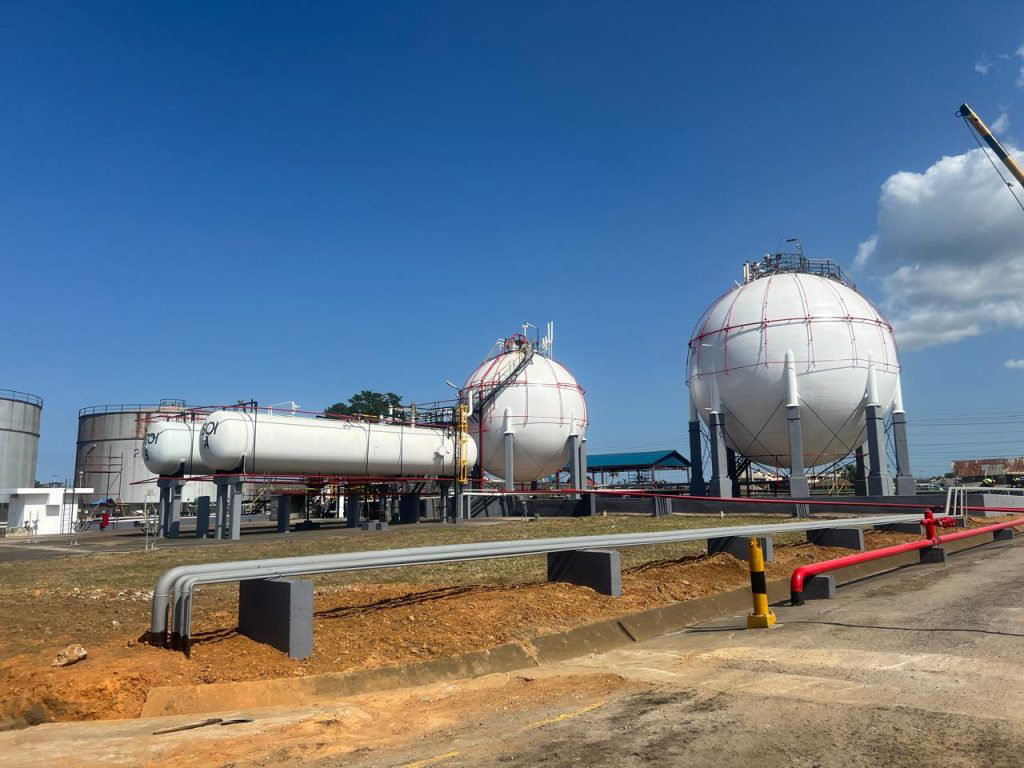
Months before the forklift ruling, the rights group Genesis for Human Rights Commission (GHRC) wrote to Captain Ruto demanding documents on a very different transaction: the alienation of prime public land at KPA’s strategic Kipevu enclave in Mombasa to a private, politically connected company for construction of a private Container Freight Station.
GHRC Programme Director Caleb Ng’wena’s June 9, 2026 letter alleged the allocation proceeded without a competitive tender, without public participation, and without sign-off from the National Environment Management Authority, the National Construction Authority or Mombasa County Government.
The same company, GHRC says, went on to secure an exclusive, single-sourced contract to handle 20 percent of all South Sudan-bound transit cargo through the port a slice of one of the port’s most lucrative transit corridors, awarded without competitive bidding.
Construction at the site reportedly continued even after the group’s seven-day ultimatum expired. “This entire transaction reeks of high-level influence-peddling, state capture and brazen land grab,” Ng’wena said in his letter, and the group has since asked the Ethics and Anti-Corruption Commission, the Director of Public Prosecutions and the Public Procurement Regulatory Authority to open investigations. KPA has not published the lease documents, the beneficial ownership of the company involved, or the justification for the single-sourced cargo award.
In fairness to due process, none of these allegations have yet been tested in a court of law or by a completed regulatory investigation, and KPA has not publicly named the company or responded point by point to the claims.
The Sh31.2 Billion Toa Corporation Petition
The largest figure attached to Captain Ruto’s tenure by far is Sh31.2 billion, the value of the civil and building works contract awarded to Japanese firm Toa Corporation for the Mombasa Special Economic Zone Development Project, financed through a Japan International Cooperation Agency concessional loan.
Activist Francis Awino, president of the Bunge la Mwananchi lobby, filed a High Court petition in Mombasa in July 2025 seeking a declaration that Captain Ruto breached Chapter Six of the Constitution’s leadership and integrity provisions and is unfit to hold public office, citing what he called collusion, concealment of procurement details and exclusion of local capacity and oversight.
Captain Ruto’s lawyer, Augustus Wafula, has dismissed the petition as speculative and reliant on inadmissible hearsay, and the matter remains before the courts. A material caveat belongs here: Awino, the same petitioner, was separately charged in April 2026 with attempting to extort Sh1.7 million from Kenya Wildlife Service Director General Erastus Kanga by threatening to file an identical Chapter Six removal petition against him.
That prosecution does not resolve the merits of the KPA petition either way, but it is a fact any fair reader needs in order to weigh the source.
The underlying questions Awino raised about undisclosed repayment terms, subcontracting arrangements and conflicts of interest on a Sh59 billion project remain unanswered by KPA regardless of the messenger’s own legal troubles.
Sh6 Billion Per Kilometre: The ‘Golden Road’
Then there is the port access road, 1.4 to 1.8 kilometres of tarmac and elevated viaduct connecting KPA headquarters to the new container terminal, budgeted at Sh8.3 billion and awarded to a Stecol Corporation and Miliki Development joint venture. Roughly Sh1.6 billion of that budget sits in contingencies and preliminaries alone, covering items critics have flagged as air-conditioned engineer suites, a fleet of diesel four-wheel-drives and twenty Android handsets.
By comparison, the Dongo Kundu bypass cost roughly Sh1.8 billion per kilometre and the Kwa Jomvu-Mariakani road about Sh342 million per kilometre. KPA’s own figure works out to nearly six times the Dongo Kundu rate.
Captain Ruto has defended the cost publicly and specifically, arguing the project is an engineering undertaking rather than a simple road involving hill excavation, land reclamation, retaining walls near oil installations and utility relocation and that KPA received bids as high as Sh10 billion before awarding the contract to the lowest bidder.
He has pointed to other short, lower-specification road projects that carried comparably large price tags. Those are substantive rebuttals and belong in any honest account of the story.
They do not, however, answer the narrower question independent engineers have raised: why a Sh1.6 billion contingency line nearly a fifth of the entire budget was built into a single contract in a way one commercial lawyer has described as structured to permit after-the-fact adjustment with minimal scrutiny.
The Sh1.9 Billion Hole That Predates Him And The One That Doesn’t
Some of the scrutiny attached to Captain Ruto is inherited rather than authored. In August 2023, months into his tenure, the National Assembly’s Public Investments Committee grilled him over a Sh1.9 billion discrepancy the Auditor-General had flagged in KPA’s 2019/2020 and 2020/2021 accounts years before he became Managing Director.
The Dock Workers Union rushed to his defence, arguing the overtime irregularities stemmed from SGR cargo-transfer directives that overstretched the workforce under the previous administration, and Captain Ruto told MPs the waiver process had been documented in a Customer Notice.
That defence is reasonable as far as it goes.
It does not, however, explain why the same unresolved questions who authorised the deviations, what recovery action followed were never closed out, nor does it change the fact that an earlier, separate 2019 allegation accused him personally of engineering a Sh21 million loss at the port while he was a senior operations official, years before his elevation to MD.
Big-Ticket Spending Amid The Scrutiny
None of this has slowed KPA’s appetite for large capital outlays. In July 2026, Captain Ruto commissioned a Sh1 billion Vessel Traffic Management Information System, alongside a package of two new tugboats worth roughly Sh1.5 billion to Sh1.6 billion and a Sh400 million helicopter intended to cut pilot-transfer times between Lamu and Mombasa.
Each of these purchases has a defensible operational rationale, and KPA has said the projects were procured and financed separately.
But announced against the backdrop of an unresolved Sh362 million forklift scandal, an unexplained Kipevu land allocation, a Sh31.2 billion court petition and an Sh8.3 billion road under fire for its costing, the sequencing invites the same question Kenyans have been asking since the forklift ruling: who is checking the arithmetic before the announcement, and who answers when the arithmetic doesn’t add up?
The Pattern, Not The Incident
Strip away the individual price tags and a single procedural signature repeats across every file: a process engineered to look restrictive and rules-bound on paper a prequalified bidder list, a competitive tender, a statutory appeal window that quietly admits an exception for a favoured party, or misses the deadline that would have let the public test it in court.
The forklift tender admitted an uninvited bidder into a restricted process. The Kipevu allocation bypassed competitive tendering and environmental clearance altogether.
The road contract buried nearly a fifth of its budget in contingency lines. And when challenged, the institutional response in court, before Parliament, in press statements has been robust denial rather than voluntary disclosure.
Captain Ruto has, credit where due, delivered real operational gains: record container throughput, faster ship turnaround, expanded liaison offices courting transit cargo from Rwanda, Burundi and DR Congo, and a digitisation push that has genuinely modernised parts of the port.
None of that operational record answers the narrower, sharper question raised by a one-day-late court filing: whether KPA’s procurement culture under his accounting officership is disciplined by the Public Procurement and Asset Disposal Act, or whether the pressure to move projects fast has repeatedly produced exactly the kind of avoidable legal and financial exposure now piling up in the courts, in Parliament, and in the Auditor-General’s files.
The Sh362 million forklift tender remains quashed. The equipment the port badly needs remains undelivered.
And the rabbit hole, as the record now shows beyond any procedural dispute, is one KPA dug for itself with the accounting officer’s signature on the process that created the opening, and on the failed attempt to appeal his way out of it.


Comments