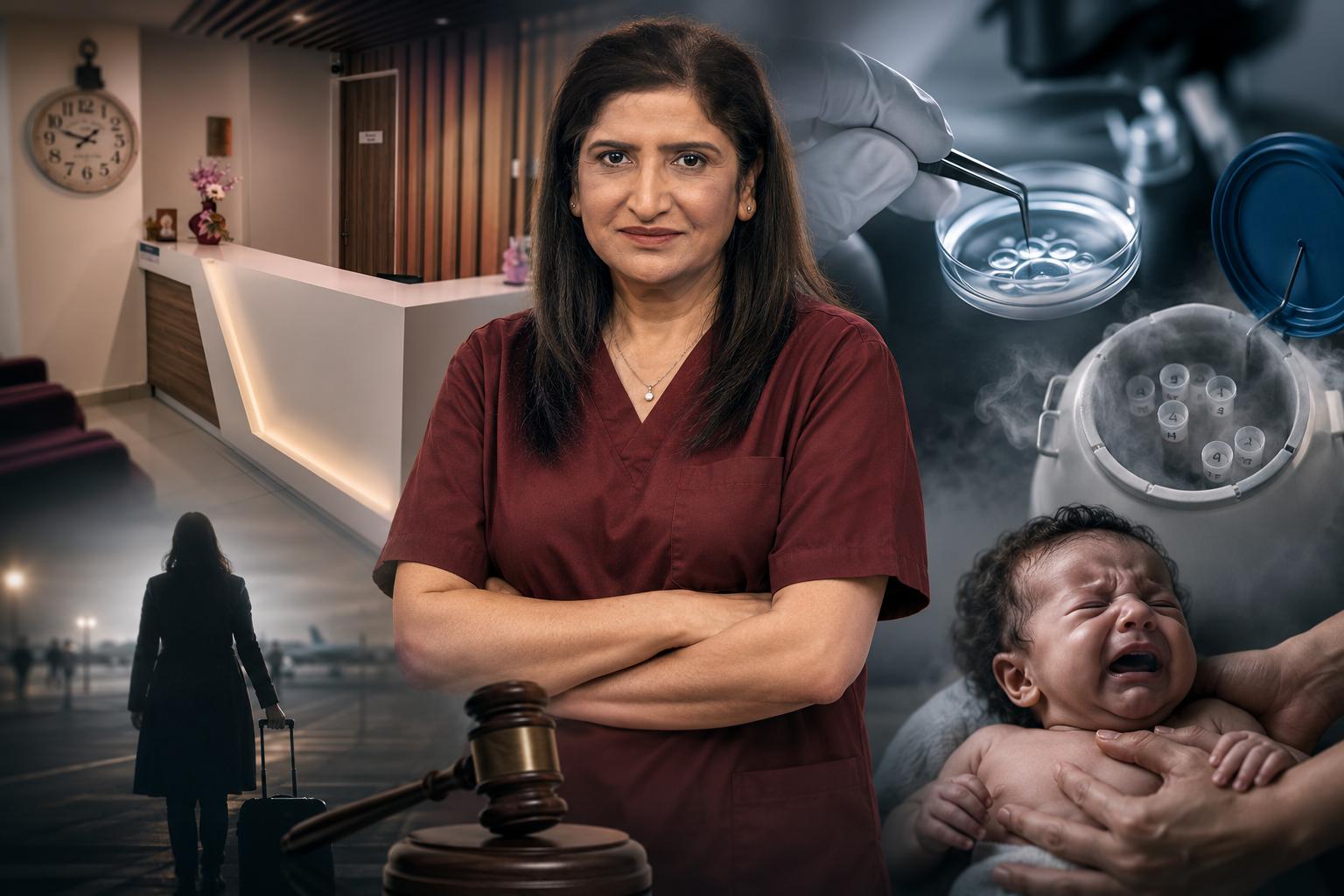
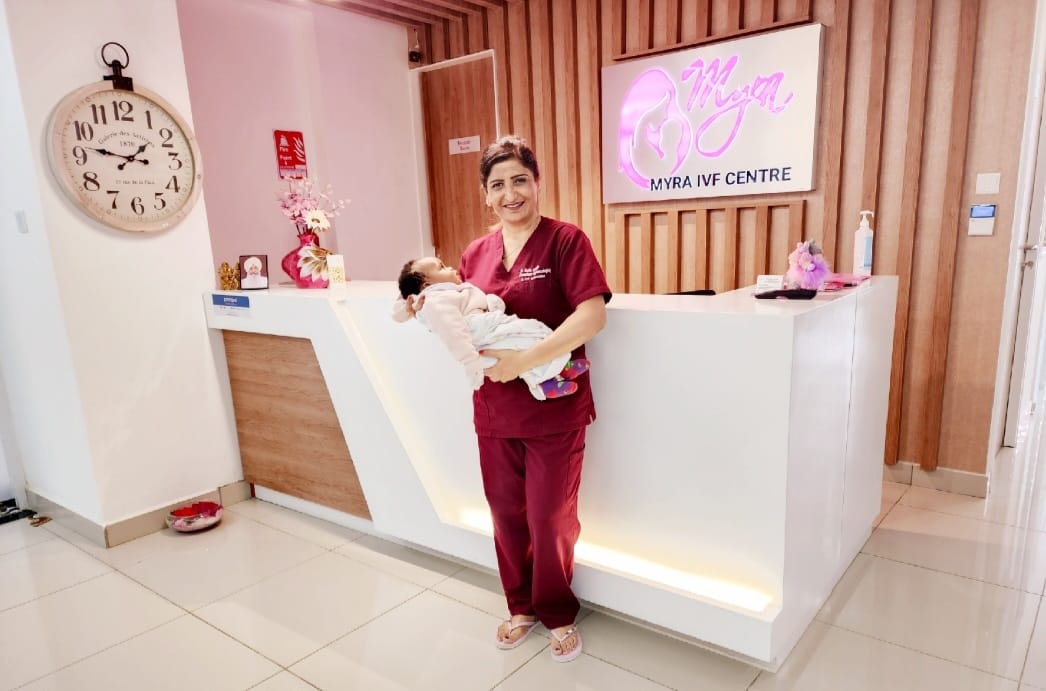
The Court of Appeal has thrown Dr. Sarita Sukhija and her Westlands-based Myra IVF and Medical Centre a lifeline. On 10 July 2026, Justices Luka Kimaru, Munyao Sila and Johnson Okello declined to lift a High Court order shielding the clinic from criminal investigation into allegations that a baby handed to a Canadian couple was not, in fact, theirs.
But a wider investigation into Nairobi’s fertility industry shows this is not a story about one doctor, one baby, or one bad year.
It is the story of a sector operating almost entirely on private paperwork, coded cryogenic canisters and post-birth trust and of a clinic that court records show has already been ordered to protect records “relating to three other minors” quite separate from the case now before the appellate bench.
THE BABY THAT DIDN’T MATCH
Carla Marcela Mendizabal and Rene Matthews, a Canadian couple identified in court papers only as C.M.M. and R.M., walked into Myra IVF in March 2024 chasing a dream that thousands of infertile couples chase every year in a country with no surrogacy law.
What they got, seventeen months later, was a nightmare that has since spilled across three court registries.
The mechanics, laid bare in Constitutional Petition E556 of 2025 and the Court of Appeal file that followed it, read like an inventory audit rather than a birth story. R.M.’s sperm was coded 1938 and dropped into liquid nitrogen at minus 196 degrees in Tank A01, canister 4.
An Indian egg donor was sourced through an agency. An embryo designated simply “No. 4” was fertilised, banked in Tank A02, canister 6, and transferred into a screened surrogate after a private agreement was signed before a lawyer on 4 November 2024, stripping the surrogate of all parental rights.
A circumvallate placenta complicated the pregnancy.
An emergency caesarean at Nairobi South Hospital on 4 June 2025 produced a preterm boy, who was moved to Gertrude’s Children’s Hospital for neonatal care before being handed over.
Almost immediately, the couple said the child’s complexion did not match what the genetics should have produced.
They commissioned independent DNA testing. According to the couple and to the Directorate of Criminal Investigations’ own account before the High Court, not one but two DNA analyses at accredited laboratories came back showing no genetic relationship between the child and the intended father.
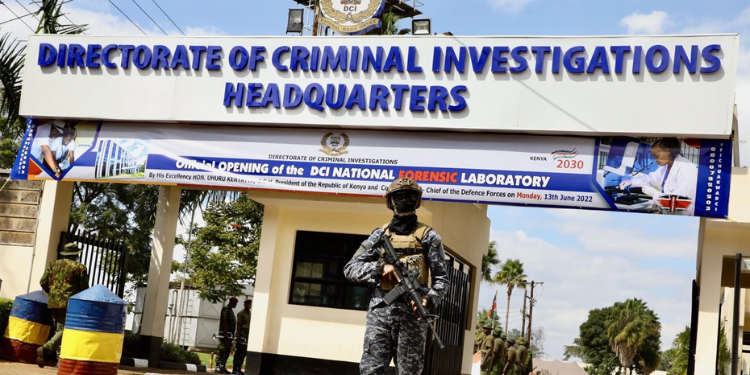
The DCI opened investigations into deception, forgery, substitution of gametes and child trafficking under the Counter-Trafficking in Persons Act investigations that, four months later, a High Court judge would freeze.
THE FIRST FREEZE AND THE LINE MOST PEOPLE MISSED
On 4 March 2026, Justice Bahati Mwamuye ruled that the DCI’s methods mass summonses, demands for embryology and financial records, and statements pulled from a receptionist and an embryologist with no direct role in the case violated Dr. Sukhija’s rights to privacy and fair administrative process.
He froze the criminal track pending a parallel complaint before the Kenya Medical Practitioners and Dentists Council (KMPDC), and barred the DCI from demanding surrogacy records.
What did not make the initial headlines is the second half of that order. Reporting at the time noted that Justice Mwamuye’s bar on the DCI also covered demands for surrogacy agreements “relating to three other minors” children with no connection to the Canadian couple’s case at all. In a sector this opaque, a judge freezing one case necessarily froze the paper trail on others.
Those “three other minors” are not hypothetical. They are, this investigation can now show, real children at the centre of a second, largely unreported legal war that erupted at the same clinic barely weeks before Justice Mwamuye’s ruling one involving an arrest at the departures gate of Jomo Kenyatta International Airport and infant twins held incommunicado at a hospital in Utawala.
THE RAID: TWINS SEIZED, A MOTHER GRABBED AT THE AIRPORT
In a case that ran in parallel to the Mendizabal-Matthews petition but drew far less attention, Myra IVF’s lawyer Kevin Mogeni and two more couples codenamed SD and AN, and JAT and BMN went to court accusing the DCI of seizing three infants and carting away computers and patient files from the Westlands clinic.
According to supporting court papers, DCI officers intercepted a woman identified as SD at JKIA on 6 February 2026 as she attempted to board a flight to London, confiscated her travel documents and phone, and separately ordered that her child being cared for at Bristol Hospital in Utawala not be released to her.
Lawyer Purity Makori told the court that police also seized five-month-old twins belonging to a fifth petitioner, despite a High Court order issued on 23 October 2024 that had already granted that petitioner full legal and actual custody of the children. Police, Makori said, produced a search order that was unsigned.
Put plainly: within the space of about a year, Myra IVF Clinic and its proprietor were fighting off DCI action over at least four separate children across at least three separate families the Canadian couple’s son, SD’s child, and the seized twins all flowing from the same private, uncoded, poorly-verified surrogacy pipeline.
The clinic and its lawyer have characterised every one of these actions as harassment. The DCI and the parents involved have characterised them as a criminal justice system trying, and repeatedly failing, to get past the clinic’s paperwork to the truth of who these children’s parents actually are.
A NAIROBI FERTILITY SECTOR ALREADY ON FIRE
Myra is not, on its own, the industry’s cautionary tale. A parallel and in some ways more disturbing scandal has been unfolding at Fertility Point, the trading name of NMC Fertility (K) Limited in Upper Hill — a clinic that markets itself as a gateway to parenthood for families across East Africa.
In Civil Case E025 of 2025, an American couple identified as AAD and ANA sued Fertility Point, a coordinating surrogacy institution and the surrogate mother herself identified as GPO after a child born on 19 January 2025 was found, once again by DNA test, to bear no genetic relationship to either intended parent.
The couple told the court the discovery caused them severe emotional trauma, and accused the surrogate of participating in or enabling concealment of the child’s true identity.
The High Court ordered the clinic, the coordinating institution and the hospital involved to preserve every record touching the case from April 2024 through the child’s birth. Court reporting has confirmed Fertility Point is separately named in a second, similar genetic-mismatch case meaning two different Nairobi surrogacy operations have now each produced at least one child whose intended parents say does not belong to them, within roughly the same eighteen-month window.
Fertility Point’s troubles run deeper still.
A whistleblower has publicly alleged that a university student died during an egg donation procedure at the clinic, and that the death was subsequently covered up with the alleged involvement of senior law enforcement figures an allegation that, if substantiated, would represent a far graver failure of Kenya’s fertility oversight than any single custody dispute.
The clinic’s ownership structure has also drawn scrutiny over links to healthcare entities previously investigated over drug-supply and NHIF-linked fraud allegations.
THE DOCTOR’S OWN PAST: FROM PLAINTIFF TO DEFENDANT
Here is the detail that transforms this from a story about two rogue clinics into a story about one doctor’s arc through Nairobi’s fertility industry. Before she founded Myra IVF, Dr. Sarita Sukhija was herself an employee at Fertility Point the very clinic now embroiled in its own DNA-mismatch and donor-death scandals.
Employment and Labour Relations Court records show Dr. Sukhija joined NMC Fertility (K) Limited on 5 June 2018 as an IVF Consultant on a monthly salary of USD 11,000. In March 2020, her filings state, the clinic unilaterally stripped her of her guaranteed minimum salary and shifted her onto a per-case payment structure.
By December 2020 the relationship had collapsed entirely: she says she was called into a meeting with the CEO and head of HR, told to leave the premises immediately and return to India, and that police officers were stationed at the clinic to bar her re-entry.
Her case, contesting what she called an unlawful and vindictive dismissal, dragged through the employment courts for years.
The irony is not subtle.
The same fertility specialist who once told a Kenyan court that a clinic had misused its power over her professional standing to force her out is now the proprietor facing accusations that her own clinic’s opaque systems allowed children to be handed to the wrong parents and is deploying the same constitutional-rights playbook, this time as shield rather than sword, to keep investigators at bay.
THE MODUS OPERANDI THE COURTS HAVE NOW EXPOSED
Strip away the legal Latin and what these overlapping cases reveal is a single, consistent operating model across Nairobi’s private fertility sector:
THE COURT OF APPEAL RULING THAT CHANGED NOTHING AND EVERYTHING
The three-judge bench that ruled on 10 July 2026 was careful. It found the Mendizabal-Matthews appeal “arguable” but concluded the couple had not shown the appeal would be rendered pointless by letting the High Court’s freeze stand, since the prohibition was tied to the KMPDC’s disciplinary process rather than a permanent shutdown of the criminal track.
Claims that evidence might be destroyed or the child moved out of reach were, the judges found, unsupported by concrete material. The application for a stay was dismissed. Each side was left to bear its own costs.
For Dr. Sukhija, it is breathing room. For the Directorate of Public Prosecutions, which had backed the couple’s bid to keep investigating, it is a setback. For the second couple’s case still sitting in the Children’s Court over another child from the same clinic, it is a signal that the courts are, for now, prepared to let professional bodies go first.
And for the twins seized at Bristol Hospital, for SD detained at JKIA, and for at least one other family’s children swept up in the same investigative dragnet, it changes nothing about the central unanswered question hanging over Myra IVF: whose children are these, and how did a clinic charging tens of thousands of dollars for “precision” fertility science lose track of whose gametes went where.
WHAT COMES NEXT
Four processes now run in parallel, none of them fast. The KMPDC must determine whether Dr. Sukhija and her staff met the professional standard of care — including whether they properly counselled intended parents on the genuine possibility of phenotypic variation from donor material, and whether their record-keeping was fit for a service this consequential.
The Mendizabal-Matthews constitutional appeal remains live at the Court of Appeal. A civil suit, HCCC E223 of 2025, proceeds separately. And the Children’s Court continues to weigh the second couple’s case from the same clinic.
Kenya’s Parliament, meanwhile, has finally moved: the Assisted Reproductive Technology Bill, sponsored by Hon. Millie Odhiambo Mabona and years in the making, passed the National Assembly in November 2025 and now sits before the Senate.
It would, for the first time, impose donor-screening standards, disclosure obligations and a legal parentage framework on an industry that has spent a decade improvising its own rules in cryogenic tanks and private contracts.
It cannot arrive soon enough for the families now waiting some for a court to confirm who their child is, others simply for their children to be handed back.
This is a developing investigation. Kenya Insights will continue to track the KMPDC proceedings, the Children’s Court matter, and the Fertility Point cases as they progress.





Comments