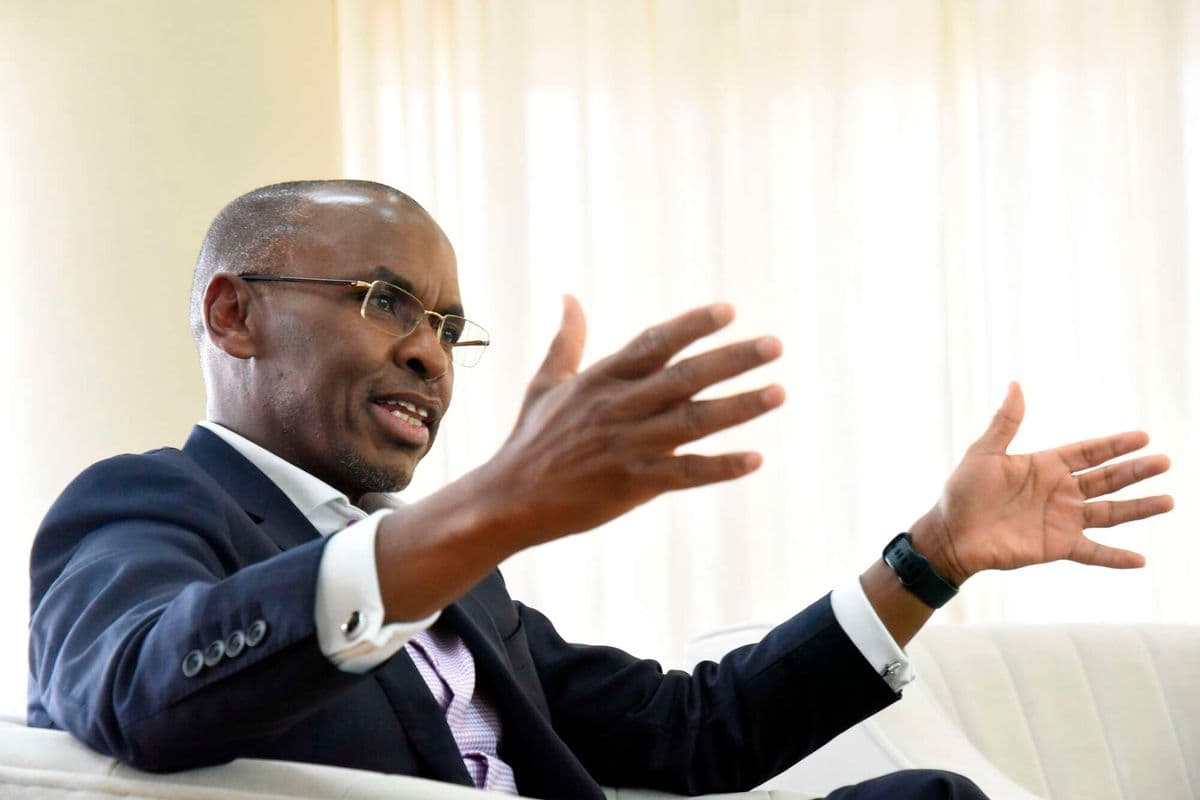
Peter Ndegwa did not buy his way into becoming one of the more consequential individual shareholders on the Nairobi Securities Exchange. He was given the shares. Safaricom’s newly released annual report for the year ended March 2026 shows the chief executive’s personal stake climbing to 12.097881 million shares, worth Sh425.8 million at the ruling market price, up from 8.74 million shares a year earlier. It is the largest single-year jump of his six-year tenure, and it arrives at the same moment the company he runs has been shrinking its own workforce, resisting unionisation, and asking ordinary Kenyans to accept a general wage increase that the government itself has struggled to gazette.
The numbers are not in dispute because they come from Safaricom’s own books. What deserves scrutiny is the pattern behind them, a pattern that stretches back to the week Ndegwa walked into Safaricom House in April 2020 holding roughly 895,000 shares, and that has since multiplied his personal stake more than thirteenfold without him spending a shilling of his own money to acquire the bulk of it.
A Trust That Buys, Vests and Hands Over For Free
The mechanism is Safaricom’s Employee Performance Share Award Plan, running since 2011 and now concentrated on a narrow band of senior managers. An employee benefit trust purchases Safaricom shares on the open market using company cash, holds them for a three year vesting period tied mainly to continued service, then transfers them to qualifying staff at zero cost.
Award sizes are set by prior performance ratings, and once vested the recipient is free to sell immediately or continue holding. Because the shares come from the open market rather than a fresh issue, existing shareholders are not diluted, which is the one feature of the scheme that Safaricom and its defenders point to whenever the size of the payouts draws attention.
In the year under review the trust spent Sh143.2 million buying 6.8 million fresh shares, then released 20.1 million shares, including stock carried over from earlier purchase rounds, to senior managers.
Those shares had cost the company Sh350 million to acquire over time.
By the date they were handed over, they were worth Sh707.5 million on the market. The gap of more than Sh357 million is pure appreciation that landed in the accounts of a small circle of executives, not in dividends, not in network expansion, and not in the pay packets of the more than six thousand employees who were not senior enough to qualify.
Safaricom’s own financial statements record Sh842.8 million in share based payment expense for the year, up from Sh669.5 million the year before, a 25.9 percent jump in the accounting cost of running the scheme.
The trust that supplies the shares entered the year holding 13.3 million units and exited holding none. Every future award will now require Safaricom to go back into the market and buy shares at prices close to their recent highs, a cost structure that only grows more expensive as the stock keeps climbing.
Thirteenfold in Six Years
Ndegwa’s shareholding history reads like a slow motion accumulation that only becomes obvious when the figures are placed side by side.
He arrived with about 895,000 shares in April 2020. By March 2024 that figure had surged sevenfold to 6.21 million.
A year later it stood at 8.74 million. The March 2026 disclosure of 12.09 million shares represents not just another increase but the steepest one yet, arriving in the same twelve month window that Safaricom’s share price rallied from lows near Sh12.20 in October 2023 to above Sh35 on the back of stronger Kenya operations profit, narrowing Ethiopia losses, and Vodacom Group’s tightening grip on the company.
At 0.03 percent of Safaricom’s roughly 40.065 billion issued shares, Ndegwa’s personal stake looks small against the size of the company. It is not small against the size of an individual Kenyan fortune. Few private citizens in the country hold a single listed equity position worth Sh425.8 million, built almost entirely through an internal compensation scheme rather than market purchases, inheritance or business ownership.
The Most Expensive Executive Chair in Kenya
Ndegwa’s total remuneration for the year ended March 2026 reached Sh324.5 million, up from Sh294.2 million the year before, itself a record at the time.
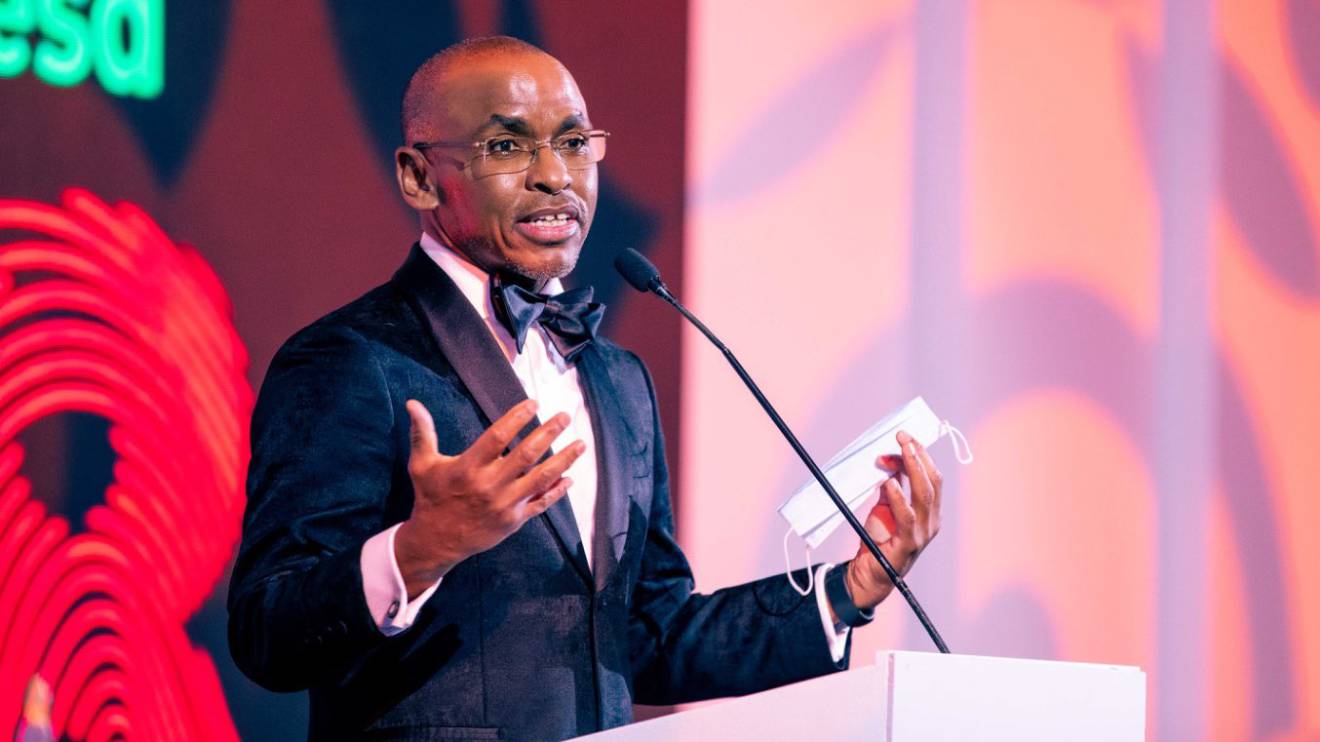
The package breaks down into a Sh105.4 million basic salary, a Sh118.5 million cash bonus, Sh31.4 million in non cash benefits that typically cover housing, vehicles, club memberships and school fees, and a Sh69.2 million EPSAP component.
That equity slice alone grew 52.8 percent year on year, a far steeper climb than his salary or bonus, and it was amplified further by the same share price rally that inflated the value of his accumulated stake.
The trajectory did not begin this year. In the year ended March 2025 his total package of Sh294.2 million already made him the highest paid chief executive among companies listed on the Nairobi Securities Exchange, ahead of KCB Group’s Paul Russo, who took home Sh250.2 million in the same period despite a 40.8 percent rise of his own.
Chief Finance Officer Dilip Pal has followed a smaller but similar curve, his own shareholding rising from 2.22 million to 2.35 million shares now worth Sh82.9 million, and his total package climbing to Sh147.5 million from Sh132.5 million, of which Sh20.3 million came through the same EPSAP structure.
A Shrinking Workforce Beneath a Growing Executive Fortune
The uncomfortable counterpoint to the executive numbers sits a few pages away in the same annual report. Safaricom’s headcount fell to 6,616 employees by the end of March 2026, down from 6,777 the year before, part of a longer decline from figures above 8,500 recorded in earlier years as the company has pursued what it calls a future fit operational structure. The prior financial year had already seen 113 employees dismissed, roughly two percent of the workforce, in a mix of disciplinary action, fraud related exits and restructuring.
None of this is new territory for Ndegwa personally.
In April 2021, less than a year into the role, the Central Organisation of Trade Unions publicly branded him the most dangerous chief executive in Safaricom’s history for workers, after he required a majority of the more than six thousand staff to reapply for their own jobs as part of a management overhaul.
COTU’s statement at the time also pointed to his earlier record at Guinness Nigeria, where he was said to have cut the workforce by close to 45 percent while facing off with West African unions, and it accused Safaricom of having long resisted attempts to unionise its employees.
Five years on, the executive who was accused of treating job security as an afterthought now sits on personal Safaricom equity worth close to half a billion shillings, built through a compensation vehicle that transfers company cash and appreciation directly to a small circle of senior managers while the broader payroll has continued to contract.
A Cost Structure That Competes With Dividends and Investment
Safaricom will point out, accurately, that the same financial year produced record group net profit of Sh95.6 billion and a record dividend of Sh2 per share totalling Sh80.13 billion, so shareholders broadly have had a strong year. What that framing tends to obscure is that the Sh143.2 million spent buying fresh shares for the EPSAP trust, and the Sh842.8 million expensed against the scheme as a whole, are resources that did not go toward additional dividends, tariff relief, or the kind of network investment the company routinely cites when justifying its market position.
The scheme is legal and fully disclosed in the annual report.
It is also, by design, a recurring transfer of value concentrated at the very top of the organisation, and its scale has grown precisely in step with the company’s recovery and its executives’ compensation.
The Timing Question
The disclosures land at an awkward moment for a company already navigating a governance overhaul. Safaricom’s shareholders are due to vote at the Annual General Meeting scheduled for July 31, 2026 on proposed changes to the Articles of Association that would allow Vodafone Kenya Limited to nominate the chief executive once it holds more than 50 percent of issued share capital, a threshold Vodacom Group crossed in late June 2026 when it acquired a further 15 percent stake from the Kenyan government, lifting its holding to 55 percent against the government’s remaining 20 percent and a 25 percent public float.
The board would retain formal appointment authority, but the nomination right would sit with the majority foreign shareholder. Ndegwa’s extraordinary personal enrichment through a scheme funded entirely by Safaricom’s own cash flows is therefore unfolding at precisely the moment control over who occupies his chair in future is shifting more explicitly toward Vodacom, a detail that has drawn far less attention than the share award figures themselves but arguably carries more consequence for the company’s long term direction.
What the Filings Do Not Say
Safaricom’s disclosures are thorough on the mechanics of the EPSAP and characteristically silent on the comparative optics. There is no line in the annual report setting Ndegwa’s Sh324.5 million package or his Sh425.8 million stake against the median pay of the employees who remain on the payroll, nor against the general wage increase that the national government has spent the better part of this year trying to gazette for workers earning far less.
The Central Organisation of Trade Unions has spent recent months pressing the Ministry of Labour to implement a 12 percent general wage increase promised by President William Ruto, arguing that a separate minimum wage adjustment gazetted in June falls short of that commitment.
Against that backdrop, a 10.3 percent rise in the total pay of Kenya’s most highly compensated chief executive, on top of a stake now worth close to half a billion shillings, sits in open contrast with the wage anxieties consuming the rest of the labour market the company operates in.
None of this required Safaricom to break any law or hide any figure. Every number in this account, from the 20.1 million shares to the emptied trust to the 6,616 remaining employees, sits inside filings the company itself published.
The story they tell together, however, is one Safaricom has never assembled into a single page of its own annual report: a chief executive once accused of treating his own workforce as expendable has, in the years since, built one of the most valuable individual equity positions in corporate Kenya almost entirely through free shares funded by the company he leads, at a pace that has consistently outstripped both the company’s headcount and the wages of the Kenyans who keep it running.



Comments