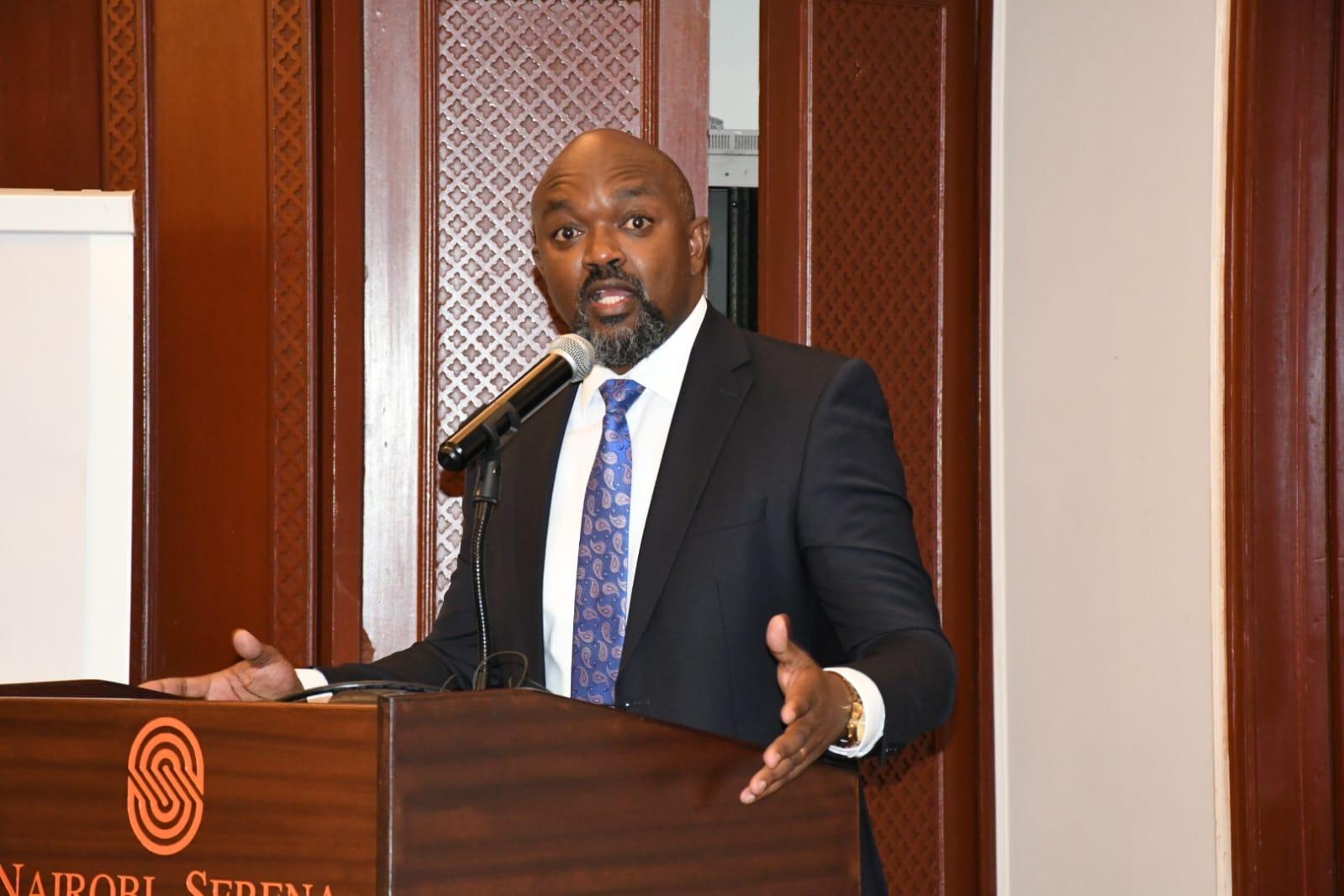
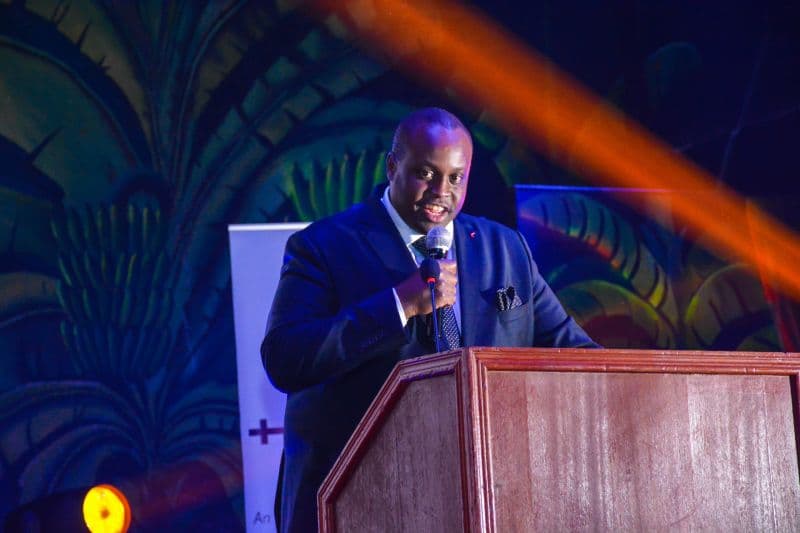
Arnold Munene has written another sermon. This time the text is misinformation, and the congregation is every Kenyan saver he thinks got the story wrong. In a column published in this newspaper, the KUSCCO Group Managing Director explains, with the calm authority of a lecturer, that rumours travel faster than facts, that Kahneman and Tversky proved people fear losses more than they enjoy gains, and that saccos are built on trust, which he says is their most valuable asset of all.
He is not wrong about the theory. Prospect theory is real. Loss aversion is real. What is missing from Munene’s column is the one fact that would have made it honest: he is the single most qualified Kenyan alive to explain why the public no longer believes anything the sacco movement’s apex body tells it, because he was inside the institution for a decade while it was quietly burning through Sh13.3 billion of member money, and he is the man currently pleading with a Senate committee to accept that most of it is gone for good.
You do not get to become the country’s foremost expert on financial misinformation by having spent ten years failing to notice the largest cooperative fraud in Kenyan history happening under your own regional desk.
THE TRILLION THAT WAS NEVER A TRILLION, AND THE THIRTEEN BILLION THAT ACTUALLY VANISHED
Munene’s column is a defence of a real number against an exaggerated headline. Kenya’s saccos genuinely hold assets north of a trillion shillings, and he is correct that a balance sheet is not a vault of idle cash. Members who heard that figure and assumed the state could simply dip into it for the National Infrastructure Fund were, indeed, misinformed. Fine. That correction took him four newspaper columns worth of Kahneman citations.
Here is a correction that needed no behavioural economics at all. A forensic audit by PricewaterhouseCoopers found that KUSCCO, the apex union Munene now runs, had received roughly Sh24.8 billion in deposits and investments from 247 member saccos, and that Sh13.3 billion of it had disappeared through parallel sets of books, unexplained withdrawals, forged audit signatures, and loans issued in flagrant breach of lending limits. By this year the union’s own numbers, laid before creditors in an insolvency petition, showed liabilities of Sh17.7 billion against assets of only Sh5.2 billion, a hole of Sh12.5 billion. That is not a rumour that outran the facts. That is the fact, confirmed in sworn affidavits, and it happened on Munene’s watch as senior regional manager and then as the man who inherited the wreckage.
WHAT HE TOLD THE SENATE HIMSELF
Munene wants Kenyans to trust the sacco movement’s numbers. In May, appearing before a Senate committee, he supplied numbers of his own that should end any lecture he intends to give on financial literacy. Of KUSCCO’s Sh8.4 billion loan book, he told senators, only Sh4.8 billion is considered recoverable at all. Of 150 saccos referred for verification, forty two turned out to have no registration file or record whatsoever, meaning a Sh690 million slice of the loan book may have been lent to entities that do not exist. Eighty eight more were dormant. Fifty seven were already in liquidation. Four had been dissolved outright.
Cabinet Secretary Wycliffe Oparanya, sitting beside him, told the same committee that KUSCCO’s books had for years been signed off by an auditor who was dead and buried, with clerks apparently continuing to operate under his name. Among the saccos left exposed, Hazina Sacco alone had close to a billion shillings on deposit at KUSCCO, and Njiwa Sacco, widely associated with the National Intelligence Service, had Sh829 million riding on an institution that could not account for its own liabilities. If Munene wants a case study in how a broadly accurate statistic curdles into a public trust crisis, he does not need Ushirika Day. He needs a mirror.
The dead cannot forge their own signatures. Someone alive did that, inside the institution Munene now asks Kenyans to trust again.
THE LOAN HE TOOK UNDER THE SCHEME HE NOW CONDEMNS
This is the detail Munene’s column will never mention, because no columnist mentions the beam in his own eye while sermonising about the speck in everyone else’s. The same forensic audit that exposed roughly Sh1.7 billion in fraudulent or grossly irregular transactions inside KUSCCO’s housing arm also found that Munene himself had accessed a Sh14.17 million facility under the union’s non conforming products policy, the very lending regime that let officials and their associates borrow many multiples of their savings and default without consequence. He now postures as the reformer sent to clean up that unit. He was also a beneficiary of the culture he claims to be dismantling.
That is not the profile of a man who walked in from outside and discovered the rot in shock. It is the profile of a man who sat inside a permissive lending regime, used it, and is now asking the public to accept his authority on what counts as a dangerous financial narrative.
THE LAWYERS HE SENT AFTER THE TRUTH
When Business Daily’s reporting connected Munene and KUSCCO Housing Cooperative Society to the Sh1.7 billion fraud, his response was not an open ledger. It was a demand letter from J.J. Okore and Associates Advocates, threatening defamation action and demanding a retraction and a public apology within seven days. The newspaper did not retract, and no defamation suit has materialised. A Cooperative Tribunal subsequently rejected KUSCCO’s attempt to control KHC’s governance outright.
A man who genuinely believed information was a systemic risk to be managed with transparency had an option available to him that costs nothing and clarifies everything: publish the full file. Munene chose lawyers first and lectures second. Kenyans are entitled to notice the order of operations.
THE ARITHMETIC OF INSULT
Set the sermon about trust against the refund ledger. Ministry documents presented to the Senate show KUSCCO has refunded only about Sh369 million to affected saccos across 2024 and 2025, against a Sh13.3 billion hole. Property auctions of defaulters’ land and houses have recovered roughly Sh60.4 million. Vehicle sales brought in Sh33.67 million more. Add it together and the recovery to date is a rounding error against the loss, arriving in a trickle while teachers, nurses, police officers and small traders wait for dividends that keep shrinking and deposits that may never return.
Meanwhile the High Court has issued preservation orders barring KUSCCO from disposing of assets or transferring funds, after Rupsa Sacco, formerly PCEA Ruiru Sacco, petitioned for its liquidation over an unpaid Sh108 million debt. The government has already stripped KUSCCO of its Central Finance Fund, handing it to the Sacco Societies Regulatory Authority under a new name, because even the state no longer trusts KUSCCO to run its own liquidity operation. An apex institution that has been partially dismantled by its own regulator is not well positioned to diagnose the public’s information hygiene.
CUT THE CRAP, MUNENE
Munene is right that misinformation is a financial risk. He is right that trust, once broken, does not repair itself on a columnist’s timetable. He is right that Kenyans deserve better financial literacy than a viral WhatsApp forward. None of that entitles him to stand at the pulpit of an institution he helped run into insolvency and lecture the very savers his institution failed about the dangers of not understanding a balance sheet.
If Munene wants to fight misinformation, he can start with the KUSCCO ledger. Publish the full list of the 240 loans issued in breach of lending limits and the names behind them. Publish the complete forensic audit, not a summary delivered at a general meeting. Explain, on the record and without lawyers, how a dead man’s signature cleared KUSCCO’s books for years while a living regional manager, now its chief executive, drew a Sh14.17 million facility under the same non conforming policy he now condemns. Publish the true, current, audited recovery number, not the aspirational one recited at conferences.
Kenya’s savers do not need another op-ed about Kahneman. They need the money, or an honest and complete account of exactly where it went and who is being prosecuted for taking it. Until that file is open, every sentence Munene writes about trust is itself a small act of financial misinformation, dressed in the language of the very discipline he claims to be protecting.
Cut the crap, Munene. The saccos are still watching. So are the regulators, the courts, and the millions of members whose sweat built the institution you are now asking them, again, to trust.




Comments