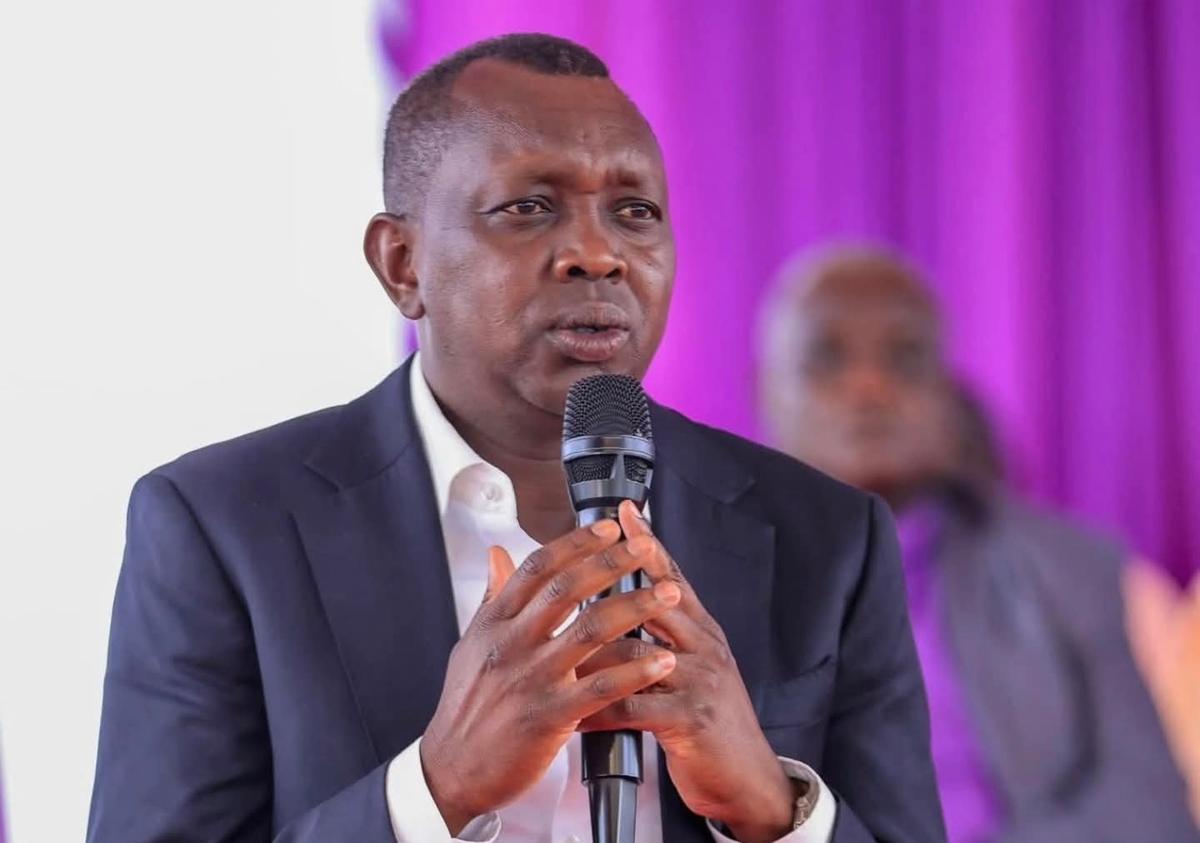
Justice M.N. Mwanyale did not mince words. In a June 9, 2026 ruling that landed like a hammer on Kapseret MP Oscar Sudi and his Mara Golf and Wild Resort Limited, the Environment and Land Court at Kilgoris declared that the titles the politician and his company were relying on to claim a prime 40.5-acre slice of the Maasai Mara ecosystem were, in the judge’s own words, legally non-existent.
Fraudulently procured. Dead on arrival.
The case is Environment and Land Court Case No. E024 of 2025, and on paper it looks like a routine interlocutory skirmish between two Asian-Kenyan businessmen and a politically connected tourism outfit.
In substance, it is a forensic anatomy of how land is captured in this country when the person doing the capturing has power on his side. It also happens to be the latest entry in a multi-county dossier that stretches back more than five years and touches some of the most expensive dirt in Kenya, from a colonial chief’s ancestral estate in Uasin Gishu to a Sh20 billion coffee farm in Runda.
THE MECHANICS OF A GHOST TITLE
The bones of the Mara case are simple enough to explain to a Standard Two pupil, to borrow a phrase Sudi himself has used before. Businessmen Neel Ashwin Gudka and Akash Kirit Gudka hold Title No. Transmara/Kerinkani/772, issued on June 26, 2014, complete with Land Control Board consent, an official search and a green card. More importantly, they hold a 2022 judgment.
In Kilgoris ELC E008 of 2022, Neel Gudka v Osika Ole Roitei, the court had already declared the brothers the lawful owners of the parcel, finding no competing titles existed over the property. That judgment should have been the end of the story.
It was not. Sometime in 2025, fresh titles materialised over the same parcel, this time in the names of Oscar Kipchumba Sudi and Mara Golf and Wild Resort Limited.
According to court papers, these were purportedly transferred to Sudi and his company by two individuals named Nakuyiet Ndorotet Kura and Stephen Partareto Ole Barta. The problem, as Justice Mwanyale found, is that Kura and Barta had nothing to transfer.
The 2022 judgment had already stripped the parcel of any competing claim. Applying the centuries-old doctrine of nemo dat quod non habet, no one can give what they do not have, the judge ruled that Sudi’s 2025 title was tainted from the moment it was issued.
“The 1st Respondent’s title was legally non-existent.” — Justice M.N. Mwanyale, ELC E024 of 2025
The order that followed was sweeping. Sudi, his resort company, Kura, Barta and their agents, directors, servants and proxies were barred from entering, trespassing on, constructing on, developing, alienating, transferring, charging, leasing or selling the disputed land.
The Land Registrar of Transmara was named as the fifth respondent, a detail that should trouble anyone who cares about how Kenya’s registries actually function, because it raises the uncomfortable question of how a registry processes a transfer from parties a court had already ruled possessed nothing to transfer. Someone signed off on that. Someone stamped it.
Kenya Insights has reviewed the substance of the ruling and confirms that the court treated this as more than a paperwork dispute.
Justice Mwanyale found that the balance of convenience and the risk of irreparable harm to the Gudkas’ statutory right to quiet possession, protected under section 24(a) of the Land Registration Act, tipped decisively toward freezing the entire transaction pending a full hearing.
The judge was explicit that this is an interlocutory finding, not a final determination of ownership. But the language used to get there, legally non-existent, fraudulently procured, is not the language of a judge hedging his bets.
A RETURN TO FAMILIAR GROUND
What makes the Mara ruling especially pointed is where it sits geographically. It is not Sudi’s first entanglement with land in or around the Maasai Mara ecosystem.
In Narok West’s Lemek area, well within the broader Mara landscape, local leaders have for months been vowing to investigate what they describe as Sudi’s illegal acquisition of more than 1,000 acres, language one leader characterised as a threat that must by all means be reversed.
The Kilgoris ruling gives that grievance a documentary spine it previously lacked: here, at last, is a court record showing exactly how a politically connected figure can end up holding paper over land a court had already assigned to someone else.
THE CHIEF’S FARM AND THE SQUATTER WHO BECAME THE GRABBER
To understand the irony sitting at the centre of Sudi’s land story, you have to go back to Kesses, on the outskirts of Eldoret, where he was born in 1980 to parents who were themselves squatters.
By his own repeated account to reporters over the years, his family lived in a grass-thatched house on the farm of the late colonial-era paramount chief Jackson Kibor arap Talai, sleeping, as Sudi has told it, in the kitchen with his two brothers because that farm was the only shelter a charcoal seller and a subsistence farmer could find.
Chief Talai died in 2012, leaving behind roughly 2,000 acres of prime land adjacent to Moi University’s main campus.
Within a matter of years, the same land that had once given a poor family a roof became the site of a bitter succession dispute, and Sudi, the man who grew up as a squatter on it, showed up on the other side of the fence.
In an incident that made headlines locally, Sudi stormed the farm with a group of youths, clashing with members of the Talai family and claiming he was inspecting 50 acres he said he had bought from Eunice Talai, a daughter-in-law of the late chief.
Other family members disputed the sale outright and demanded he produce proof of clean title and full consent from all heirs, since the succession matter was still active and, by some accounts, protected by a court caveat at the time.
A 2023 update saw the same family accusing Sudi of plotting to fence off even larger sections of the estate.
The through-line from squatter’s son to disputed 50-acre claimant on the very farm that sheltered his childhood is the kind of detail that does not appear in press releases.
It appears in family testimony, in local reporting, and now, increasingly, in a pattern that investigators and parliamentarians alike have started to notice.
MOI UNIVERSITY AND THE 1,515 ACRES
The Kesses connection runs deeper still. In June 2024, the National Assembly’s Departmental Committee on Lands summoned Sudi after squatters organised under the banner of the Ngeria Squatters petitioned Parliament, alleging a scheme to evict them from roughly 1,515 acres of land adjoining Moi University’s main campus, land they say they had occupied for more than four decades since being displaced in the 1980s.
The committee toured the land, ordered all farming activity halted pending its inquiry, and heard evidence that the university had leased half the disputed acreage to a private company, Cropsoko, for an annual fee of Sh24 million, without the university’s own vice chancellor able to fully account for who stood behind the arrangement.
Sudi refused to appear before the committee, posting a video dismissing the entire affair and insisting, in his words, that even a Standard Two child would know the land belonged to the university.
Committee chairperson Joash Nyamoko confirmed Sudi had been adversely mentioned during site visits and stood firm on the summons.
By August 2024, the matter had escalated to the point that the Principal Secretary for Lands, Nixon Korir, told the same committee the dispute had already wound its way up to the Supreme Court once before, and floated compulsory acquisition of the land into the Settlement Fund as the only clean way to resettle the squatters without further litigation.
The fact that a sitting Cabinet-level official saw compulsory state intervention as the only escape from the dispute tells you how entangled the underlying titles had become.
SH20 BILLION IN RUNDA: THE COMPANY SUDI KEEPS
If Kesses shows Sudi operating on home turf and the Mara shows the mechanics of a title flip in granular detail, the Kasarini Coffee Farm affair in Runda shows the company he keeps when the stakes get truly large.
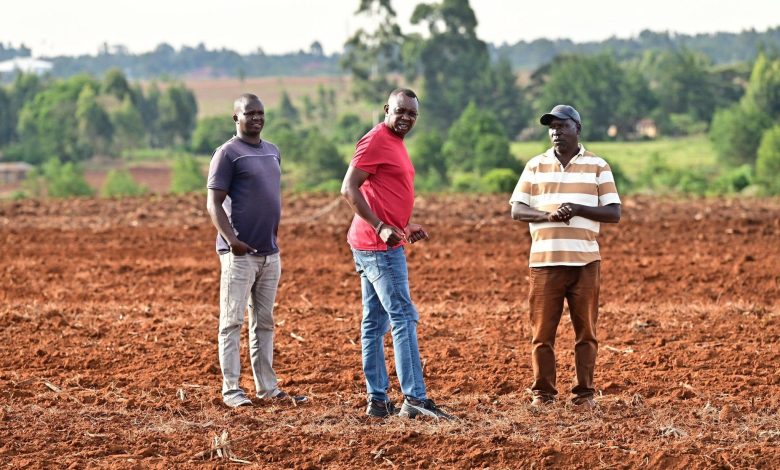
In April 2026, a petition filed at the High Court in Kiambu by Daniel Mwangi Mbugua and his daughter Wanjiru Mwangi named Interior Cabinet Secretary Kipchumba Murkomen, Sudi and Gatundu North MP Elijah Kururia, asking the court to compel the Ethics and Anti-Corruption Commission to investigate all three over the alleged facilitation of an invasion of the 300-acre Kasarini Coffee Farm, home to the well-known Paradise Lost recreational centre and registered under LR numbers 5974/1, 5972 and 5971. The petitioners valued the property at not less than Sh20 billion.
The allegations in that petition are not the language of a boundary dispute. Wanjiru Mwangi told the court she personally witnessed Murkomen patrolling the contested land on April 11, 2026, with a convoy of six vehicles and a truck carrying twenty armed men wielding machetes.
She says she narrowly escaped an attack days later, on April 13.
The petitioners allege more than 200 invaders have taken possession of family land belonging to the estate of the late Kiambu tycoon Mbugua Mwangi, who died in 2008, with portions of the property allegedly transferred to an entity called Pamat Enterprises Limited, a company incorporated in 1984 and based in Lavington.
“That CS Kipchumba Murkomen was patrolling with a team of six vehicles and a truck with 20 armed goons, wielding machetes and other crude weapons.” — Petition filed at Kiambu High Court, April 2026
The petition further asked the court to compel the Director of Criminal Investigations and Kiambu’s OCS and OCPD to produce whatever title deeds had been presented to police by the alleged invaders for authentication, and to explain how officers verified those documents in the first place, a request that implicitly accuses the police of rubber-stamping paperwork for the powerful.
Murkomen has publicly denied any interest in the land, calling the allegations rumour and conjecture.
Kururia has offered a competing narrative, arguing the disputed sections were set aside decades ago for farmworkers under a 1984 resurvey and that no grabbing has occurred.
Sudi, for his part, has not responded to media queries on the matter.
What is not in dispute is that his name sits, once again, at the centre of a land fight measured not in acres of modest farmland but in billions of shillings of Nairobi’s most expensive real estate corridor.
A PATTERN THE INSTITUTIONS ARE ONLY NOW CONFRONTING
Taken individually, each of these episodes could be dismissed as the ordinary friction of Kenya’s chaotic land registry, family succession disputes, boundary quarrels, the occasional overzealous politician.
Taken together, and now anchored by a High Court finding that a title bearing Sudi’s name was legally non-existent from inception, they describe something closer to a method: identify land already subject to dispute or recent adjudication, locate a local proxy willing to sign a transfer they have no legal right to make, secure a fresh title through a registry that asks few questions, and rely on political weight to make the paperwork stick until someone with the resources of a Gudka brother, or the standing of a university vice chancellor, or the documentation of a chief’s estate, forces the matter into court.
The naming of the Transmara Land Registrar as a respondent in the Mara case is the detail investigators should not let go. It is one thing for a politician to claim disputed land through a proxy.
It is another for that claim to clear a government registry after a competing court judgment had already settled the question of ownership.
The full hearing in ELC E024 of 2025 will determine final ownership of the 40-acre parcel, but the interlocutory ruling already stands as a public record of how the scheme was built, and a template for identifying it elsewhere.
For the Gudka brothers, the June ruling is vindication after a fight stretching back to 2018, when they first went to court to stop encroachment on their land, through a 2022 judgment that should have settled the matter permanently, to this fresh injunction needed only because a new title appeared in 2025 despite that settlement.
For the Ngeria squatters of Kesses, for the Talai family still contesting the Kibor estate, and for the Mbugua family fighting to hold onto Kasarini Coffee Farm against a convoy of armed men, the Mara ruling offers something rarer than sympathy.
It offers proof that at least one court, in at least one instance, looked at the paperwork behind a Sudi-linked land claim and called it what it was.
The dust in Transmara has settled for now.
Whether the same scrutiny reaches Kesses, Lemek and Runda is the question Kenyans watching their land disappear through proxies, fresh titles and political muscle are now entitled to ask.


Comments